
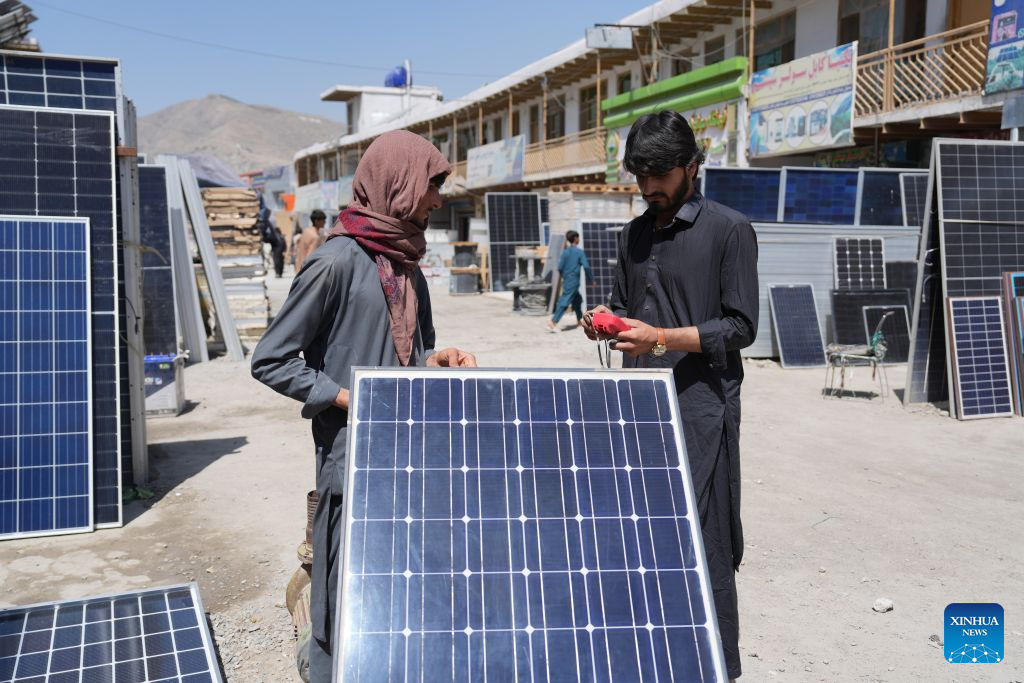
People buy solar panels at a solar equipment store in Kabul, Afghanistan, July 29, 2026. (Photo by Saifurahman Safi/Xinhua)
KABUL, Aug. 1 (Xinhua) -- Customers moved from one display to another, comparing solar panels, batteries and inverters at a busy solar market in Kabul. Some asked about prices, while others sought advice on systems suitable for their homes or farmland.
The growing interest reflects a broader trend in Afghanistan, where frequent power shortages have prompted more households, businesses and farmers to turn to solar energy.
Standing among stacks of solar equipment, dealer Qari Gul Alam Samim said the solar products available in Afghanistan mainly come from China.
He said the number of customers has grown steadily in recent years as more people become familiar with solar technology.
"Years ago, customers usually needed technicians to install their systems," he said. "Now, many people understand how the equipment works and can complete much of the installation themselves after buying it."
The expanding market includes homeowners seeking backup electricity, shopkeepers trying to reduce interruptions to business, factories looking for stable power supplies and farmers using solar-powered pumps to irrigate their fields.
For Kabul resident Nusratullah Mohammad Khail, the decision to install a solar system came after repeated electricity shortages.
"In winter, power cuts are common, and during summer the electricity supply is often not enough for daily needs," he said. "That is why we installed a solar system at our home."
He said the system has worked reliably and that good-quality batteries can last for many years with proper use.
Nearby, another trader, Haji Qari, said business usually reaches its peak between March and July, when demand for solar equipment rises across the country.
"Hundreds of containers carrying solar products arrive in Afghanistan during the season," he said. "The 600-watt and 700-watt systems are among the most popular because they meet the needs of many families."
Beyond urban areas, traders said solar energy is becoming increasingly common in agriculture, where farmers are using solar-powered systems to pump water for irrigation in places with limited access to electricity.
Ahmad, a farmer in a rural district outside Kabul, said solar panels have changed the way he manages his land.
Previously, he depended on diesel pumps or irregular electricity to draw water from a nearby well, which was costly and often unreliable. After installing a small solar-powered pumping system, he said he can now irrigate his fields more consistently throughout the day. ■
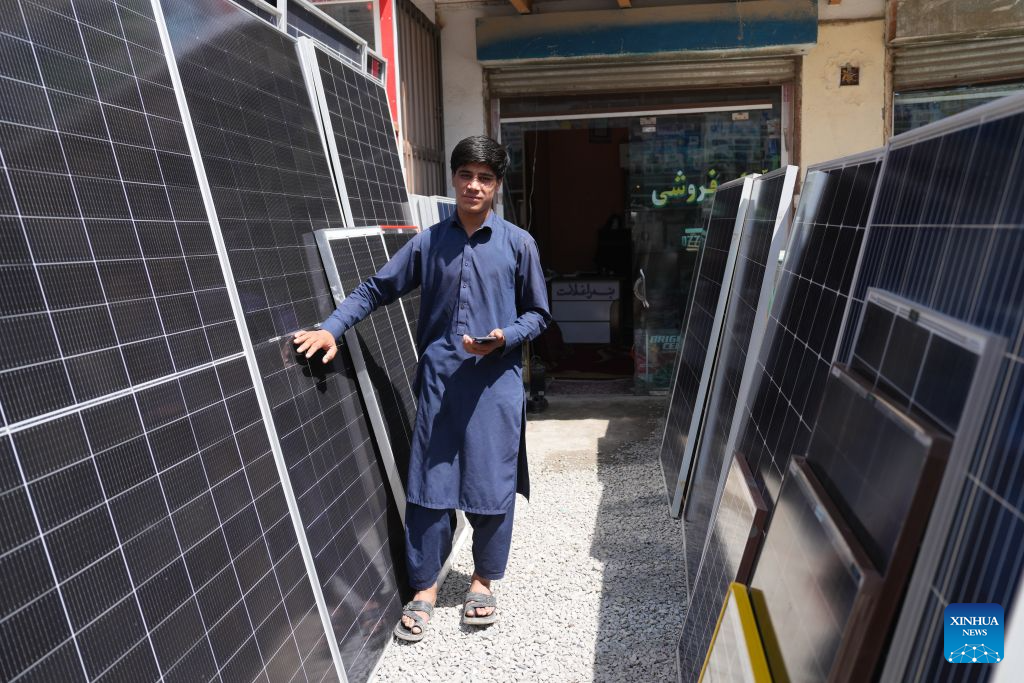
A shop owner checks solar panels at a solar equipment store in Kabul, Afghanistan, July 29, 2026. (Photo by Saifurahman Safi/Xinhua)
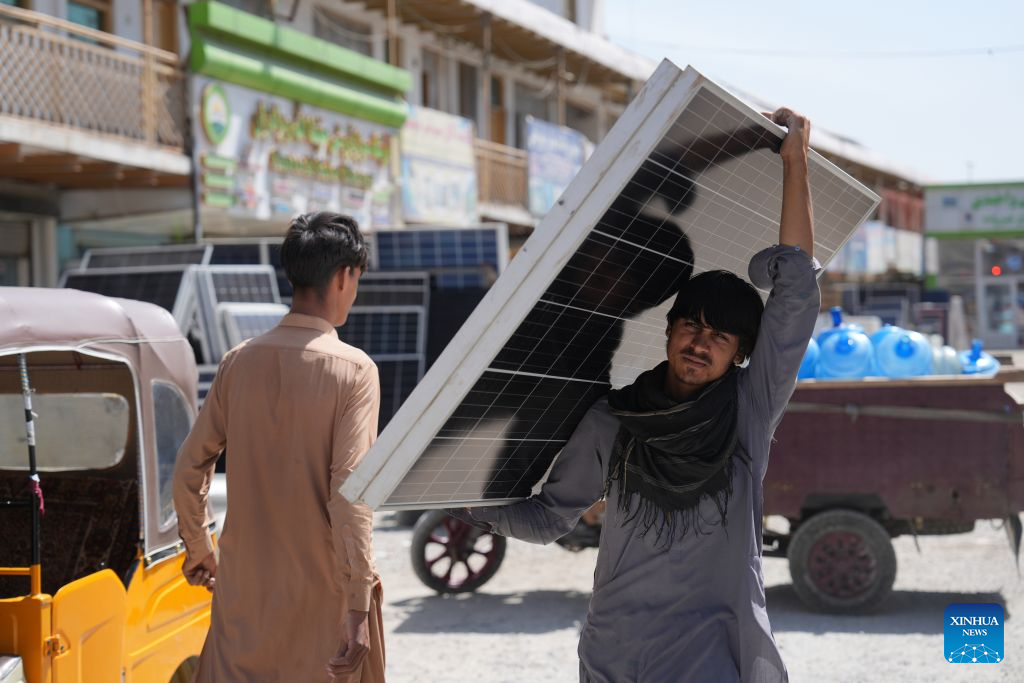
A man unloads solar panels from a truck outside a solar equipment store in Kabul, Afghanistan, July 29, 2026. (Photo by Saifurahman Safi/Xinhua)