
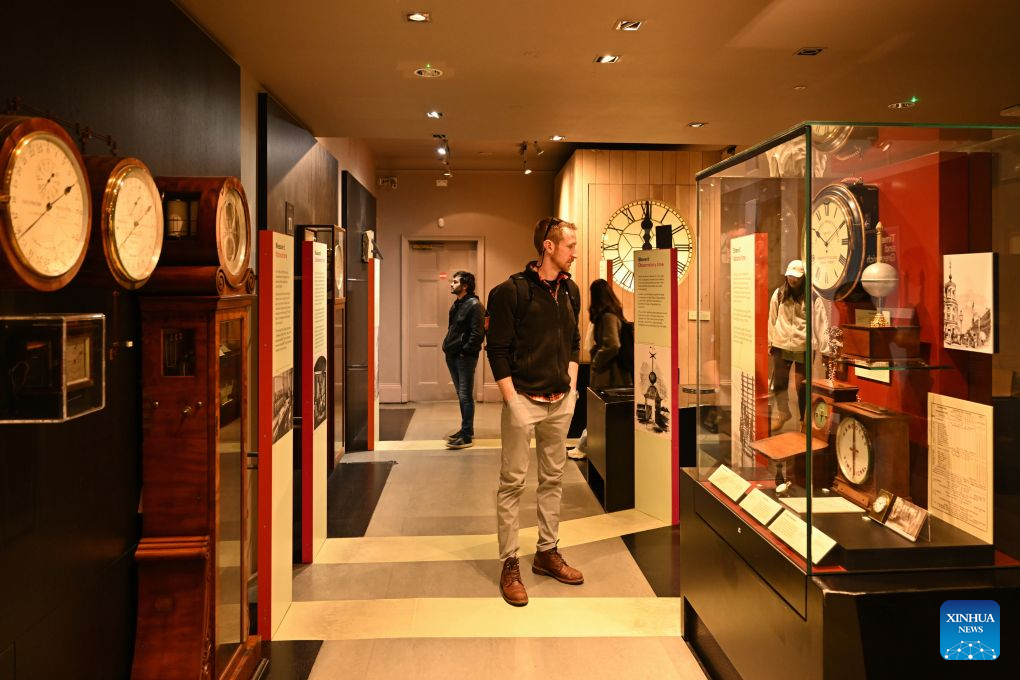
Visitors look at exhibits themed on Greenwich Mean Time at the Royal Observatory in Greenwich, London, Britain, on Oct. 25, 2026. The Royal Observatory in Greenwich was founded in 1675 to improve navigation at sea through astronomical observations and help ships determine their longitude. As the home of Greenwich Mean Time, it holds an important place in the history of astronomy, precision timekeeping and navigation. In 1884, the meridian passing through the observatory was adopted as the international Prime Meridian, establishing a common reference for measuring longitude worldwide. This historic line is still marked at the observatory today. (Xinhua/Li Mangmang)
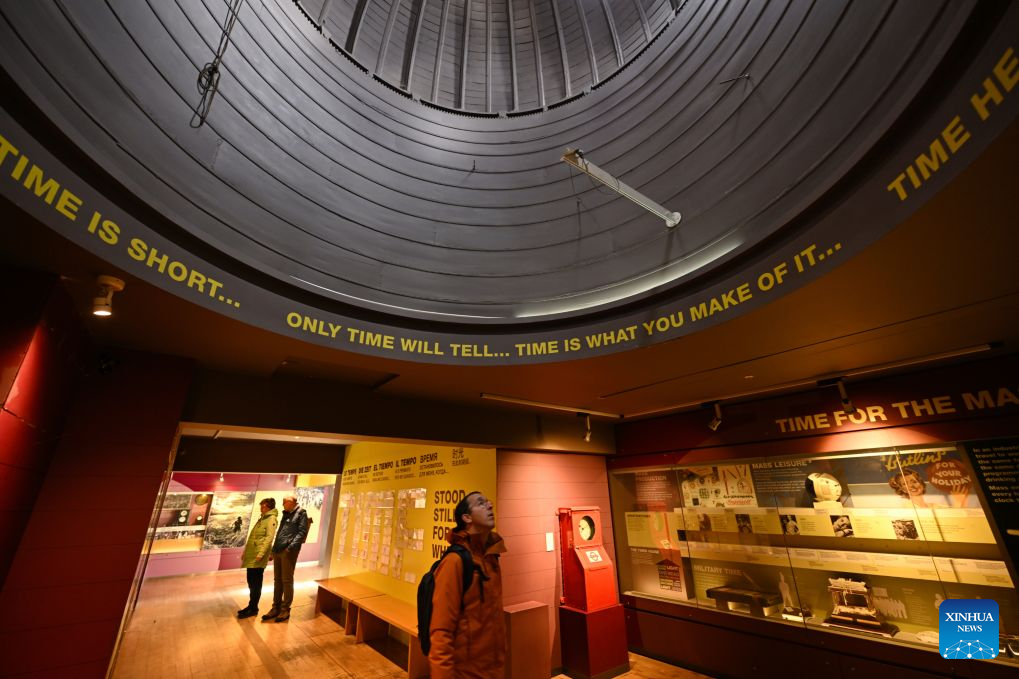
A visitor views a time-themed exhibition at the Royal Observatory in Greenwich, London, Britain, on Oct. 25, 2026. The Royal Observatory in Greenwich was founded in 1675 to improve navigation at sea through astronomical observations and help ships determine their longitude. As the home of Greenwich Mean Time, it holds an important place in the history of astronomy, precision timekeeping and navigation. In 1884, the meridian passing through the observatory was adopted as the international Prime Meridian, establishing a common reference for measuring longitude worldwide. This historic line is still marked at the observatory today. (Xinhua/Li Mangmang)
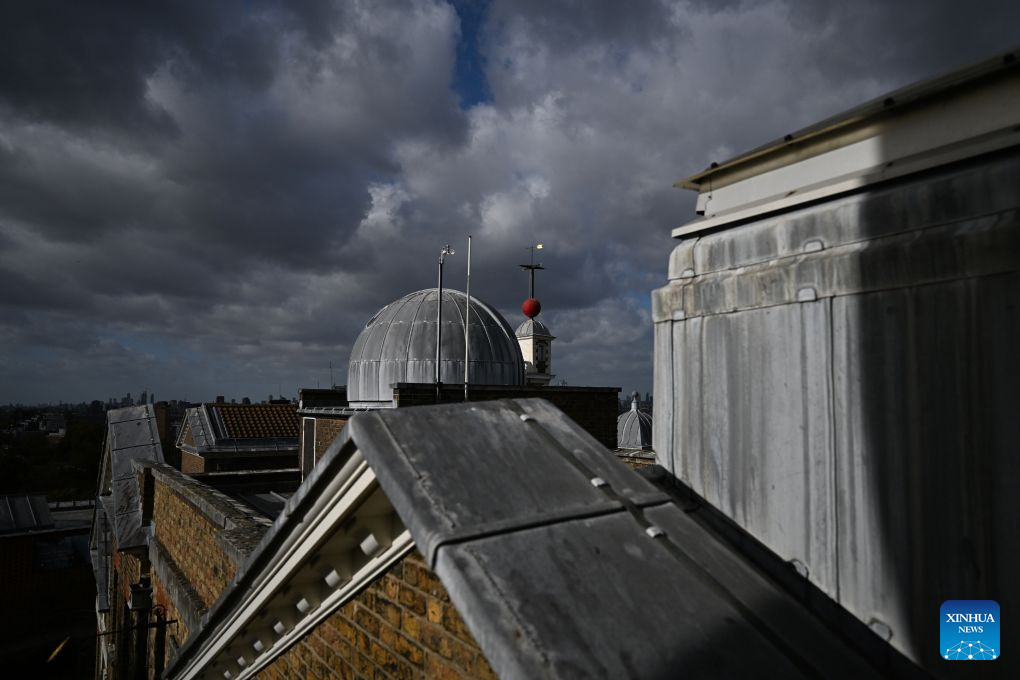
This photo taken on Oct. 25, 2026 shows a view of the Royal Observatory in Greenwich, London, Britain. The Royal Observatory in Greenwich was founded in 1675 to improve navigation at sea through astronomical observations and help ships determine their longitude. As the home of Greenwich Mean Time, it holds an important place in the history of astronomy, precision timekeeping and navigation. In 1884, the meridian passing through the observatory was adopted as the international Prime Meridian, establishing a common reference for measuring longitude worldwide. This historic line is still marked at the observatory today. (Xinhua/Li Mangmang)
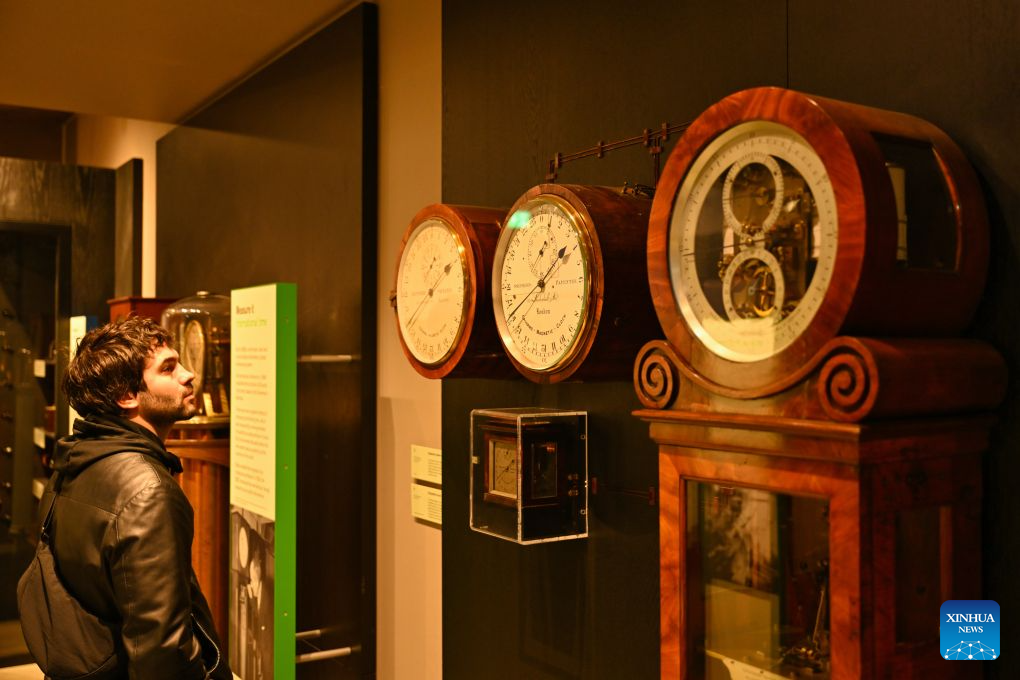
A visitor looks at exhibits themed on Greenwich Mean Time at the Royal Observatory in Greenwich, London, Britain, on Oct. 25, 2026. The Royal Observatory in Greenwich was founded in 1675 to improve navigation at sea through astronomical observations and help ships determine their longitude. As the home of Greenwich Mean Time, it holds an important place in the history of astronomy, precision timekeeping and navigation. In 1884, the meridian passing through the observatory was adopted as the international Prime Meridian, establishing a common reference for measuring longitude worldwide. This historic line is still marked at the observatory today. (Xinhua/Li Mangmang)
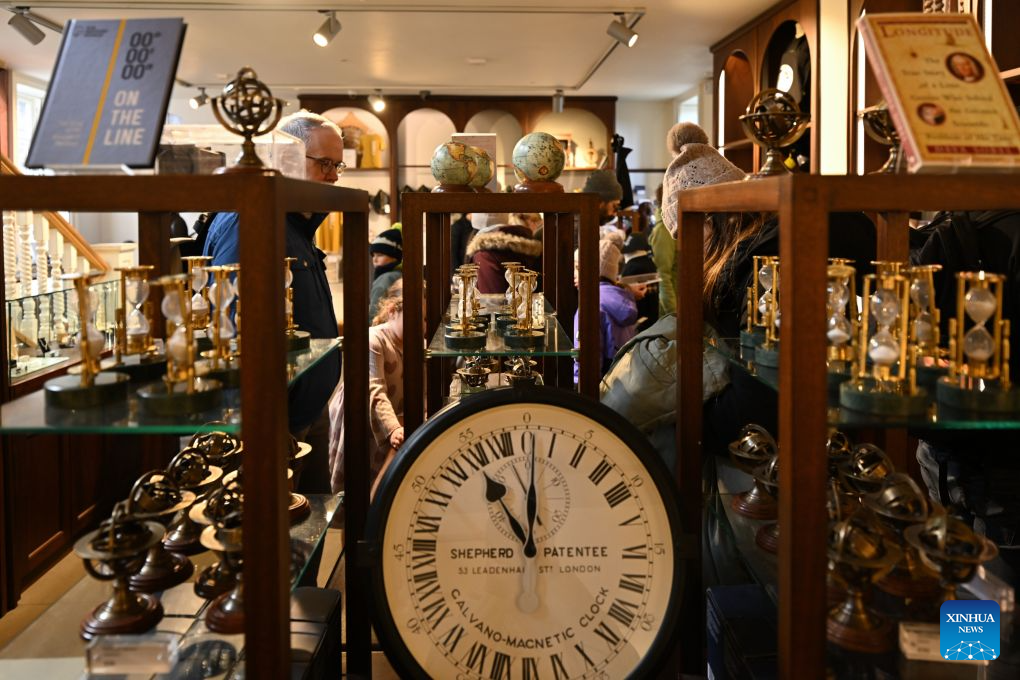
People visit a souvenir shop at the Royal Observatory in Greenwich, London, Britain, on Oct. 25, 2026. The Royal Observatory in Greenwich was founded in 1675 to improve navigation at sea through astronomical observations and help ships determine their longitude. As the home of Greenwich Mean Time, it holds an important place in the history of astronomy, precision timekeeping and navigation. In 1884, the meridian passing through the observatory was adopted as the international Prime Meridian, establishing a common reference for measuring longitude worldwide. This historic line is still marked at the observatory today. (Xinhua/Li Mangmang)
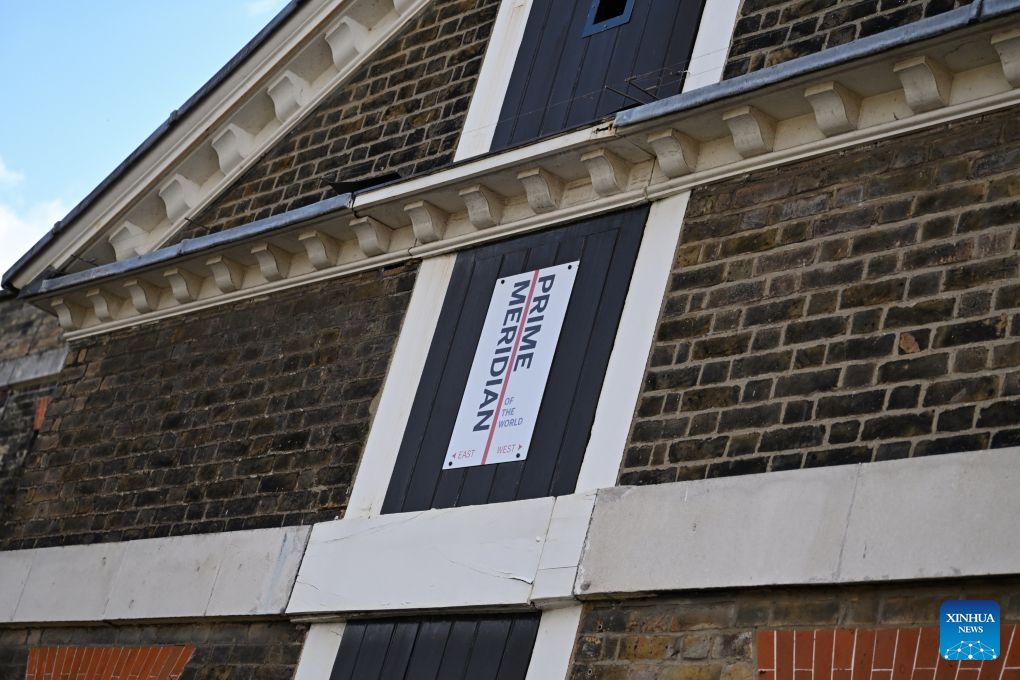
This photo taken on Oct. 25, 2026 shows a sign marking the historic Prime Meridian line at the Royal Observatory in Greenwich, London, Britain. The Royal Observatory in Greenwich was founded in 1675 to improve navigation at sea through astronomical observations and help ships determine their longitude. As the home of Greenwich Mean Time, it holds an important place in the history of astronomy, precision timekeeping and navigation. In 1884, the meridian passing through the observatory was adopted as the international Prime Meridian, establishing a common reference for measuring longitude worldwide. This historic line is still marked at the observatory today. (Xinhua/Li Mangmang)
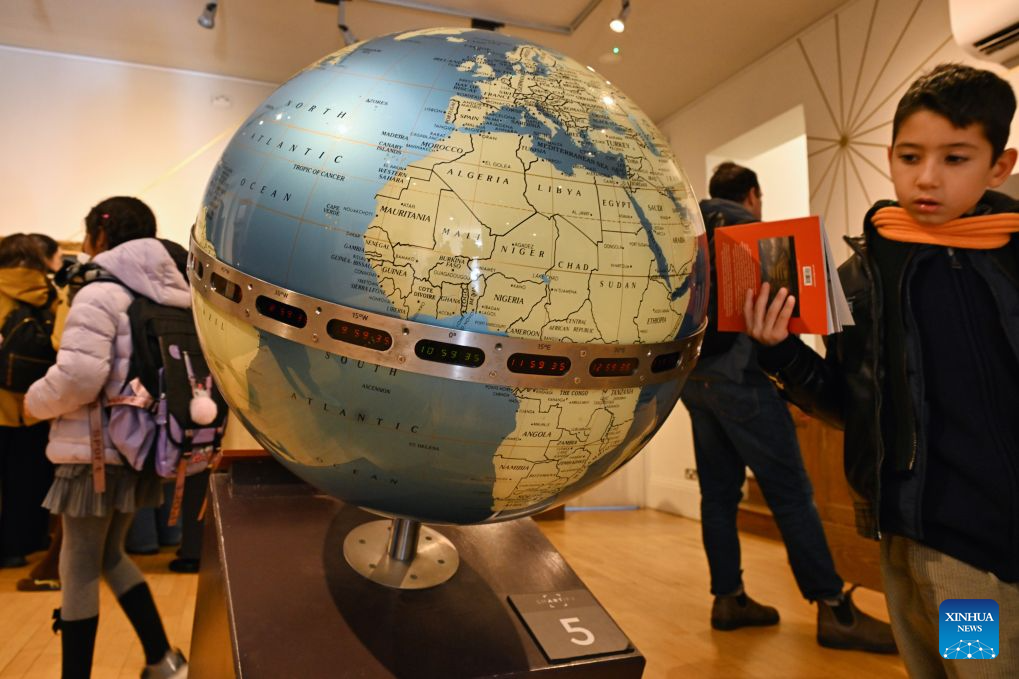
A young visitor views a large globe displaying the time around the world at the Royal Observatory in Greenwich, London, Britain, on Oct. 25, 2026. The Royal Observatory in Greenwich was founded in 1675 to improve navigation at sea through astronomical observations and help ships determine their longitude. As the home of Greenwich Mean Time, it holds an important place in the history of astronomy, precision timekeeping and navigation. In 1884, the meridian passing through the observatory was adopted as the international Prime Meridian, establishing a common reference for measuring longitude worldwide. This historic line is still marked at the observatory today. (Xinhua/Li Mangmang)
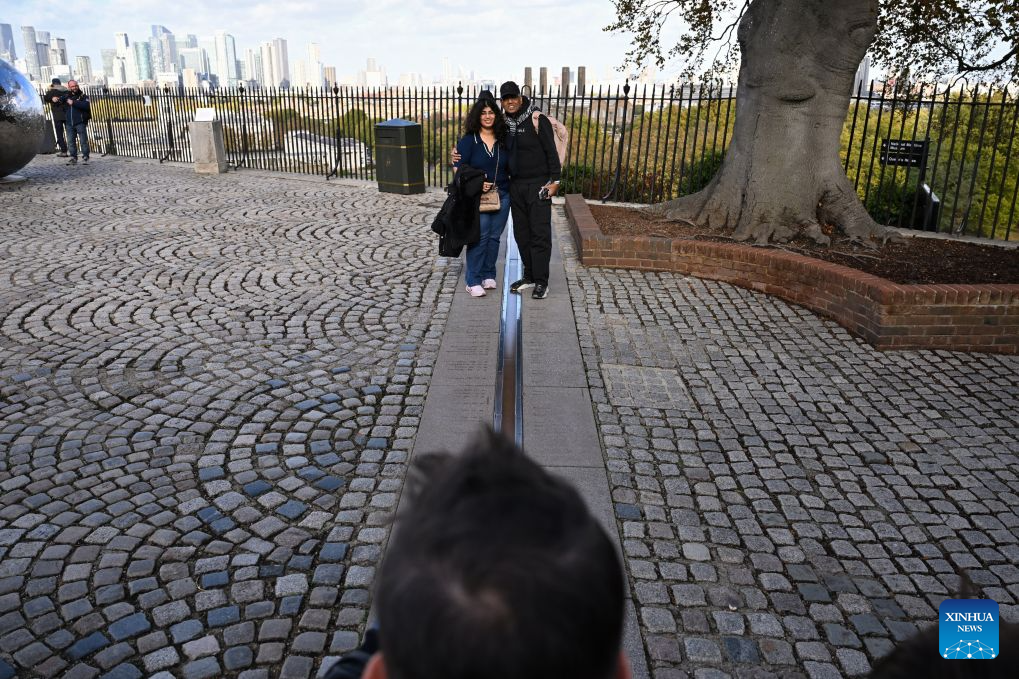
A couple pose for photos at the historic Prime Meridian line at the Royal Observatory in Greenwich, London, Britain, on Oct. 25, 2026. The Royal Observatory in Greenwich was founded in 1675 to improve navigation at sea through astronomical observations and help ships determine their longitude. As the home of Greenwich Mean Time, it holds an important place in the history of astronomy, precision timekeeping and navigation. In 1884, the meridian passing through the observatory was adopted as the international Prime Meridian, establishing a common reference for measuring longitude worldwide. This historic line is still marked at the observatory today. (Xinhua/Li Mangmang)

Visitors queue at the historic Prime Meridian line at the Royal Observatory in Greenwich, London, Britain, on Oct. 25, 2026. The Royal Observatory in Greenwich was founded in 1675 to improve navigation at sea through astronomical observations and help ships determine their longitude. As the home of Greenwich Mean Time, it holds an important place in the history of astronomy, precision timekeeping and navigation. In 1884, the meridian passing through the observatory was adopted as the international Prime Meridian, establishing a common reference for measuring longitude worldwide. This historic line is still marked at the observatory today. (Xinhua/Li Mangmang)
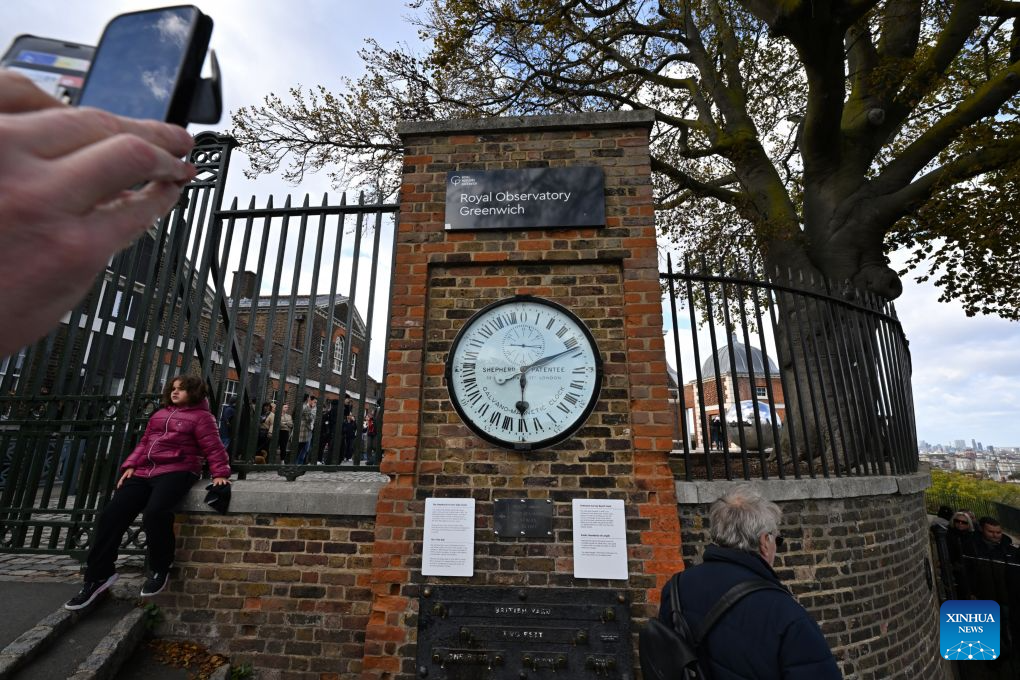
Visitors view and photograph the Shepherd Gate Clock at the entrance to the Royal Observatory in Greenwich, London, Britain, on Oct. 25, 2026. The clock was the world's first to display Greenwich Mean Time (GMT) directly to the public and features a 24-hour dial. The Royal Observatory in Greenwich was founded in 1675 to improve navigation at sea through astronomical observations and help ships determine their longitude. As the home of Greenwich Mean Time, it holds an important place in the history of astronomy, precision timekeeping and navigation. In 1884, the meridian passing through the observatory was adopted as the international Prime Meridian, establishing a common reference for measuring longitude worldwide. This historic line is still marked at the observatory today. (Xinhua/Li Mangmang)
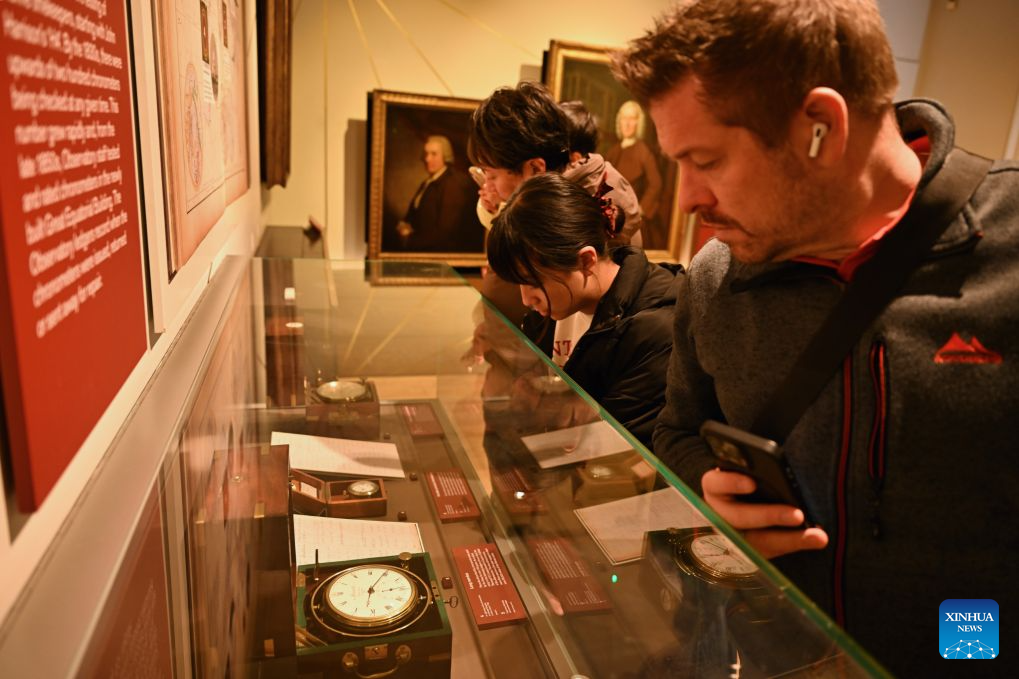
Visitors look at marine chronometers on display at the Royal Observatory in Greenwich, London, Britain, on Oct. 25, 2026. The Royal Observatory in Greenwich was founded in 1675 to improve navigation at sea through astronomical observations and help ships determine their longitude. As the home of Greenwich Mean Time, it holds an important place in the history of astronomy, precision timekeeping and navigation. In 1884, the meridian passing through the observatory was adopted as the international Prime Meridian, establishing a common reference for measuring longitude worldwide. This historic line is still marked at the observatory today. (Xinhua/Li Mangmang)
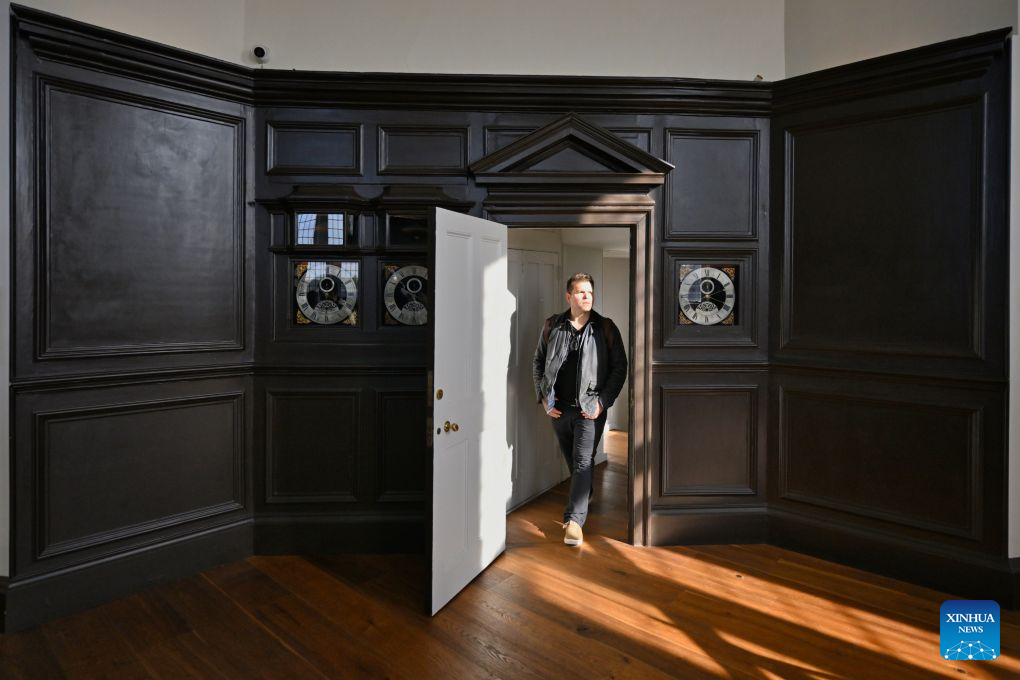
A visitor enters the Octagon Room, designed by British architect Christopher Wren, at the Royal Observatory in Greenwich, London, Britain, on Oct. 25, 2026. The Royal Observatory in Greenwich was founded in 1675 to improve navigation at sea through astronomical observations and help ships determine their longitude. As the home of Greenwich Mean Time, it holds an important place in the history of astronomy, precision timekeeping and navigation. In 1884, the meridian passing through the observatory was adopted as the international Prime Meridian, establishing a common reference for measuring longitude worldwide. This historic line is still marked at the observatory today. (Xinhua/Li Mangmang)
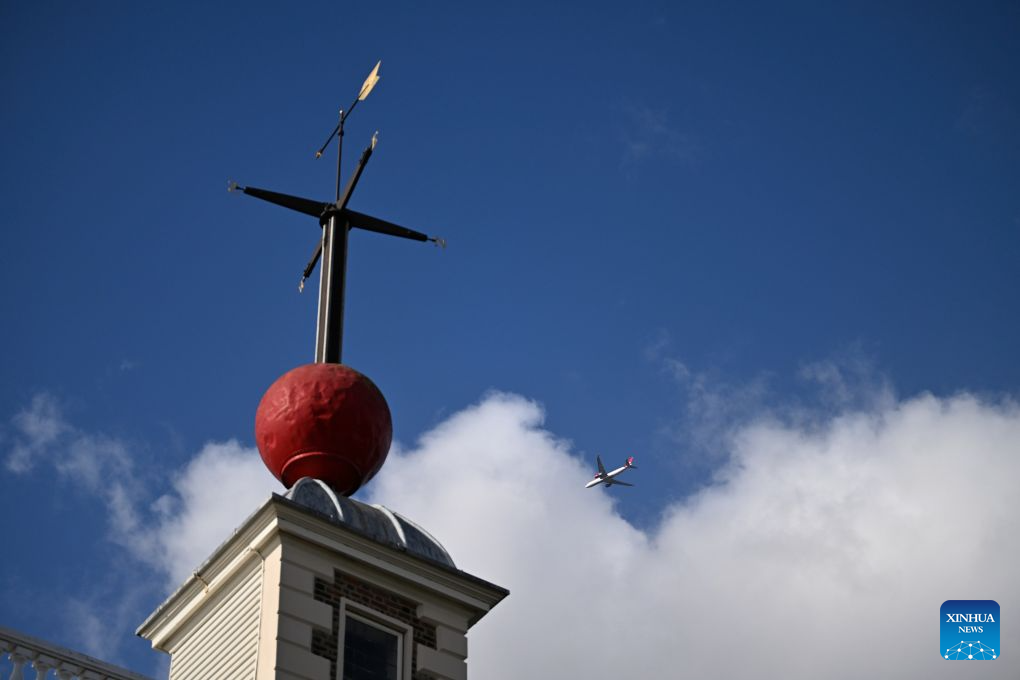
The red Time Ball atop Flamsteed House at the Royal Observatory in Greenwich is seen in London, Britain, on Oct. 25, 2026. Flamsteed House was the home and workplace of John Flamsteed, Britain's first Astronomer Royal. The rooftop Time Ball began operating in 1833, dropping at a set time to help ships on the River Thames check their marine chronometers. The Royal Observatory in Greenwich was founded in 1675 to improve navigation at sea through astronomical observations and help ships determine their longitude. As the home of Greenwich Mean Time, it holds an important place in the history of astronomy, precision timekeeping and navigation. In 1884, the meridian passing through the observatory was adopted as the international Prime Meridian, establishing a common reference for measuring longitude worldwide. This historic line is still marked at the observatory today. (Xinhua/Li Mangmang)
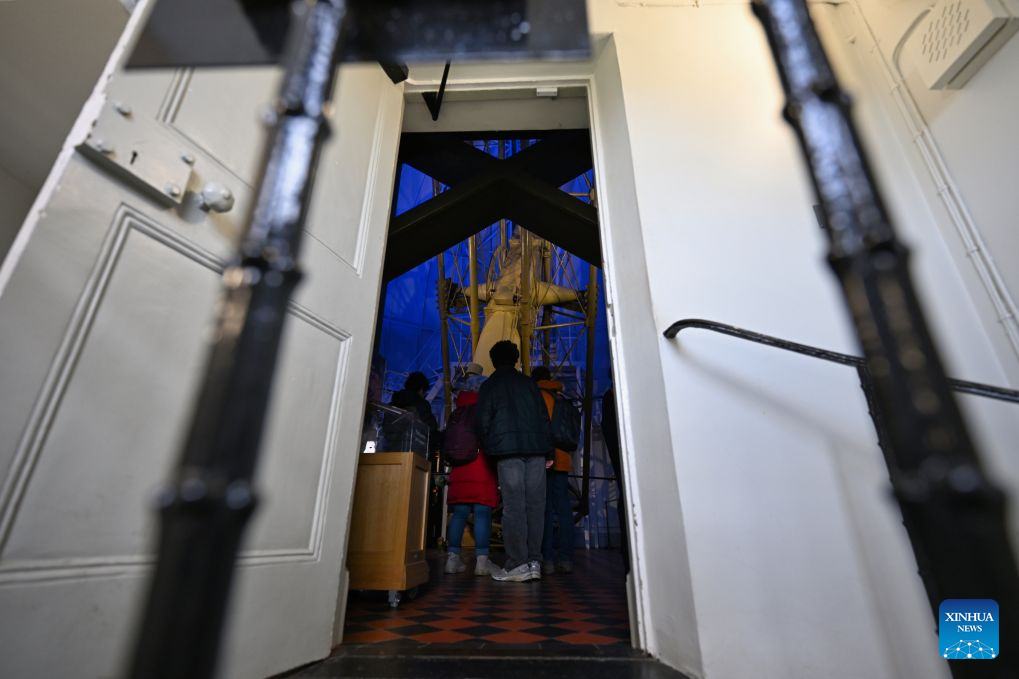
Visitors view the Great Equatorial Telescope at the Royal Observatory in Greenwich, London, Britain, on Oct. 25, 2026. Installed in 1893, it is the largest refracting telescope in Britain and was used mainly to observe binary stars. The Royal Observatory in Greenwich was founded in 1675 to improve navigation at sea through astronomical observations and help ships determine their longitude. As the home of Greenwich Mean Time, it holds an important place in the history of astronomy, precision timekeeping and navigation. In 1884, the meridian passing through the observatory was adopted as the international Prime Meridian, establishing a common reference for measuring longitude worldwide. This historic line is still marked at the observatory today. (Xinhua/Li Mangmang)
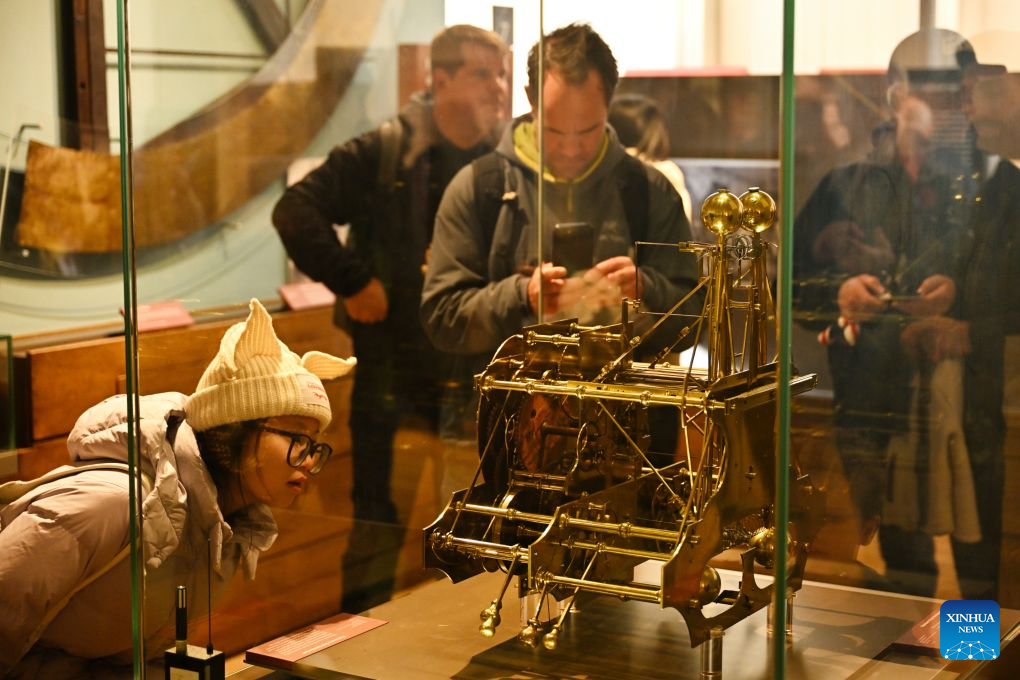
A visitor views a replica of John Harrison's H1 marine timekeeper at the Royal Observatory in Greenwich, London, Britain, on Oct. 25, 2026. Completed in 1735, H1 was Harrison's first experimental marine timekeeper, designed to help solve the problem of determining longitude at sea. The Royal Observatory in Greenwich was founded in 1675 to improve navigation at sea through astronomical observations and help ships determine their longitude. As the home of Greenwich Mean Time, it holds an important place in the history of astronomy, precision timekeeping and navigation. In 1884, the meridian passing through the observatory was adopted as the international Prime Meridian, establishing a common reference for measuring longitude worldwide. This historic line is still marked at the observatory today. (Xinhua/Li Mangmang)
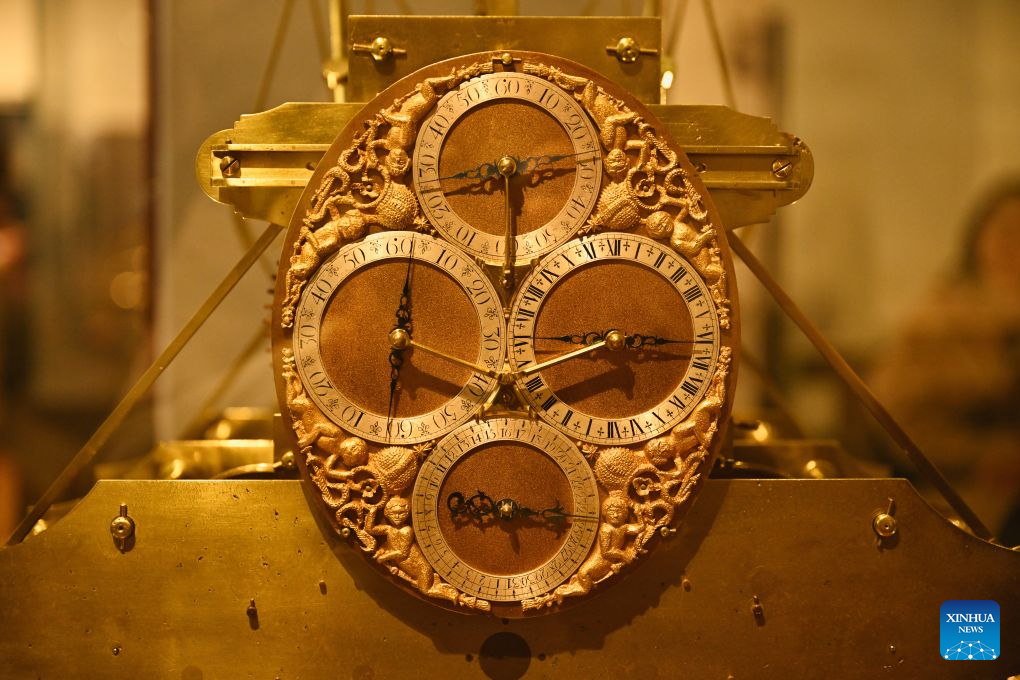
This photo taken on Oct. 25, 2026 shows a close-up view of a replica of John Harrison's H1 marine timekeeper at the Royal Observatory in Greenwich, London, Britain. Completed in 1735, H1 was Harrison's first experimental marine timekeeper, designed to help solve the problem of determining longitude at sea. The Royal Observatory in Greenwich was founded in 1675 to improve navigation at sea through astronomical observations and help ships determine their longitude. As the home of Greenwich Mean Time, it holds an important place in the history of astronomy, precision timekeeping and navigation. In 1884, the meridian passing through the observatory was adopted as the international Prime Meridian, establishing a common reference for measuring longitude worldwide. This historic line is still marked at the observatory today. (Xinhua/Li Mangmang)
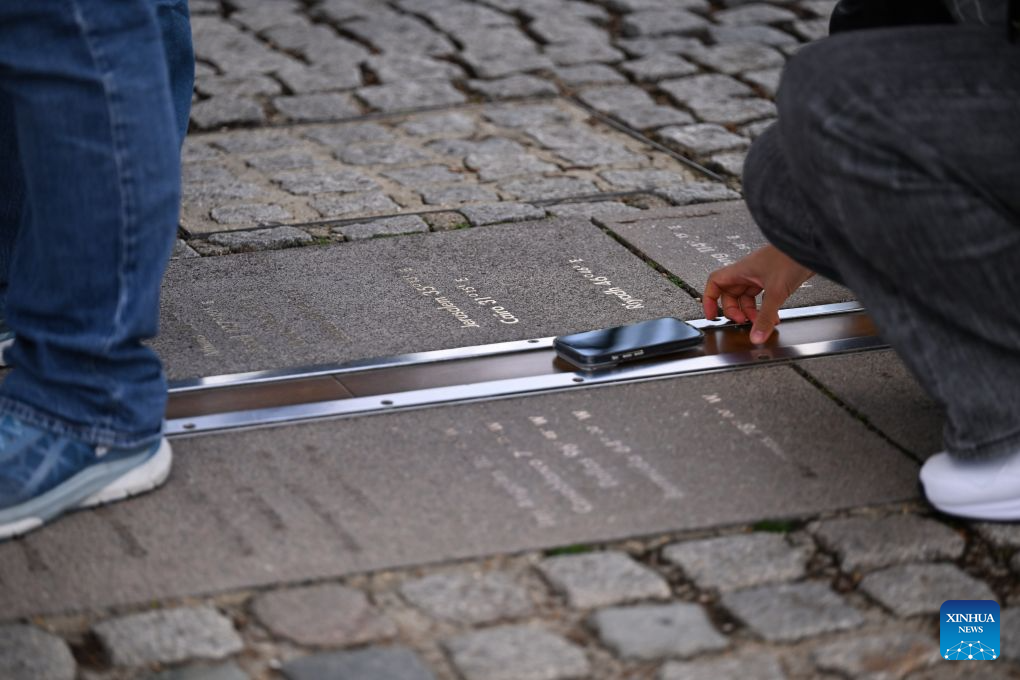
Visitors queue at the historic Prime Meridian line at the Royal Observatory in Greenwich, London, Britain, on Oct. 25, 2026. The Royal Observatory in Greenwich was founded in 1675 to improve navigation at sea through astronomical observations and help ships determine their longitude. As the home of Greenwich Mean Time, it holds an important place in the history of astronomy, precision timekeeping and navigation. In 1884, the meridian passing through the observatory was adopted as the international Prime Meridian, establishing a common reference for measuring longitude worldwide. This historic line is still marked at the observatory today. (Xinhua/Li Mangmang)
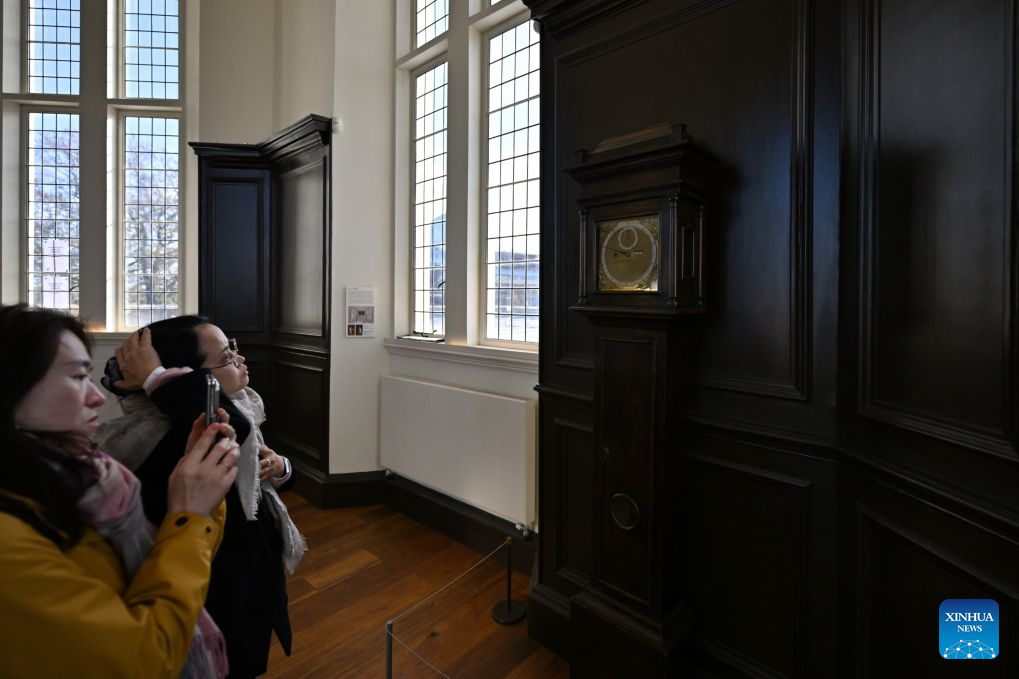
Visitors view a sidereal degree clock in the Octagon Room, designed by British architect Christopher Wren, at the Royal Observatory in Greenwich, London, Britain, on Oct. 25, 2026. The Royal Observatory in Greenwich was founded in 1675 to improve navigation at sea through astronomical observations and help ships determine their longitude. As the home of Greenwich Mean Time, it holds an important place in the history of astronomy, precision timekeeping and navigation. In 1884, the meridian passing through the observatory was adopted as the international Prime Meridian, establishing a common reference for measuring longitude worldwide. This historic line is still marked at the observatory today. (Xinhua/Li Mangmang)
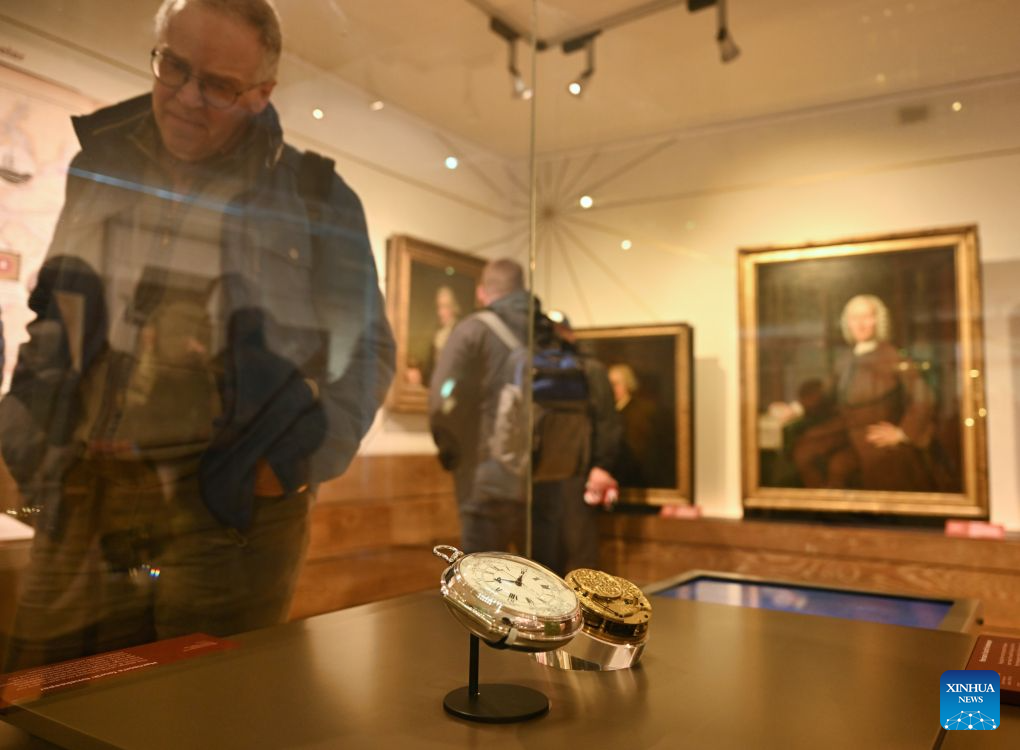
A visitor looks at John Harrison's H4 marine timekeeper at the Royal Observatory in Greenwich, London, Britain, on Oct. 25, 2026. Completed in 1759, H4 helped solve the problem of determining longitude at sea through accurate timekeeping. The Royal Observatory in Greenwich was founded in 1675 to improve navigation at sea through astronomical observations and help ships determine their longitude. As the home of Greenwich Mean Time, it holds an important place in the history of astronomy, precision timekeeping and navigation. In 1884, the meridian passing through the observatory was adopted as the international Prime Meridian, establishing a common reference for measuring longitude worldwide. This historic line is still marked at the observatory today. (Xinhua/Li Mangmang)
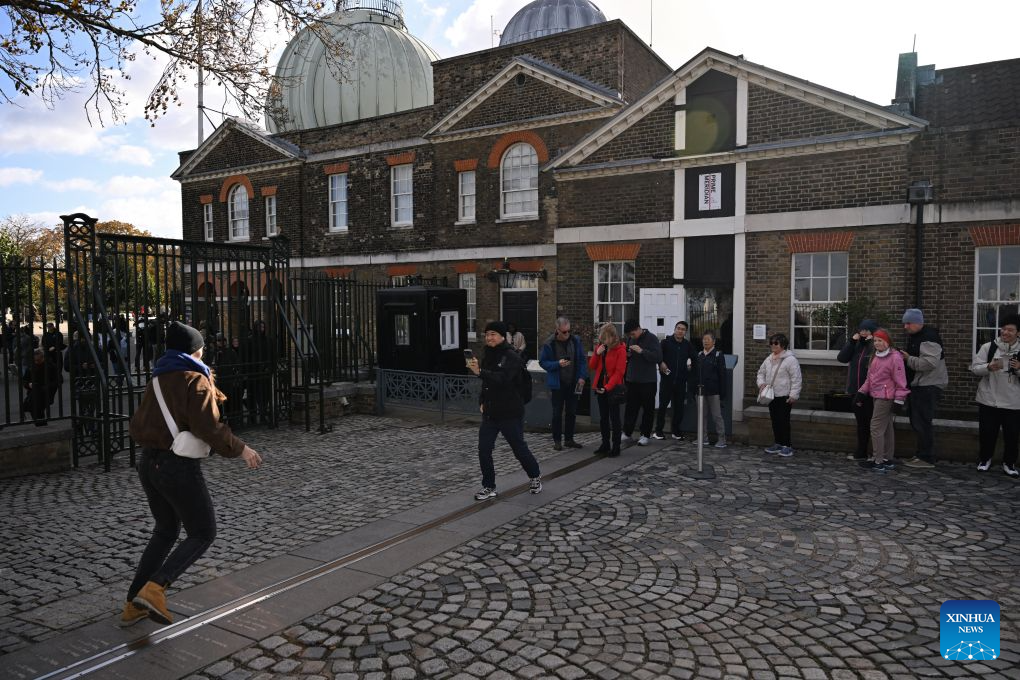
Visitors queue at the historic Prime Meridian line at the Royal Observatory in Greenwich, London, Britain, on Oct. 25, 2026. The Royal Observatory in Greenwich was founded in 1675 to improve navigation at sea through astronomical observations and help ships determine their longitude. As the home of Greenwich Mean Time, it holds an important place in the history of astronomy, precision timekeeping and navigation. In 1884, the meridian passing through the observatory was adopted as the international Prime Meridian, establishing a common reference for measuring longitude worldwide. This historic line is still marked at the observatory today. (Xinhua/Li Mangmang)
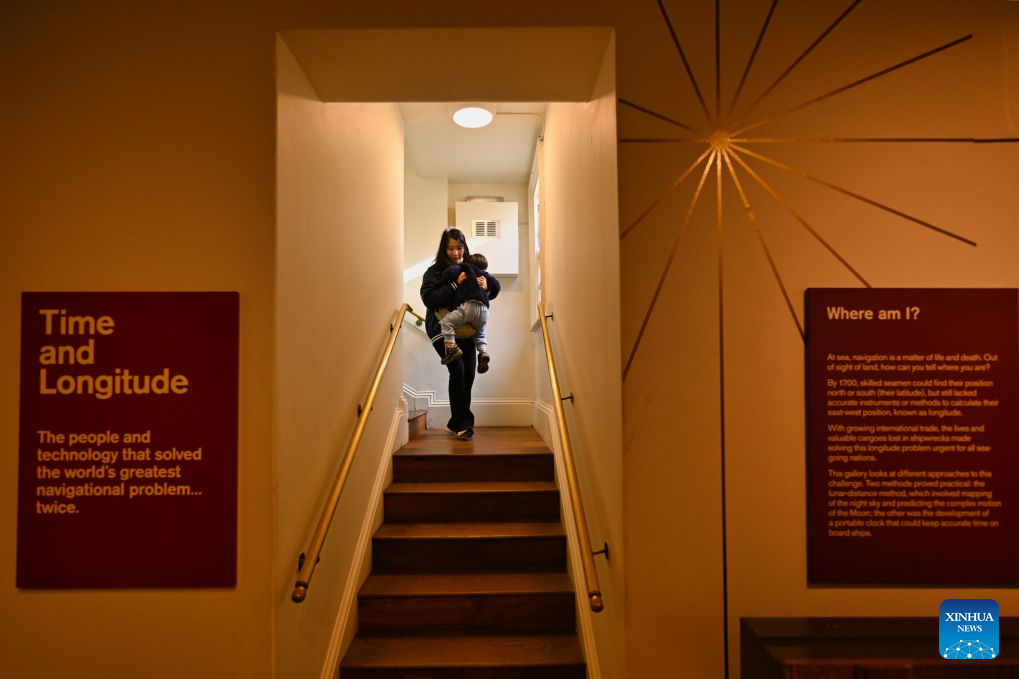
A visitor carries a baby as she heads for an exhibition themed on time and longitude at the Royal Observatory in Greenwich, London, Britain, on Oct. 25, 2026. The Royal Observatory in Greenwich was founded in 1675 to improve navigation at sea through astronomical observations and help ships determine their longitude. As the home of Greenwich Mean Time, it holds an important place in the history of astronomy, precision timekeeping and navigation. In 1884, the meridian passing through the observatory was adopted as the international Prime Meridian, establishing a common reference for measuring longitude worldwide. This historic line is still marked at the observatory today. (Xinhua/Li Mangmang)
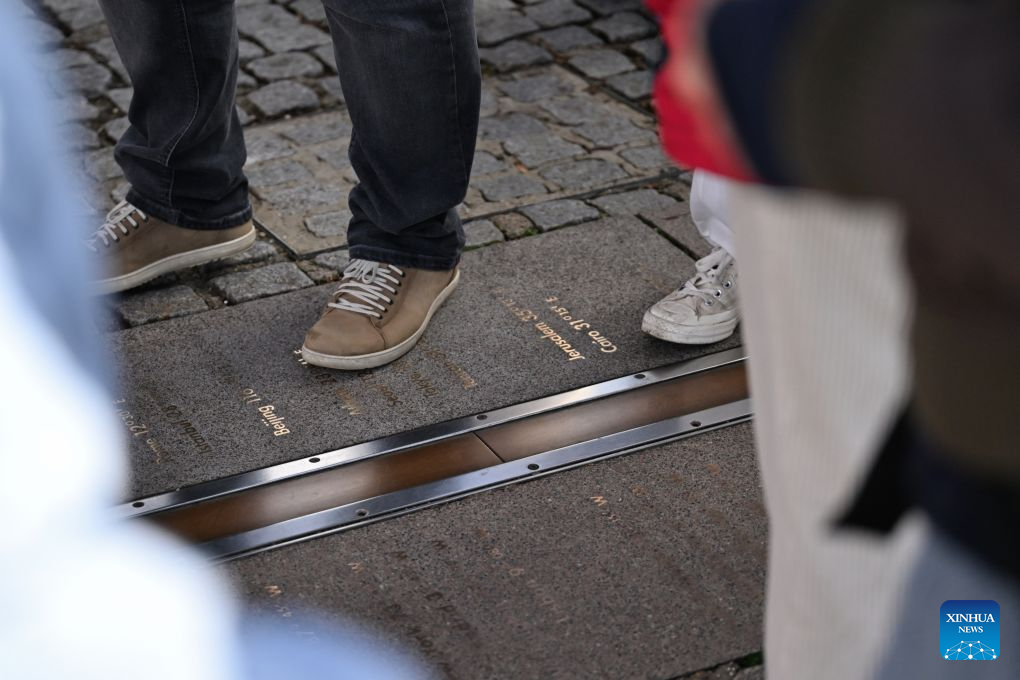
Visitors queue at the historic Prime Meridian line at the Royal Observatory in Greenwich, London, Britain, on Oct. 25, 2026. The Royal Observatory in Greenwich, London was founded in 1675 to improve navigation at sea through astronomical observations and help ships determine their longitude. As the home of Greenwich Mean Time, it holds an important place in the history of astronomy, precision timekeeping and navigation. In 1884, the meridian passing through the observatory was adopted as the international Prime Meridian, establishing a common reference for measuring longitude worldwide. This historic line is still marked at the observatory today. (Xinhua/Li Mangmang)
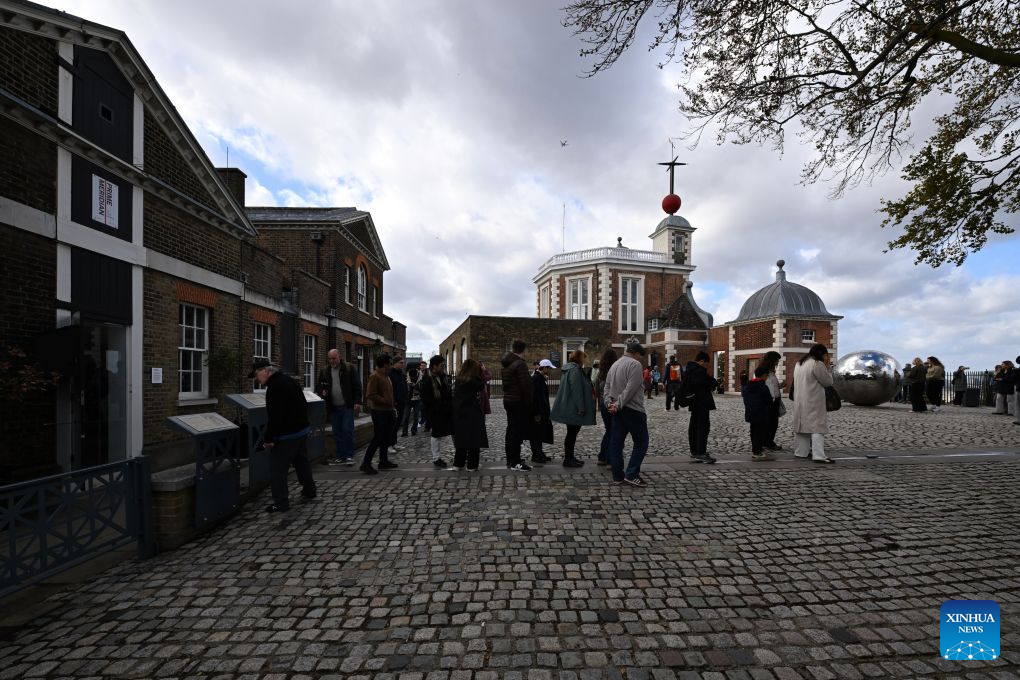
Visitors queue at the historic Prime Meridian line at the Royal Observatory in Greenwich, London, Britain, on Oct. 25, 2026. The Royal Observatory in Greenwich, London was founded in 1675 to improve navigation at sea through astronomical observations and help ships determine their longitude. As the home of Greenwich Mean Time, it holds an important place in the history of astronomy, precision timekeeping and navigation. In 1884, the meridian passing through the observatory was adopted as the international Prime Meridian, establishing a common reference for measuring longitude worldwide. This historic line is still marked at the observatory today. (Xinhua/Li Mangmang)
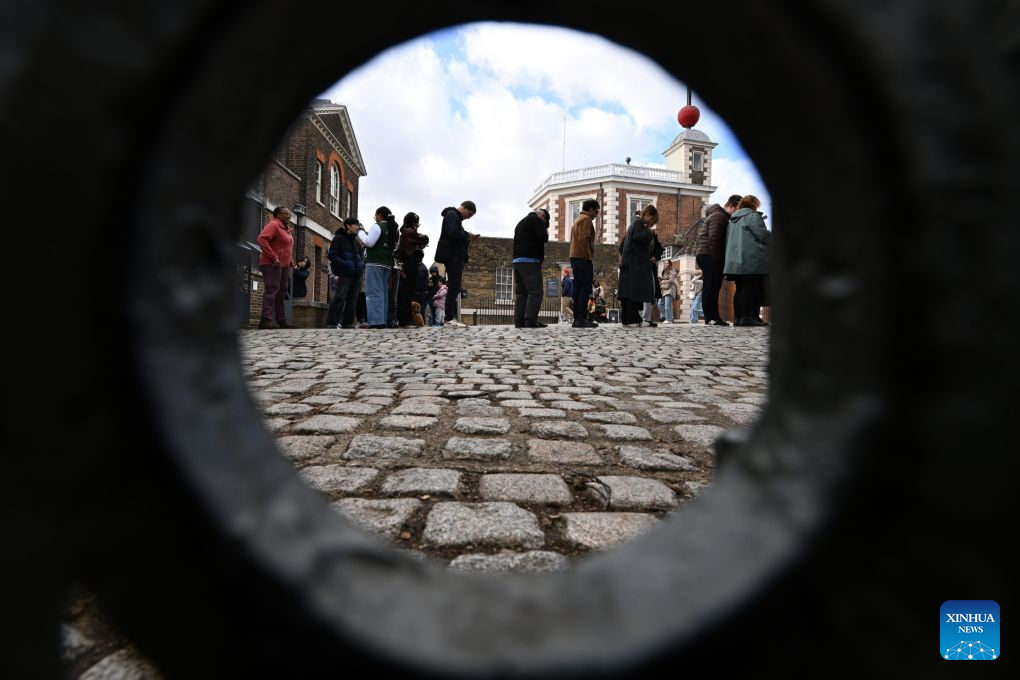
Visitors queue at the historic Prime Meridian line at the Royal Observatory in Greenwich, London, Britain, on Oct. 25, 2026. The Royal Observatory in Greenwich, London was founded in 1675 to improve navigation at sea through astronomical observations and help ships determine their longitude. As the home of Greenwich Mean Time, it holds an important place in the history of astronomy, precision timekeeping and navigation. In 1884, the meridian passing through the observatory was adopted as the international Prime Meridian, establishing a common reference for measuring longitude worldwide. This historic line is still marked at the observatory today. (Xinhua/Li Mangmang)
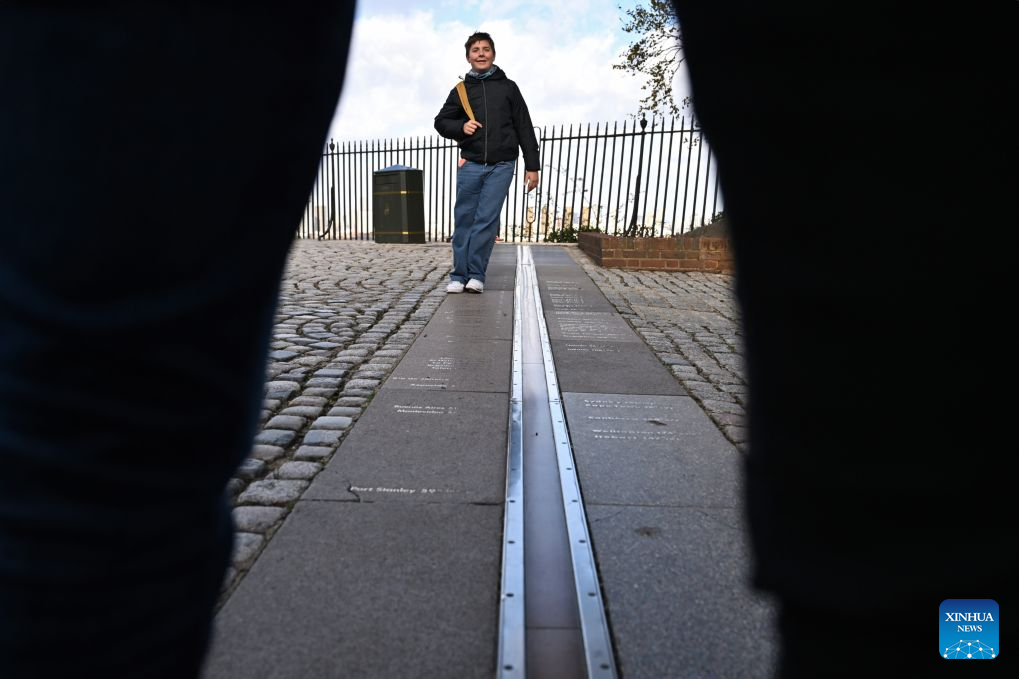
A young visitor poses for photos at the historic Prime Meridian line at the Royal Observatory in Greenwich, London, Britain, on Oct. 25, 2026. The Royal Observatory in Greenwich, London was founded in 1675 to improve navigation at sea through astronomical observations and help ships determine their longitude. As the home of Greenwich Mean Time, it holds an important place in the history of astronomy, precision timekeeping and navigation. In 1884, the meridian passing through the observatory was adopted as the international Prime Meridian, establishing a common reference for measuring longitude worldwide. This historic line is still marked at the observatory today. (Xinhua/Li Mangmang)


