
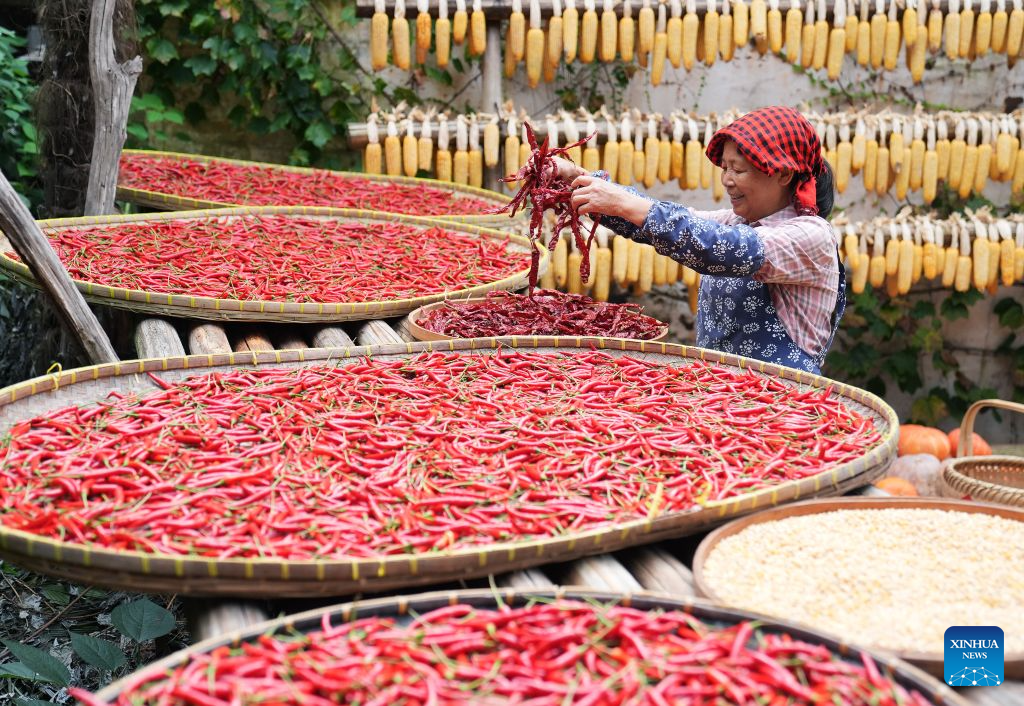
Cao Fudi dries chili peppers at Huangling scenic area in Wuyuan County, east China's Jiangxi Province, Sept. 22, 2026.
Cao Fudi, a 64-year-old villager, now works at the Huangling scenic area demonstrating Shaiqiu, a traditional practice of sun-drying harvested crops in autumn. More than a decade ago, Cao and her family lived in an old house on the mountain, relying mainly on farming and a small grocery store for a living.
In 2009, Huangling began a preservation-focused development program that relocated villagers to new homes while preserving the old village and traditional houses for tourism. Cao's family and other villagers moved to the newly built Huangling New Village at the foot of the mountain in 2011. Three years later, the Huangling scenic area opened, and Shaiqiu gradually became one of its attractions.
Tourism has since transformed Cao's livelihood. In 2020, a tourism company hired Cao to demonstrate Shaiqiu, giving her a stable job close to home. As more tourists arrived, business at the family's grocery store improved. Together with dividends from the local tourism industry, the family's annual income has grown to more than 300,000 yuan (about 44,706 U.S. dollars).
The tourism boom has also created jobs for more than 700 villagers from Huangling and nearby areas. With more local opportunities, Cao's son and daughter-in-law, who had previously worked away from home, returned to work in the village, allowing the family to live together again. (Xinhua/Wan Xiang)
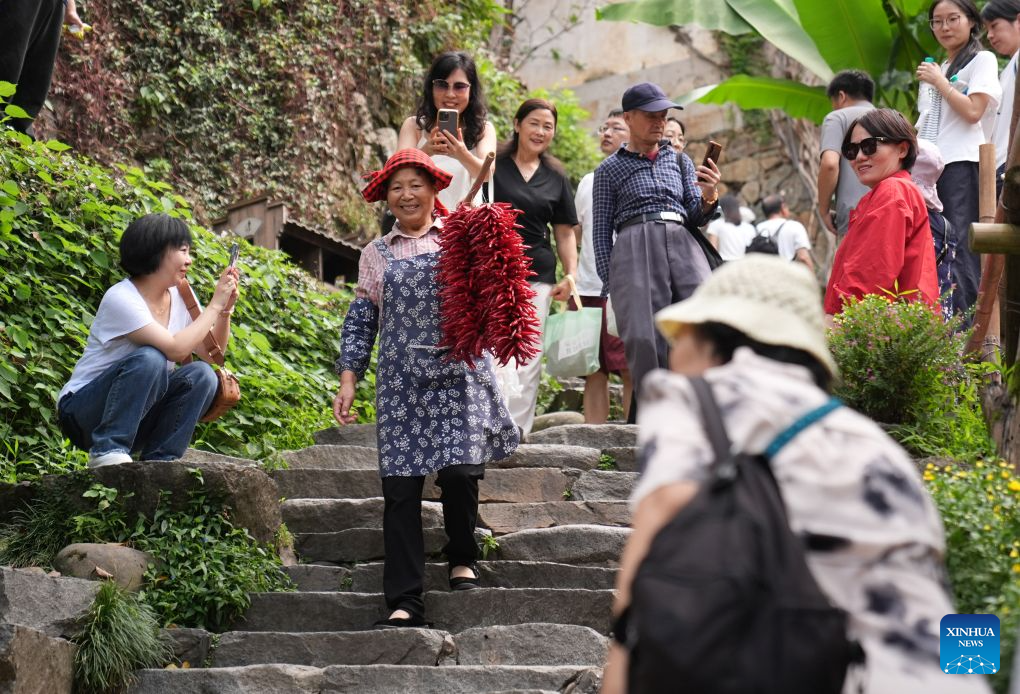
Cao Fudi carries chili peppers for drying at Huangling scenic area in Wuyuan County, east China's Jiangxi Province, Sept. 22, 2026.
Cao Fudi, a 64-year-old villager, now works at the Huangling scenic area demonstrating Shaiqiu, a traditional practice of sun-drying harvested crops in autumn. More than a decade ago, Cao and her family lived in an old house on the mountain, relying mainly on farming and a small grocery store for a living.
In 2009, Huangling began a preservation-focused development program that relocated villagers to new homes while preserving the old village and traditional houses for tourism. Cao's family and other villagers moved to the newly built Huangling New Village at the foot of the mountain in 2011. Three years later, the Huangling scenic area opened, and Shaiqiu gradually became one of its attractions.
Tourism has since transformed Cao's livelihood. In 2020, a tourism company hired Cao to demonstrate Shaiqiu, giving her a stable job close to home. As more tourists arrived, business at the family's grocery store improved. Together with dividends from the local tourism industry, the family's annual income has grown to more than 300,000 yuan (about 44,706 U.S. dollars).
The tourism boom has also created jobs for more than 700 villagers from Huangling and nearby areas. With more local opportunities, Cao's son and daughter-in-law, who had previously worked away from home, returned to work in the village, allowing the family to live together again. (Xinhua/Wan Xiang)
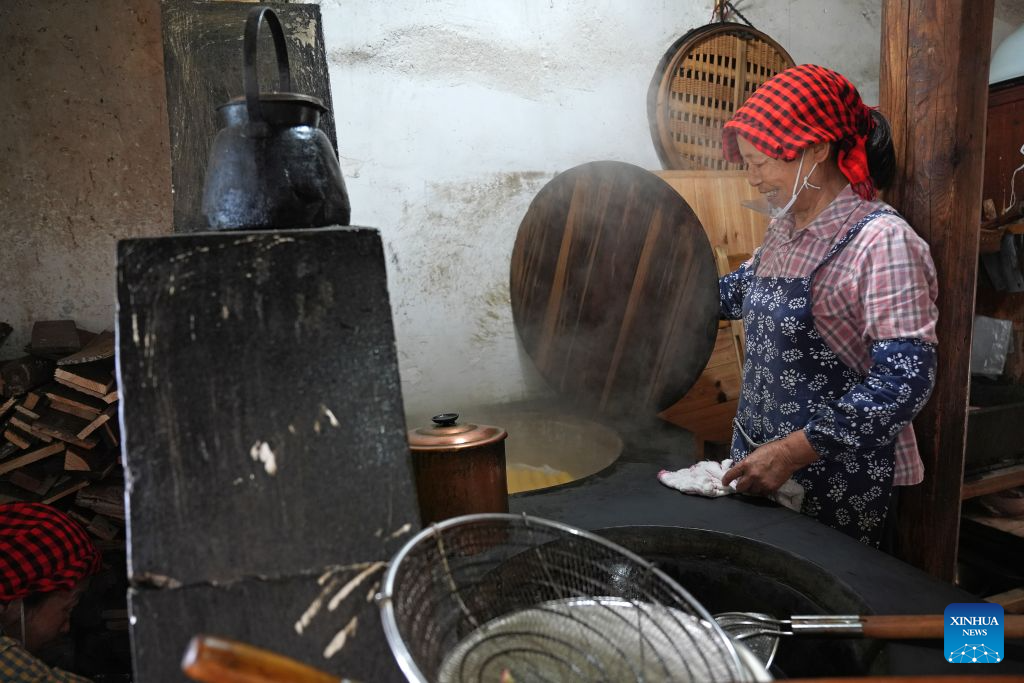
Cao Fudi makes sweet potato chips at Huangling scenic area in Wuyuan County, east China's Jiangxi Province, Sept. 22, 2026.
Cao Fudi, a 64-year-old villager, now works at the Huangling scenic area demonstrating Shaiqiu, a traditional practice of sun-drying harvested crops in autumn. More than a decade ago, Cao and her family lived in an old house on the mountain, relying mainly on farming and a small grocery store for a living.
In 2009, Huangling began a preservation-focused development program that relocated villagers to new homes while preserving the old village and traditional houses for tourism. Cao's family and other villagers moved to the newly built Huangling New Village at the foot of the mountain in 2011. Three years later, the Huangling scenic area opened, and Shaiqiu gradually became one of its attractions.
Tourism has since transformed Cao's livelihood. In 2020, a tourism company hired Cao to demonstrate Shaiqiu, giving her a stable job close to home. As more tourists arrived, business at the family's grocery store improved. Together with dividends from the local tourism industry, the family's annual income has grown to more than 300,000 yuan (about 44,706 U.S. dollars).
The tourism boom has also created jobs for more than 700 villagers from Huangling and nearby areas. With more local opportunities, Cao's son and daughter-in-law, who had previously worked away from home, returned to work in the village, allowing the family to live together again. (Xinhua/Wan Xiang)
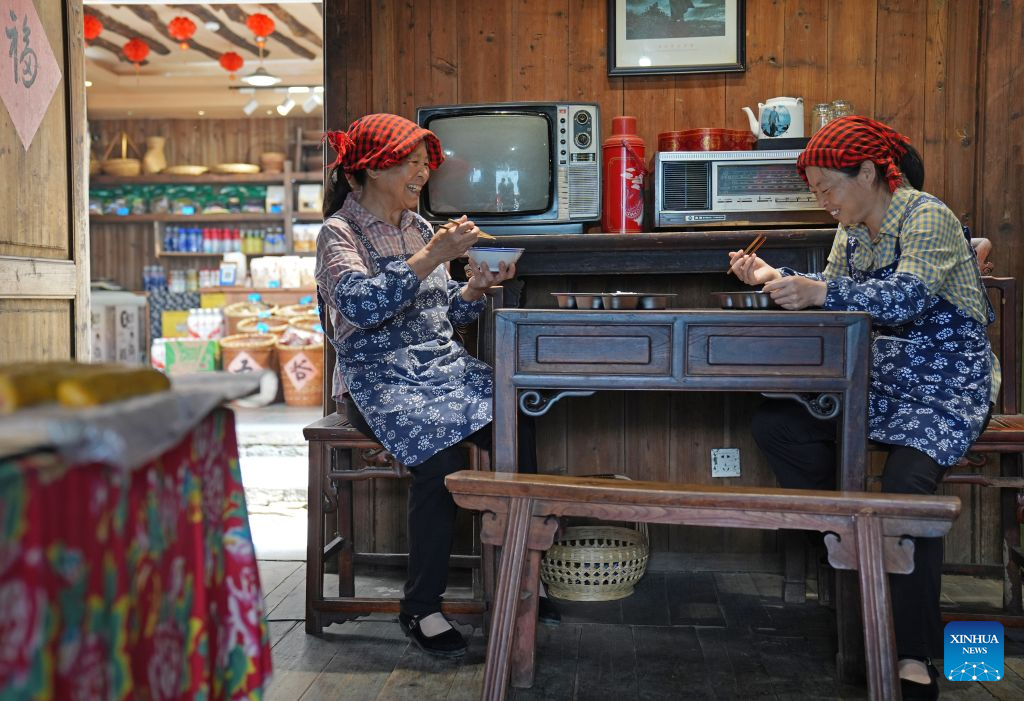
Cao Fudi (L) has a meal with a colleague at Huangling scenic area in Wuyuan County, east China's Jiangxi Province, Sept. 22, 2026.
Cao Fudi, a 64-year-old villager, now works at the Huangling scenic area demonstrating Shaiqiu, a traditional practice of sun-drying harvested crops in autumn. More than a decade ago, Cao and her family lived in an old house on the mountain, relying mainly on farming and a small grocery store for a living.
In 2009, Huangling began a preservation-focused development program that relocated villagers to new homes while preserving the old village and traditional houses for tourism. Cao's family and other villagers moved to the newly built Huangling New Village at the foot of the mountain in 2011. Three years later, the Huangling scenic area opened, and Shaiqiu gradually became one of its attractions.
Tourism has since transformed Cao's livelihood. In 2020, a tourism company hired Cao to demonstrate Shaiqiu, giving her a stable job close to home. As more tourists arrived, business at the family's grocery store improved. Together with dividends from the local tourism industry, the family's annual income has grown to more than 300,000 yuan (about 44,706 U.S. dollars).
The tourism boom has also created jobs for more than 700 villagers from Huangling and nearby areas. With more local opportunities, Cao's son and daughter-in-law, who had previously worked away from home, returned to work in the village, allowing the family to live together again. (Xinhua/Wan Xiang)
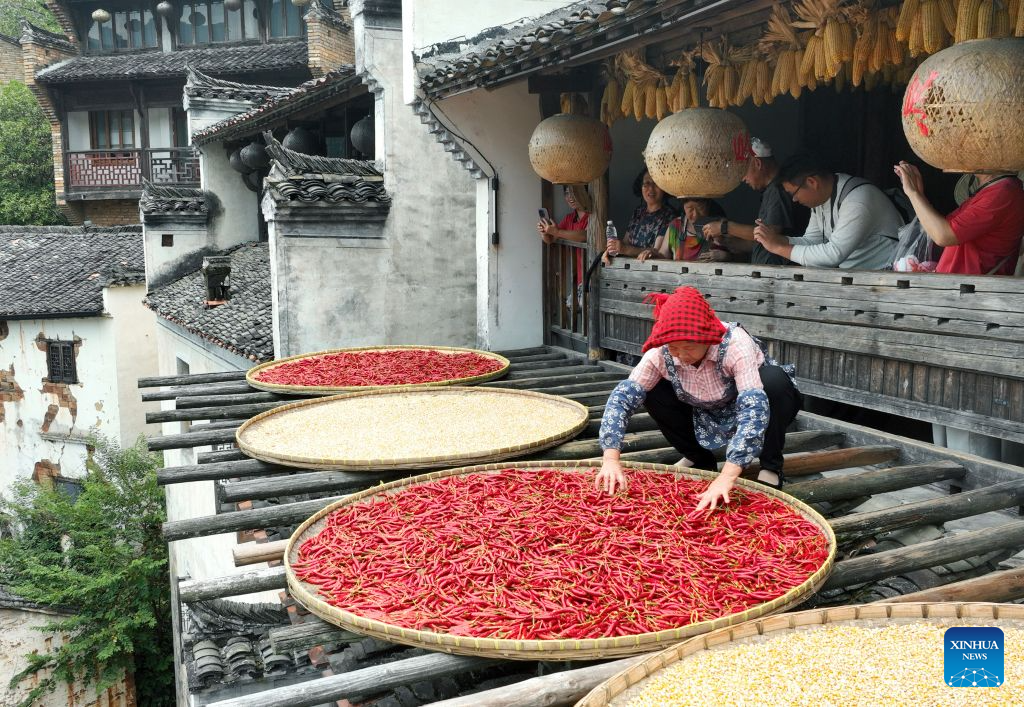
A drone photo shows Cao Fudi drying crops at Huangling scenic area in Wuyuan County, east China's Jiangxi Province, Sept. 22, 2026.
Cao Fudi, a 64-year-old villager, now works at the Huangling scenic area demonstrating Shaiqiu, a traditional practice of sun-drying harvested crops in autumn. More than a decade ago, Cao and her family lived in an old house on the mountain, relying mainly on farming and a small grocery store for a living.
In 2009, Huangling began a preservation-focused development program that relocated villagers to new homes while preserving the old village and traditional houses for tourism. Cao's family and other villagers moved to the newly built Huangling New Village at the foot of the mountain in 2011. Three years later, the Huangling scenic area opened, and Shaiqiu gradually became one of its attractions.
Tourism has since transformed Cao's livelihood. In 2020, a tourism company hired Cao to demonstrate Shaiqiu, giving her a stable job close to home. As more tourists arrived, business at the family's grocery store improved. Together with dividends from the local tourism industry, the family's annual income has grown to more than 300,000 yuan (about 44,706 U.S. dollars).
The tourism boom has also created jobs for more than 700 villagers from Huangling and nearby areas. With more local opportunities, Cao's son and daughter-in-law, who had previously worked away from home, returned to work in the village, allowing the family to live together again. (Xinhua/Wan Xiang)
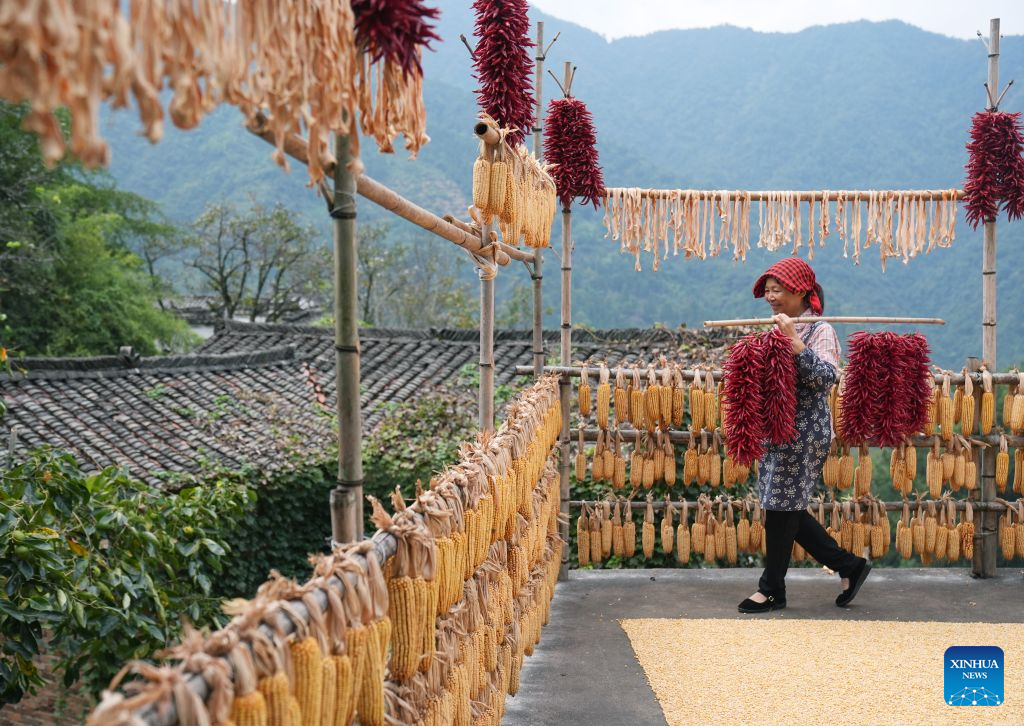
Cao Fudi carries chili peppers for drying at Huangling scenic area in Wuyuan County, east China's Jiangxi Province, Sept. 22, 2026.
Cao Fudi, a 64-year-old villager, now works at the Huangling scenic area demonstrating Shaiqiu, a traditional practice of sun-drying harvested crops in autumn. More than a decade ago, Cao and her family lived in an old house on the mountain, relying mainly on farming and a small grocery store for a living.
In 2009, Huangling began a preservation-focused development program that relocated villagers to new homes while preserving the old village and traditional houses for tourism. Cao's family and other villagers moved to the newly built Huangling New Village at the foot of the mountain in 2011. Three years later, the Huangling scenic area opened, and Shaiqiu gradually became one of its attractions.
Tourism has since transformed Cao's livelihood. In 2020, a tourism company hired Cao to demonstrate Shaiqiu, giving her a stable job close to home. As more tourists arrived, business at the family's grocery store improved. Together with dividends from the local tourism industry, the family's annual income has grown to more than 300,000 yuan (about 44,706 U.S. dollars).
The tourism boom has also created jobs for more than 700 villagers from Huangling and nearby areas. With more local opportunities, Cao's son and daughter-in-law, who had previously worked away from home, returned to work in the village, allowing the family to live together again. (Xinhua/Wan Xiang)
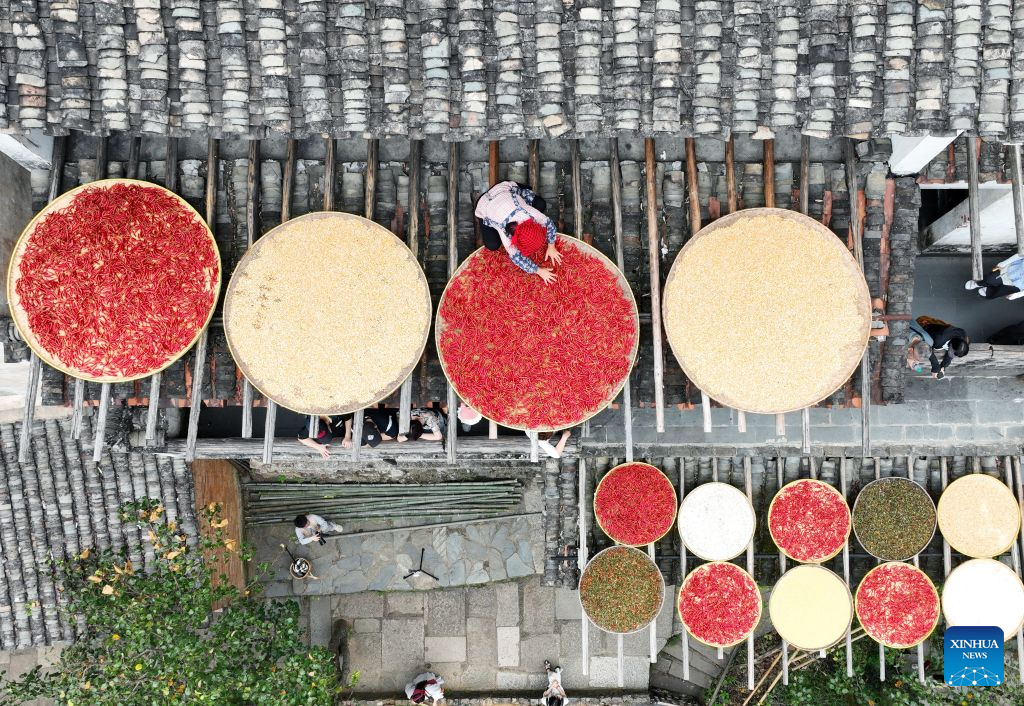
An aerial drone photo shows Cao Fudi drying crops at Huangling scenic area in Wuyuan County, east China's Jiangxi Province, Sept. 22, 2026.
Cao Fudi, a 64-year-old villager, now works at the Huangling scenic area demonstrating Shaiqiu, a traditional practice of sun-drying harvested crops in autumn. More than a decade ago, Cao and her family lived in an old house on the mountain, relying mainly on farming and a small grocery store for a living.
In 2009, Huangling began a preservation-focused development program that relocated villagers to new homes while preserving the old village and traditional houses for tourism. Cao's family and other villagers moved to the newly built Huangling New Village at the foot of the mountain in 2011. Three years later, the Huangling scenic area opened, and Shaiqiu gradually became one of its attractions.
Tourism has since transformed Cao's livelihood. In 2020, a tourism company hired Cao to demonstrate Shaiqiu, giving her a stable job close to home. As more tourists arrived, business at the family's grocery store improved. Together with dividends from the local tourism industry, the family's annual income has grown to more than 300,000 yuan (about 44,706 U.S. dollars).
The tourism boom has also created jobs for more than 700 villagers from Huangling and nearby areas. With more local opportunities, Cao's son and daughter-in-law, who had previously worked away from home, returned to work in the village, allowing the family to live together again. (Xinhua/Wan Xiang)
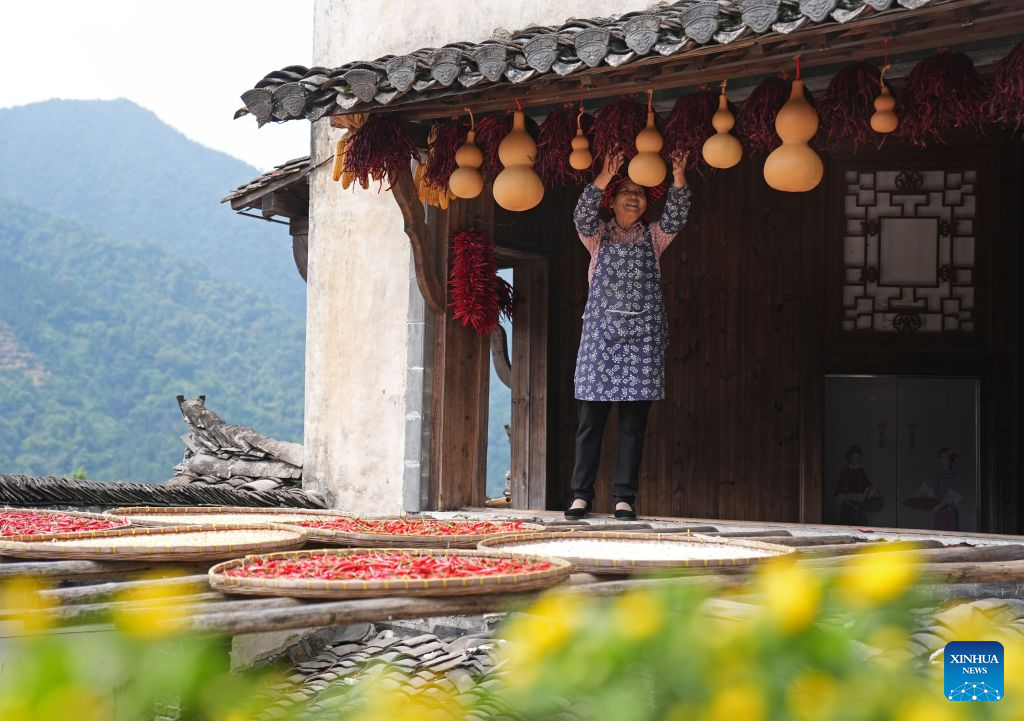
Cao Fudi dries crops at Huangling scenic area in Wuyuan County, east China's Jiangxi Province, Sept. 22, 2026.
Cao Fudi, a 64-year-old villager, now works at the Huangling scenic area demonstrating Shaiqiu, a traditional practice of sun-drying harvested crops in autumn. More than a decade ago, Cao and her family lived in an old house on the mountain, relying mainly on farming and a small grocery store for a living.
In 2009, Huangling began a preservation-focused development program that relocated villagers to new homes while preserving the old village and traditional houses for tourism. Cao's family and other villagers moved to the newly built Huangling New Village at the foot of the mountain in 2011. Three years later, the Huangling scenic area opened, and Shaiqiu gradually became one of its attractions.
Tourism has since transformed Cao's livelihood. In 2020, a tourism company hired Cao to demonstrate Shaiqiu, giving her a stable job close to home. As more tourists arrived, business at the family's grocery store improved. Together with dividends from the local tourism industry, the family's annual income has grown to more than 300,000 yuan (about 44,706 U.S. dollars).
The tourism boom has also created jobs for more than 700 villagers from Huangling and nearby areas. With more local opportunities, Cao's son and daughter-in-law, who had previously worked away from home, returned to work in the village, allowing the family to live together again. (Xinhua/Wan Xiang)
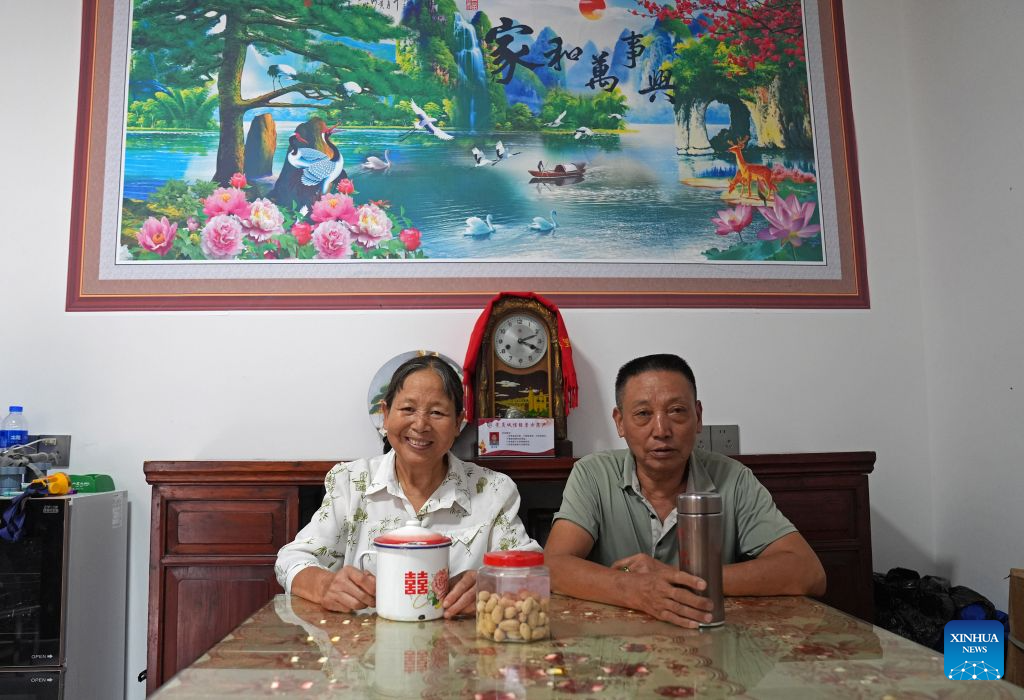
Cao Fudi (L) and her husband pose for a photo at home in Huangling New Village in Wuyuan County, east China's Jiangxi Province, Sept. 22, 2026.
Cao Fudi, a 64-year-old villager, now works at the Huangling scenic area demonstrating Shaiqiu, a traditional practice of sun-drying harvested crops in autumn. More than a decade ago, Cao and her family lived in an old house on the mountain, relying mainly on farming and a small grocery store for a living.
In 2009, Huangling began a preservation-focused development program that relocated villagers to new homes while preserving the old village and traditional houses for tourism. Cao's family and other villagers moved to the newly built Huangling New Village at the foot of the mountain in 2011. Three years later, the Huangling scenic area opened, and Shaiqiu gradually became one of its attractions.
Tourism has since transformed Cao's livelihood. In 2020, a tourism company hired Cao to demonstrate Shaiqiu, giving her a stable job close to home. As more tourists arrived, business at the family's grocery store improved. Together with dividends from the local tourism industry, the family's annual income has grown to more than 300,000 yuan (about 44,706 U.S. dollars).
The tourism boom has also created jobs for more than 700 villagers from Huangling and nearby areas. With more local opportunities, Cao's son and daughter-in-law, who had previously worked away from home, returned to work in the village, allowing the family to live together again. (Xinhua/Wan Xiang)
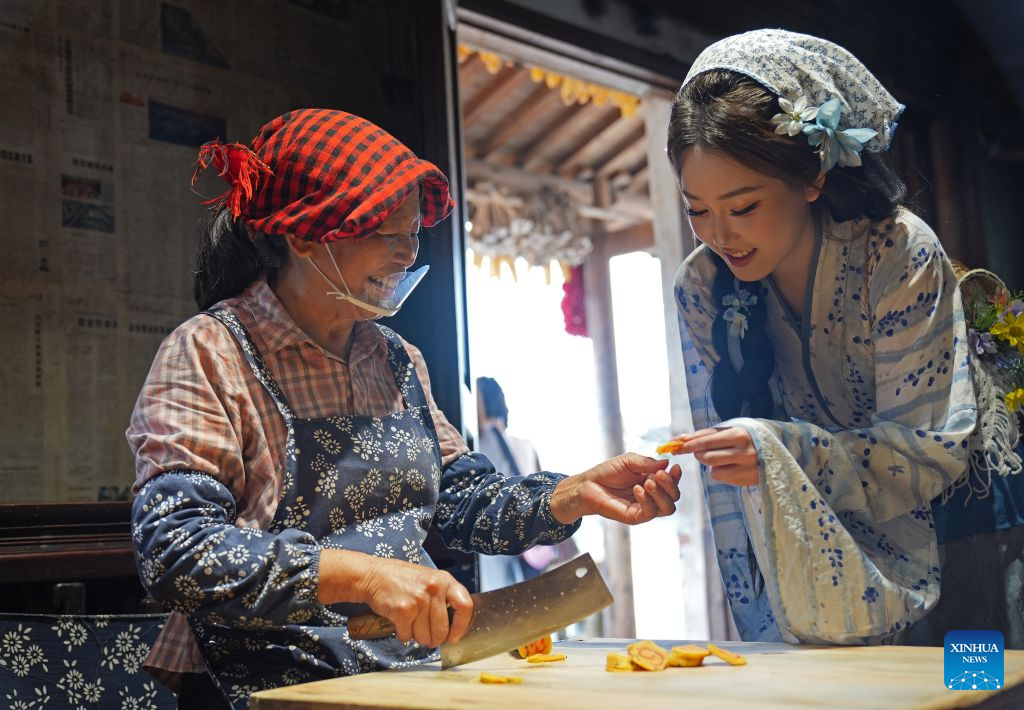
Cao Fudi (L) communicates with a tourist while making sweet potato chips at Huangling scenic area in Wuyuan County, east China's Jiangxi Province, Sept. 22, 2026.
Cao Fudi, a 64-year-old villager, now works at the Huangling scenic area demonstrating Shaiqiu, a traditional practice of sun-drying harvested crops in autumn. More than a decade ago, Cao and her family lived in an old house on the mountain, relying mainly on farming and a small grocery store for a living.
In 2009, Huangling began a preservation-focused development program that relocated villagers to new homes while preserving the old village and traditional houses for tourism. Cao's family and other villagers moved to the newly built Huangling New Village at the foot of the mountain in 2011. Three years later, the Huangling scenic area opened, and Shaiqiu gradually became one of its attractions.
Tourism has since transformed Cao's livelihood. In 2020, a tourism company hired Cao to demonstrate Shaiqiu, giving her a stable job close to home. As more tourists arrived, business at the family's grocery store improved. Together with dividends from the local tourism industry, the family's annual income has grown to more than 300,000 yuan (about 44,706 U.S. dollars).
The tourism boom has also created jobs for more than 700 villagers from Huangling and nearby areas. With more local opportunities, Cao's son and daughter-in-law, who had previously worked away from home, returned to work in the village, allowing the family to live together again. (Xinhua/Wan Xiang)
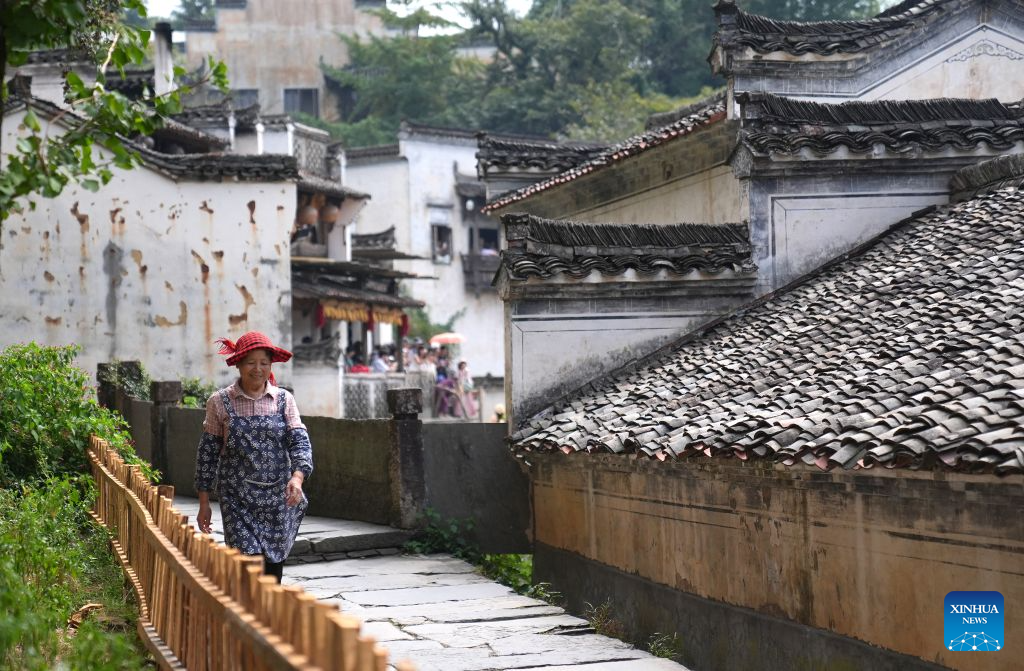
Cao Fudi walks on a street at Huangling scenic area in Wuyuan County, east China's Jiangxi Province, Sept. 22, 2026.
Cao Fudi, a 64-year-old villager, now works at the Huangling scenic area demonstrating Shaiqiu, a traditional practice of sun-drying harvested crops in autumn. More than a decade ago, Cao and her family lived in an old house on the mountain, relying mainly on farming and a small grocery store for a living.
In 2009, Huangling began a preservation-focused development program that relocated villagers to new homes while preserving the old village and traditional houses for tourism. Cao's family and other villagers moved to the newly built Huangling New Village at the foot of the mountain in 2011. Three years later, the Huangling scenic area opened, and Shaiqiu gradually became one of its attractions.
Tourism has since transformed Cao's livelihood. In 2020, a tourism company hired Cao to demonstrate Shaiqiu, giving her a stable job close to home. As more tourists arrived, business at the family's grocery store improved. Together with dividends from the local tourism industry, the family's annual income has grown to more than 300,000 yuan (about 44,706 U.S. dollars).
The tourism boom has also created jobs for more than 700 villagers from Huangling and nearby areas. With more local opportunities, Cao's son and daughter-in-law, who had previously worked away from home, returned to work in the village, allowing the family to live together again. (Xinhua/Wan Xiang)
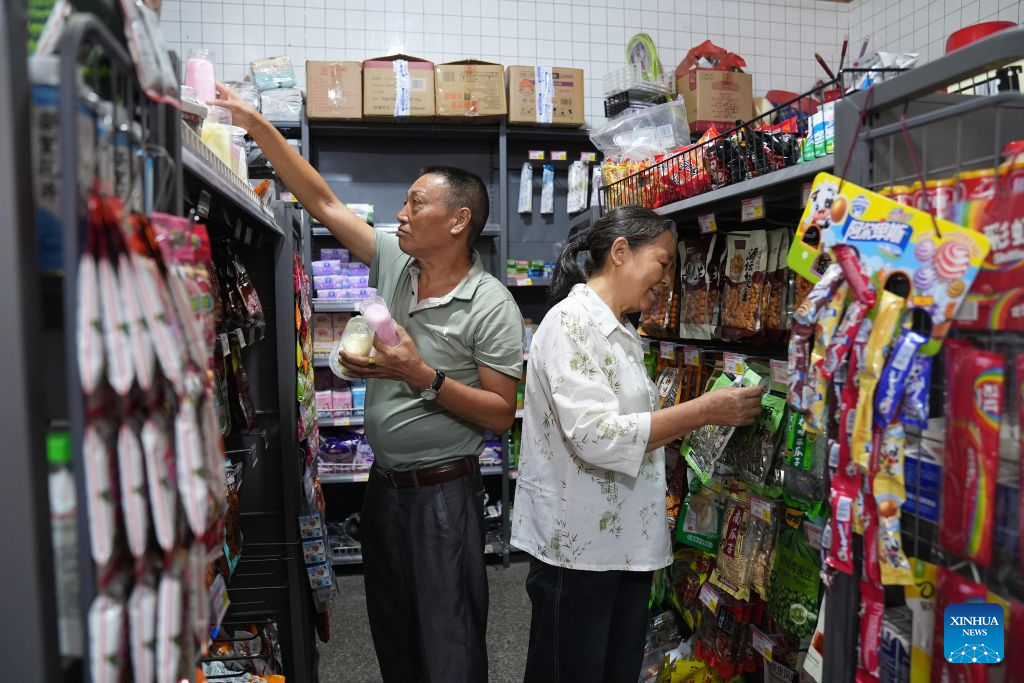
Cao Fudi (R) works with her husband at their grocery store in Huangling New Village in Wuyuan County, east China's Jiangxi Province, Sept. 22, 2026.
Cao Fudi, a 64-year-old villager, now works at the Huangling scenic area demonstrating Shaiqiu, a traditional practice of sun-drying harvested crops in autumn. More than a decade ago, Cao and her family lived in an old house on the mountain, relying mainly on farming and a small grocery store for a living.
In 2009, Huangling began a preservation-focused development program that relocated villagers to new homes while preserving the old village and traditional houses for tourism. Cao's family and other villagers moved to the newly built Huangling New Village at the foot of the mountain in 2011. Three years later, the Huangling scenic area opened, and Shaiqiu gradually became one of its attractions.
Tourism has since transformed Cao's livelihood. In 2020, a tourism company hired Cao to demonstrate Shaiqiu, giving her a stable job close to home. As more tourists arrived, business at the family's grocery store improved. Together with dividends from the local tourism industry, the family's annual income has grown to more than 300,000 yuan (about 44,706 U.S. dollars).
The tourism boom has also created jobs for more than 700 villagers from Huangling and nearby areas. With more local opportunities, Cao's son and daughter-in-law, who had previously worked away from home, returned to work in the village, allowing the family to live together again. (Xinhua/Wan Xiang)
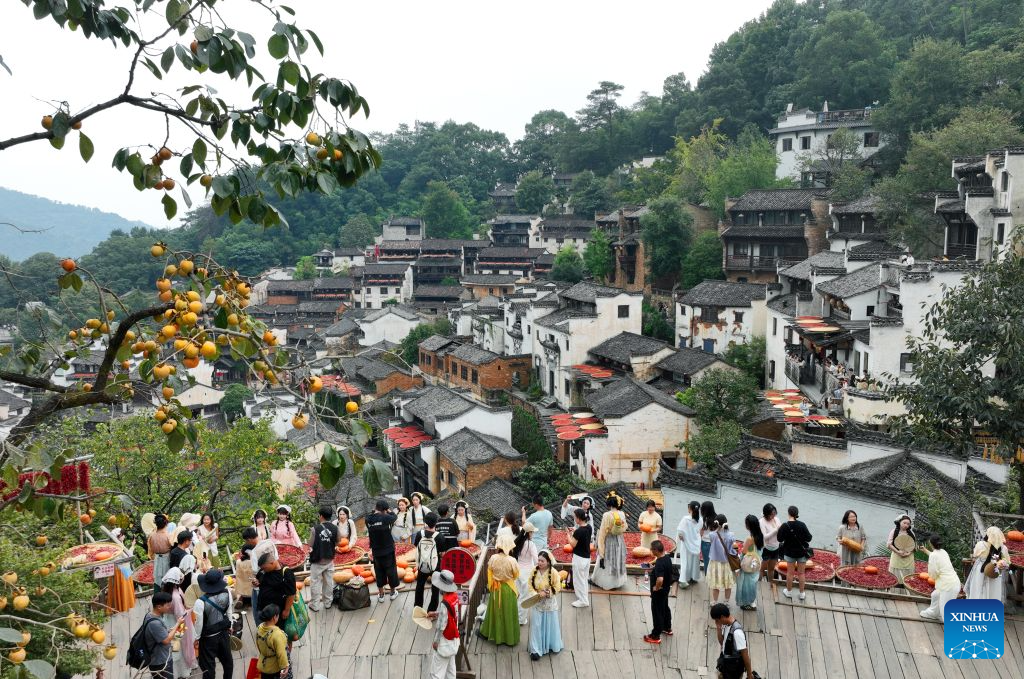
An aerial drone photo shows tourists visiting Huangling scenic area in Wuyuan County, east China's Jiangxi Province, Sept. 22, 2026.
Cao Fudi, a 64-year-old villager, now works at the Huangling scenic area demonstrating Shaiqiu, a traditional practice of sun-drying harvested crops in autumn. More than a decade ago, Cao and her family lived in an old house on the mountain, relying mainly on farming and a small grocery store for a living.
In 2009, Huangling began a preservation-focused development program that relocated villagers to new homes while preserving the old village and traditional houses for tourism. Cao's family and other villagers moved to the newly built Huangling New Village at the foot of the mountain in 2011. Three years later, the Huangling scenic area opened, and Shaiqiu gradually became one of its attractions.
Tourism has since transformed Cao's livelihood. In 2020, a tourism company hired Cao to demonstrate Shaiqiu, giving her a stable job close to home. As more tourists arrived, business at the family's grocery store improved. Together with dividends from the local tourism industry, the family's annual income has grown to more than 300,000 yuan (about 44,706 U.S. dollars).
The tourism boom has also created jobs for more than 700 villagers from Huangling and nearby areas. With more local opportunities, Cao's son and daughter-in-law, who had previously worked away from home, returned to work in the village, allowing the family to live together again. (Xinhua/Wan Xiang)
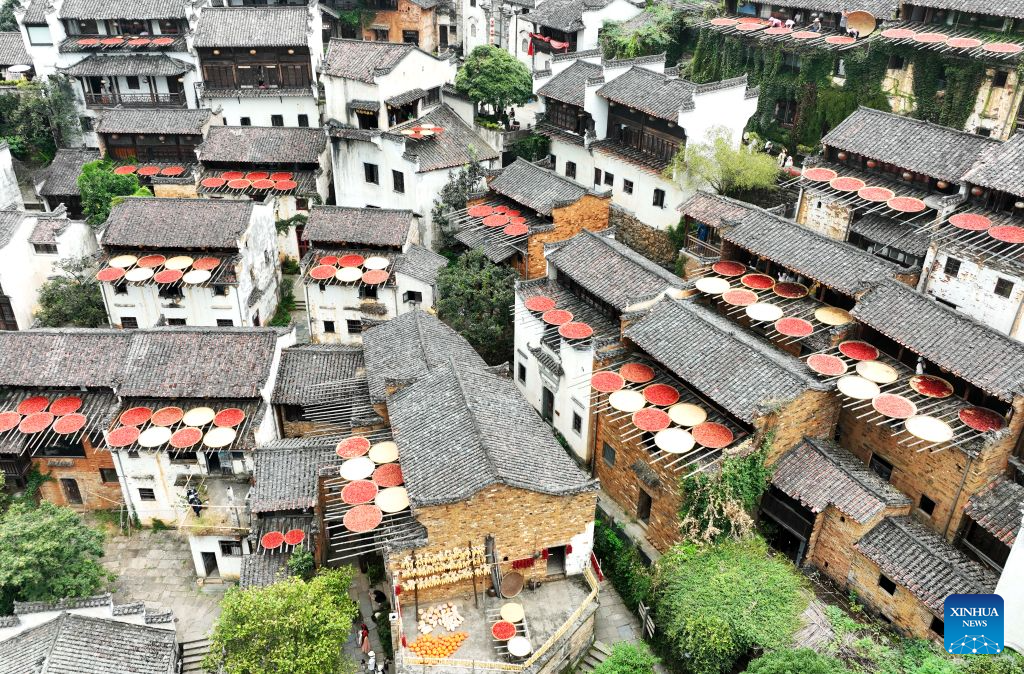
An aerial drone photo shows a view of Huangling scenic area with harvested crops on trays in Wuyuan County, east China's Jiangxi Province, Sept. 22, 2026.
Cao Fudi, a 64-year-old villager, now works at the Huangling scenic area demonstrating Shaiqiu, a traditional practice of sun-drying harvested crops in autumn. More than a decade ago, Cao and her family lived in an old house on the mountain, relying mainly on farming and a small grocery store for a living.
In 2009, Huangling began a preservation-focused development program that relocated villagers to new homes while preserving the old village and traditional houses for tourism. Cao's family and other villagers moved to the newly built Huangling New Village at the foot of the mountain in 2011. Three years later, the Huangling scenic area opened, and Shaiqiu gradually became one of its attractions.
Tourism has since transformed Cao's livelihood. In 2020, a tourism company hired Cao to demonstrate Shaiqiu, giving her a stable job close to home. As more tourists arrived, business at the family's grocery store improved. Together with dividends from the local tourism industry, the family's annual income has grown to more than 300,000 yuan (about 44,706 U.S. dollars).
The tourism boom has also created jobs for more than 700 villagers from Huangling and nearby areas. With more local opportunities, Cao's son and daughter-in-law, who had previously worked away from home, returned to work in the village, allowing the family to live together again. (Xinhua/Wan Xiang)
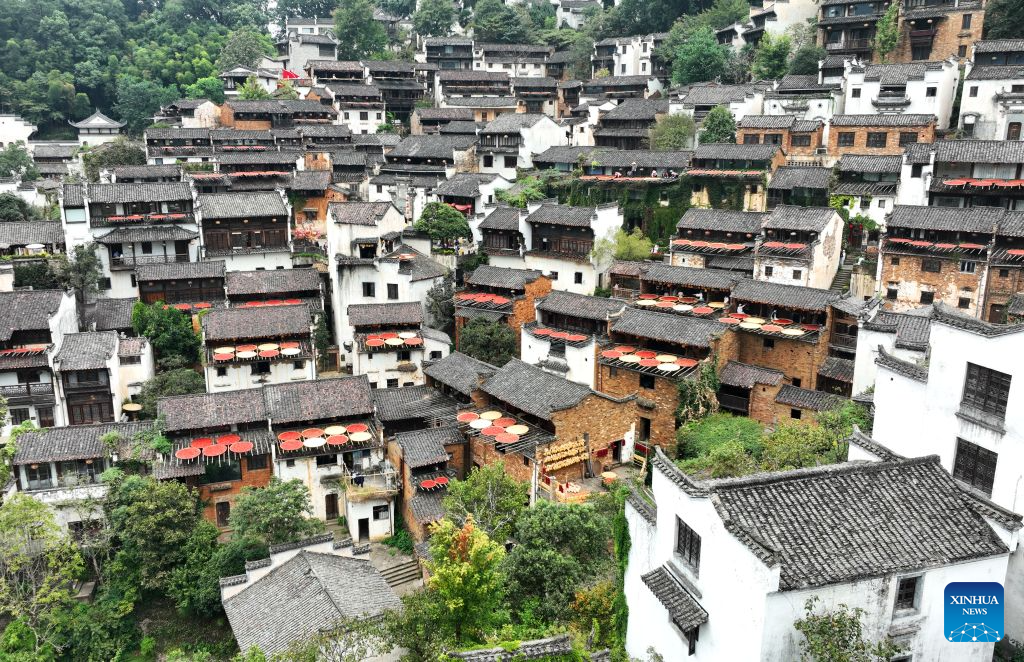
An aerial drone photo shows a view of Huangling scenic area with harvested crops on trays in Wuyuan County, east China's Jiangxi Province, Sept. 22, 2026.
Cao Fudi, a 64-year-old villager, now works at the Huangling scenic area demonstrating Shaiqiu, a traditional practice of sun-drying harvested crops in autumn. More than a decade ago, Cao and her family lived in an old house on the mountain, relying mainly on farming and a small grocery store for a living.
In 2009, Huangling began a preservation-focused development program that relocated villagers to new homes while preserving the old village and traditional houses for tourism. Cao's family and other villagers moved to the newly built Huangling New Village at the foot of the mountain in 2011. Three years later, the Huangling scenic area opened, and Shaiqiu gradually became one of its attractions.
Tourism has since transformed Cao's livelihood. In 2020, a tourism company hired Cao to demonstrate Shaiqiu, giving her a stable job close to home. As more tourists arrived, business at the family's grocery store improved. Together with dividends from the local tourism industry, the family's annual income has grown to more than 300,000 yuan (about 44,706 U.S. dollars).
The tourism boom has also created jobs for more than 700 villagers from Huangling and nearby areas. With more local opportunities, Cao's son and daughter-in-law, who had previously worked away from home, returned to work in the village, allowing the family to live together again. (Xinhua/Wan Xiang)


