
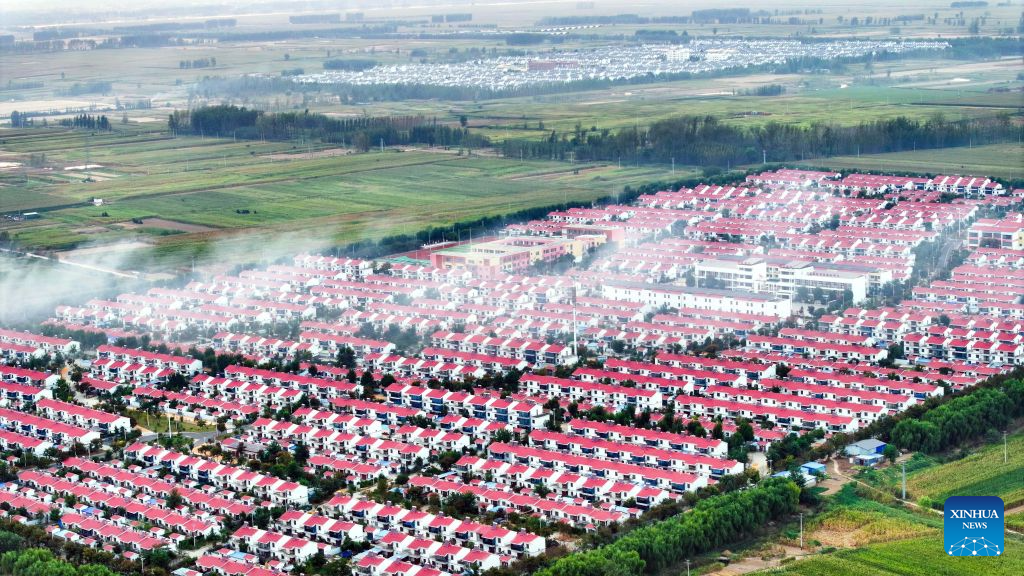
A drone photo taken on Sept. 17, 2026 shows a view of Xingdong New Village of Dongming County in Heze, east China's Shandong Province. The Yellow River, dubbed the Mother River of China, has long nourished the land in Heze, east China's Shandong Province, but recurring floods once posed a persistent threat to residents living on its floodplain. To protect local residents from flooding, a large-scale relocation and reconstruction project was launched in 2017 and completed in 2020.
Some 600,000 residents from the floodplain moved into newly built communities with improved housing and access to kindergartens, community clinics, elderly care centers and public spaces. In recent years, local authorities have also developed agriculture, rural processing and tourism-related industries to create more income opportunities for residents. (Xinhua/Chen Yehua)

Students attend a class at a school in Liuhe New Village of Juancheng County in Heze, east China's Shandong Province, Sept. 16, 2026. The Yellow River, dubbed the Mother River of China, has long nourished the land in Heze, east China's Shandong Province, but recurring floods once posed a persistent threat to residents living on its floodplain. To protect local residents from flooding, a large-scale relocation and reconstruction project was launched in 2017 and completed in 2020.
Some 600,000 residents from the floodplain moved into newly built communities with improved housing and access to kindergartens, community clinics, elderly care centers and public spaces. In recent years, local authorities have also developed agriculture, rural processing and tourism-related industries to create more income opportunities for residents. (Xinhua/Chen Yehua)
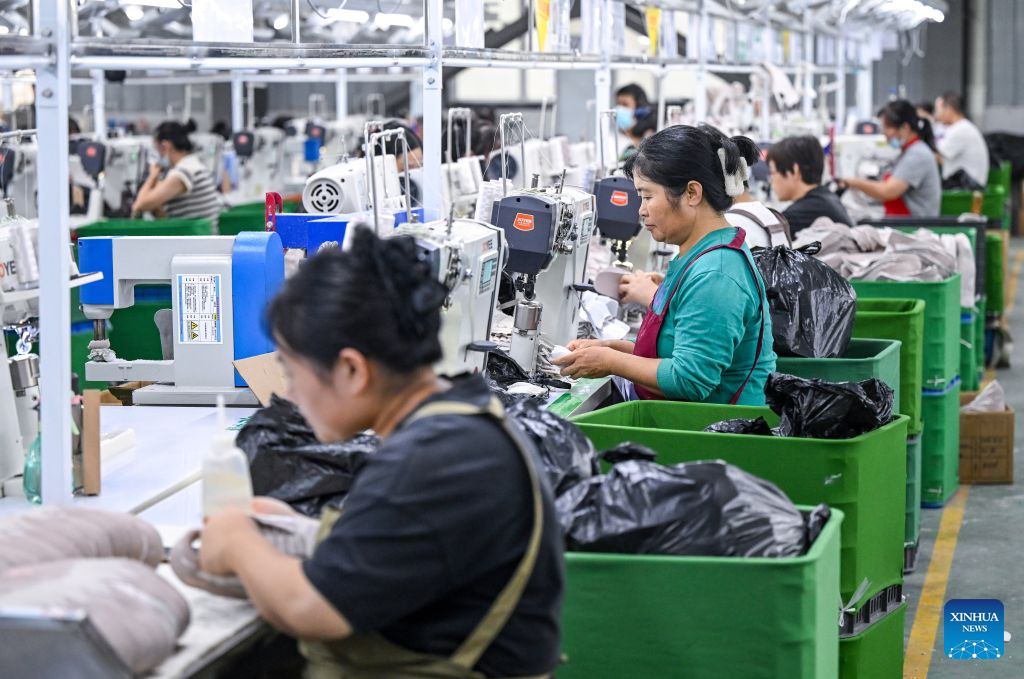
People work at a workshop of a shoe factory in Changxingji Township of Dongming County in Heze, east China's Shandong Province, Sept. 17, 2026. Many neighboring villagers are employed here. The Yellow River, dubbed the Mother River of China, has long nourished the land in Heze, east China's Shandong Province, but recurring floods once posed a persistent threat to residents living on its floodplain. To protect local residents from flooding, a large-scale relocation and reconstruction project was launched in 2017 and completed in 2020.
Some 600,000 residents from the floodplain moved into newly built communities with improved housing and access to kindergartens, community clinics, elderly care centers and public spaces. In recent years, local authorities have also developed agriculture, rural processing and tourism-related industries to create more income opportunities for residents. (Xinhua/Chen Yehua)

Students clear a blackboard at a school of Liuhe New Village of Juancheng County in Heze, east China's Shandong Province, Sept. 16, 2026. The Yellow River, dubbed the Mother River of China, has long nourished the land in Heze, east China's Shandong Province, but recurring floods once posed a persistent threat to residents living on its floodplain. To protect local residents from flooding, a large-scale relocation and reconstruction project was launched in 2017 and completed in 2020.
Some 600,000 residents from the floodplain moved into newly built communities with improved housing and access to kindergartens, community clinics, elderly care centers and public spaces. In recent years, local authorities have also developed agriculture, rural processing and tourism-related industries to create more income opportunities for residents. (Xinhua/Chen Yehua)

People work at a workshop of a shoe factory in Changxingji Township of Dongming County in Heze, east China's Shandong Province, Sept. 17, 2026. Many neighboring villagers are employed here. The Yellow River, dubbed the Mother River of China, has long nourished the land in Heze, east China's Shandong Province, but recurring floods once posed a persistent threat to residents living on its floodplain. To protect local residents from flooding, a large-scale relocation and reconstruction project was launched in 2017 and completed in 2020.
Some 600,000 residents from the floodplain moved into newly built communities with improved housing and access to kindergartens, community clinics, elderly care centers and public spaces. In recent years, local authorities have also developed agriculture, rural processing and tourism-related industries to create more income opportunities for residents. (Xinhua/Chen Yehua)
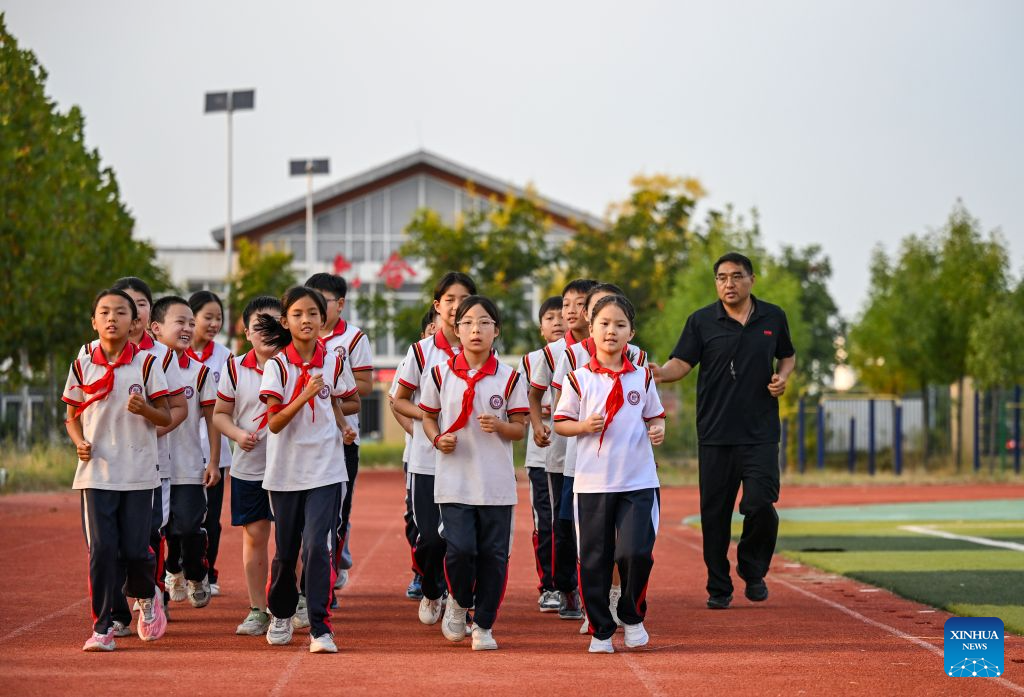
Students run with a teacher at a school in Liuhe New Village of Juancheng County in Heze, east China's Shandong Province, Sept. 16, 2026. The Yellow River, dubbed the Mother River of China, has long nourished the land in Heze, east China's Shandong Province, but recurring floods once posed a persistent threat to residents living on its floodplain. To protect local residents from flooding, a large-scale relocation and reconstruction project was launched in 2017 and completed in 2020.
Some 600,000 residents from the floodplain moved into newly built communities with improved housing and access to kindergartens, community clinics, elderly care centers and public spaces. In recent years, local authorities have also developed agriculture, rural processing and tourism-related industries to create more income opportunities for residents. (Xinhua/Chen Yehua)
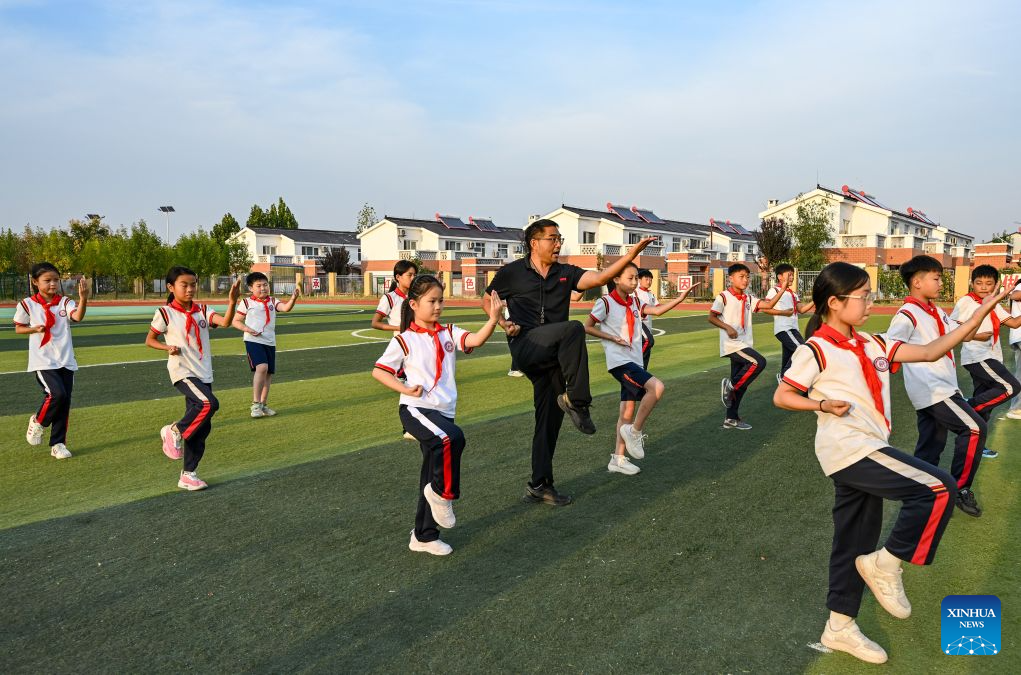
Students attend a boxing training session with a teacher at a school in Liuhe New Village of Juancheng County in Heze, east China's Shandong Province, Sept. 16, 2026. The Yellow River, dubbed the Mother River of China, has long nourished the land in Heze, east China's Shandong Province, but recurring floods once posed a persistent threat to residents living on its floodplain. To protect local residents from flooding, a large-scale relocation and reconstruction project was launched in 2017 and completed in 2020.
Some 600,000 residents from the floodplain moved into newly built communities with improved housing and access to kindergartens, community clinics, elderly care centers and public spaces. In recent years, local authorities have also developed agriculture, rural processing and tourism-related industries to create more income opportunities for residents. (Xinhua/Chen Yehua)

Children have fun at a kindergarten in Liuhe New Village of Juancheng County in Heze, east China's Shandong Province, Sept. 16, 2026. The Yellow River, dubbed the Mother River of China, has long nourished the land in Heze, east China's Shandong Province, but recurring floods once posed a persistent threat to residents living on its floodplain. To protect local residents from flooding, a large-scale relocation and reconstruction project was launched in 2017 and completed in 2020.
Some 600,000 residents from the floodplain moved into newly built communities with improved housing and access to kindergartens, community clinics, elderly care centers and public spaces. In recent years, local authorities have also developed agriculture, rural processing and tourism-related industries to create more income opportunities for residents. (Xinhua/Chen Yehua)
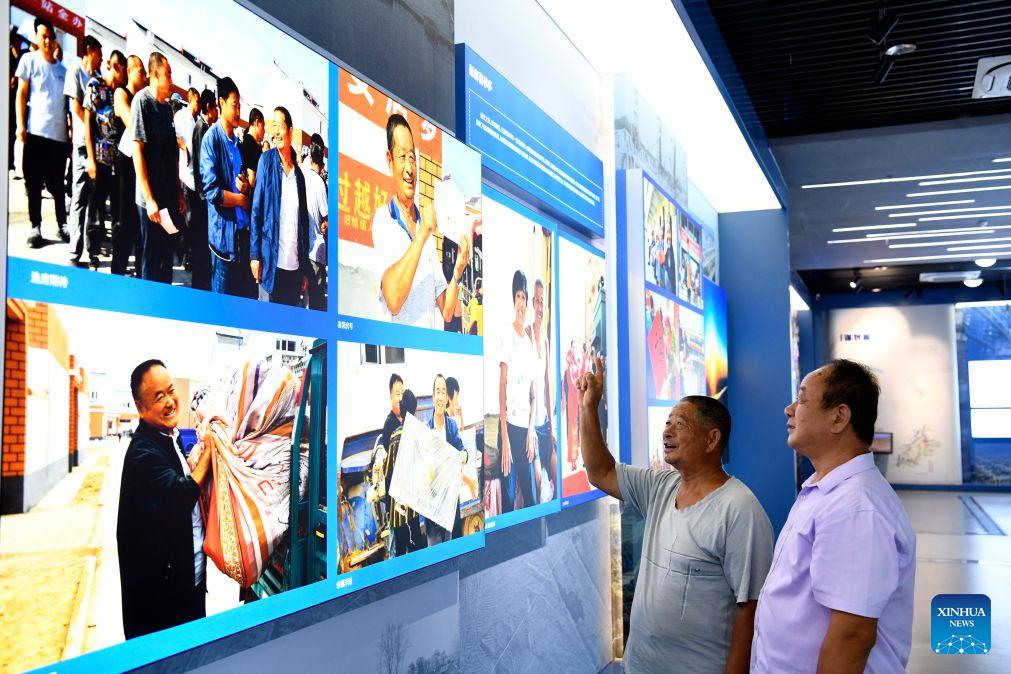
Villager Liu Guanglin (L) shares his experience at an exhibition hall documenting the relocation of residents from the Yellow River floodplain in Juancheng County in Heze, east China's Shandong Province, Sept. 16, 2026. The Yellow River, dubbed the Mother River of China, has long nourished the land in Heze, east China's Shandong Province, but recurring floods once posed a persistent threat to residents living on its floodplain. To protect local residents from flooding, a large-scale relocation and reconstruction project was launched in 2017 and completed in 2020.
Some 600,000 residents from the floodplain moved into newly built communities with improved housing and access to kindergartens, community clinics, elderly care centers and public spaces. In recent years, local authorities have also developed agriculture, rural processing and tourism-related industries to create more income opportunities for residents. (Xinhua/Guo Xulei)
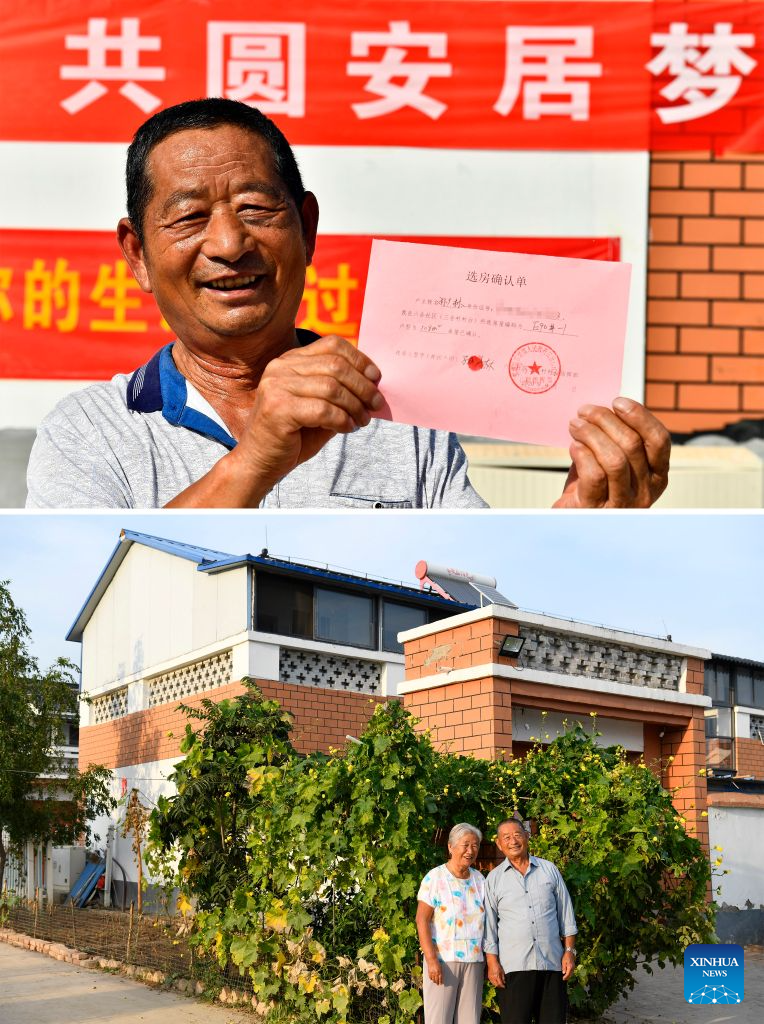
This combo photo shows Liu Guanglin showing his housing selection confirmation letter after relocation on Sept. 20, 2020 (top), and Liu Guanglin and her wife posing for a photo in front of their house on Sept. 16, 2026, in Liuhe New Village of Juancheng County in Heze, east China's Shandong Province. The Yellow River, dubbed the Mother River of China, has long nourished the land in Heze, east China's Shandong Province, but recurring floods once posed a persistent threat to residents living on its floodplain. To protect local residents from flooding, a large-scale relocation and reconstruction project was launched in 2017 and completed in 2020.
Some 600,000 residents from the floodplain moved into newly built communities with improved housing and access to kindergartens, community clinics, elderly care centers and public spaces. In recent years, local authorities have also developed agriculture, rural processing and tourism-related industries to create more income opportunities for residents. (Xinhua/Guo Xulei)
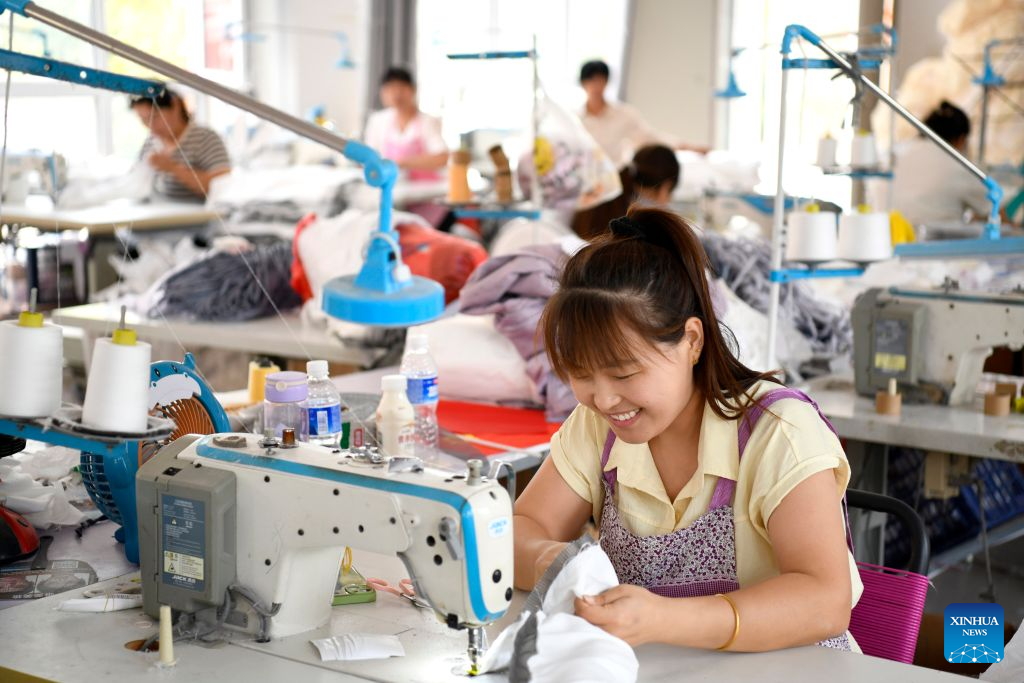
Villager Dong Hongjuan works on pillowcases at a workshop in Liuhe New Village of Juancheng County in Heze, east China's Shandong Province, Sept. 16, 2026. The Yellow River, dubbed the Mother River of China, has long nourished the land in Heze, east China's Shandong Province, but recurring floods once posed a persistent threat to residents living on its floodplain. To protect local residents from flooding, a large-scale relocation and reconstruction project was launched in 2017 and completed in 2020.
Some 600,000 residents from the floodplain moved into newly built communities with improved housing and access to kindergartens, community clinics, elderly care centers and public spaces. In recent years, local authorities have also developed agriculture, rural processing and tourism-related industries to create more income opportunities for residents. (Xinhua/Guo Xulei)
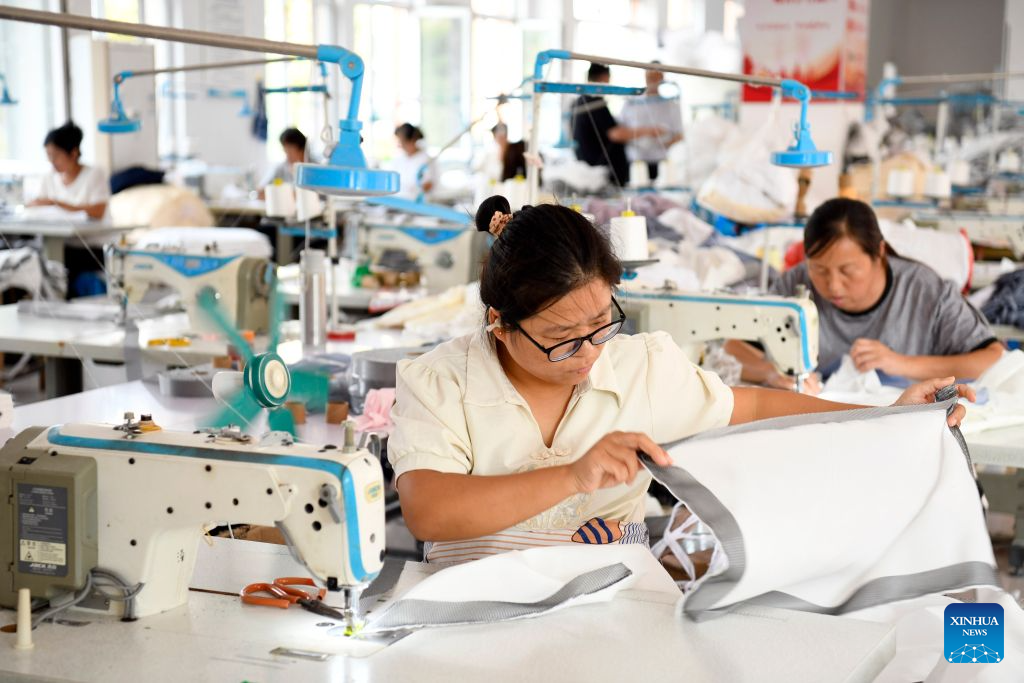
Villagers work on pillowcases at a workshop in Liuhe New Village of Juancheng County in Heze, east China's Shandong Province, Sept. 16, 2026. The Yellow River, dubbed the Mother River of China, has long nourished the land in Heze, east China's Shandong Province, but recurring floods once posed a persistent threat to residents living on its floodplain. To protect local residents from flooding, a large-scale relocation and reconstruction project was launched in 2017 and completed in 2020.
Some 600,000 residents from the floodplain moved into newly built communities with improved housing and access to kindergartens, community clinics, elderly care centers and public spaces. In recent years, local authorities have also developed agriculture, rural processing and tourism-related industries to create more income opportunities for residents. (Xinhua/Guo Xulei)
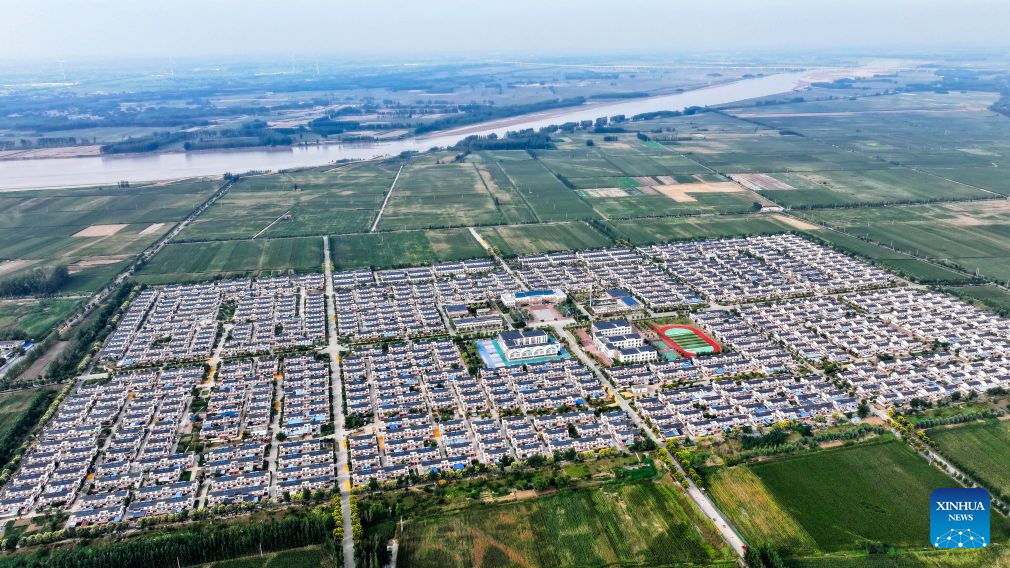
An aerial drone photo taken on Sept. 16, 2026 shows a view of Liuhe New Village of Juancheng County in Heze, east China's Shandong Province. The Yellow River, dubbed the Mother River of China, has long nourished the land in Heze, east China's Shandong Province, but recurring floods once posed a persistent threat to residents living on its floodplain. To protect local residents from flooding, a large-scale relocation and reconstruction project was launched in 2017 and completed in 2020.
Some 600,000 residents from the floodplain moved into newly built communities with improved housing and access to kindergartens, community clinics, elderly care centers and public spaces. In recent years, local authorities have also developed agriculture, rural processing and tourism-related industries to create more income opportunities for residents. (Xinhua/Guo Xulei)
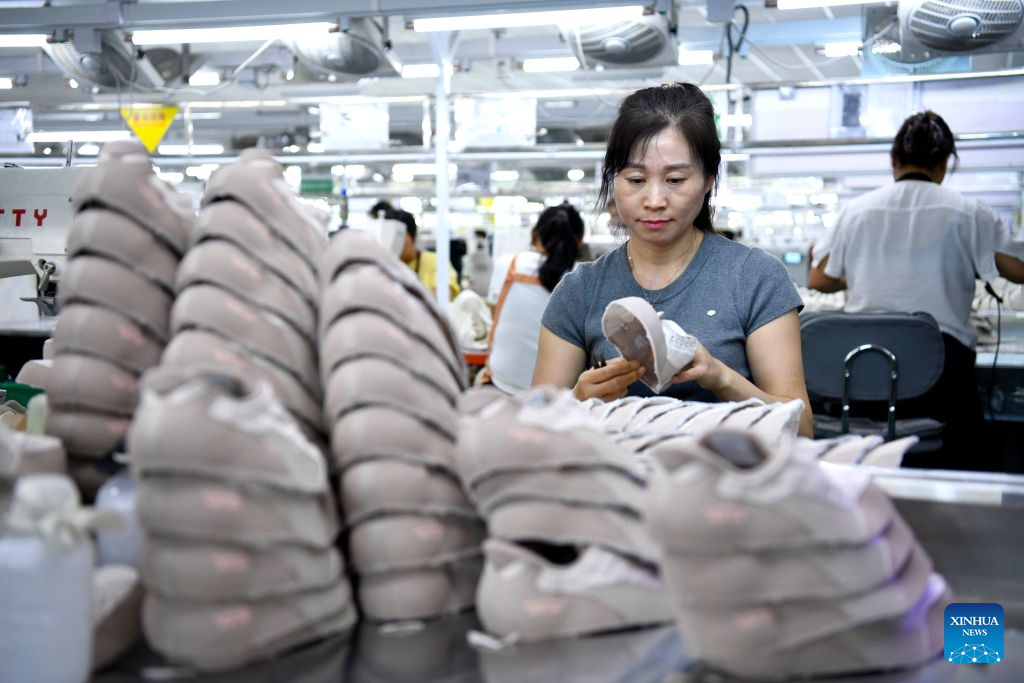
A worker checks the quality of shoes at a workshop of a shoe factory in Changxingji Township of Dongming County in Heze, east China's Shandong Province, Sept. 17, 2026. Many neighboring villagers are employed here. The Yellow River, dubbed the Mother River of China, has long nourished the land in Heze, east China's Shandong Province, but recurring floods once posed a persistent threat to residents living on its floodplain. To protect local residents from flooding, a large-scale relocation and reconstruction project was launched in 2017 and completed in 2020.
Some 600,000 residents from the floodplain moved into newly built communities with improved housing and access to kindergartens, community clinics, elderly care centers and public spaces. In recent years, local authorities have also developed agriculture, rural processing and tourism-related industries to create more income opportunities for residents. (Xinhua/Guo Xulei)
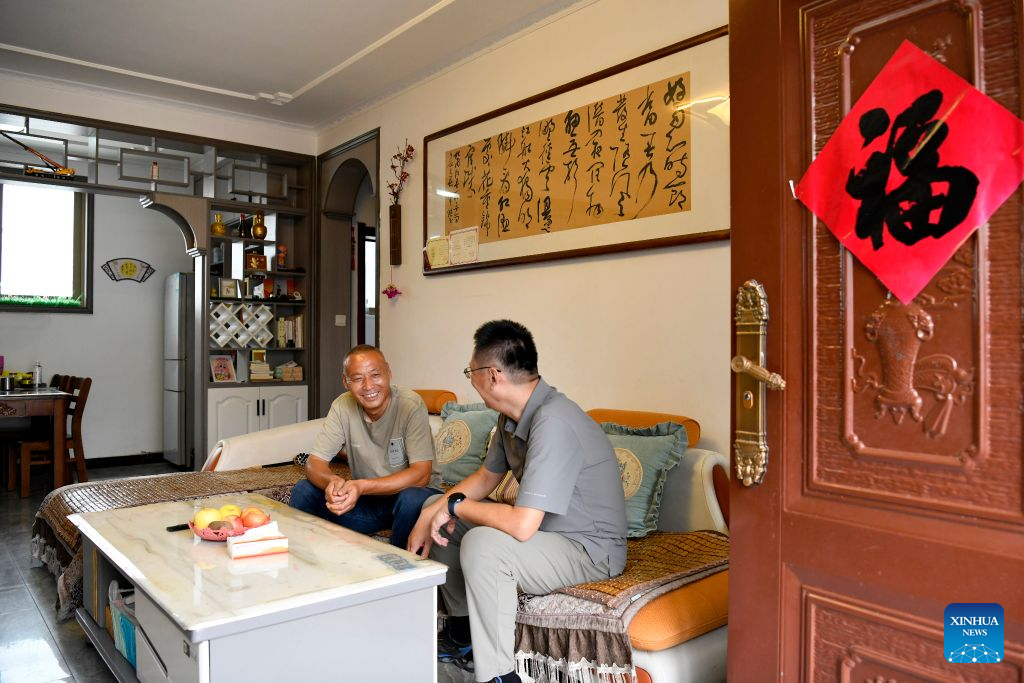
Villager Xu Jixing (L) shares his life after being relocated into a new house in Xingdong New Village of Dongming County in Heze, east China's Shandong Province, Sept. 17, 2026. The Yellow River, dubbed the Mother River of China, has long nourished the land in Heze, east China's Shandong Province, but recurring floods once posed a persistent threat to residents living on its floodplain. To protect local residents from flooding, a large-scale relocation and reconstruction project was launched in 2017 and completed in 2020.
Some 600,000 residents from the floodplain moved into newly built communities with improved housing and access to kindergartens, community clinics, elderly care centers and public spaces. In recent years, local authorities have also developed agriculture, rural processing and tourism-related industries to create more income opportunities for residents. (Xinhua/Guo Xulei)
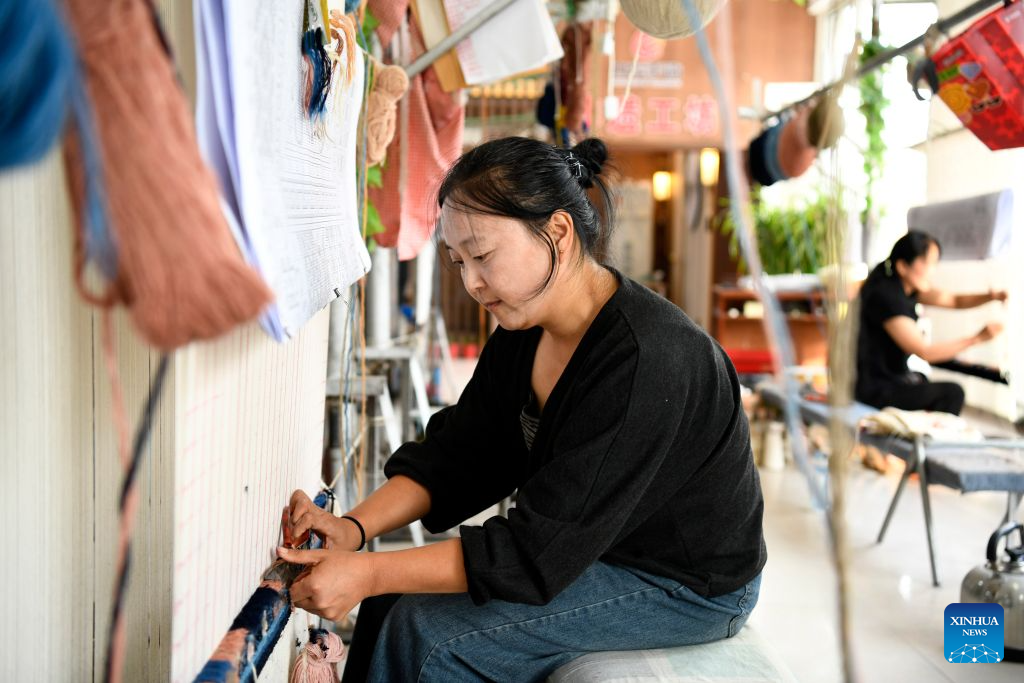
A villager works on a carpet at a workshop in Liuhe New Village of Juancheng County in Heze, east China's Shandong Province, Sept. 16, 2026. The Yellow River, dubbed the Mother River of China, has long nourished the land in Heze, east China's Shandong Province, but recurring floods once posed a persistent threat to residents living on its floodplain. To protect local residents from flooding, a large-scale relocation and reconstruction project was launched in 2017 and completed in 2020.
Some 600,000 residents from the floodplain moved into newly built communities with improved housing and access to kindergartens, community clinics, elderly care centers and public spaces. In recent years, local authorities have also developed agriculture, rural processing and tourism-related industries to create more income opportunities for residents. (Xinhua/Guo Xulei)
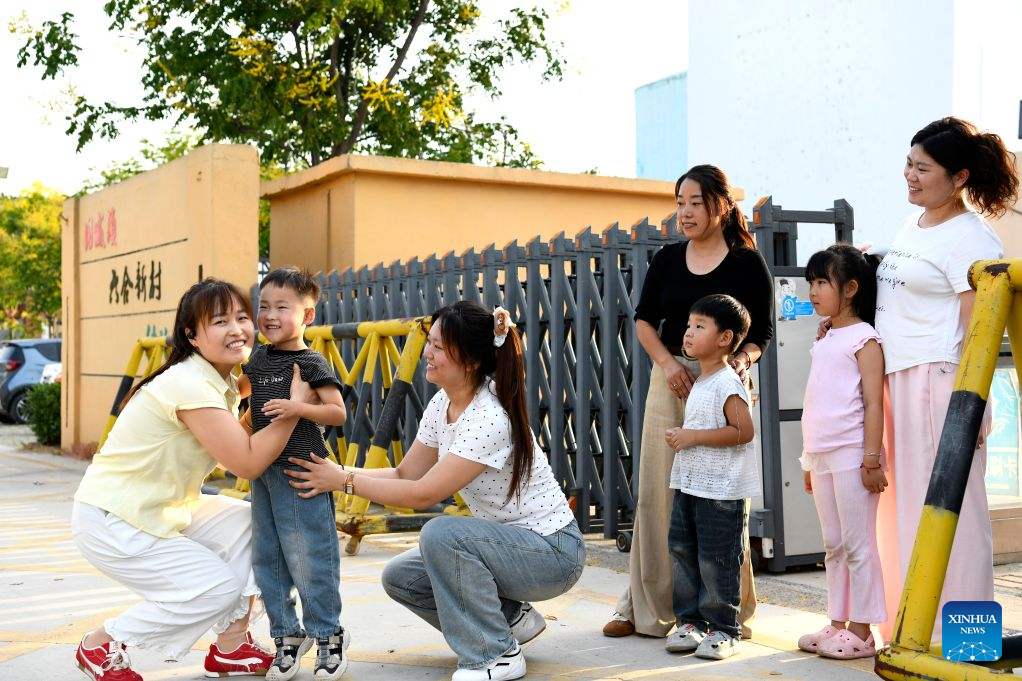
Villager Dong Hongjuan (1st L) picks up her kid at a kindergarten in Liuhe New Village of Juancheng County in Heze, east China's Shandong Province, Sept. 16, 2026. The Yellow River, dubbed the Mother River of China, has long nourished the land in Heze, east China's Shandong Province, but recurring floods once posed a persistent threat to residents living on its floodplain. To protect local residents from flooding, a large-scale relocation and reconstruction project was launched in 2017 and completed in 2020.
Some 600,000 residents from the floodplain moved into newly built communities with improved housing and access to kindergartens, community clinics, elderly care centers and public spaces. In recent years, local authorities have also developed agriculture, rural processing and tourism-related industries to create more income opportunities for residents. (Xinhua/Guo Xulei)


