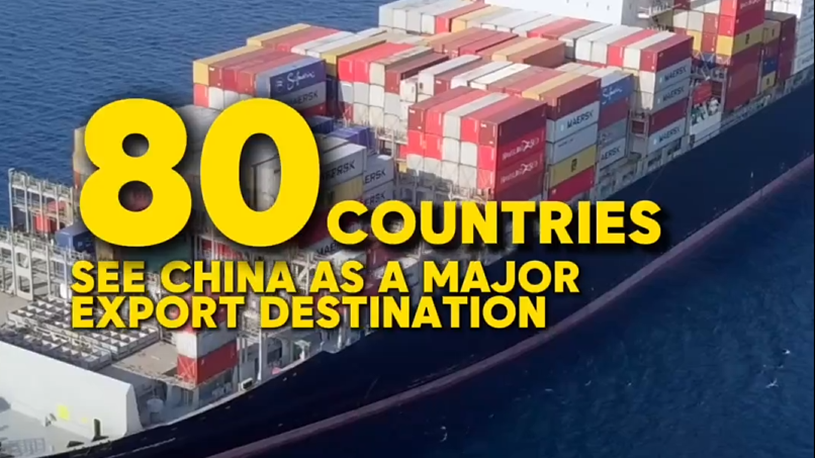
BEIJING, Aug. 7 (Xinhua) -- Robots, AI-related products and innovative drugs are emerging as new drivers of China's export growth, as the country expands into higher-value industries driven by innovation.
In July, the country's exports rose 17.8 percent year on year, with high-tech products, including industrial robots and 3D printers, contributing nearly 60 percent of the total increase in exports, data from the General Administration of Customs showed on Friday.
Exports of industrial robots jumped 13.2 percent to 7.34 billion yuan (about 1.1 billion U.S. dollars) last month. This trend builds on the momentum from 2025, when China became a net exporter of industrial robots for the first time.
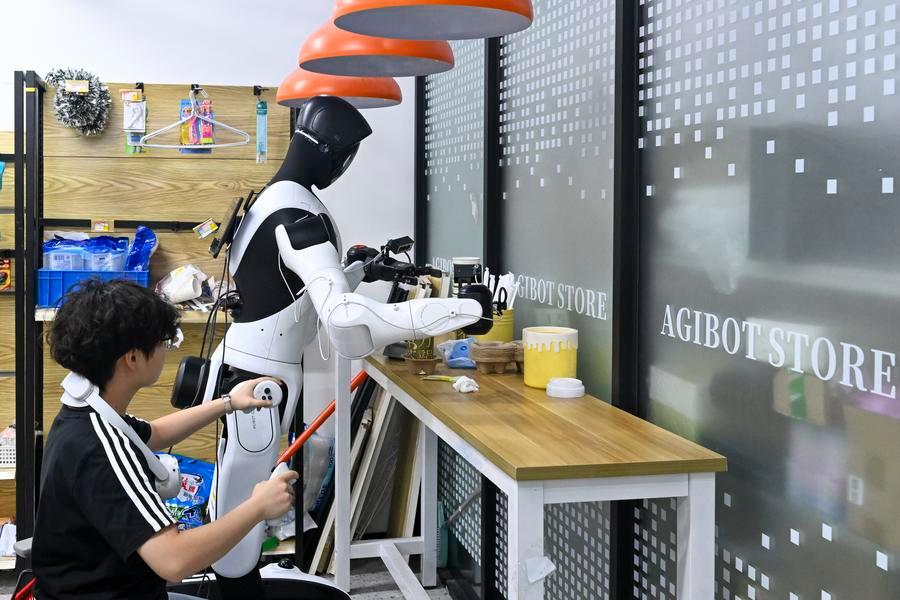
Beyond industrial robots, Chinese-made consumer and humanoid robots are also finding widespread applications in manufacturing and everyday life around the world.
Official data showed that in the first half of this year, exports of surgical robots climbed 3.3-fold year on year to 480 million yuan, while exports of cleaning robots and intelligent bionic robots, including humanoid robots, robotic dogs and biomimetic fish and birds, reached 18.09 billion yuan.
AI-related exports also gained momentum. In the January-June period, exports of electronic components and computer parts both posted double-digit growth, contributing a combined 6.9 percentage points to overall export growth.
Beyond manufactured goods, China's technology exports now extend to digital services, with companies increasingly providing AI algorithms, cloud computing, and digital solutions to overseas markets. OpenRouter, a global platform that aggregates large language models, said that all of the six most-used models on its platform in July were open-source models developed in China.
The shift is also visible in the pharmaceutical industry, where Chinese companies are increasingly taking their innovations global through licensing deals for new drugs.
In the first half, Chinese companies signed 81 outbound licensing agreements for innovative drugs with partners in 20 countries and regions, including the United States, Britain, France and Italy. The total deal value reached 80 percent of the full-year figure for 2025.
China now accounts for about 30 percent of the world's new drugs under development, ranking second globally, according to the National Medical Products Administration. ■