
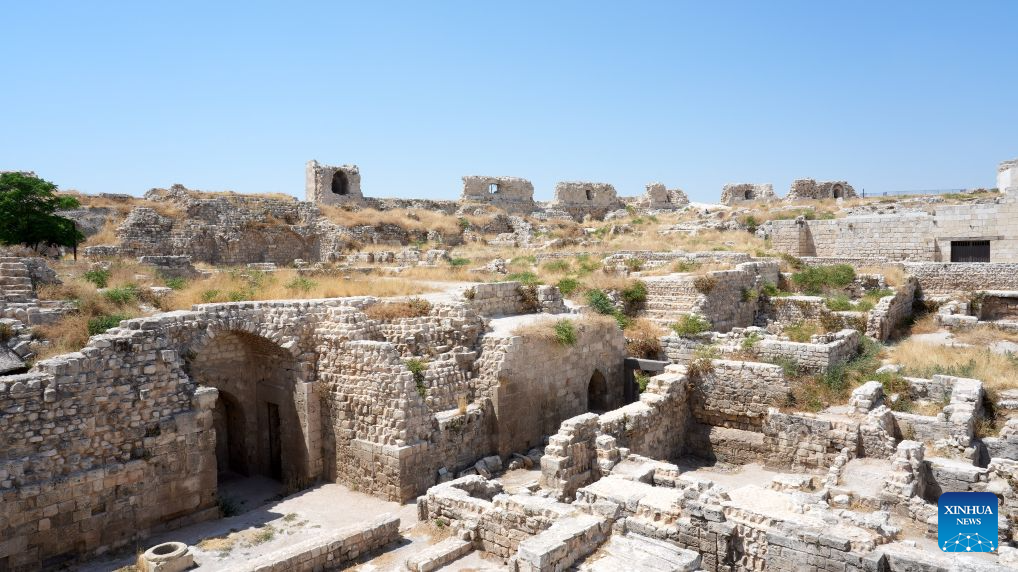
This photo taken on July 20, 2026 shows a view inside Aleppo Citadel in Aleppo, Syria. (Photo by Monsef Memari/Xinhua)
by Hummam Sheikh Ali
ALEPPO, Syria, July 30 (Xinhua) -- From the summit of Aleppo Citadel, the city stretches to every horizon, its rooftops shimmering beneath the summer sun. For centuries, rulers climbed these same walls to watch over one of the world's oldest continuously inhabited cities.
Today, visitors come for something more personal.
Some return searching for memories. Others arrive to discover a history they had only heard about. Together, they walk through a fortress where nearly every stone tells two stories -- one of the civilizations that built it, and another of the modern conflict that nearly broke it.
Aleppo Citadel has watched empires rise and fall for nearly a thousand years. Hittites, Greeks, Romans, Byzantines, Ayyubids, Mamluks and Ottomans all left their imprint on the land where the citadel stands. Yet for many Syrians, the deepest scars are not the oldest ones.
Years of fighting between 2012 and 2016 damaged sections of the fortress, while the 2023 earthquake inflicted further destruction on its walls, towers and historic structures. Even today, collapsed masonry, fractured arches and restoration scaffolding remain part of the landscape.
As Syria's situation gradually stabilizes, the silence of war has given way to the footsteps of visitors once again.
Children run across ancient stone courtyards. Families stop to photograph panoramic views of Aleppo. Syrians returning from abroad linger quietly beside windows overlooking the city they once left behind.
For Mohammad Nour Habbak, director of Aleppo Citadel, that return may be as important as the restoration itself.
"Aleppo Citadel is one of Syria's most important cultural heritage sites and one of the oldest and largest fortresses in the Middle East," he told Xinhua. "It has preserved its overall architectural layout and remains a symbol for the people of Aleppo because of its deep historical significance."
He said reopening the citadel to visitors marked a turning point after years of closure during the country's turmoil.
"Anyone visiting Aleppo will naturally visit the citadel," Habbak said. "It is one of the most important stops on the city's cultural tourism route, and reopening it has encouraged both domestic and international visitors to return."
Restoring such a monument, however, is painstaking work.
Unlike modern buildings, centuries-old stone structures cannot simply be rebuilt. Engineers first document every crack, archaeologists study every fallen block and conservators carefully determine which original materials can be preserved before reconstruction begins.
Much of that technical work has already been completed.
"The biggest challenge today is financing," Habbak said. "Most restoration studies are ready, but implementing them depends on securing sufficient funding."
Among those climbing the citadel's steep stone bridge is Zakaria, a Syrian originally from the Afrin district who has lived in Germany for the past 40 years. Visiting the fortress with his wife and daughter was one of the first things he wanted to do after returning home.
"The citadel is something we are proud of," he said. "It reflects our civilization and the people who built it. I always wanted to come back and visit it."
Standing inside the fortress, however, he found himself confronting not only history, but also loss.
"It breaks my heart to see such a great civilization damaged," he said. "War destroyed everything. It spared neither people nor places."
For Abdul Salam Talja, a young visitor from al-Bab in Aleppo's countryside, the experience was different.
The conflict had prevented him from visiting Aleppo while growing up. Instead of rediscovering a past he remembered, he was discovering the city for the first time.
"Many of the places we saw were not what we had imagined," he told Xinhua. "We hope they can all be restored because we want to see our history as it truly was."
Talja believes the responsibility for preserving that history now belongs to his own generation.
"We are the youth of this country," he said. "We should not wait for others to rebuild Syria. It will not happen overnight, and our generation will have to work hard so that those who come after us can see a better country."
That contrast is perhaps the citadel's greatest story today.
For older Syrians, it preserves memories of a country interrupted.
For younger Syrians, it represents a history still waiting to be fully discovered.
High above Aleppo, where ancient walls continue to overlook a city slowly rebuilding below, the fortress remains exactly where it has stood for centuries.
The empires have changed.
The skyline has changed.
The battles have changed.
But Aleppo Citadel continues to remind those who cross its stone bridge that while war can damage monuments, it cannot erase the history they carry, or the hope of those determined to preserve them. ■
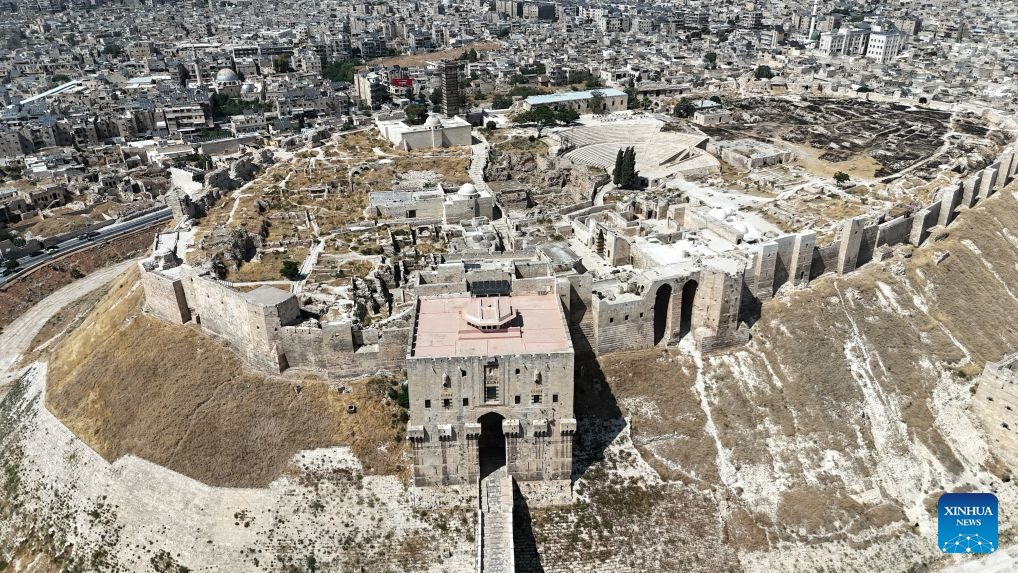
An aerial drone photo taken on July 20, 2026 shows a general view of Aleppo Citadel in Aleppo, Syria. (Photo by Monsef Memari/Xinhua)
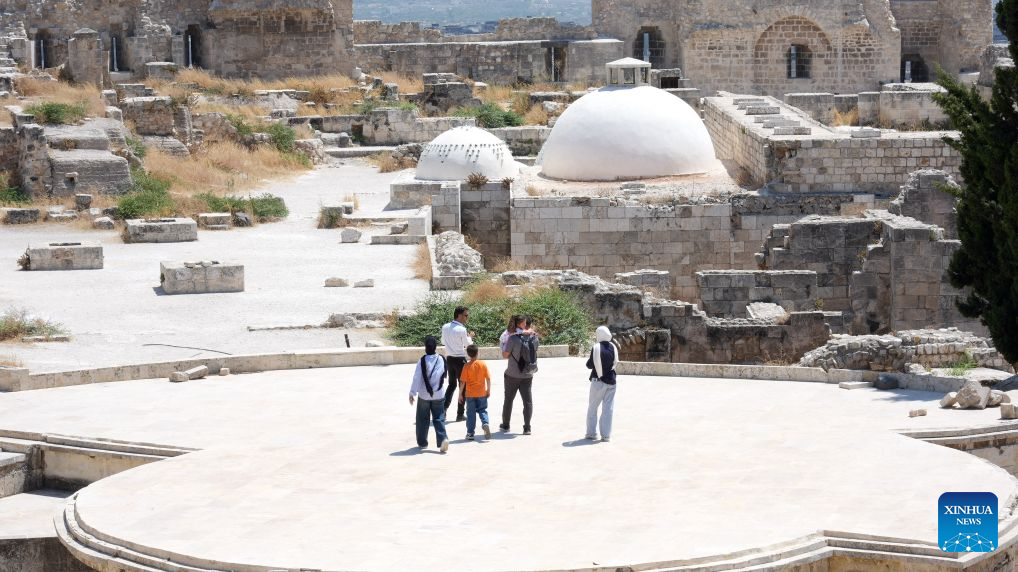
People visit Aleppo Citadel in Aleppo, Syria, July 20, 2026. (Photo by Monsef Memari/Xinhua)
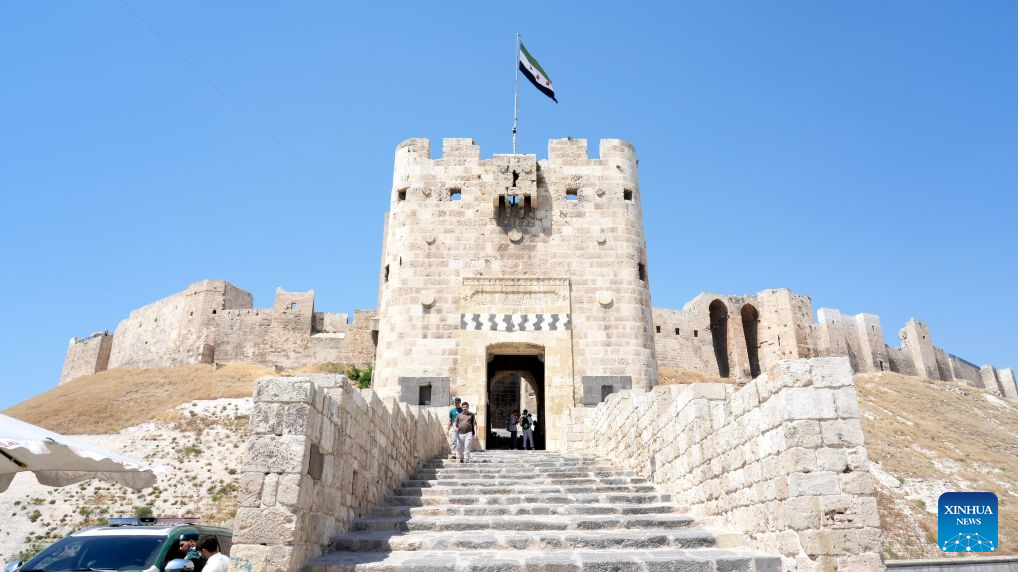
This photo taken on July 20, 2026 shows the main entrance to Aleppo Citadel in Aleppo, Syria. (Photo by Monsef Memari/Xinhua)
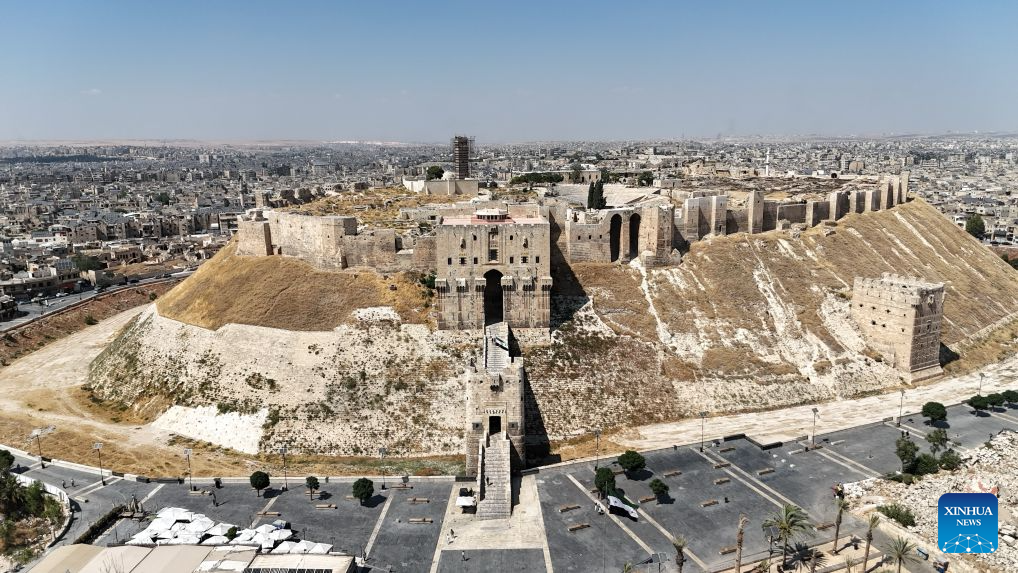
An aerial drone photo taken on July 20, 2026 shows a general view of Aleppo Citadel in Aleppo, Syria. (Photo by Monsef Memari/Xinhua)


