by Julia Pierrepont III, Gao Shan and Pan Yi
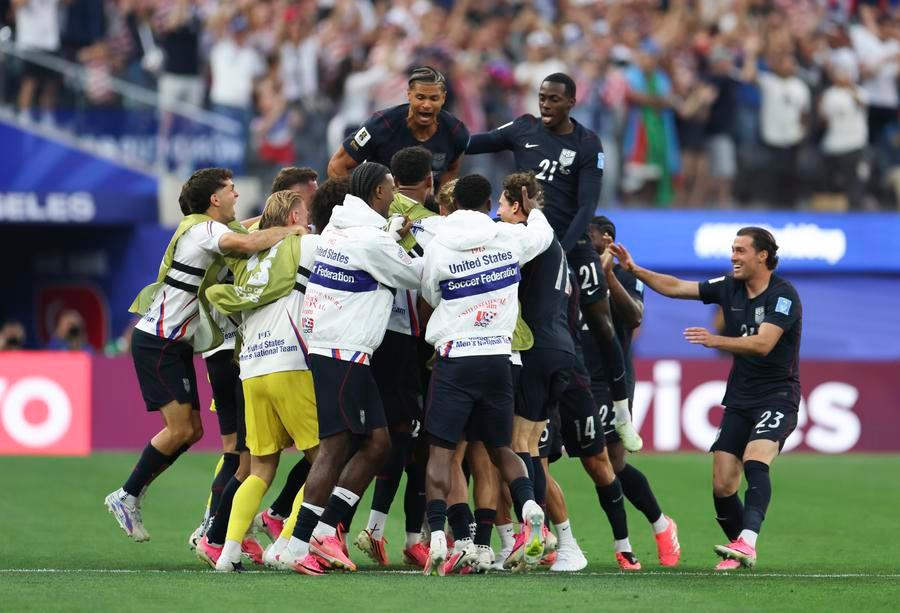
LOS ANGELES, June 27 (Xinhua) -- Soccer has long lagged behind football, baseball and basketball in the American sports landscape. But by topping its group and advancing to the knockout stage of the 2026 FIFA World Cup, the United States Men's National Team (USMNT) has further ignited Americans' passion for the sport.
"It's disappointing to lose to Türkiye at the last minute, but we're still group winners. We've got every reason to be proud," Douglas, a fan from San Diego, California, told Xinhua at Los Angeles Stadium, after the U.S. suffered a 3-2 defeat to an already-eliminated Turkish side Thursday night.
"I hope the U.S. can reach the quarterfinals, maybe even the semifinals," he said, noting that the World Cup will inspire more Americans to get into soccer.
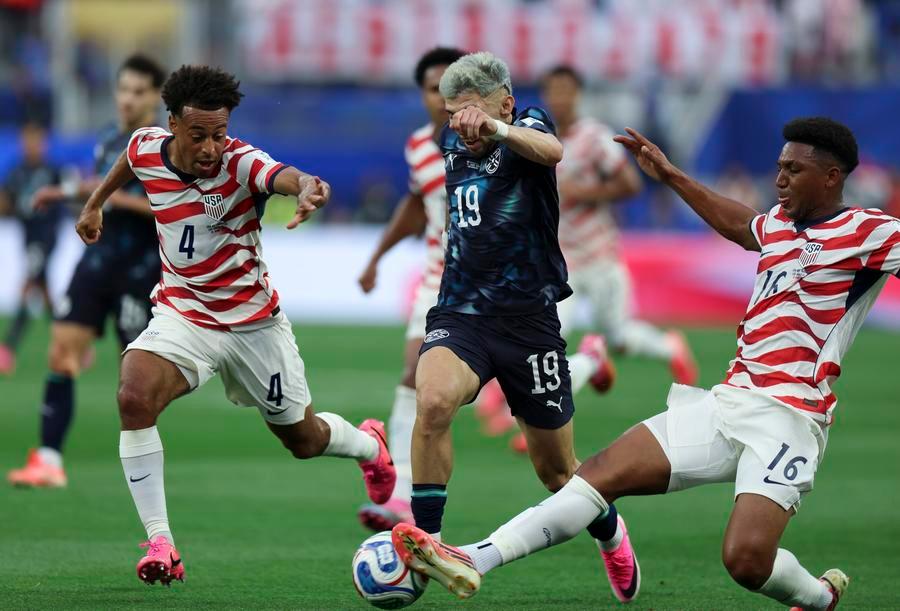
The U.S. secured the top spot in Group D with a 4-1 win over Paraguay in Los Angeles and a 2-0 victory over Australia in Seattle. The team will continue its World Cup journey against Bosnia and Herzegovina in the Round of 32.
The team's performance has prompted a national conversation about whether a strong run on home soil can push soccer from periodic American fascination into a more durable part of the country's sporting culture.
"That's pretty cool, and it's one of the beautiful things about hosting a World Cup. The sport enters the mainstream conversation in a way it rarely does," wrote Alejandro Bedoya, who earned 66 caps for the United States and represented the USMNT at the 2014 FIFA World Cup, in a column for MLSsoccer.com this week.
"More people are paying attention. More people are invested," he added.
"Our team is awesome," said soccer fan Tucker. "It's about time the U.S. got on the soccer bandwagon. It's a global phenomenon. We're the only country that didn't get the memo."
The early signs are unusually strong. The U.S. team's win over Paraguay drew record audiences, including high-profile figures from film, tech and sports, like soccer legend David Beckham, movie stars Tom Cruise and Leonardo DiCaprio, tech giant Bill Gates, and NBA legend Kareem Abdul-Jabbar.
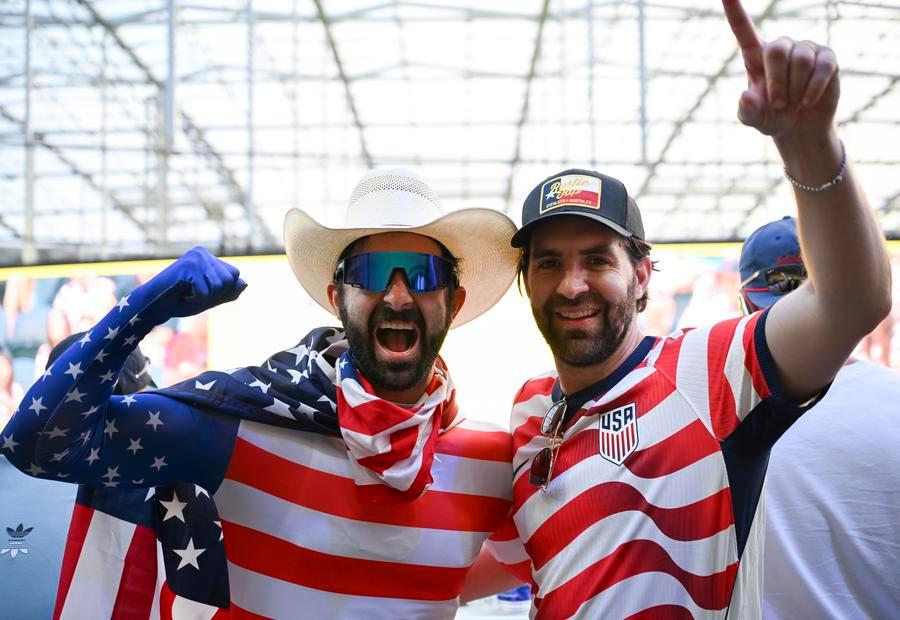
The match drew an estimated 27.5 million combined viewers across FOX, Telemundo, Peacock and Tubi. This impressive figure set a new all-time record for the most-watched soccer telecast in U.S. history, NBC reported.
The U.S. game against Australia boasted an estimated 23 million viewers. The U.S. game against Türkiye averaged a preliminary audience of 15.86 million viewers on FOX alone.
"We are so proud because we are winning a lot of fans and adding fans to the sport here in America," said U.S. head coach Mauricio Pochettino.
That matters because major tournaments have historically worked as accelerants. The 1994 World Cup helped create the conditions for Major League Soccer, the top tier of professional soccer in the United States, which began play in 1996.
"Our team is doing a great job in spite of there not being a big history of soccer in the U.S.," said Rocky Dononan, a soccer fan from Los Angeles. "Epic performances like this will bring in more fans. Everybody loves an underdog."
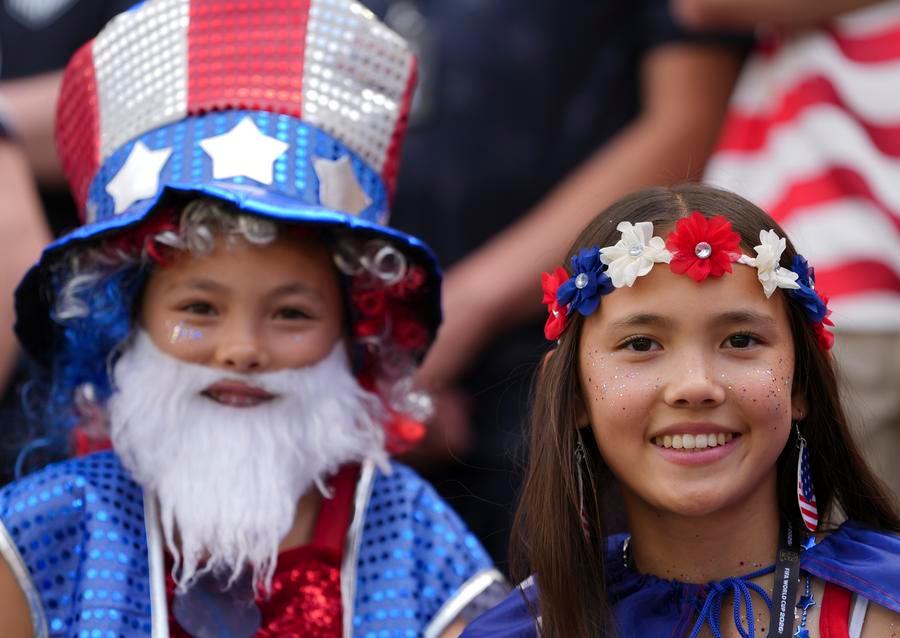
In the United States, the timing may be even more favorable. Participation was already climbing before the World Cup began. The Sports and Fitness Industry Association says outdoor soccer participation reached 16.8 million Americans in 2025, up 15.8 percent year over year, while indoor soccer rose to 6.6 million, climbing 10.5 percent from the previous year. Its broader participation hub estimated that by May 2026, nearly eight percent of Americans, or about 24.9 million people, were playing indoor or outdoor soccer.
U.S. Soccer has described the next decade - including the 2026 World Cup, the 2028 Los Angeles Olympics and the 2031 Women's World Cup - as a "generational opportunity." Its Pathways strategy acknowledges the problem plainly: soccer is growing, but for many families it remains fragmented, expensive and difficult to navigate. If the national team's success brings new players in, the system must be ready to keep them.
"It's totally going to open up the game in this country," said Finn Van Cleef, 18, a promising player in a local soccer club league on the U.S. East Coast.
Commercially, the conditions are stronger than in any previous American soccer boom. MLS reported that viewership was up 62 percent through the first three months of the 2026 season, while attendance averaged more than 22,000 fans per match. The league says it is experiencing its strongest three-year period of fan engagement, aided by the World Cup, improved media distribution and the presence of international stars.
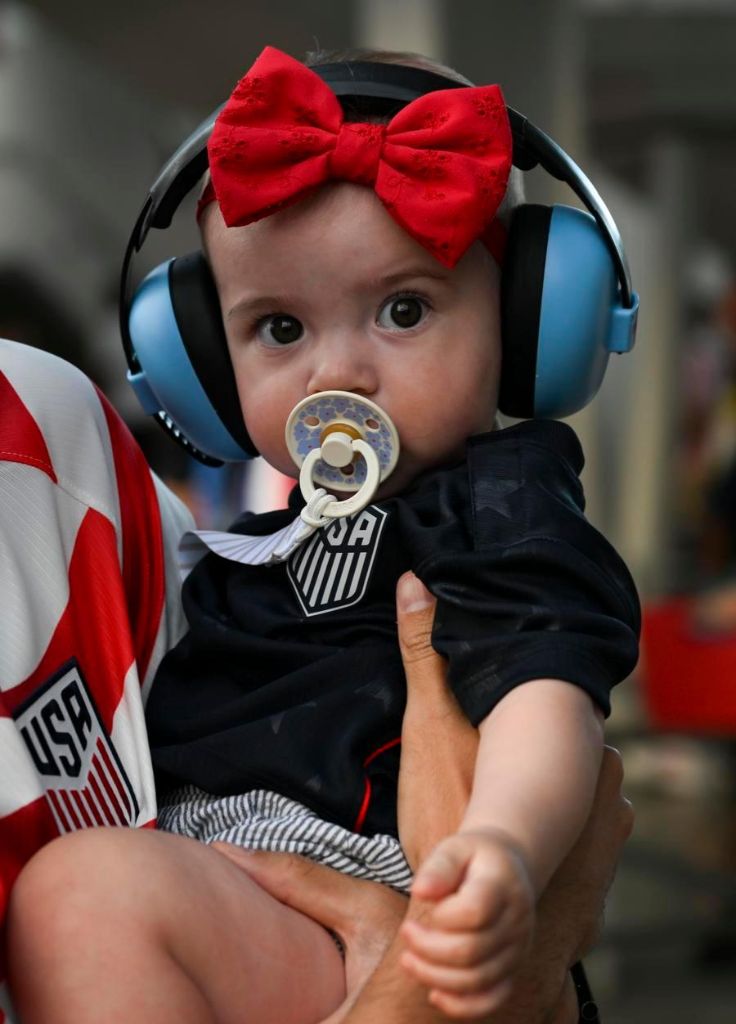
For soccer to become a lasting legacy in the U.S., youth and adult soccer registrations need to keep rising, especially in communities that have historically lacked access; and commercial investment has to flow into facilities, coaching, girls' and boys' development, and lower-cost community programs rather than only into top-tier clubs.
Don Garber, Commissioner of Major League Soccer, said that he doesn't expect the tournament to be a magic leap forward for MLS, with dramatically more fans and bigger TV numbers overnight. What he wants to see is a generation of new fans who came for the World Cup and stayed for the league. What he doesn't want is a spectacular few weeks that leave nothing behind.
A record 45 MLS players are representing 17 teams on soccer's biggest stage, according to Garber.
"The entire soccer industry, the women's game, the men's game, the minor leagues, the grassroots community, our federation, needs to be thinking about this. I really do believe it'll be bigger and better and more valuable when the World Cup is gone," Garber said. ■