
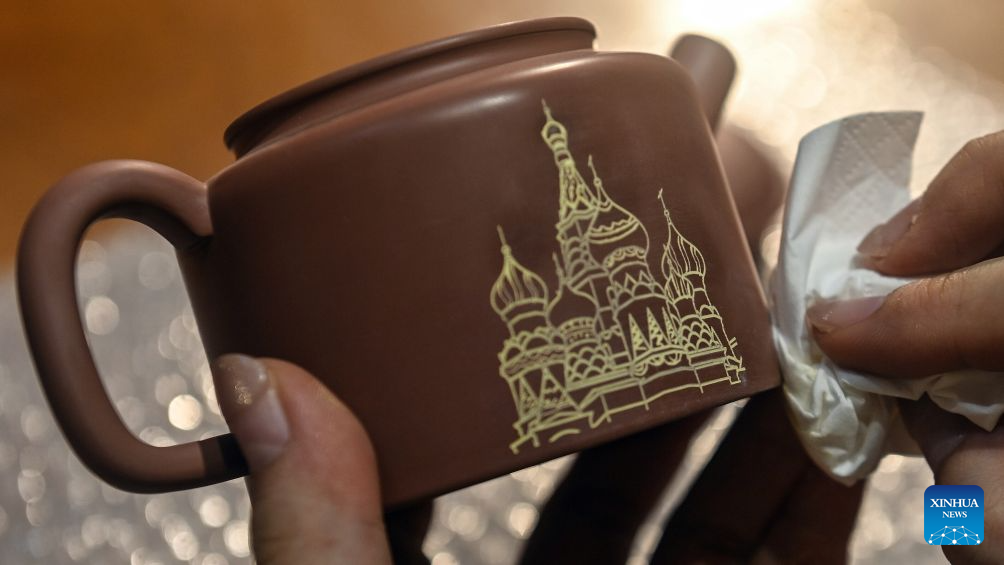
An artisan makes a Nixing pottery tea pot to be exported to Russia at a studio in Qinzhou City, south China's Guangxi Zhuang Autonomous Region, on June 24, 2026. In recent years, Qinzhou has leveraged various platforms, such as cultural expos, to further raise the profile of its Nixing pottery, one of the four famous potteries in China.
Thanks to the dedication and craftsmanship of generations of skilled artisans, Nixing pottery has become a much-loved intangible cultural heritage product with a distinctive unglazed kiln-transformation technique. Due to it, sales of Nixing pottery products have continued to grow steadily, boosting artisans' incomes and driving the sustained expansion of the industry.
According to historical records, the pottery, made of peculiar purple clay on both sides of the Qinjiang River in Qinzhou, dated back to the Tang Dynasty (618-907) and has a history of more than 1,300 years. In June 2008, its sintering techniques were added to the national intangible cultural heritage list. (Photo by Ao Shuaichang/Xinhua)
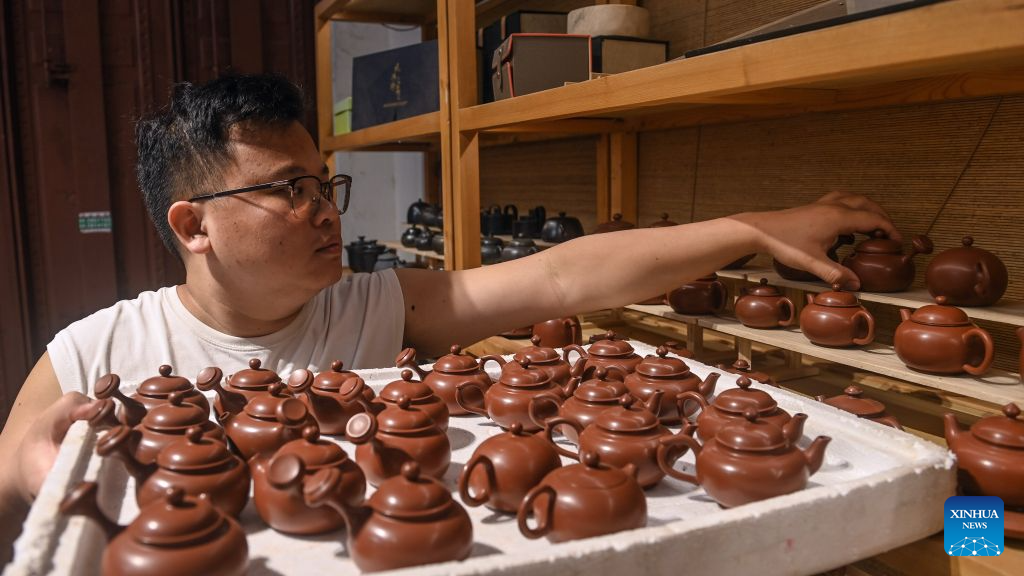
Artisan Li Yuanlin arranges finished Nixing pottery tea pots at a studio in Qinzhou City, south China's Guangxi Zhuang Autonomous Region, on June 24, 2026. In recent years, Qinzhou has leveraged various platforms, such as cultural expos, to further raise the profile of its Nixing pottery, one of the four famous potteries in China.
Thanks to the dedication and craftsmanship of generations of skilled artisans, Nixing pottery has become a much-loved intangible cultural heritage product with a distinctive unglazed kiln-transformation technique. Due to it, sales of Nixing pottery products have continued to grow steadily, boosting artisans' incomes and driving the sustained expansion of the industry.
According to historical records, the pottery, made of peculiar purple clay on both sides of the Qinjiang River in Qinzhou, dated back to the Tang Dynasty (618-907) and has a history of more than 1,300 years. In June 2008, its sintering techniques were added to the national intangible cultural heritage list. (Xinhua/Zhang Ailin)
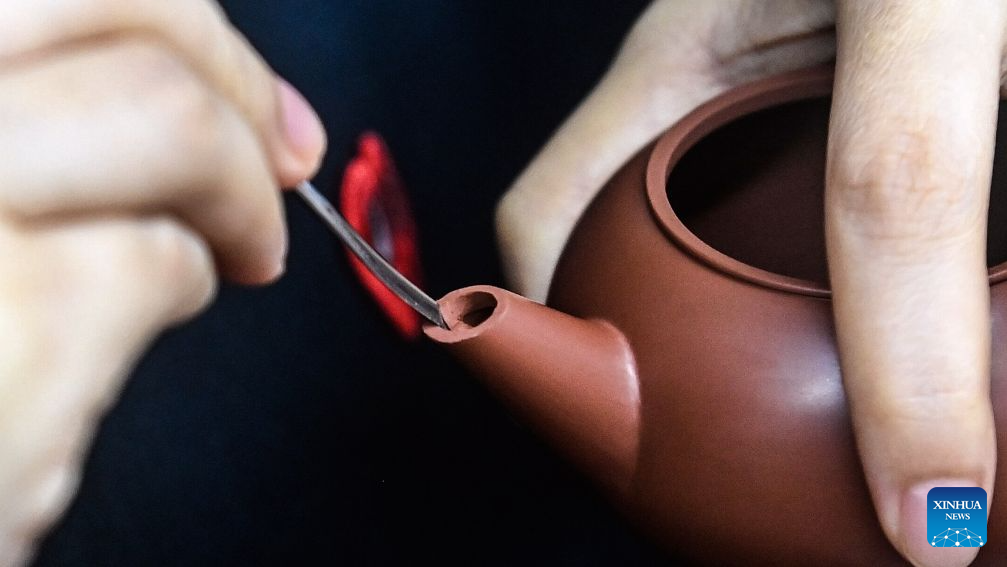
A college student makes a Nixing pottery product at a studio in Qinzhou City, south China's Guangxi Zhuang Autonomous Region, on June 23, 2026. In recent years, Qinzhou has leveraged various platforms, such as cultural expos, to further raise the profile of its Nixing pottery, one of the four famous potteries in China.
Thanks to the dedication and craftsmanship of generations of skilled artisans, Nixing pottery has become a much-loved intangible cultural heritage product with a distinctive unglazed kiln-transformation technique. Due to it, sales of Nixing pottery products have continued to grow steadily, boosting artisans' incomes and driving the sustained expansion of the industry.
According to historical records, the pottery, made of peculiar purple clay on both sides of the Qinjiang River in Qinzhou, dated back to the Tang Dynasty (618-907) and has a history of more than 1,300 years. In June 2008, its sintering techniques were added to the national intangible cultural heritage list. (Xinhua/Zhang Ailin)
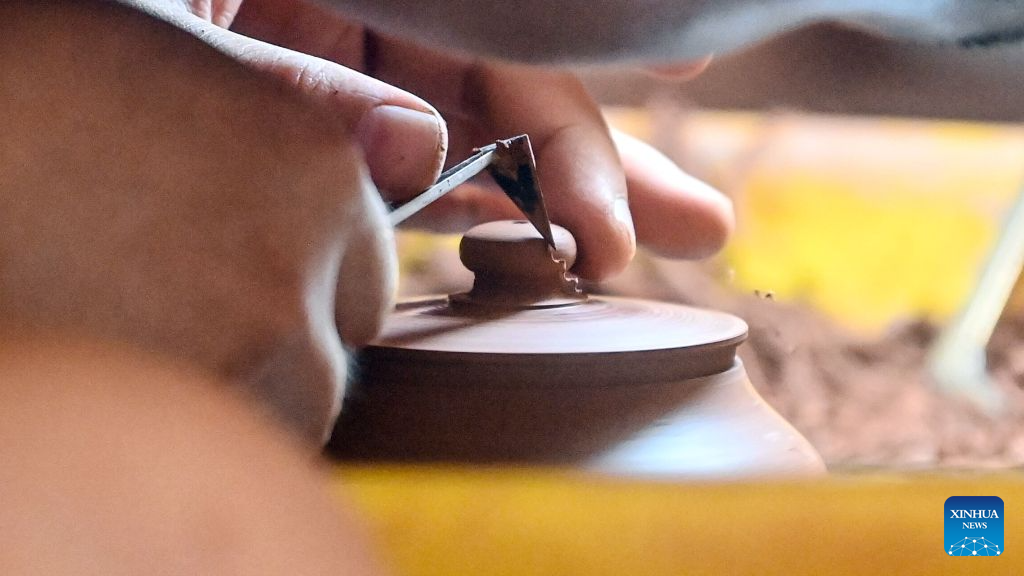
A college graduate makes a Nixing pottery product at a studio in Qinzhou City, south China's Guangxi Zhuang Autonomous Region, on June 23, 2026. In recent years, Qinzhou has leveraged various platforms, such as cultural expos, to further raise the profile of its Nixing pottery, one of the four famous potteries in China.
Thanks to the dedication and craftsmanship of generations of skilled artisans, Nixing pottery has become a much-loved intangible cultural heritage product with a distinctive unglazed kiln-transformation technique. Due to it, sales of Nixing pottery products have continued to grow steadily, boosting artisans' incomes and driving the sustained expansion of the industry.
According to historical records, the pottery, made of peculiar purple clay on both sides of the Qinjiang River in Qinzhou, dated back to the Tang Dynasty (618-907) and has a history of more than 1,300 years. In June 2008, its sintering techniques were added to the national intangible cultural heritage list. (Xinhua/Zhang Ailin)
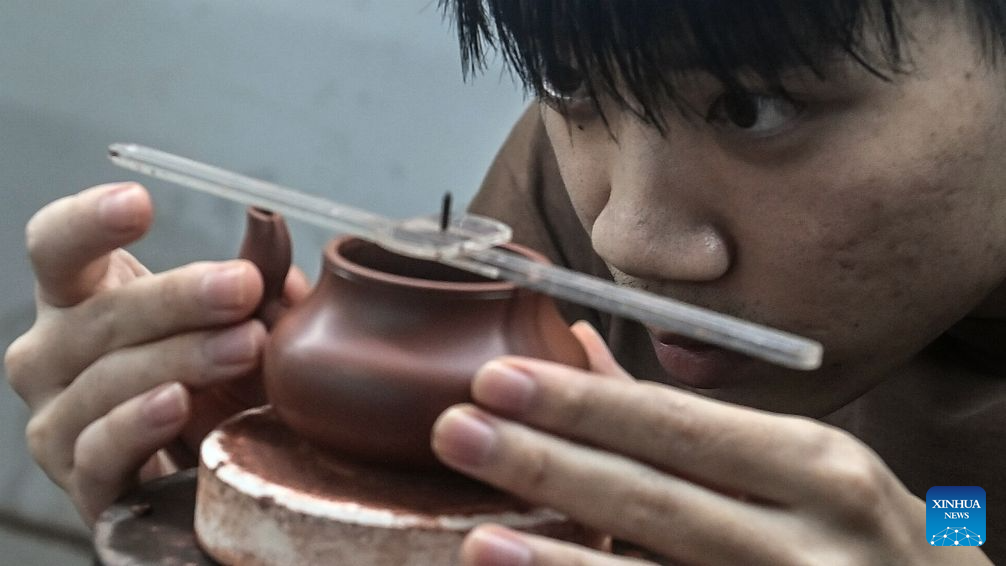
A college graduate makes a Nixing pottery product at a studio in Qinzhou City, south China's Guangxi Zhuang Autonomous Region, on June 23, 2026. In recent years, Qinzhou has leveraged various platforms, such as cultural expos, to further raise the profile of its Nixing pottery, one of the four famous potteries in China.
Thanks to the dedication and craftsmanship of generations of skilled artisans, Nixing pottery has become a much-loved intangible cultural heritage product with a distinctive unglazed kiln-transformation technique. Due to it, sales of Nixing pottery products have continued to grow steadily, boosting artisans' incomes and driving the sustained expansion of the industry.
According to historical records, the pottery, made of peculiar purple clay on both sides of the Qinjiang River in Qinzhou, dated back to the Tang Dynasty (618-907) and has a history of more than 1,300 years. In June 2008, its sintering techniques were added to the national intangible cultural heritage list. (Xinhua/Zhang Ailin)
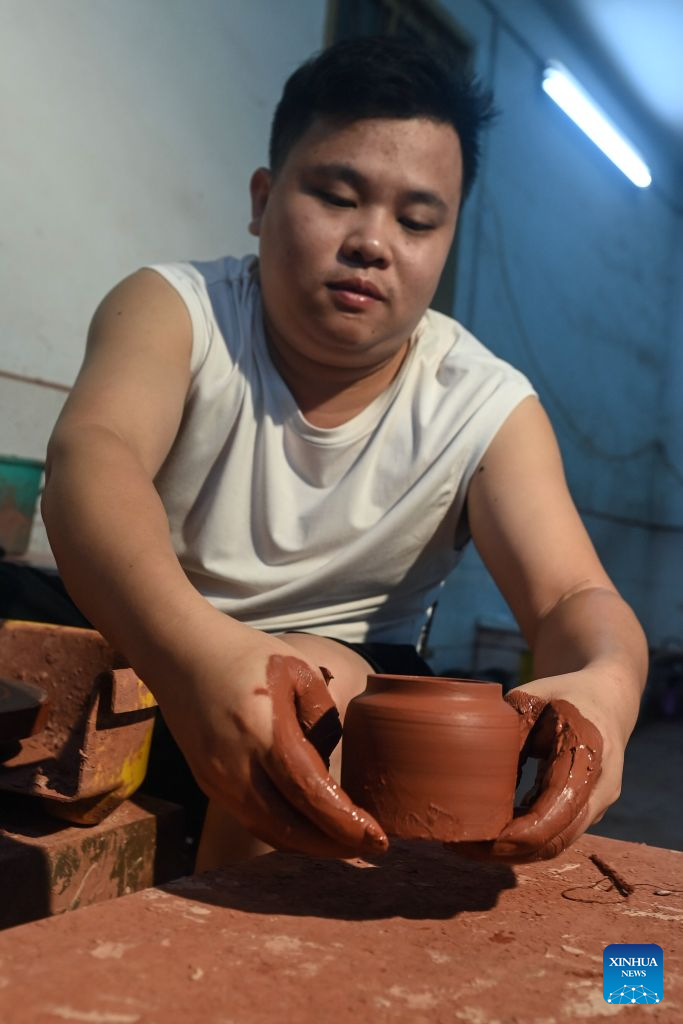
Artisan Li Yuanlin makes a Nixing pottery product at a studio in Qinzhou City, south China's Guangxi Zhuang Autonomous Region, on June 24, 2026. In recent years, Qinzhou has leveraged various platforms, such as cultural expos, to further raise the profile of its Nixing pottery, one of the four famous potteries in China.
Thanks to the dedication and craftsmanship of generations of skilled artisans, Nixing pottery has become a much-loved intangible cultural heritage product with a distinctive unglazed kiln-transformation technique. Due to it, sales of Nixing pottery products have continued to grow steadily, boosting artisans' incomes and driving the sustained expansion of the industry.
According to historical records, the pottery, made of peculiar purple clay on both sides of the Qinjiang River in Qinzhou, dated back to the Tang Dynasty (618-907) and has a history of more than 1,300 years. In June 2008, its sintering techniques were added to the national intangible cultural heritage list. (Xinhua/Zhang Ailin)
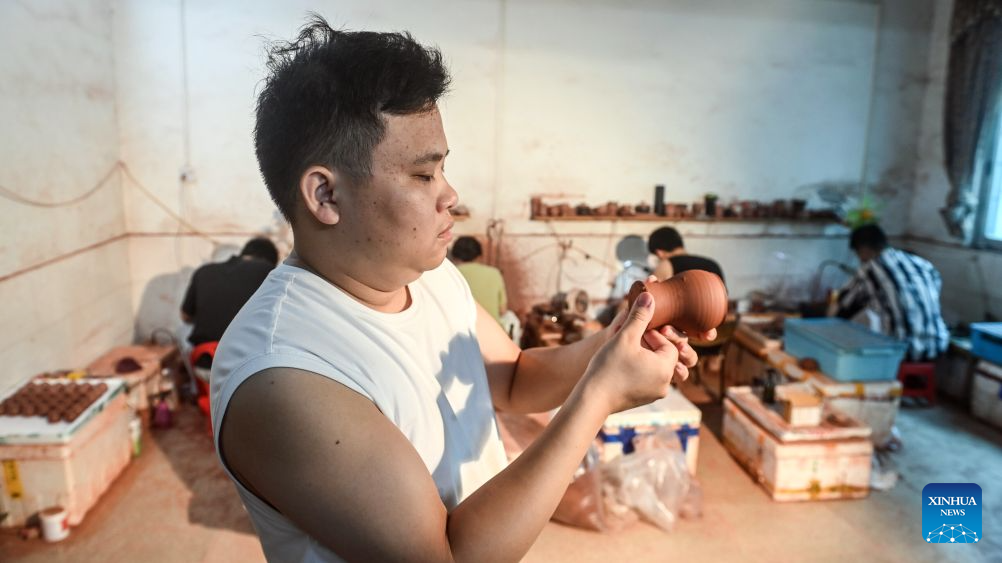
Artisan Li Yuanlin checks an unfinished Nixing pottery product at a studio in Qinzhou City, south China's Guangxi Zhuang Autonomous Region, on June 24, 2026. In recent years, Qinzhou has leveraged various platforms, such as cultural expos, to further raise the profile of its Nixing pottery, one of the four famous potteries in China.
Thanks to the dedication and craftsmanship of generations of skilled artisans, Nixing pottery has become a much-loved intangible cultural heritage product with a distinctive unglazed kiln-transformation technique. Due to it, sales of Nixing pottery products have continued to grow steadily, boosting artisans' incomes and driving the sustained expansion of the industry.
According to historical records, the pottery, made of peculiar purple clay on both sides of the Qinjiang River in Qinzhou, dated back to the Tang Dynasty (618-907) and has a history of more than 1,300 years. In June 2008, its sintering techniques were added to the national intangible cultural heritage list. (Xinhua/Zhang Ailin)
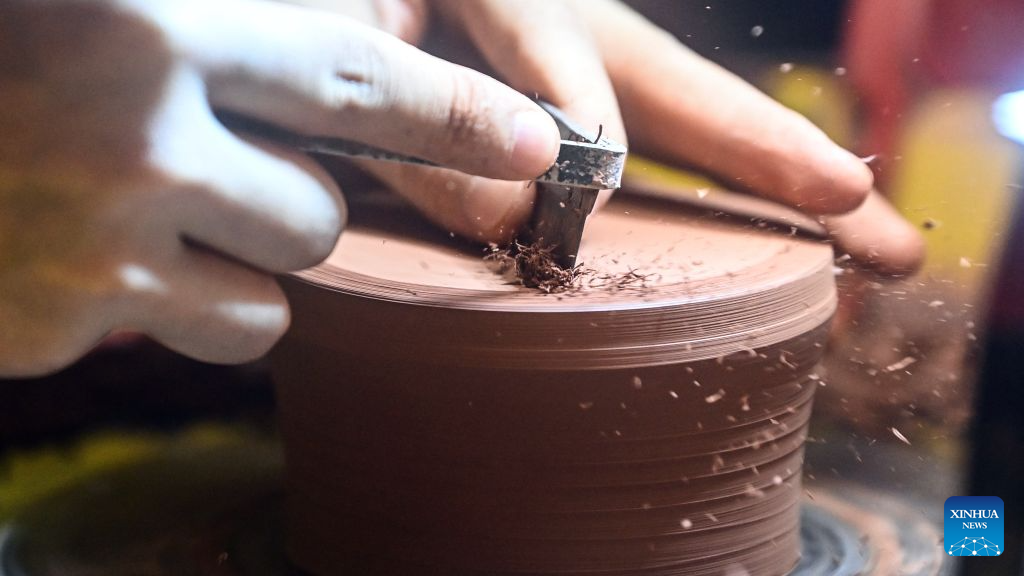
A college graduate makes a Nixing pottery product at a studio in Qinzhou City, south China's Guangxi Zhuang Autonomous Region, on June 23, 2026. In recent years, Qinzhou has leveraged various platforms, such as cultural expos, to further raise the profile of its Nixing pottery, one of the four famous potteries in China.
Thanks to the dedication and craftsmanship of generations of skilled artisans, Nixing pottery has become a much-loved intangible cultural heritage product with a distinctive unglazed kiln-transformation technique. Due to it, sales of Nixing pottery products have continued to grow steadily, boosting artisans' incomes and driving the sustained expansion of the industry.
According to historical records, the pottery, made of peculiar purple clay on both sides of the Qinjiang River in Qinzhou, dated back to the Tang Dynasty (618-907) and has a history of more than 1,300 years. In June 2008, its sintering techniques were added to the national intangible cultural heritage list. (Xinhua/Zhang Ailin)
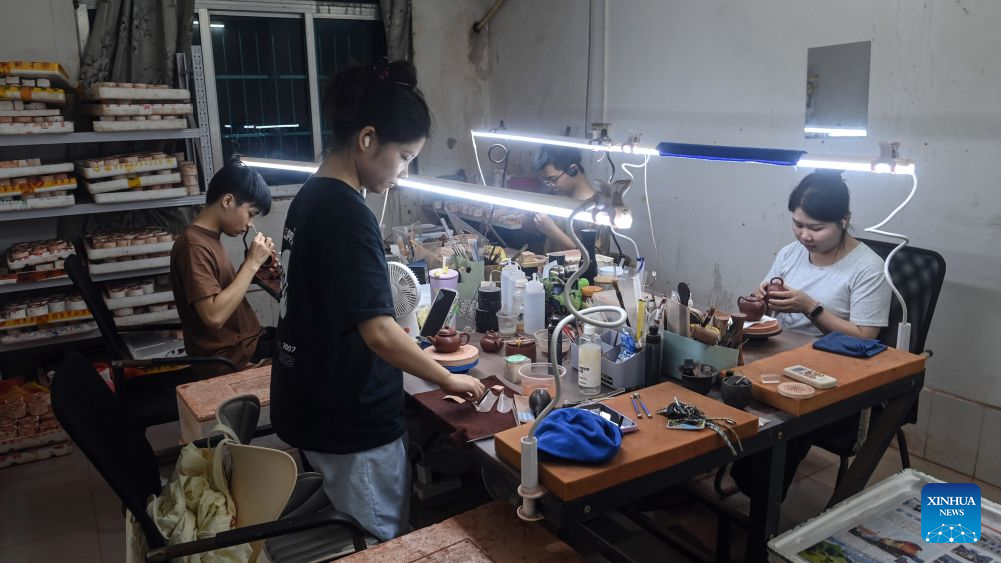
College graduates make Nixing pottery products at a studio in Qinzhou City, south China's Guangxi Zhuang Autonomous Region, on June 23, 2026. In recent years, Qinzhou has leveraged various platforms, such as cultural expos, to further raise the profile of its Nixing pottery, one of the four famous potteries in China.
Thanks to the dedication and craftsmanship of generations of skilled artisans, Nixing pottery has become a much-loved intangible cultural heritage product with a distinctive unglazed kiln-transformation technique. Due to it, sales of Nixing pottery products have continued to grow steadily, boosting artisans' incomes and driving the sustained expansion of the industry.
According to historical records, the pottery, made of peculiar purple clay on both sides of the Qinjiang River in Qinzhou, dated back to the Tang Dynasty (618-907) and has a history of more than 1,300 years. In June 2008, its sintering techniques were added to the national intangible cultural heritage list. (Xinhua/Zhang Ailin)
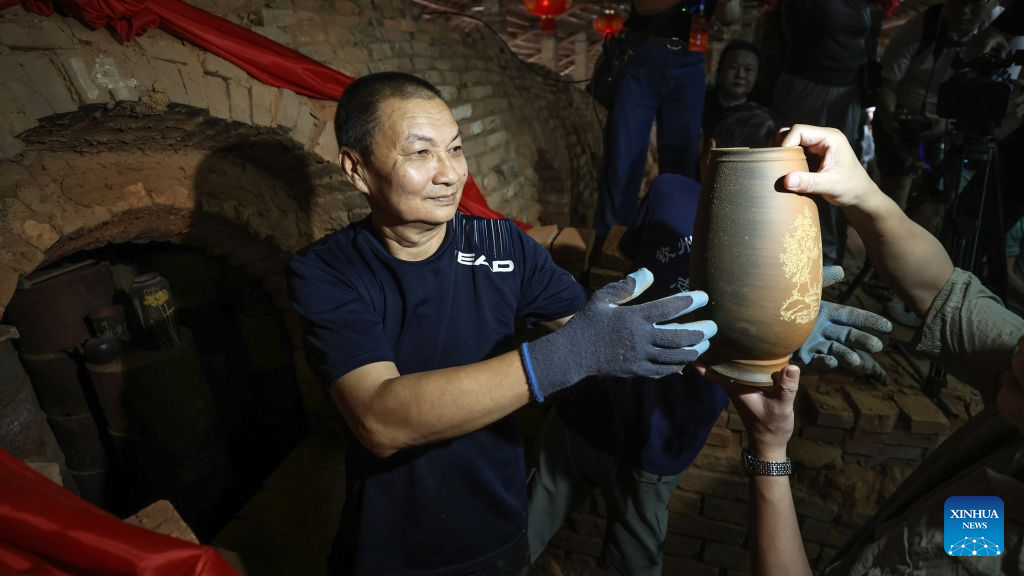
A staff member takes out a finished Nixing pottery product from an old kiln in Qinzhou City, south China's Guangxi Zhuang Autonomous Region, on June 19, 2026. In recent years, Qinzhou has leveraged various platforms, such as cultural expos, to further raise the profile of its Nixing pottery, one of the four famous potteries in China.
Thanks to the dedication and craftsmanship of generations of skilled artisans, Nixing pottery has become a much-loved intangible cultural heritage product with a distinctive unglazed kiln-transformation technique. Due to it, sales of Nixing pottery products have continued to grow steadily, boosting artisans' incomes and driving the sustained expansion of the industry.
According to historical records, the pottery, made of peculiar purple clay on both sides of the Qinjiang River in Qinzhou, dated back to the Tang Dynasty (618-907) and has a history of more than 1,300 years. In June 2008, its sintering techniques were added to the national intangible cultural heritage list. (Xinhua/Zhang Ailin)
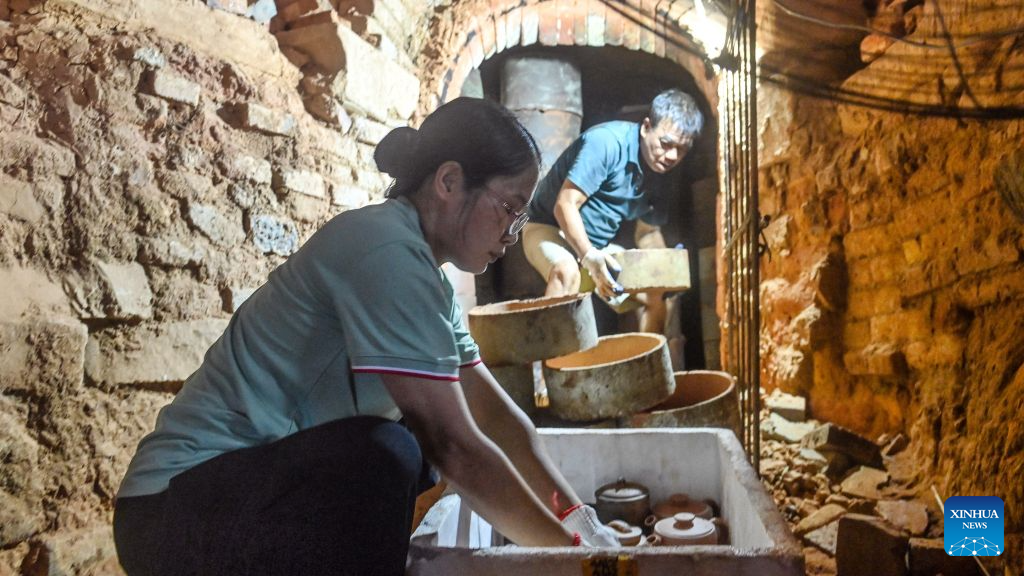
Staff members take out finished Nixing pottery products from an old kiln in Qinzhou City, south China's Guangxi Zhuang Autonomous Region, on June 19, 2026. In recent years, Qinzhou has leveraged various platforms, such as cultural expos, to further raise the profile of its Nixing pottery, one of the four famous potteries in China.
Thanks to the dedication and craftsmanship of generations of skilled artisans, Nixing pottery has become a much-loved intangible cultural heritage product with a distinctive unglazed kiln-transformation technique. Due to it, sales of Nixing pottery products have continued to grow steadily, boosting artisans' incomes and driving the sustained expansion of the industry.
According to historical records, the pottery, made of peculiar purple clay on both sides of the Qinjiang River in Qinzhou, dated back to the Tang Dynasty (618-907) and has a history of more than 1,300 years. In June 2008, its sintering techniques were added to the national intangible cultural heritage list. (Xinhua/Zhang Ailin)
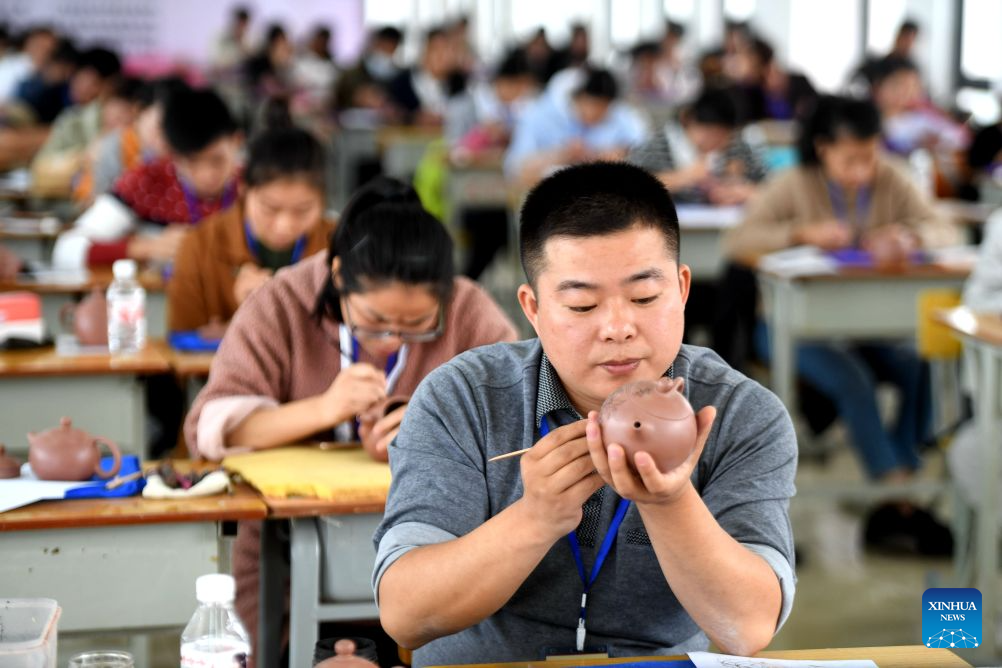
This file photo taken on Nov. 30, 2016 shows contestants taking part in a pottery-making competition in Qinzhou City, south China's Guangxi Zhuang Autonomous Region. In recent years, Qinzhou has leveraged various platforms, such as cultural expos, to further raise the profile of its Nixing pottery, one of the four famous potteries in China.
Thanks to the dedication and craftsmanship of generations of skilled artisans, Nixing pottery has become a much-loved intangible cultural heritage product with a distinctive unglazed kiln-transformation technique. Due to it, sales of Nixing pottery products have continued to grow steadily, boosting artisans' incomes and driving the sustained expansion of the industry.
According to historical records, the pottery, made of peculiar purple clay on both sides of the Qinjiang River in Qinzhou, dated back to the Tang Dynasty (618-907) and has a history of more than 1,300 years. In June 2008, its sintering techniques were added to the national intangible cultural heritage list. (Xinhua/Zhang Ailin)
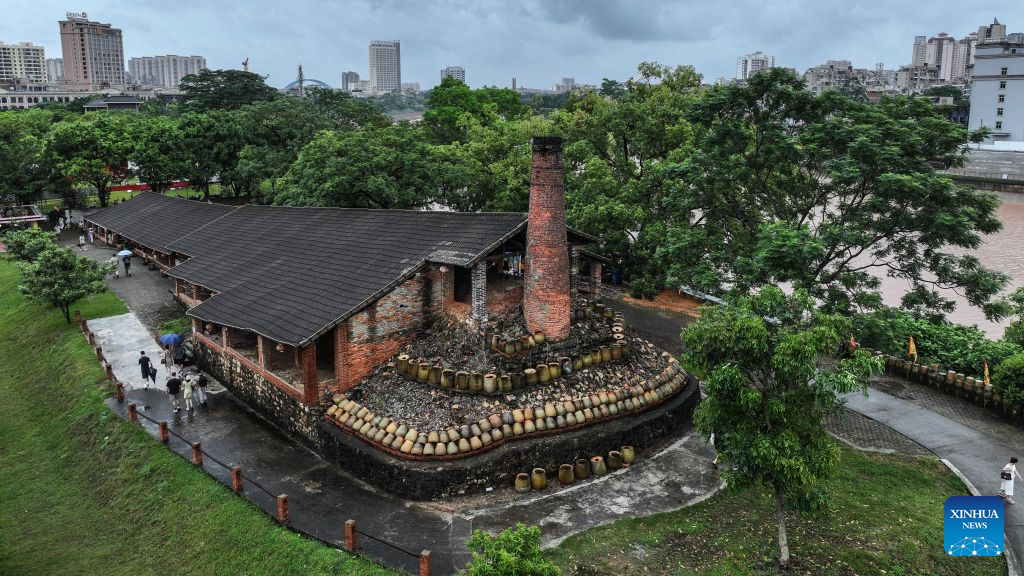
A drone photo taken on June 19, 2026 shows an old kiln built in Ming Dynasty (1368-1644) in Qinzhou City, south China's Guangxi Zhuang Autonomous Region. In recent years, Qinzhou has leveraged various platforms, such as cultural expos, to further raise the profile of its Nixing pottery, one of the four famous potteries in China.
Thanks to the dedication and craftsmanship of generations of skilled artisans, Nixing pottery has become a much-loved intangible cultural heritage product with a distinctive unglazed kiln-transformation technique. Due to it, sales of Nixing pottery products have continued to grow steadily, boosting artisans' incomes and driving the sustained expansion of the industry.
According to historical records, the pottery, made of peculiar purple clay on both sides of the Qinjiang River in Qinzhou, dated back to the Tang Dynasty (618-907) and has a history of more than 1,300 years. In June 2008, its sintering techniques were added to the national intangible cultural heritage list. (Xinhua/Zhang Ailin)


