
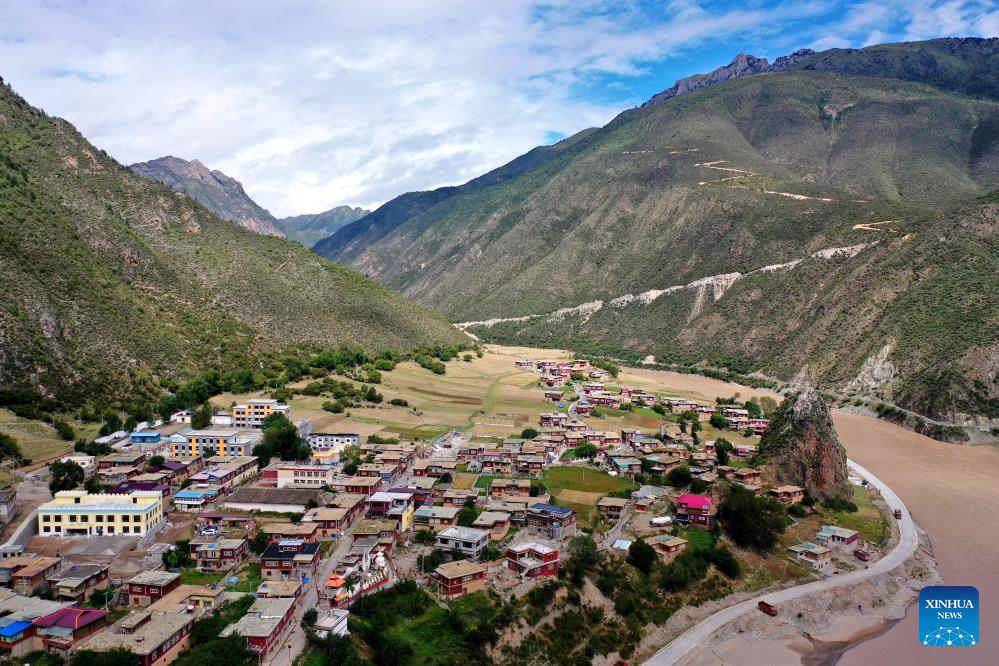
An aerial drone photo taken on Sept. 24, 2020 shows a view of Gamtog Village in Jomda County, Qamdo City of southwest China's Xizang Autonomous Region. (Xinhua/Zhan Yan)
LHASA, May 23 (Xinhua) -- By the Jinsha River in southwest China stands a giant boulder carved with two characters: Xi Zang. Behind it lies Gamtog Village, the eastern gateway to Xizang Autonomous Region.
In October 1950, the People's Liberation Army (PLA) crossed the river here on cowhide rafts, a moment that marked the beginning of Xizang's peaceful liberation and made Gamtog known as "the first liberated village" in the region.
Gone are the days of risking lives on fragile rafts. Today, a concrete bridge connects the village to a highway, bringing not only transport-related income but also a growing number of tourists.
Saturday marks the 75th anniversary of Xizang's peaceful liberation.
The transformation of Gamtog reflects the region's leap from backward serfdom to prosperity, from a life of hunger, leaking roofs, and corvee labor to one with paved roads, steady incomes, and children who sit in classrooms and learn.
A TASTE OF HOPE
Like the rest of Xizang, Gamtog Village was trapped under a feudal serfdom system before 1950. The majority of inhabitants were serfs, plagued with harsh corvee labor and famine.
Upon arrival, the PLA soldiers shared some of what they had with the villagers -- fried flour made from wheat and other grains. For Podrup, then just 10 years old, it was the best food she had ever tasted.
"It was salty, and to us it was delicious, as we had no seasoning at all at home," recalls Podrup, now 86, adding that it was her first taste of any food other than tsampa and turnips.
Seeing the PLA soldiers shared their own food with those in need and were always willing to lend a helping hand, locals offered to ferry their supplies for free. When the soldiers saw there were no decent trails for mules, they led the villagers in building roads.
In 1952, Qamdo, where Gamtog Village is located, gained road access. Two years later, the Sichuan-Xizang Highway became operational, ending Xizang's history of having no highway.
Gyangdro, 70, witnessed the drastic change in transport infrastructure over the past seven decades.
Her father-in-law was one of the boatmen who helped deliver supplies for the PLA soldiers. In 1956, a narrow chain bridge connected the village to the other side of the river, allowing only people and mules to cross. A concrete bridge came in 1974, followed by the modern 8.5-meter-wide Gamtog Jinsha River Bridge in 2008.
"The evolution of the bridges tells the story of Gamtog's shift from isolation to connection," Gyangdro said. "Now that the Gamtog Jinsha River Bridge is built, there are more vehicles and travel is much easier for everyone."
ROAD TO PROSPERITY
According to a white paper released last year, improved transport infrastructure and services have facilitated travel across Xizang, with 124,900 km of roads and 1,359 km of in-service railways built by the end of 2024.
Today, transport has become a major source of income for Gamtog villagers. Most families now own a vehicle, and some have several.
Thanks to better roads, the village has also become a first stop for many travelers entering Xizang, drawn by its revolutionary heritage, natural scenery, and Tibetan culture. Villagers have opened homestays and specialty restaurants, offering horse riding services, dance performances, and guided tours.
Last year, the villige received more than 20,000 tourists, and its per capita disposable income reached more than 20,000 yuan (about 2,925 U.S. dollars).
Deng Miao, from neighboring Sichuan Province, was drawn to the village because of its revolutionary heritage and natural beauty. She now runs a homestay, blending traditional Tibetan elements with revolutionary culture in its design.
"The village has a long revolutionary legacy and a tradition of ethnic solidarity. That's why I chose it," Deng said. She has studied the village's history through local archives and tourism officials, and now tells that history to her guests.
Figures show Xizang's gross domestic product surged to over 303 billion yuan in 2025 from 129 million in 1951, while average life expectancy in the region has climbed from 35.5 years in the 1950s to 72.5 years today. Education in the region has achieved a historic leap, from a gross enrollment rate of less than 2 percent in old times to nearly 100 percent in compulsory education currently.
From a shabby house shared with livestock to a two-storey Tibetan-style residence, Dokhar, 71, has witnessed three generations of homes in Gamtog Village. After graduating from college, his two sons have found jobs in Konjo County and Chongqing Municipality, respectively. His granddaughter Padma Yudron, a fifth grader in Konjo County, enjoys free education at school.
"I hope she studies hard, gets into a good university, and finds time to travel across our country to see the beautiful landscapes and experience different cultures," Dokhar said. ■
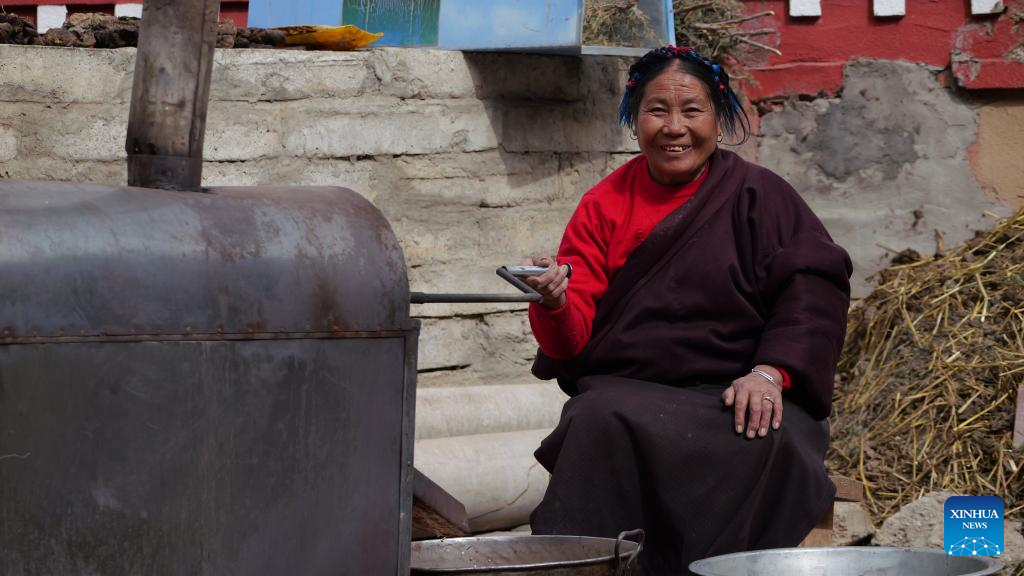
Gyangdro cooks highland barley in Gamtog Village in Jomda County, Qamdo City of southwest China's Xizang Autonomous Region, Feb. 8, 2026. (Xinhua/Dang Li)
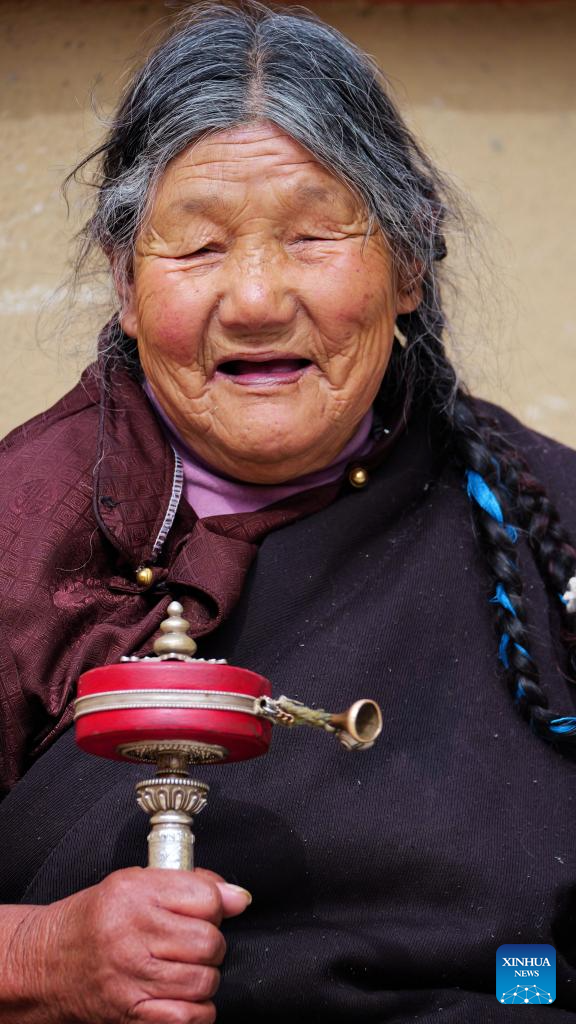
This photo taken on Feb. 8, 2026 shows the portrait of Podrup in Gamtog Village in Jomda County, Qamdo City of southwest China's Xizang Autonomous Region. (Xinhua/Gaesang Namgyae)

This photo taken on Feb. 8, 2026 shows the portrait of Dokhar in Gamtog Village in Jomda County, Qamdo City of southwest China's Xizang Autonomous Region. (Xinhua/Gaesang Namgyae)
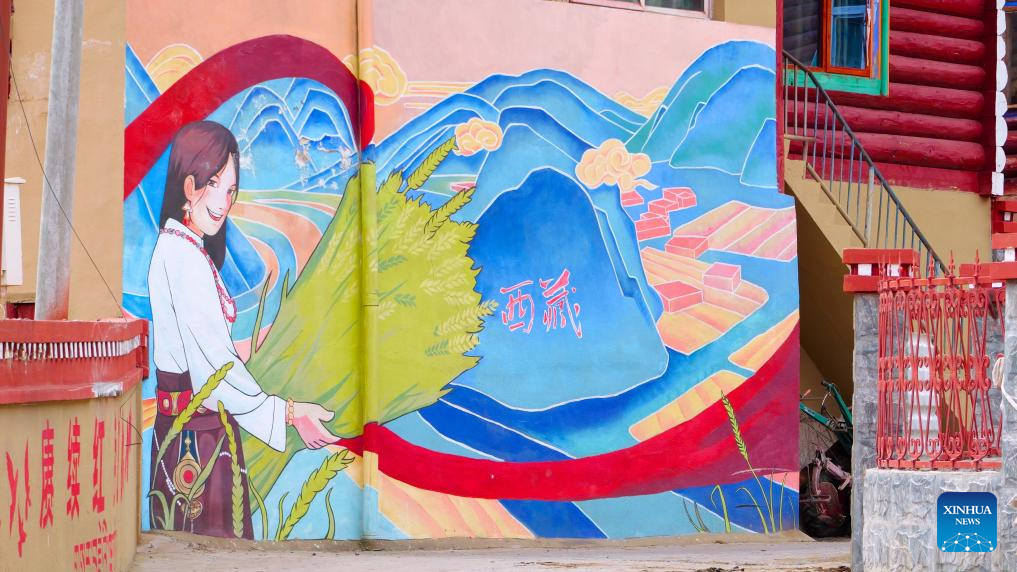
This photo taken on Feb. 8, 2026 shows a painting on a wall in Gamtog Village in Jomda County, Qamdo City of southwest China's Xizang Autonomous Region. (Xinhua/Dang Li)
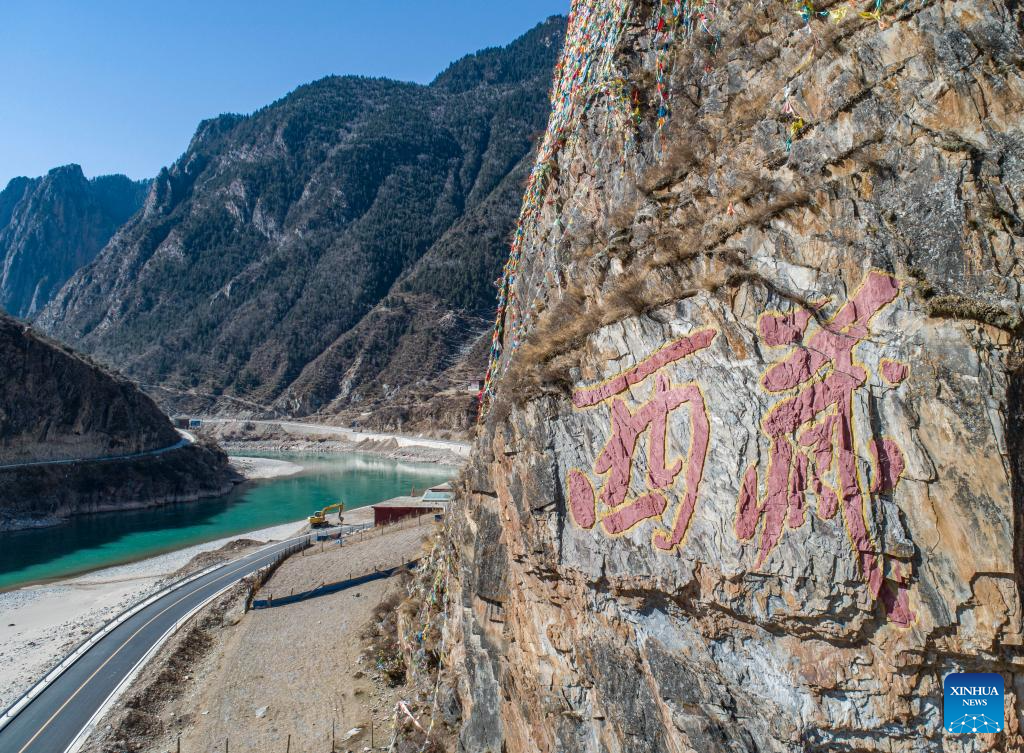
A drone photo taken on March 23, 2021 shows a giant boulder carved with two characters "Xi Zang" at the entrance to Gamtog Village in Jomda County, Qamdo City of southwest China's Xizang Autonomous Region. (Xinhua/Sun Fei)
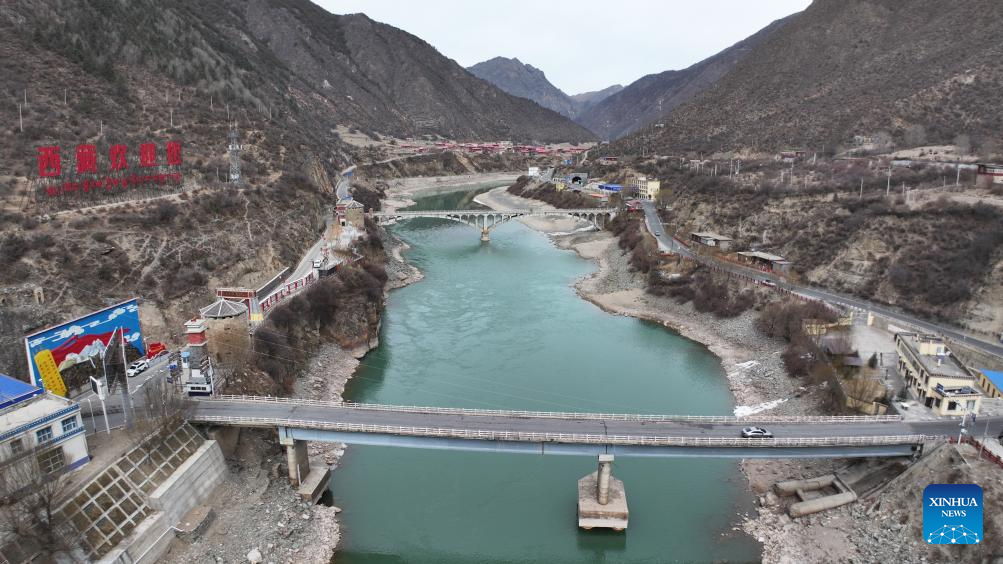
An aerial drone photo taken on Feb. 8, 2026 shows a concrete bridge (front) connecting Gamtog Village to a highway in Jomda County, Qamdo City of southwest China's Xizang Autonomous Region. (Xinhua/Dang Li)


