
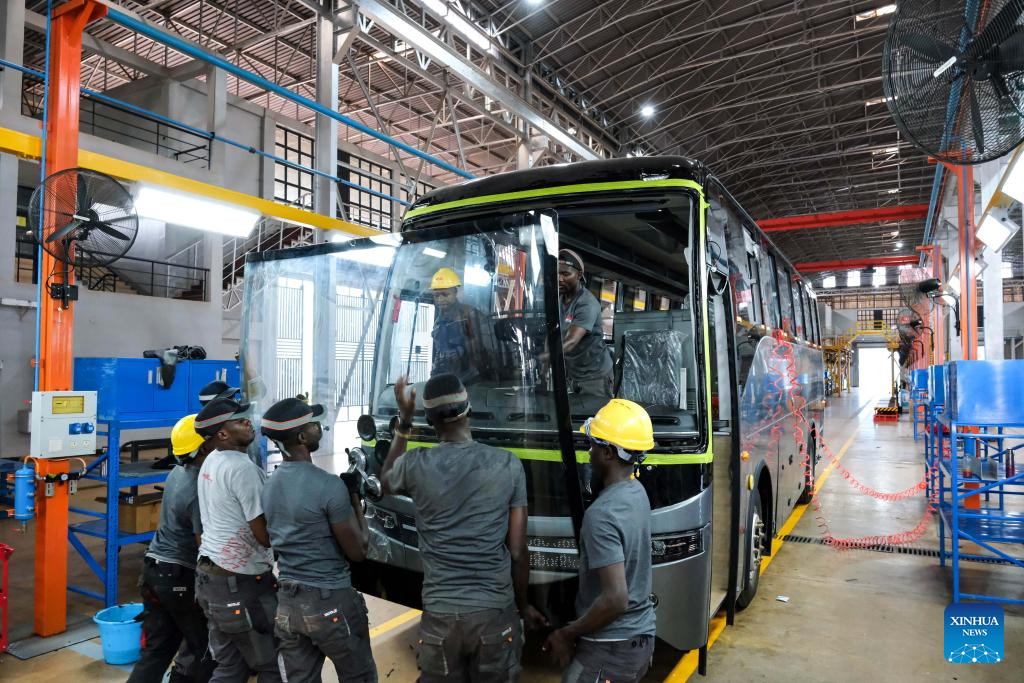
Workers fix the windscreen on an electric bus inside the Kiira Vehicle Plant in Jinja, Eastern Uganda, on May 18, 2026. (Photo by Hajarah Nalwadda/Xinhua)
KAMPALA, May 20 (Xinhua) -- On the busy streets of Kampala, Uganda's capital, a quiet transformation is unfolding. Sleek, locally manufactured electric buses are becoming part of the city's daily rhythm, marking the country's accelerating drive toward greener and more sustainable urban transport.
Since their introduction, the green-and-gray 40-seater electric buses have quickly drawn growing public attention. Equipped with onboard WiFi, they allow passengers to share photos and videos of their journeys on social media in real time, turning routine commutes into visible symbols of emerging green mobility solutions.
Uganda's journey into electric mobility dates back to 2016, when it unveiled Africa's first solar-powered electric bus, the Kayoola electric vehicle, a name loosely translated as "mass carrier."
At the heart of this transition is Kiira Motors Corporation (KMC) and its subsidiary E-Bus Xpress Kiira Ltd., which are spearheading efforts to scale up electric mobility across the country.
During a recent media tour of the company's production plant, managing director Ian Kyeyune said the number of buses operating on city routes is set to rise from 16 to 45 within a month.
He added that Uganda plans to produce more than 1,500 electric buses over the next year, forming part of a broader national e-mobility strategy targeting 15,000 electric vehicles by 2030.
"The goal for us is to transport over five million Ugandans daily. What this means is that on each route that is passable by motorized vehicle, there must be a Kayoola electric bus," Kyeyune said.
To support the shift, city authorities are reshaping urban traffic management -- removing roadside parking in downtown areas and introducing dedicated bus lanes, aimed at easing congestion and prioritizing public transport in a city long dominated by fuel-powered vehicles.
The government is also expanding the sector through a campaign that encourages private participation. Under the initiative, transport operators can own buses, while investors may purchase seats for fixed periods under franchise arrangements. Authorities also plan to extend electric bus services beyond Kampala to intercity routes nationwide.
KMC engineers say the electric buses offer clear economic advantages over diesel-powered alternatives, particularly in acquisition, servicing, and maintenance costs.
"We save over 60 percent of energy costs. Where an ordinary taxi would spend 1,800 shillings (about 0.48 U.S. dollars), we only spend 800 shillings on energy cost per km," Kyeyune said.
He added that studies indicate operators can recover their investment within about three years, thanks to lower fuel expenses. The batteries, with an estimated lifespan of 12 years, can later be reused for applications such as solar energy storage.
Richard Madanda, KMC's director for production, said the batteries used in the buses are imported from China and that the company is working closely with Chinese partners to develop local technical expertise in electric vehicle technology.
"We are working with a partner from China because their auto industry, in terms of electric vehicles, is the best in the world. We want to learn from the best," Madanda said.
Uganda is also testing its electric mobility ambitions beyond its borders. Late last year, Uganda launched an African expedition featuring a locally manufactured electric bus that traveled 13,000 km across five African countries -- Tanzania, Zambia, Botswana, Eswatini, and South Africa.
The journey aimed to demonstrate the endurance of African-made electric buses and promote wider adoption of green mobility solutions. The electric bus used in the expedition has a range of 500 km per charge.
For Kyeyune, the shift goes beyond transport and reflects technological self-reliance.
"It is about Africa providing or being the net source of mobility solutions for itself," Kyeyune said. "We have come of age, and we are providing solutions to our own problems. But the overarching benefit from this is the ability to afford and access this technology at an affordable fee," Kyeyune said. ■
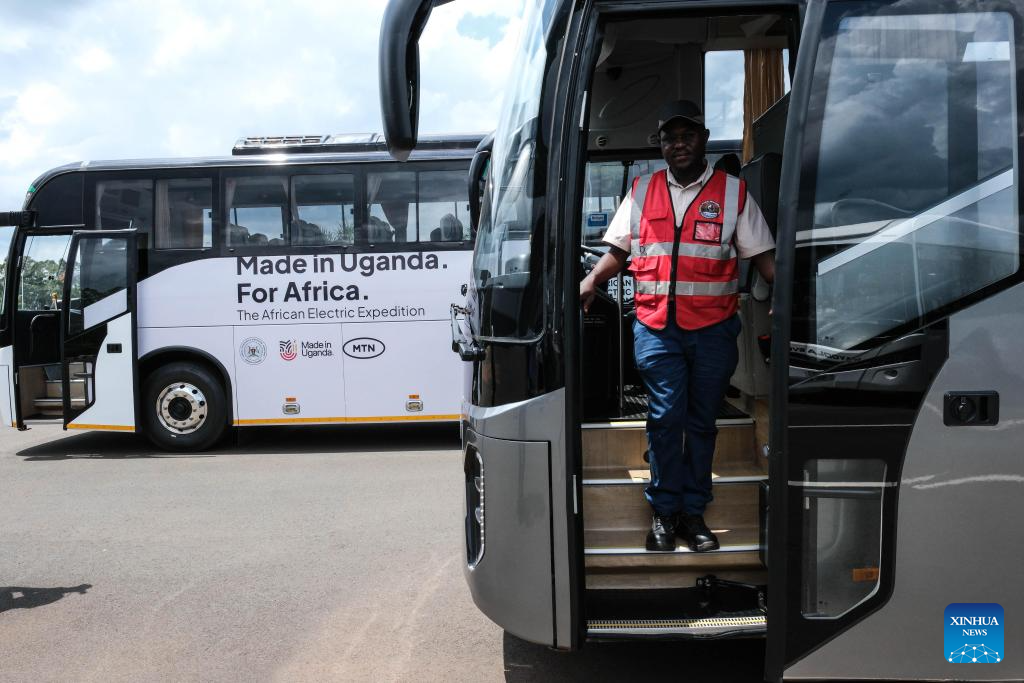
An engineer stands inside an electric bus at the Kiira Vehicle Plant in Jinja, Eastern Uganda, on May 18, 2026. (Photo by Hajarah Nalwadda/Xinhua)
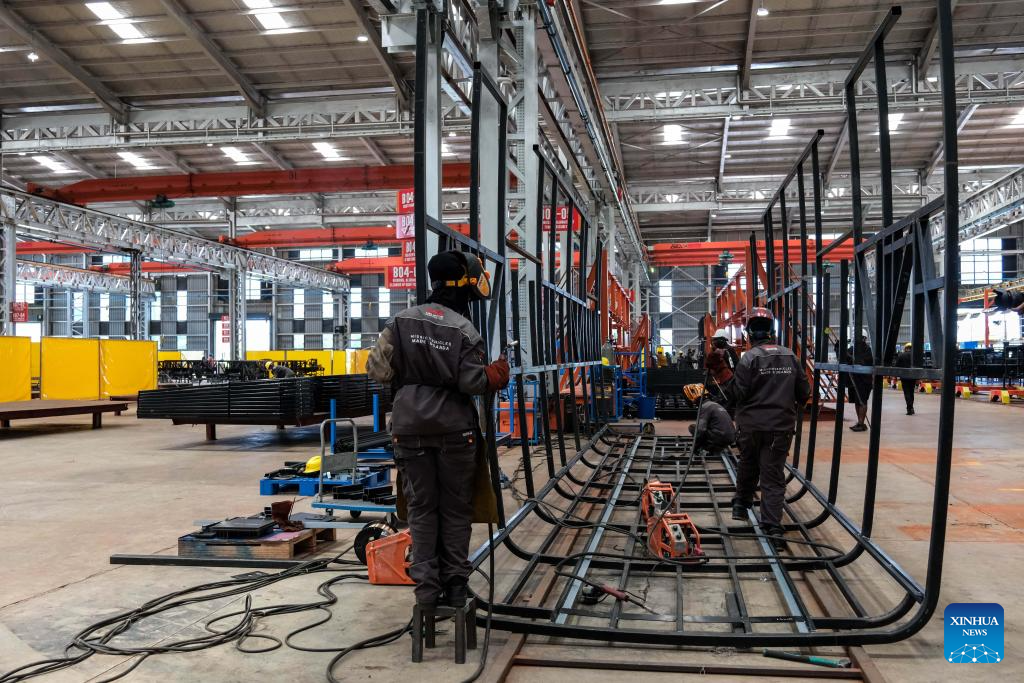
Workers weld a bus frame inside the electric bus workshop at the Kiira Vehicle Plant in Jinja, Eastern Uganda, on May 18, 2026. (Photo by Hajarah Nalwadda/Xinhua)
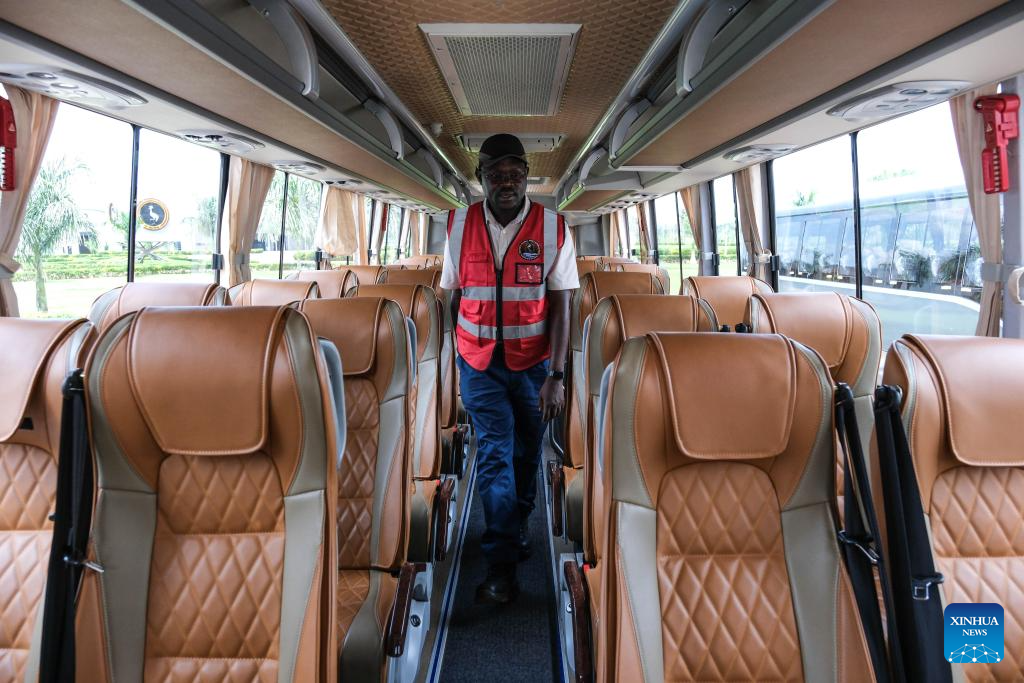
An engineer walks inside an electric bus at the Kiira Vehicle Plant in Jinja, Eastern Uganda, on May 18, 2026. (Photo by Hajarah Nalwadda/Xinhua)


