
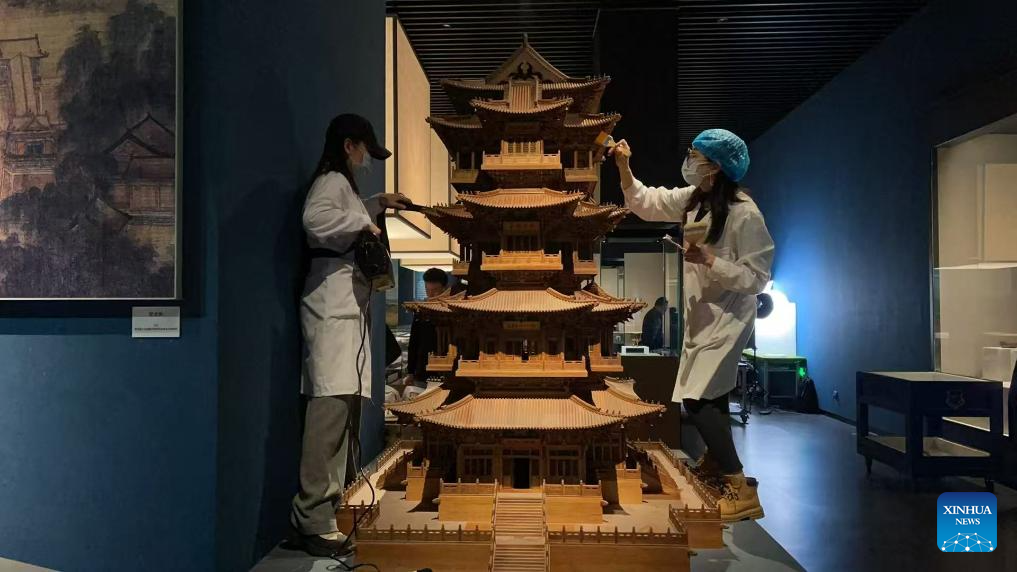
Xu Zheng (R) and her colleague clean and consolidate a model in Hohhot, north China's Inner Mongolia Autonomous Region, on April 1, 2025. (Xinhua)
HOHHOT, May 18 (Xinhua) -- Dressed in a white lab coat and a face mask, hunched over a workstation under the bright light of a surgical-style lamp, Xu Zheng looks exactly like a surgeon preparing for a delicate operation.
But her patients do not have a pulse; they are centuries-old textiles.
As a textile artifact conservator at the Inner Mongolia Museum in north China, Xu views her role through a medical lens. "We are essentially doctors for cultural relics," said Xu.
"We examine them, diagnose their ailments, and treat them. The only difference is that our patients cannot speak, which means the treatment requires an extra measure of skill and patience," she added.
Since graduating from Northwest University with a degree in cultural relics conservation technology in 2008, Xu has breathed new life into hundreds of ancient artifacts. Under her meticulous care, fragile Northern Wei Dynasty (386-534) overalls and hats worn by the nomadic Khitan people have regained their structural integrity and vibrant histories.
In the northern grasslands of Inner Mongolia, ancient textiles recovered from tombs and ruins often arrive at Xu's lab resembling decayed, brittle wood that can crumble into dust at the slightest touch.
"Faced with such fragility, we never rush into physical restoration," Xu said.
First comes the diagnosis. Using advanced digital microscopes with ultra-deep fields of view, Xu and her team collect microscopic data to map out the specific "diseases" or degradation patterns afflicting the fibers before formulating a cure.
The next step is resuscitation through a specialized humidification process. Using custom equipment, the dry, brittle textiles are exposed to cold steam. As the parched fibers absorb moisture, their strength increases, allowing them to be safely flattened and reinforced.
"Gauging the right amount of moisture is a fine art that relies heavily on touch," Xu said. "When the fibers absorb enough water, they lose their rigid, decayed texture and feel soft again. It feels as if they are waking up from a deep sleep."
For Xu, the tactile awakening feels like a dialogue across time, a way to decode the cultural secrets woven into the warp and weft.
She recalled restoring a round-topped hat from the Northern Wei Dynasty. The team was initially puzzled by the function of the long ribbons attached to it, debating whether they served as windproof straps or were mere ornaments. As the restoration progressed, Xu discovered that the ribbons were designed to be tied into a decorative bow at the back.
"It was purely for aesthetics," Xu said. "Even a simple winter hat carried the ancient people's love for beauty."
Beyond fashion, the hat also revealed a deeper historical narrative: it combined the advanced weaving techniques of the Central Plains with the ear-protecting, cold-defying features required for life on the northern steppes, a silent witness to early ethnic and cultural integration.
Today, Xu's toolkit is expanding far beyond traditional needles, brushes, and microscopes. She is currently collaborating with experts from Chifeng University to preserve a collection of fragmented Liao Dynasty (907-1125) textiles unearthed from the Dayingzi tomb.
To piece together hundreds of fragile, mismatched fragments without causing further physical degradation, the team is deploying 3D scanning and digital modeling to virtually analyze and reconstruct the original garments.
"New technology is bridging the gaps of traditional conservation," Xu noted, adding that her team plans to integrate more scientific breakthroughs to enhance the precision of their work.
Despite her busy schedule in the lab, Xu frequently slips into the museum's exhibition halls. Watching crowds of visitors stop and gaze in awe at the garments she spent months reviving brings her immense fulfillment.
"Seeing more and more people step into the museum with a growing passion for history gives us, the behind-the-scenes workers, all the motivation we need," she said. ■
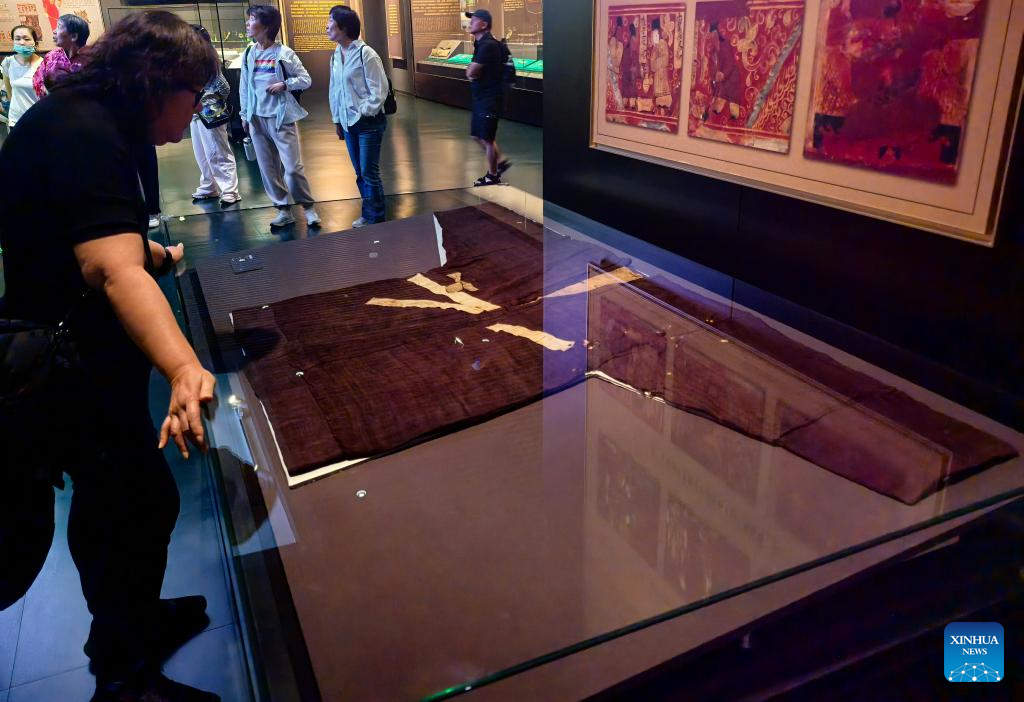
This photo taken with a mobile phone shows a visitor viewing a garment from Northern Wei Dynasty (386-534), partially restored by Xu Zheng, at the Inner Mongolia Museum in Hohhot, north China's Inner Mongolia Autonomous Region, on May 14, 2026. (Xinhua/Wei Jingyu)
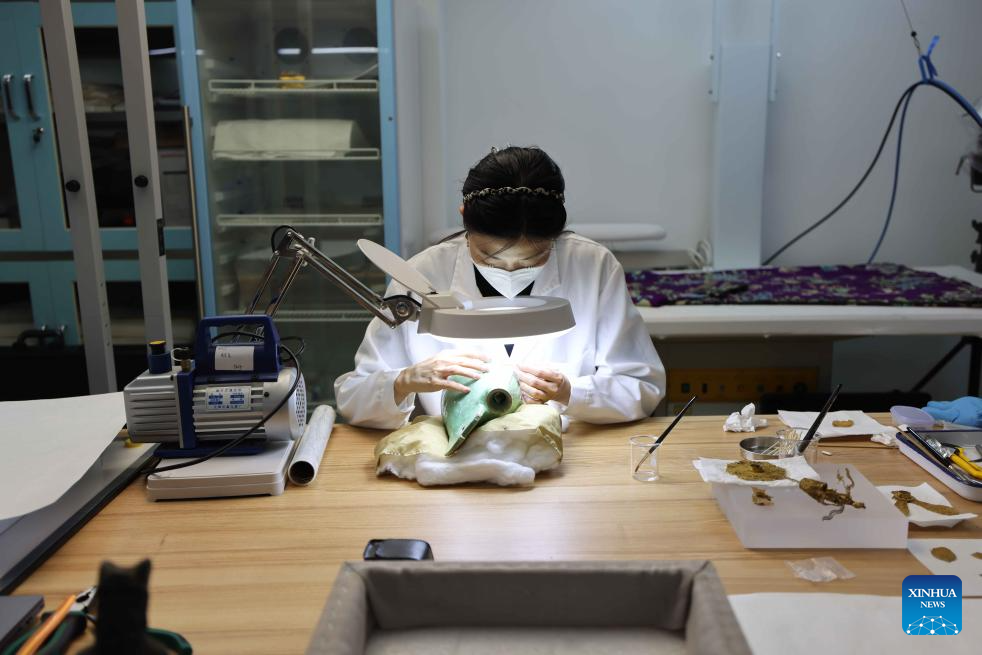
Xu Zheng restores a cultural relic in Hohhot, north China's Inner Mongolia Autonomous Region, on April 15, 2025. (Xinhua)


