
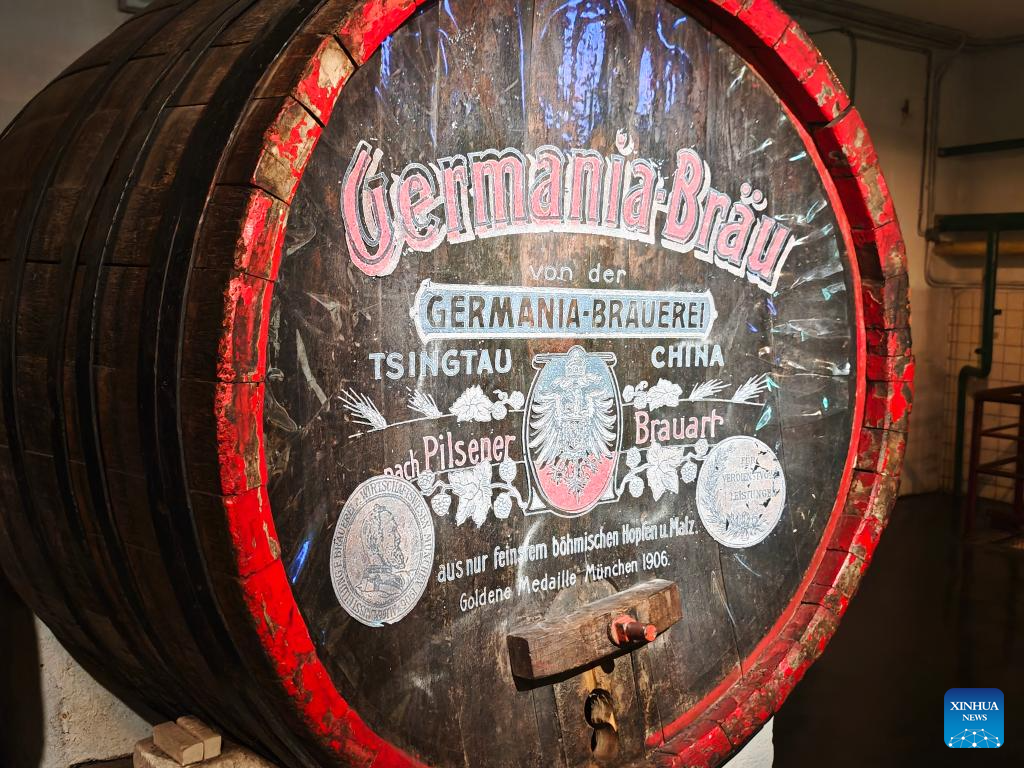
This photo taken with a mobile phone on May 16, 2026 shows an old beer barrel at the Tsingtao Beer Museum in Qingdao, east China's Shandong Province. (Xinhua/Li Aoqiu)
JINAN, May 18 (Xinhua) -- Inside a brewery workshop lined with German-style red bricks, tourist Ji Hyeonseong from the Republic of Korea raised a glass of freshly brewed unfiltered beer straight from the production line. He was utterly enthralled the moment the malt flavor reached his taste buds.
The scene, however, was not taking place in Germany, the traditional home of beer, but thousands of kilometers away, at the Tsingtao Beer Museum in the coastal Chinese city of Qingdao.
"Tsingtao beer features a cool, smooth texture and is absolutely delicious. I'll definitely recommend it to my friends back home," Ji said, adding that his family chose to visit the museum as soon as they arrived in Qingdao.
May 18 marks International Museum Day. Converted from a German-built brewery dating back to 1903, the museum is attracting an increasing number of visitors from abroad as the summer tourism peak approaches. This is largely thanks to its immersive projects that combine history, culture and leisure into a refreshing travel experience.
Inside the museum, technology-driven exhibits have captivated many first-time visitors like Ji.
In the brewing exhibition hall, holographic projections vividly recreate a German brewer from a century ago. Turning abruptly toward visitors, he appears to splash them with a virtual mug of beer, eliciting laughs and surprise.
As night falls, projection mapping and digital lighting technologies transform the century-old brewery walls into dreamlike displays of light and shadow, rolling out a feast of nighttime visual wonders.
"We have carefully designed an industrial tourism experience that integrates sightseeing, interaction, tasting and shopping," said Sun Ji, curator of the museum.
The goal is to transform industrial heritage into an immersive cultural tourism landmark that combines historical exploration, brewing culture, entertainment, dining and creative consumption, she said.
Visitors can even step into the role of brewmasters, crafting personalized beer recipes in interactive theatrical gaming spaces. Afterward, they can browse the museum's gift shop for quirky mascot dolls and other creative souvenirs.
Still, for many visitors, the beer itself remains the highlight.
"It's cool seeing the old buildings and vintage equipment, but the most unforgettable part is tasting the Tsingtao beer," said American tourist Andrew Werner before draining his glass in one gulp.
This experience-oriented tourism model has earned the museum remarkable market appeal. In 2025 alone, it received more than 2.5 million visits.
"As China continues to optimize its visa-free policies, the museum is gaining a rising global profile. We welcomed more than 250,000 overseas visitors in 2025, up around 70 percent year on year," Sun said.
To better serve international travelers, the museum has introduced a ticketing system that supports multiple currencies and international bank cards, while also offering multilingual guided services in Chinese, English, Russian, French, Japanese and Korean.
Bilingual signage throughout the venue also allows overseas visitors to fully immerse themselves in the experience.
China is leveraging its rich cultural resources to create new consumption scenarios and sustain economic momentum. The outline of the country's 15th Five-Year Plan, released in March this year, called for developing industrial tourism tailored to local conditions and fostering distinctive themed travel routes and high-quality tourism performance projects.
The policy push is accelerating the transformation of China's industrial tourism sector, represented by the Tsingtao Beer Museum, toward technology-enhanced and culturally immersive experiences, breathing new life into historical heritage while strengthening preservation efforts.
"Our experience has shown that old factories and aging equipment are still precious assets that preserve historical memory and generate new momentum for cultural and tourism consumption," said Zeng Chao, deputy general manager of Tsingtao Beer Culture Communication Co., Ltd. and general manager of Tsingtao Beer International Tourism Development Co., Ltd.
According to Zeng, the museum plans to deepen cross-industry collaboration around cultural tourism IPs, while continuing to upgrade immersive theatrical experiences and nighttime tours. The goal is to build a comprehensive tourism ecosystem integrating dining, accommodation, transportation, sightseeing, shopping and entertainment.
"We hope visitors from around the world will be able to fully experience the unique charm of China's industrial heritage and the rich culture starting from Tsingtao beer," Zeng added. ■
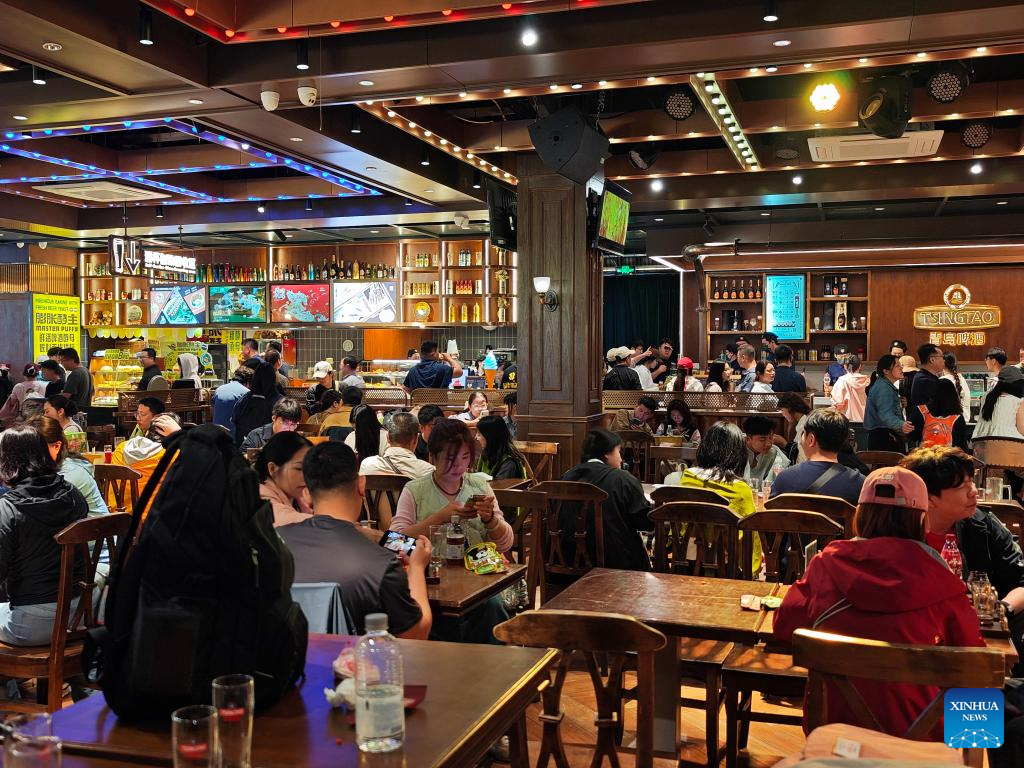
This photo taken with a mobile phone shows people dining at a pub of the Tsingtao Beer Museum in Qingdao, east China's Shandong Province, on May 16, 2026. (Xinhua/Li Aoqiu)
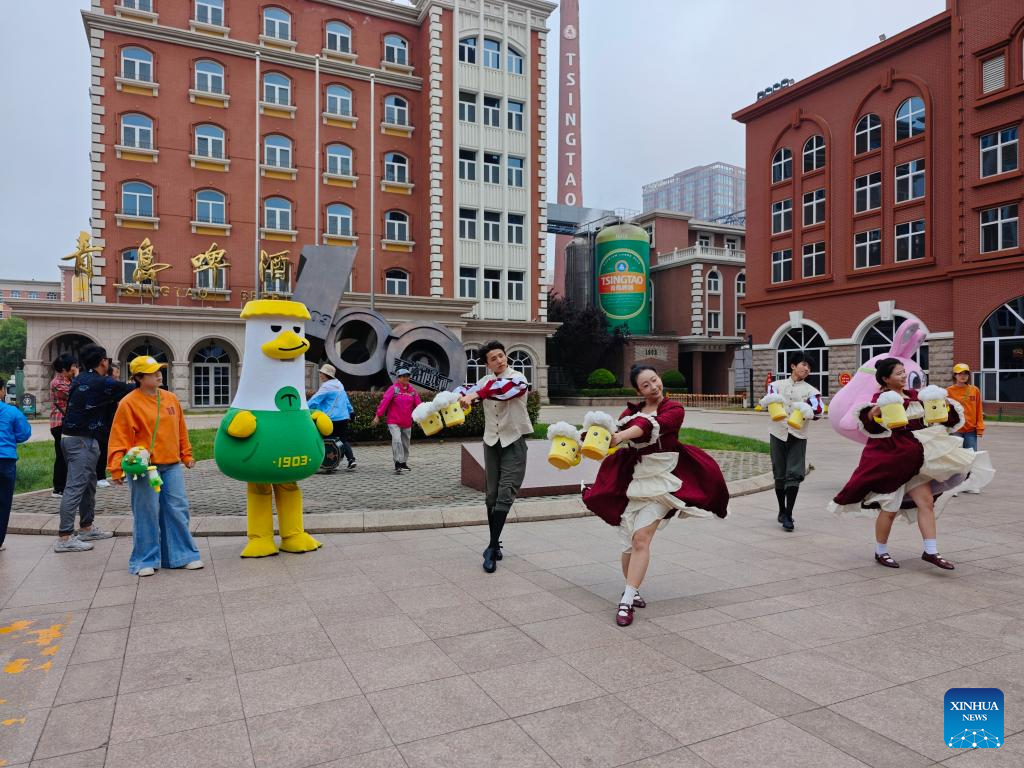
This photo taken with a mobile phone shows staff members performing to welcome tourists at the Tsingtao Beer Museum in Qingdao, east China's Shandong Province, on May 16, 2026. (Xinhua/Li Aoqiu)


