*We are able to encounter another great civilization without traveling overseas. This is precisely the profound significance of museums.
*Museums act as bridges linking history and the present, and connect China with the rest of the world.
*People around the world are embracing Chinese food and drinks, trying on gorgeous traditional Hanfu garments, and delving into the time-honored Chinese history and culture embodied in cultural exhibits.
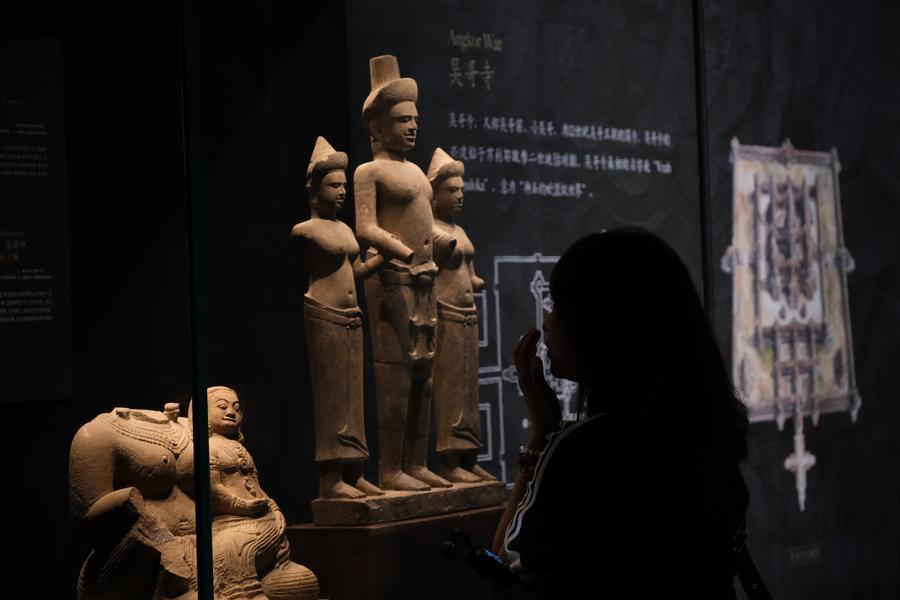
BEIJING, May 18 (Xinhua) -- Li Duo wandered past the weather-worn statues of Angkor Wat, soaking in the timeless charm of the ancient ruins and delving into the civilization that created them -- all without ever setting foot in Cambodia.
At the Meet You Museum in Beijing's trendy 798 Art Zone, an exhibition featuring 122 artifacts from the National Museum of Cambodia is offering Chinese visitors a rare glimpse into the legacy of the Angkor civilization. This exhibition opened on May 1 and runs to Aug. 30.
"The exhibition gives us access to a wide range of renowned artifacts including the iconic 'Khmer Smile,' and helps us gain insights into the exotic civilization that evolved along a path parallel to that of Chinese civilization," said Li, who holds a master's degree in archaeology.
"We are able to encounter another great civilization without traveling overseas. This is precisely the profound significance of museums," she noted.
Wang Haixuan, vice president of Beijing Zhongchuang Tourism & Culture Group that runs the museum, told Xinhua that digital technologies are being used to recreate the engineering wisdom behind Angkor Wat, while motion-capture systems enable visitors to interact with mythological figures associated with the site.
The museum has previously hosted exhibitions focused on other ancient civilizations, including a well-received showcase of Egyptian civilization last year.
"Our goal is to give audiences opportunities to engage with civilizations from across the world," said Wang, who added that these exhibitions are particularly popular among museum enthusiasts, young people and families.
"Museums act as bridges linking history and the present, and connect China with the rest of the world," he said. "Through these curatorial efforts, we promote dialogue between civilizations, facilitate cultural exchanges and strengthen people-to-people ties."
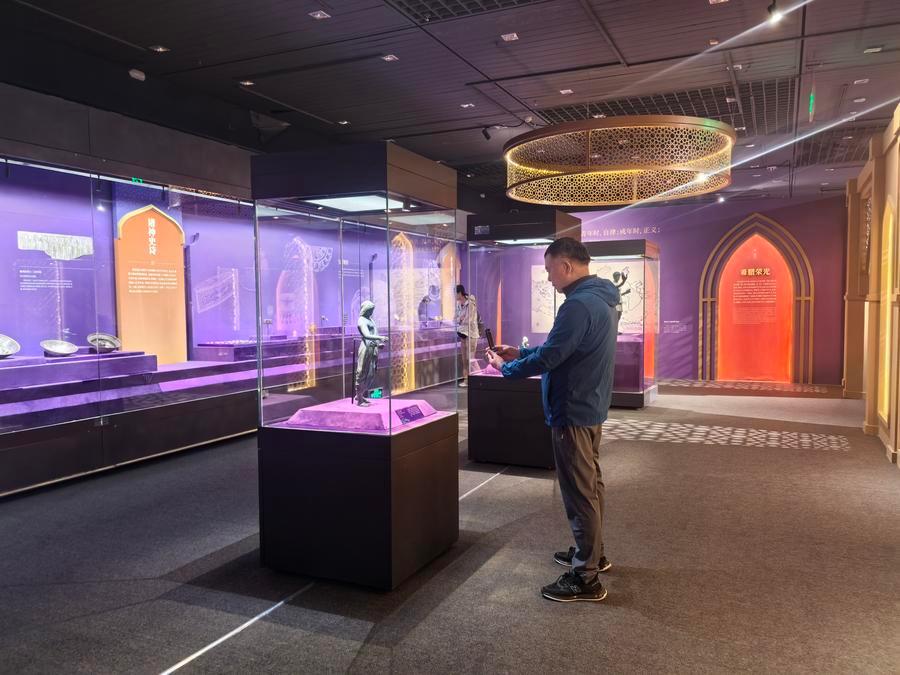
By the end of 2025, China had 7,188 registered museums, more than 91 percent of which offered free admission, according to official data released by the National Cultural Heritage Administration (NCHA) on the International Museum Day, which is observed on May 18. They received 1.56 billion visits in 2025.
Across China, a growing number of museums, both public and private, are bringing overseas civilizations closer to domestic audiences, allowing people to explore the world without leaving their home cities.
In Lanzhou, capital city of northwest China's Gansu Province, visitors to the Gansu Provincial Museum are finding themselves face to face with a civilization from the Middle East.
Titled "Golden Dust of Time: Exhibition of the Royal Collection From Kuwait," this event showcases 130 sets of artifacts from the Kuwaiti royal collection, including ibex sculptures, metal bowls, rhytons and gold ornaments, which quietly tell stories spanning thousands of years.
"I've never been to Kuwait, but these artifacts give me a direct sense of its civilization and spiritual world," said Liu Chunxia, a tourist from Guangzhou in south China. "They already possessed highly sophisticated metalworking and pottery techniques thousands of years ago. In those tiny ornaments, you can see beauty, faith and emotional connections between people."
As material life becomes increasingly abundant, many Chinese visitors are seeking richer cultural and spiritual experiences, she said, adding that this is one reason why more and more people in China today are willing to spend on high-quality exhibitions.
Ban Rui, director of the Gansu museum, said museums in China are no longer simply spaces dedicated to local history, but are increasingly evolving into public platforms for exchanges between civilizations.
"Civilizational exchange is not abstract," Ban said. "It exists in every artifact. That makes it more immediate and easier for audiences to understand and connect with."
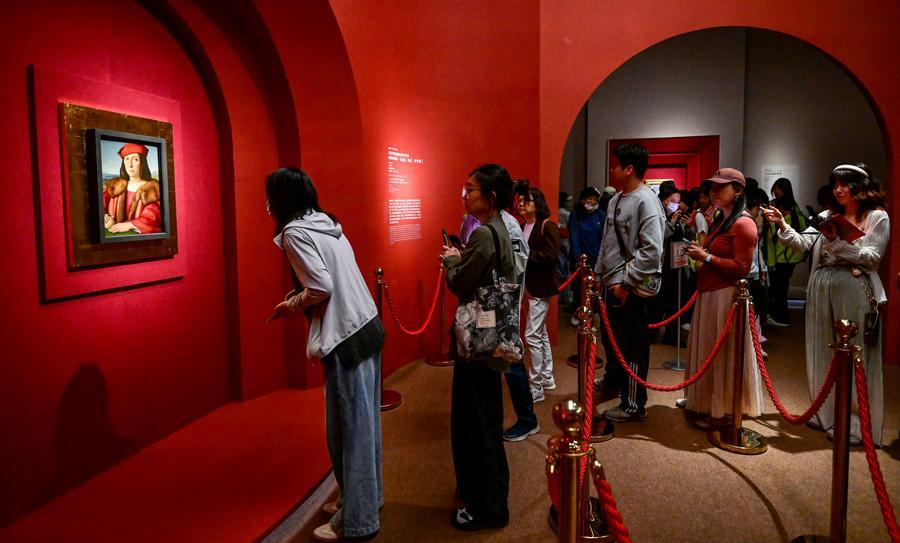
Behind the growing number of international exhibitions are also changes in the way museums operate.
Introducing overseas exhibitions often involves enormous costs and logistical challenges, including curation, transportation, insurance, display and promotion. In recent years, however, museums in China have increasingly experimented with more market-oriented partnerships, bringing in state-owned enterprises and private-sector partners to help expand access to international exhibition resources.
Such efforts are unfolding across China. According to incomplete statistics of Art Exhibitions China, an agency under the NCHA, exhibitions from countries including Italy, the Czech Republic, Syria, Britain, Greece and Kuwait have been staged in Chinese museums since the beginning of this year.
Shanghai will host a major exhibition on ancient civilizations of the Americas beginning in early July. Titled "Ancient Civilizations of the Americas," the exhibition will run for 16 months at the Shanghai Museum on the People's Square.
It will be the sixth installment in the museum's "A Dialogue with the World" series of art and cultural relics exhibitions, and another landmark show on global ancient civilizations following its popular exhibition on Ancient Egypt.
At the same time, Chinese cultural relics and exhibitions are reaching wider global audiences.
The culture of Dunhuang, one of China's best-known cultural symbols overseas, has become an increasingly important part of international cultural exchanges. Exhibitions in France have used digital technologies, reconstructed caves, live performances and immersive experiences to take the art of the Mogao Grottoes in northwest China to overseas audiences.
Chai Qilin, deputy head of the cultural promotion department at the Dunhuang Academy, said overseas audiences have shown strong interest in Chinese cultural exhibitions. "Many visitors tell us they hope to see more exhibitions like these," Chai said. "Through them, people gain a more direct and deeper understanding of Chinese culture."
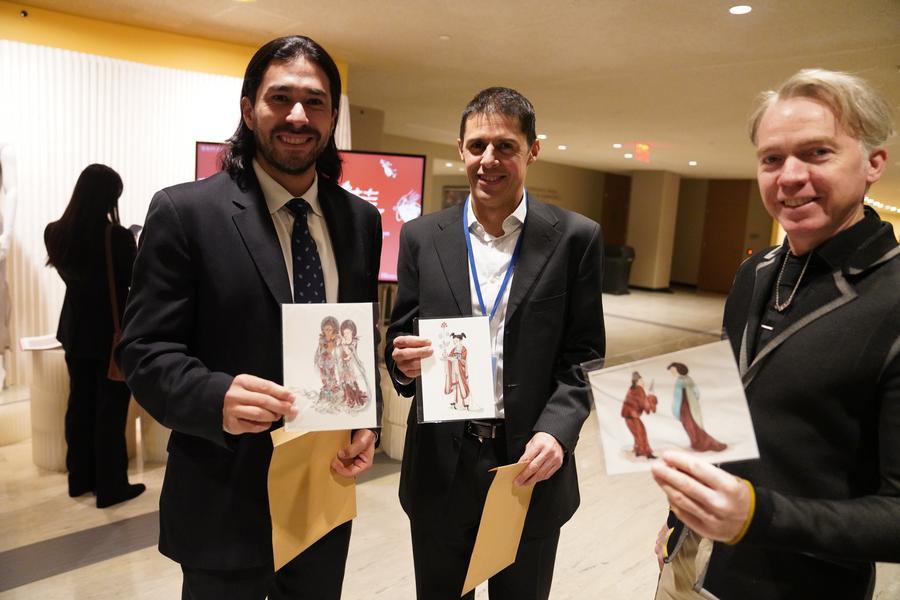
Home to an extensive collection of cultural relics in north China, the Shanxi Museum has since 2012 partnered with peer institutions across the United States, Australia, Russia, Armenia, Hungary, Greece, France and Mexico to host overseas exhibitions.
Zhang Huiguo, deputy director of the museum, told Xinhua that bronze and jade pieces featured in its European exhibitions had sparked strong local interest. "Jade is rarely used in traditional European cultural contexts. Although bronze artifacts also exist in European history, their production techniques, functions and cultural connotations are markedly different from those of ancient Chinese bronzes," he explained.
Alongside exhibits, the museum employs a range of interactive and immersive methods to demonstrate ancient techniques like mechanics of dougong, a traditional Chinese interlocking wooden bracket system core to ancient architecture, and the ancient craftsmanship behind Chinese bronze ware, as part of its efforts to share Chinese culture more vividly with global viewers.
For its shows in Mexico, a major global silver producer, the museum drew side-by-side comparisons between traditional Chinese silver-making techniques and local craftsmanship, identifying both shared features and distinct, culture-specific traits of these two craft traditions.
In recent years, as China's comprehensive national strength has steadily improved, the global influence of Chinese culture has kept rising, igniting the viral "China Chic" craze, said Zhang. People around the world are embracing Chinese food and drinks, trying on gorgeous traditional Hanfu garments, and delving into the time-honored Chinese history and culture embodied in cultural exhibits.
"Going overseas is not only about promoting multiculturalism, but more importantly, it is about building an international pattern of cultural and people-to-people exchanges," he said.■
(Reporting by Bai Xu, Cheng Lu, He Wen, Wang Xuetao, Ha Lina and He Jin.)