
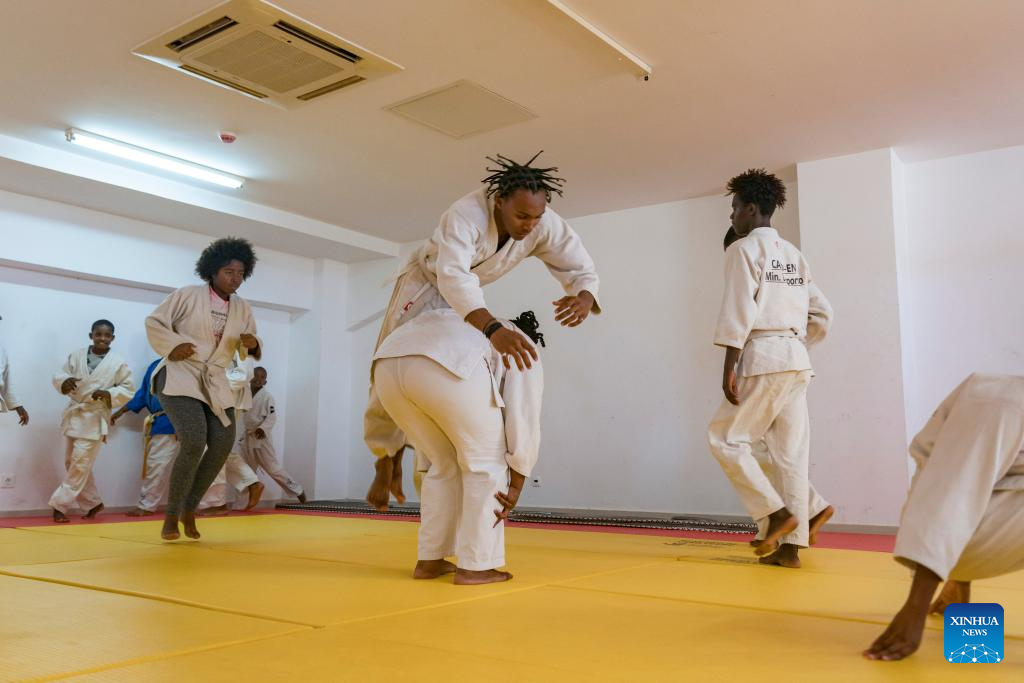
Young trainees practice in a judo room at the Cape Verde's National Stadium, located on the northern outskirts of Cape Verde's capital city Praia, on May 11, 2026. (Xinhua/Xie Jianfei)
PRAIA, May 15 (Xinhua) -- Inside a judo room at Cape Verde's National Stadium, young athletes practice breakfalls under the guidance of their coach Joao Jose Silva Ferreira.
The 15,000-seat sports complex, a space better known for hosting major competitions, has become a regular training ground where local youth build both athletic skills and discipline.
Ferreira told Xinhua that the judo program now has 28 regular trainees who practice three times a week at the stadium. Among them is 20-year-old Marcio da Silva, who has practiced judo for years and credits the facility with helping him stay committed to the sport.
"Without this stadium, I might not have been able to continue for so long," said Marcio da Silva. "This place allows us to keep training, and it makes us feel that we are doing something serious."
Located on the northern outskirts of Cape Verde's capital city Praia, the National Stadium was built with Chinese assistance and handed over in 2014. More than a decade later, Chinese technical support has continued at the venue.
In April 2025, the third phase of Chinese technical assistance for the stadium began. A team of 11 experts is expected to work at the venue for three years, covering areas including electrical systems, civil works, sound systems, timing and scoring systems, decoration and maintenance.
"Building a stadium is one thing. Running it is another," said Li Junsheng, manager of the third-phase technical assistance project for the National Stadium, undertaken by China's Shaanxi Construction Engineering Group.
Li said the long-term operation of a large sports facility can face many challenges after delivery, including aging systems, equipment renewal and a shortage of local technical personnel.
"The cooperation did not stop at the moment of handover," Li said. "What we provide is not only maintenance, but also spare parts supply and personnel training."
According to Li, during the second phase of technical assistance, the Chinese team added ramps for people with disabilities, renovated the plastic running track, repainted steel structures, and built supporting facilities including a restaurant, kitchen and laundry room.
"Now athletes passing through Praia can stay inside the stadium and have hot meals at the new canteen, without worrying about food during training camps," he said.
The third phase focuses on further improving the stadium's operation and safety systems. Li said the original surveillance system, installed about 10 years ago, used analog equipment for which spare parts are now difficult to find. The fire alarm system also requires renovation due to aging.
He added that maintenance of perimeter walls, replacement of grass in auxiliary areas and repair of lighting facilities are also under way.
Gu Yuanye, an interpreter for the project, first came to Cape Verde in 2013. He said he has witnessed major changes around the stadium over the past decade.
"In the early years, people coming from downtown often had to wait for minibuses at the roundabout, and sometimes walk one or two kilometers," Gu said. "Now houses have expanded into this area, and bus routes have been extended here."
Orlando Jorge Mascarenhas, head of stadium management, said the opening of the National Stadium changed the landscape of sports development in Cape Verde.
"In my view, sports development in Cape Verde can be divided into two phases: before the National Stadium and after the National Stadium," Mascarenhas said. "It was the first large-scale comprehensive national sports facility after Cape Verde's independence, and it remains the country's largest sports infrastructure."
"The stadium has become deeply integrated into our daily sports life," he said. "It is almost difficult to imagine Cape Verdean sports without it."
Mascarenhas said the stadium has also served public needs beyond sports. During the COVID-19 pandemic, it was used as a field hospital, and it has also hosted training for the national police.
His personal connection with China began long before he managed the stadium. Mascarenhas said his father visited Shanghai in the late 1970s or early 1980s and often spoke to the family about what he had seen in China.
"My father used to say: Cape Verde is very small, and China is very big," he said.
Years later, Mascarenhas himself traveled to China for training in stadium management. He said that experience gave him a clearer understanding of China's cooperation with Cape Verde.
"China's support is not only about building the facility," he said. "It also includes follow-up operation, management experience and capacity building." ■
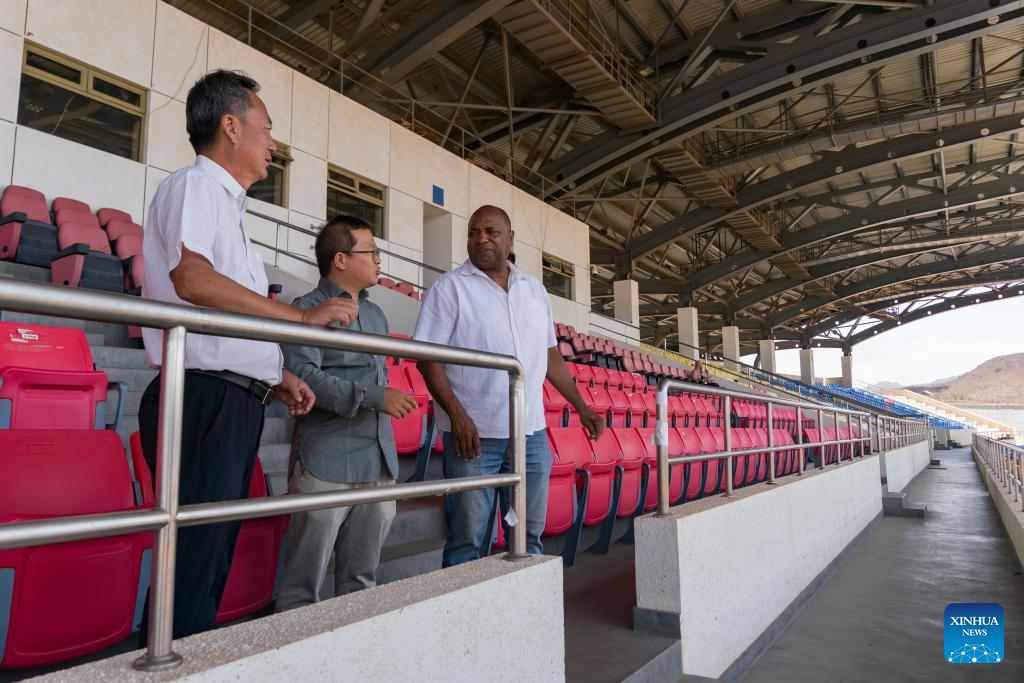
Orlando Jorge Mascarenhas (R), head of the Stadium management, talks with Li Junsheng (L), manager of the third-phase technical assistance project for the Stadium, undertaken by China's Shaanxi Construction Engineering Group, in the Cape Verde's National Stadium, located on the northern outskirts of Cape Verde's capital city Praia, on May 11, 2026. (Xinhua/Xie Jianfei)
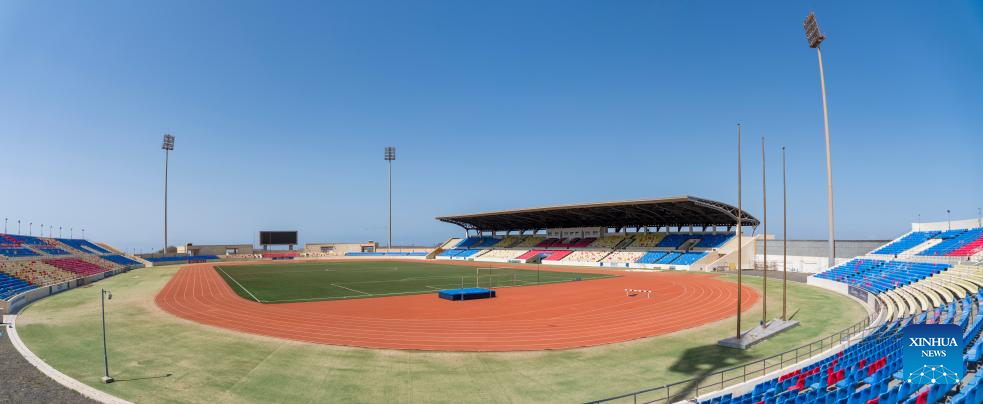
This photo taken on May 11, 2026 shows the general view of the Cape Verde's National Stadium, located on the northern outskirts of Cape Verde's capital city Praia. (Xinhua/Xie Jianfei)
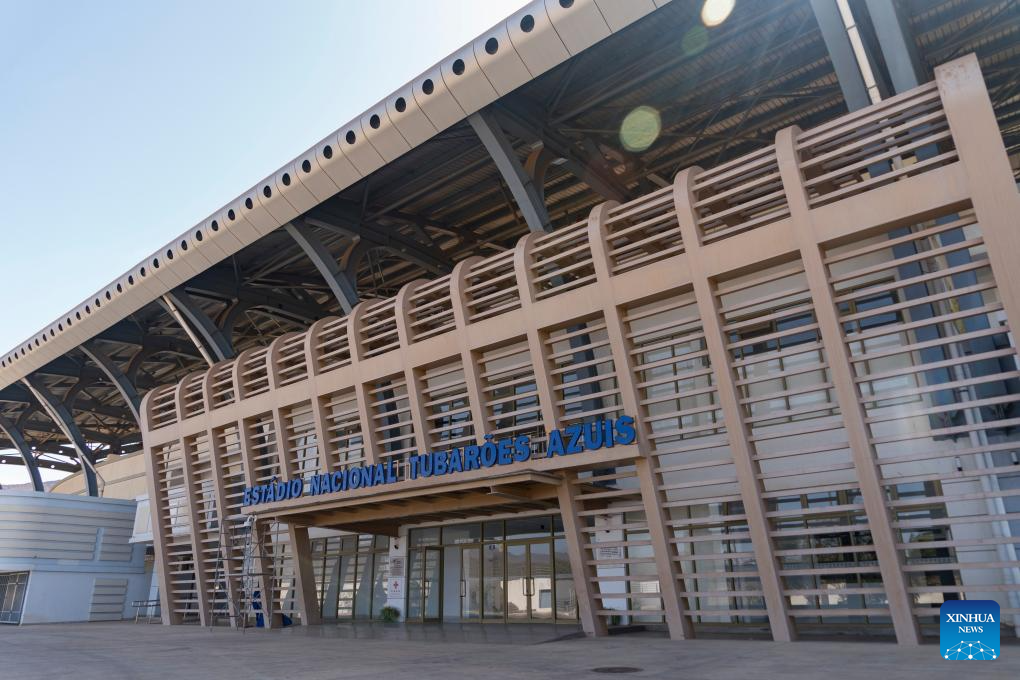
This photo taken on May 11, 2026 shows an entrance of the Cape Verde's National Stadium, located on the northern outskirts of Cape Verde's capital city Praia. (Xinhua/Xie Jianfei)


