
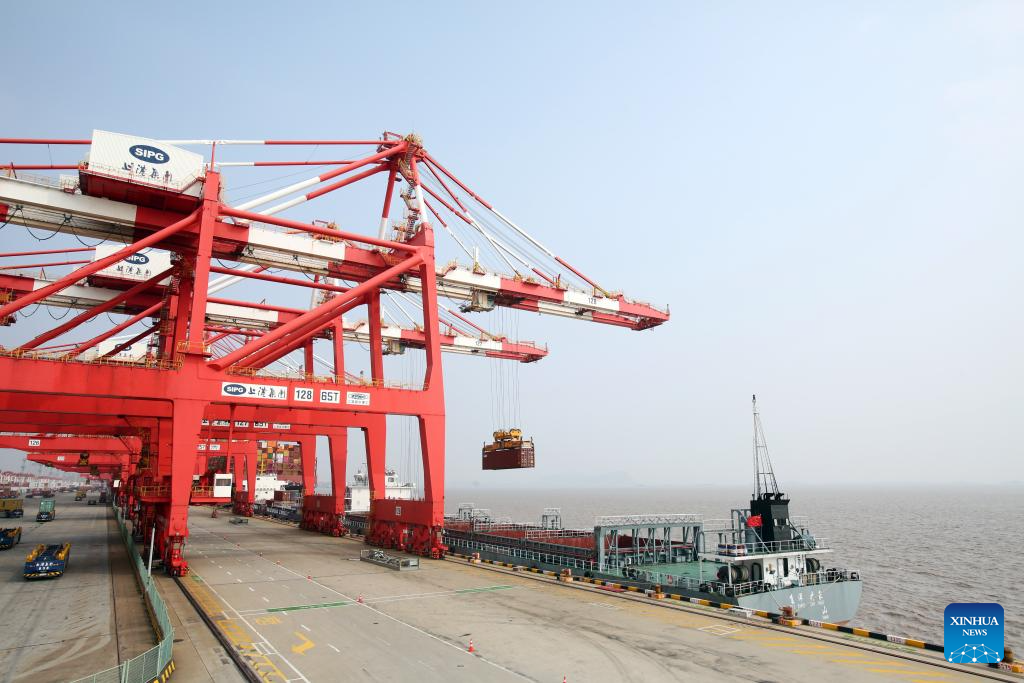
This photo taken on April 1, 2026 shows automated cargo handling equipment at the phase IV automated terminal of Shanghai Yangshan Deep Water Port in Shanghai, east China. The Shanghai Yangshan Deep Water Port has evolved into a comprehensive shipping and logistics hub as China is building Shanghai as a center for international maritime shipping. In the first quarter of 2026, the Shanghai Yangshan Deep Water Port handled 7.45 million TEUs of container throughput, representing a 9.1% year-on-year increase. The port's phase IV automated terminal is one of the world's largest single-unit container terminals with advanced integrated automation. It features seven deepwater container berths, 61 automated container yards, as well as designated areas for hazardous materials and oversized containers. (Xinhua/Cheng Li)
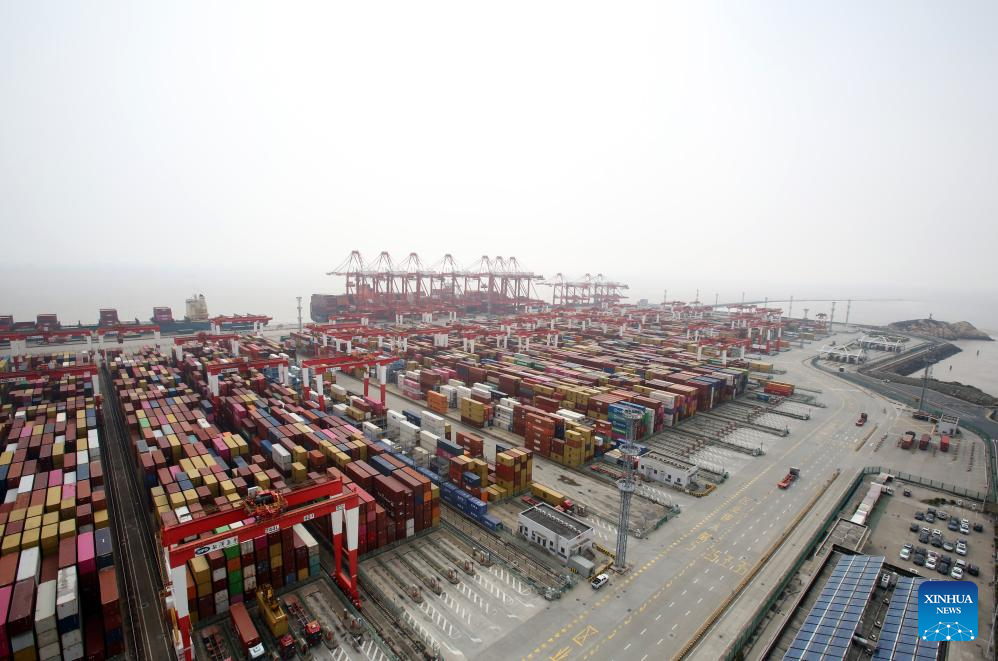
This photo taken on April 1, 2026 shows the phase IV automated terminal of Shanghai Yangshan Deep Water Port in Shanghai, east China. The Shanghai Yangshan Deep Water Port has evolved into a comprehensive shipping and logistics hub as China is building Shanghai as a center for international maritime shipping. In the first quarter of 2026, the Shanghai Yangshan Deep Water Port handled 7.45 million TEUs of container throughput, representing a 9.1% year-on-year increase. The port's phase IV automated terminal is one of the world's largest single-unit container terminals with advanced integrated automation. It features seven deepwater container berths, 61 automated container yards, as well as designated areas for hazardous materials and oversized containers. (Xinhua/Cheng Li)
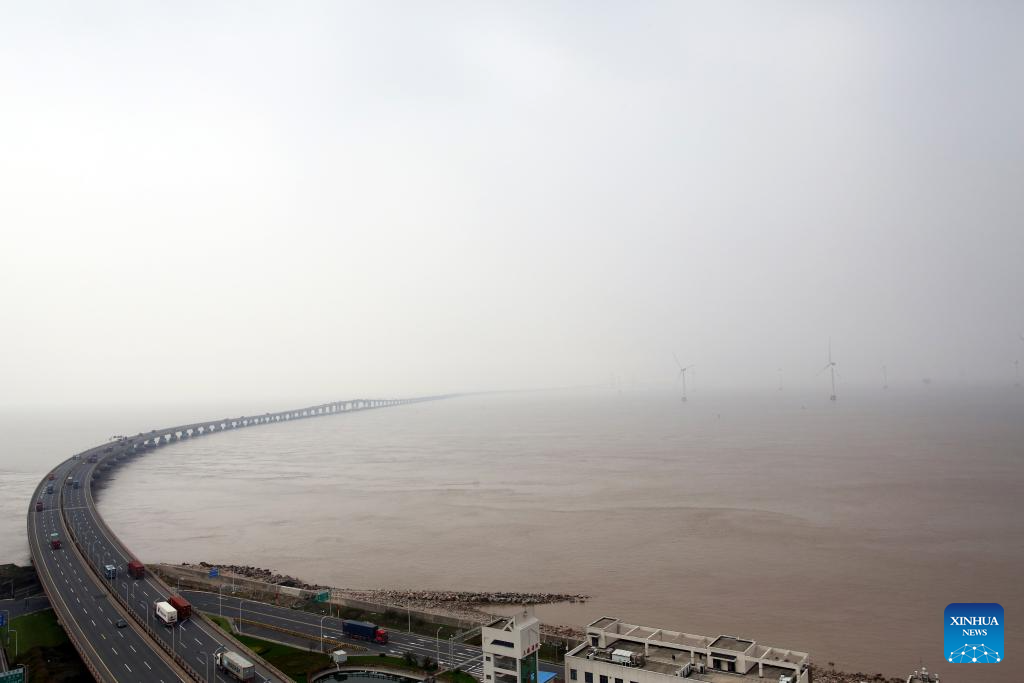
This photo taken on April 1, 2026 shows the Donghai Bridge connecting Pudong New Area and Shanghai Yangshan Deep Water Port in Shanghai, east China. The Shanghai Yangshan Deep Water Port has evolved into a comprehensive shipping and logistics hub as China is building Shanghai as a center for international maritime shipping. In the first quarter of 2026, the Shanghai Yangshan Deep Water Port handled 7.45 million TEUs of container throughput, representing a 9.1% year-on-year increase. The port's phase IV automated terminal is one of the world's largest single-unit container terminals with advanced integrated automation. It features seven deepwater container berths, 61 automated container yards, as well as designated areas for hazardous materials and oversized containers. (Xinhua/Cheng Li)
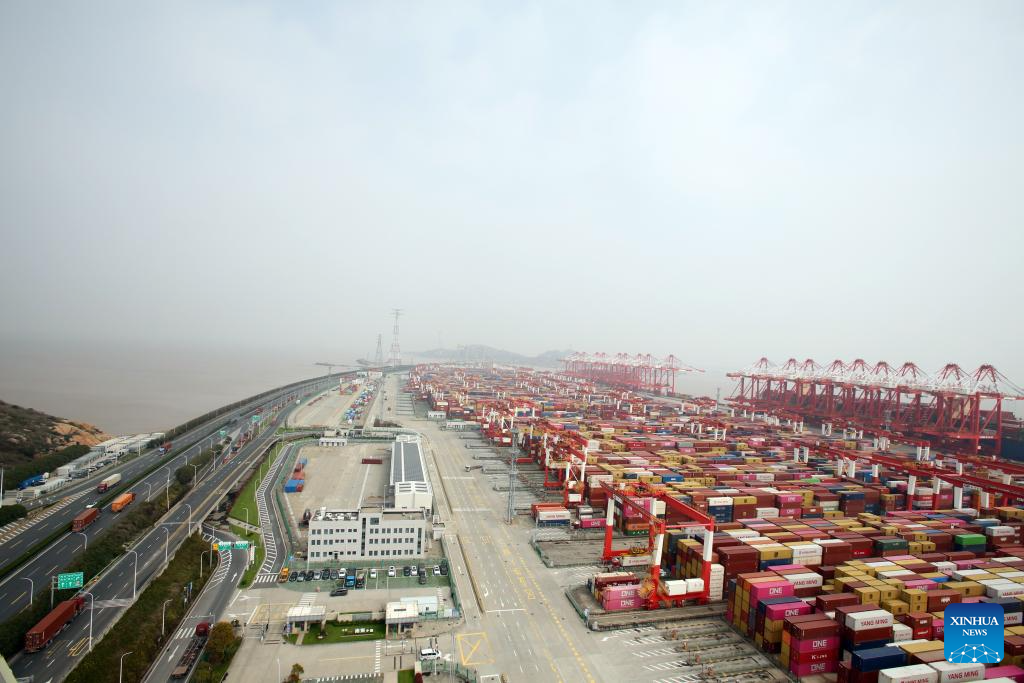
This photo taken on April 1, 2026 shows the phase IV automated terminal of Shanghai Yangshan Deep Water Port in Shanghai, east China. The Shanghai Yangshan Deep Water Port has evolved into a comprehensive shipping and logistics hub as China is building Shanghai as a center for international maritime shipping. In the first quarter of 2026, the Shanghai Yangshan Deep Water Port handled 7.45 million TEUs of container throughput, representing a 9.1% year-on-year increase. The port's phase IV automated terminal is one of the world's largest single-unit container terminals with advanced integrated automation. It features seven deepwater container berths, 61 automated container yards, as well as designated areas for hazardous materials and oversized containers. (Xinhua/Cheng Li)
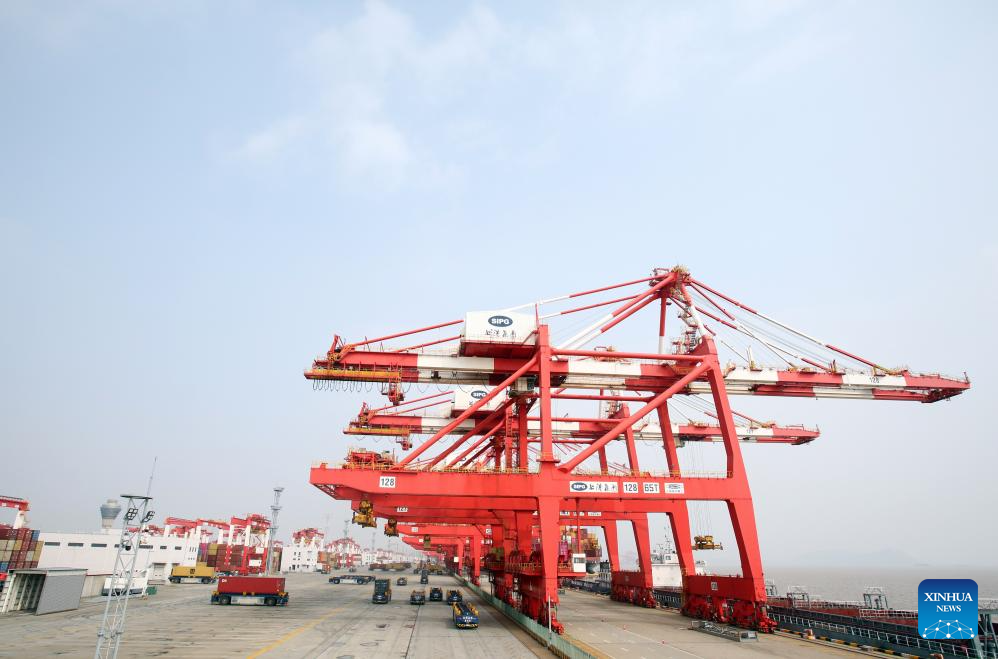
This photo taken on April 1, 2026 shows automated cargo handling equipment at the phase IV automated terminal of Shanghai Yangshan Deep Water Port in Shanghai, east China. The Shanghai Yangshan Deep Water Port has evolved into a comprehensive shipping and logistics hub as China is building Shanghai as a center for international maritime shipping. In the first quarter of 2026, the Shanghai Yangshan Deep Water Port handled 7.45 million TEUs of container throughput, representing a 9.1% year-on-year increase. The port's phase IV automated terminal is one of the world's largest single-unit container terminals with advanced integrated automation. It features seven deepwater container berths, 61 automated container yards, as well as designated areas for hazardous materials and oversized containers. (Xinhua/Cheng Li)
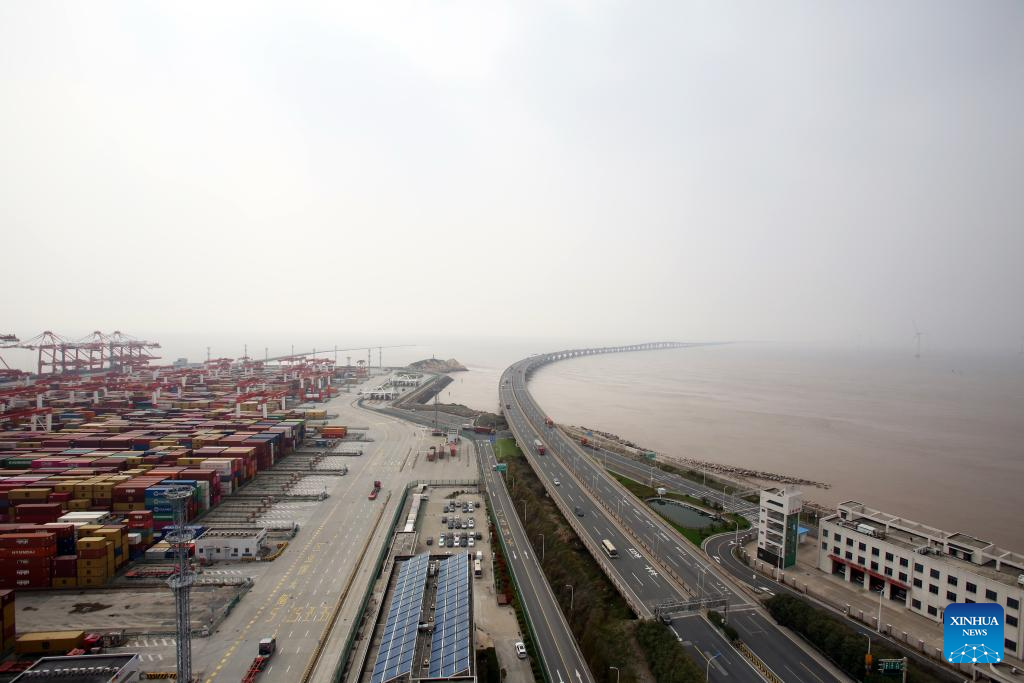
This photo taken on April 1, 2026 shows the Shanghai Yangshan Deep Water Port and the Donghai Bridge in Shanghai, east China. The Shanghai Yangshan Deep Water Port has evolved into a comprehensive shipping and logistics hub as China is building Shanghai as a center for international maritime shipping. In the first quarter of 2026, the Shanghai Yangshan Deep Water Port handled 7.45 million TEUs of container throughput, representing a 9.1% year-on-year increase. The port's phase IV automated terminal is one of the world's largest single-unit container terminals with advanced integrated automation. It features seven deepwater container berths, 61 automated container yards, as well as designated areas for hazardous materials and oversized containers. (Xinhua/Cheng Li)
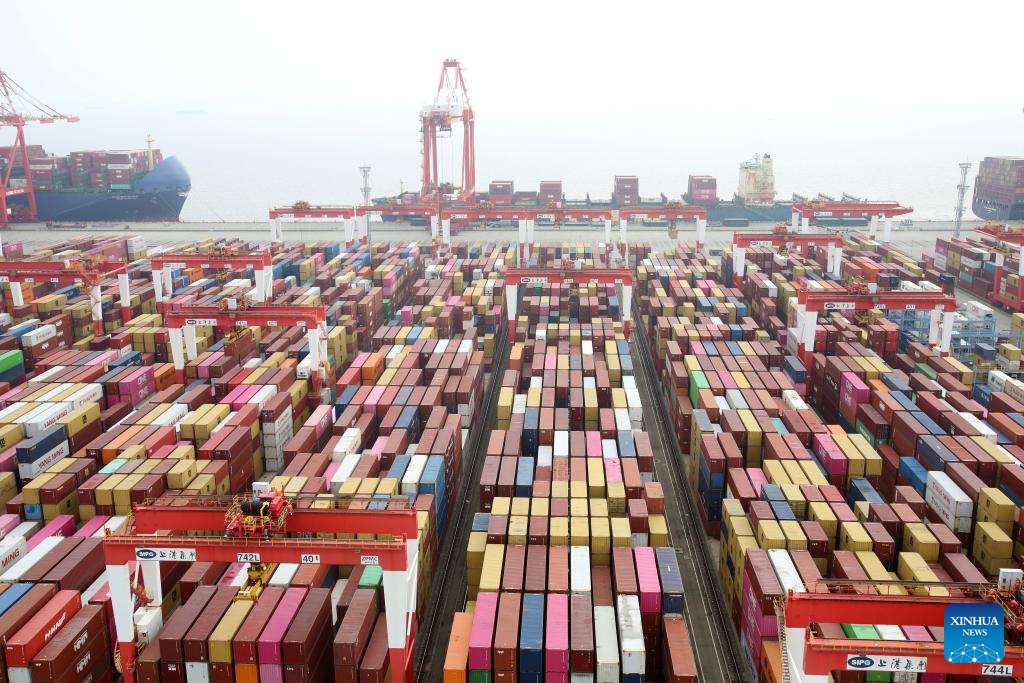
This photo taken on April 1, 2026 shows the phase IV automated terminal of Shanghai Yangshan Deep Water Port in Shanghai, east China. The Shanghai Yangshan Deep Water Port has evolved into a comprehensive shipping and logistics hub as China is building Shanghai as a center for international maritime shipping. In the first quarter of 2026, the Shanghai Yangshan Deep Water Port handled 7.45 million TEUs of container throughput, representing a 9.1% year-on-year increase. The port's phase IV automated terminal is one of the world's largest single-unit container terminals with advanced integrated automation. It features seven deepwater container berths, 61 automated container yards, as well as designated areas for hazardous materials and oversized containers. (Xinhua/Cheng Li)
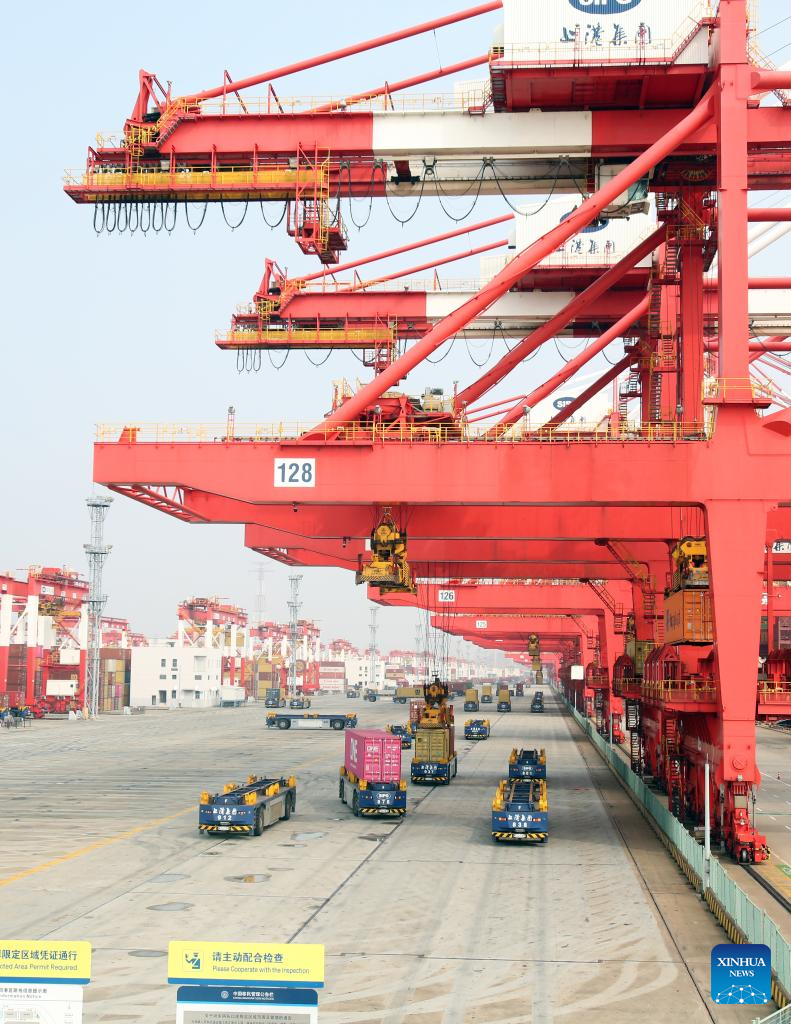
This photo taken on April 1, 2026 shows the phase IV automated terminal of Shanghai Yangshan Deep Water Port in Shanghai, east China. The Shanghai Yangshan Deep Water Port has evolved into a comprehensive shipping and logistics hub as China is building Shanghai as a center for international maritime shipping. In the first quarter of 2026, the Shanghai Yangshan Deep Water Port handled 7.45 million TEUs of container throughput, representing a 9.1% year-on-year increase. The port's phase IV automated terminal is one of the world's largest single-unit container terminals with advanced integrated automation. It features seven deepwater container berths, 61 automated container yards, as well as designated areas for hazardous materials and oversized containers. (Xinhua/Cheng Li)


