
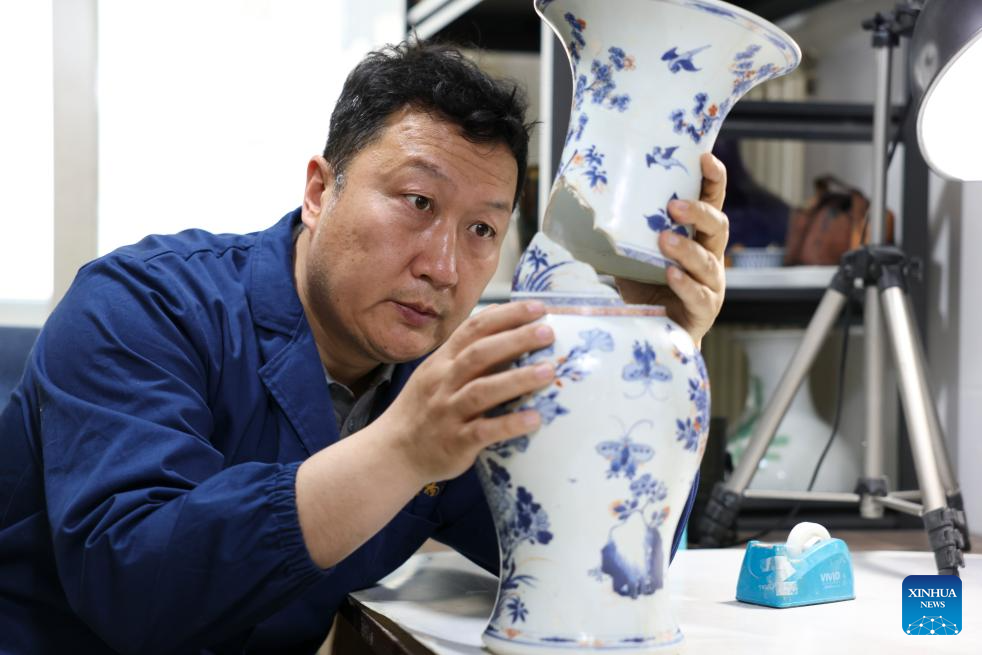
Xu Kai restores a cultural relic at a studio in Taiyuan, north China's Shanxi Province, April 29, 2026. Xu Kai is a ceramic cultural relics restoration specialist at Shanxi Museum. With 27 years of experience in the field, the 48-year-old has breathed new life into countless precious artifacts, ranging from Neolithic pottery to official kiln porcelain of the Ming (1368-1644) and Qing (1644-1911) dynasties.
Through continuous learning and refinement, Xu has developed a set of restoration techniques for ancient ceramics with the principle of "one artifact, one restoration plan."
More challenging than physical restoration is the recapture of the original spirit and charm of each piece. Before every restoration, Xu needs to carefully study the object's craftsmanship and characteristics, a process he sees as a silent dialogue with ancient artisans.
"What we restore is not just the appearance of an object, but fragments of history itself," Xu says, adding that he has always approached his work with deep reverence.
In 2023, Xu won first prize in the ceramic restorer category at the National Cultural Heritage Vocational Skills Competition and has also recently ranked among the recipients of a national heritage craftsman award.
Day after day, while the relics are reborn, the work has left its mark on him: declining eyesight, coupled with chronic shoulder and neck strain.
"I hope restoration techniques will continue to advance, so that cultural relics can be preserved in more scientific and comprehensive ways," Xu says. "That will also help visitors better understand the artifacts, connect with history, and allow the relics to truly come alive." (Xinhua/Yang Chenguang)
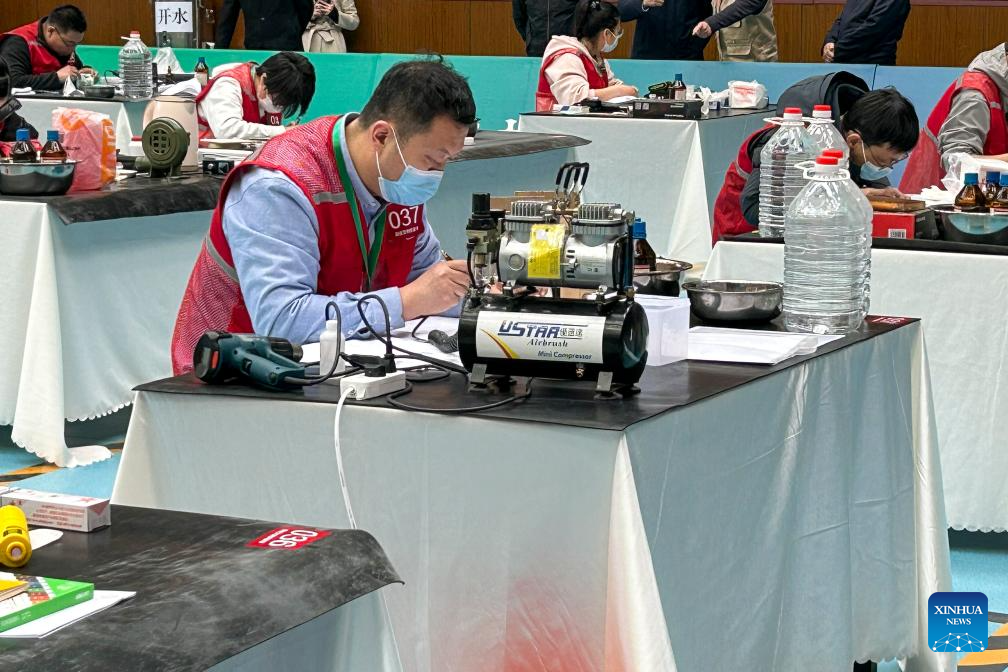
This file photo taken on March 25, 2023 shows Xu Kai participating in the National Cultural Heritage Vocational Skills Competition in Taiyuan, north China's Shanxi Province. (Xinhua/Yang Chenguang)
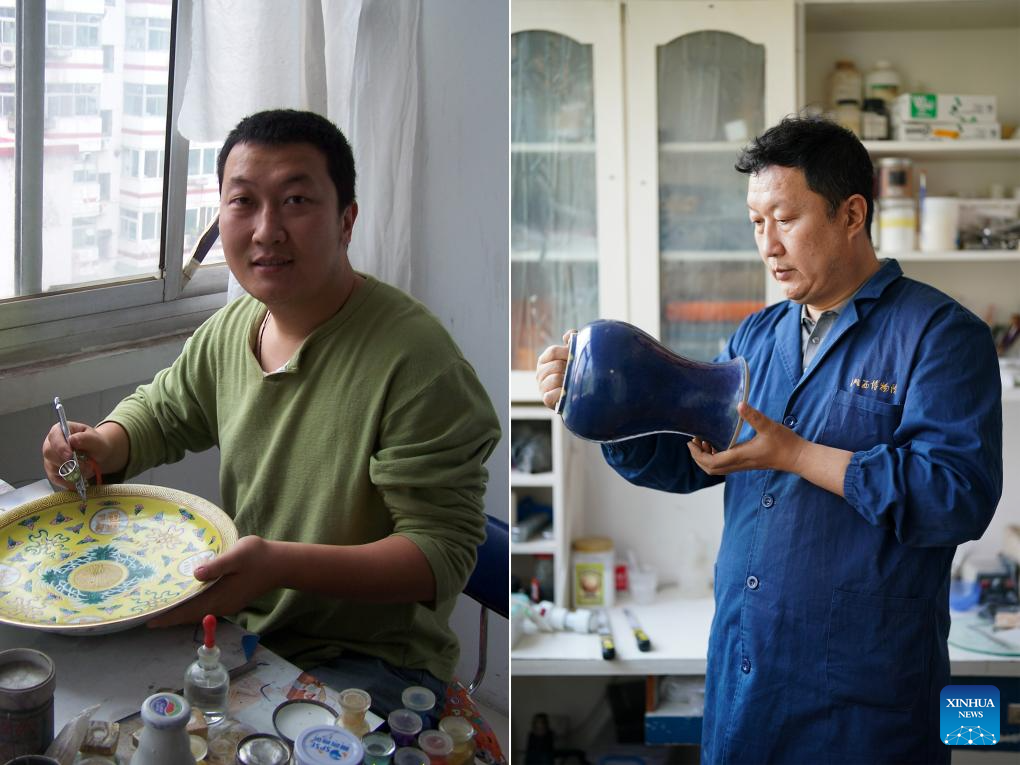
LEFT: Xu Kai restores a cultural relic at a studio in Taiyuan, north China's Shanxi Province, June 18, 2009 (file photo);
RIGHT: Xu Kai views a restored cultural relic at a studio in Taiyuan, north China's Shanxi Province, April 29, 2026 (Xinhua/Yang Chenguang)
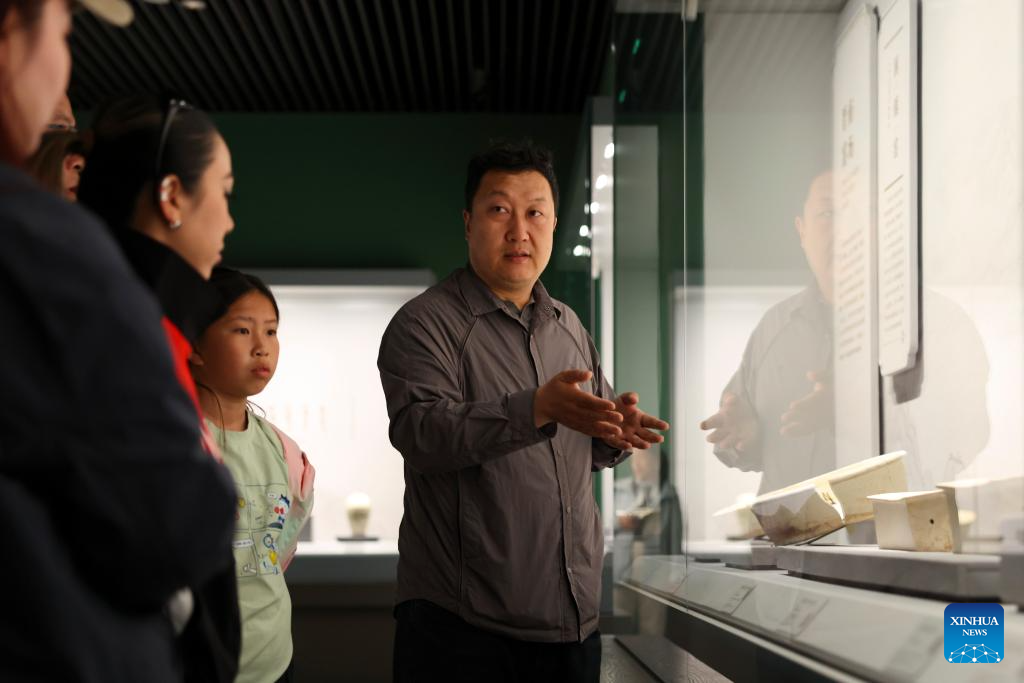
Xu Kai introduces exhibits to visitors at Shanxi Museum in Taiyuan, north China's Shanxi Province, April 29, 2026. (Xinhua/Yang Chenguang)
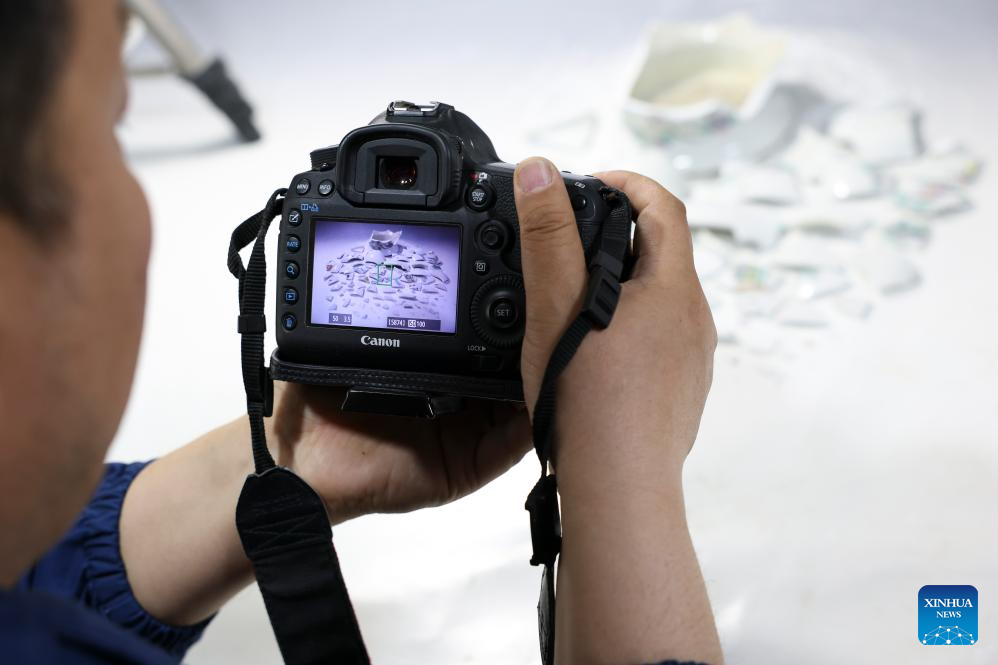
Xu Kai takes a photo of a cultural relic at a studio in Taiyuan, north China's Shanxi Province, April 29, 2026. (Xinhua/Yang Chenguang)
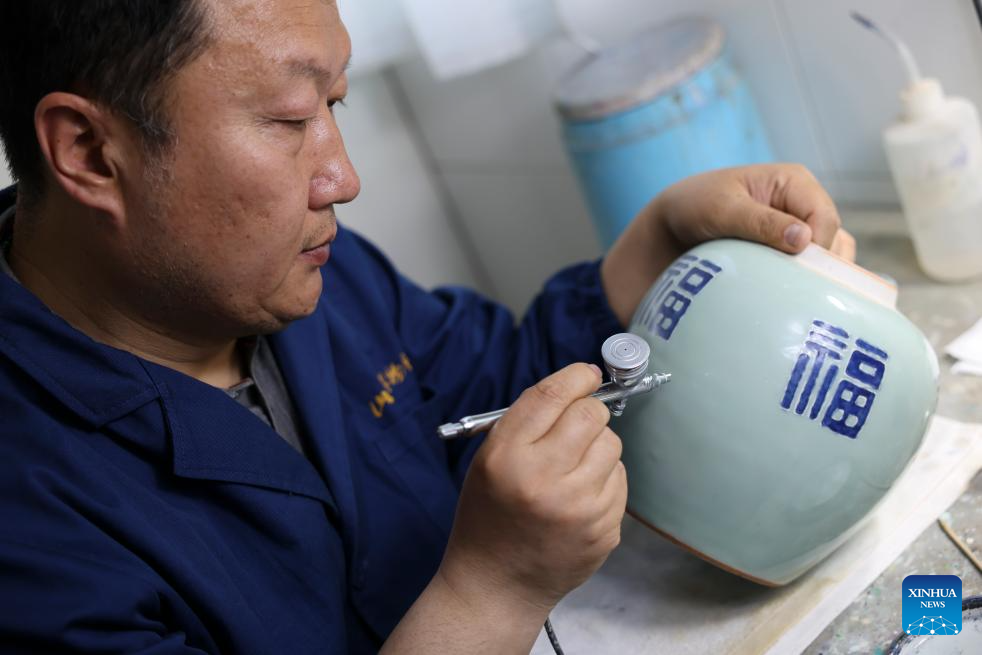
Xu Kai restores a cultural relic at a studio in Taiyuan, north China's Shanxi Province, April 29, 2026. (Xinhua/Yang Chenguang)
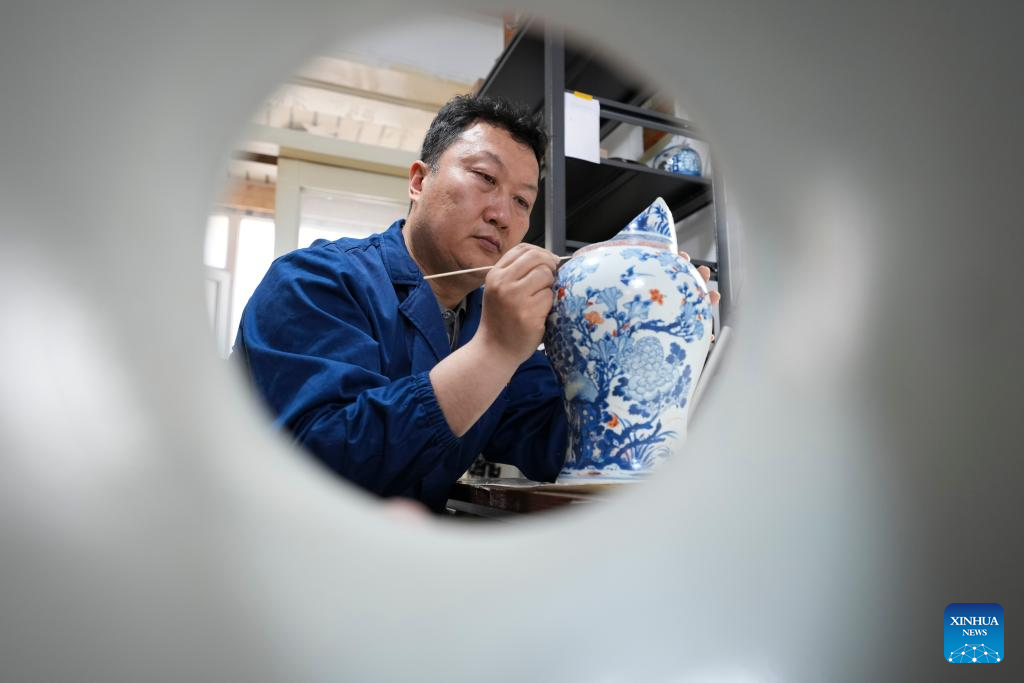
Xu Kai restores a cultural relic at a studio in Taiyuan, north China's Shanxi Province, April 29, 2026. (Xinhua/Yang Chenguang)
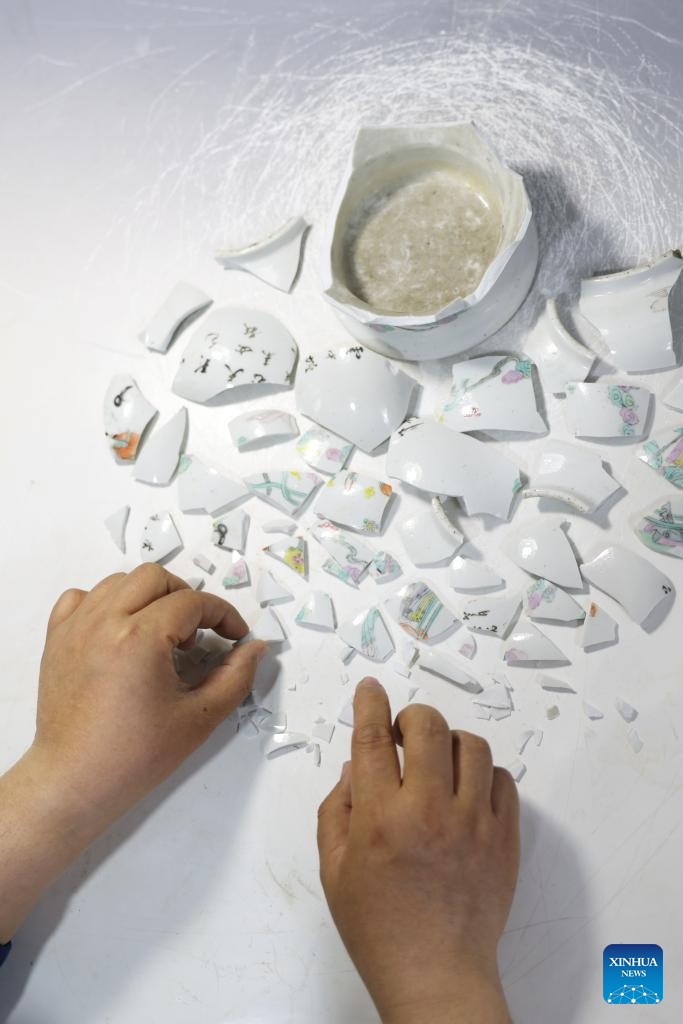
Xu Kai sorts out fragments of a cultural relic at a studio in Taiyuan, north China's Shanxi Province, April 29, 2026. (Xinhua/Yang Chenguang)
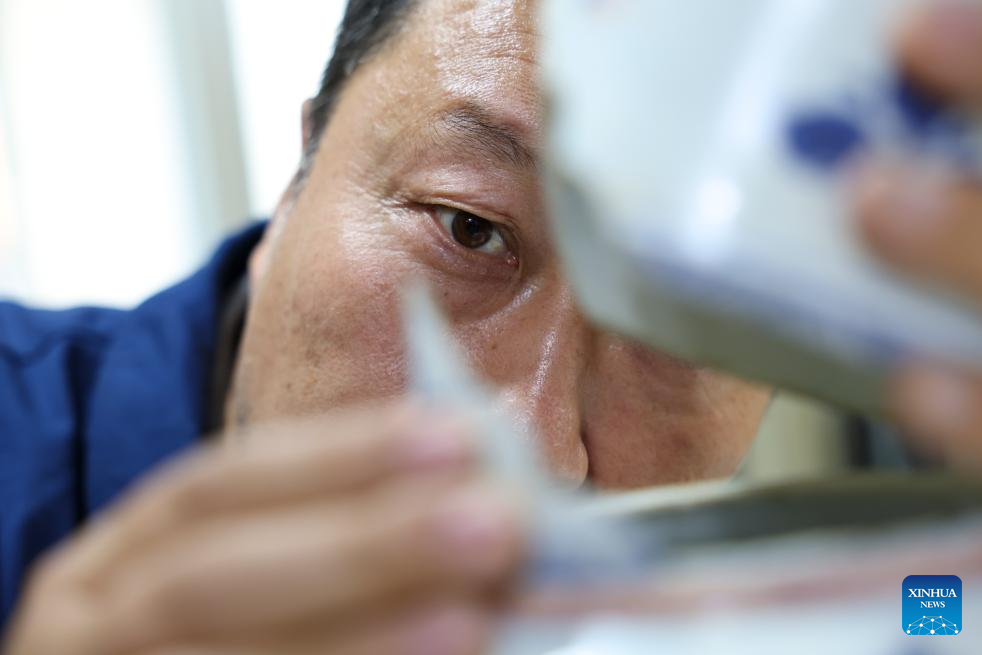
Xu Kai restores a cultural relic at a studio in Taiyuan, north China's Shanxi Province, April 29, 2026. (Xinhua/Yang Chenguang)
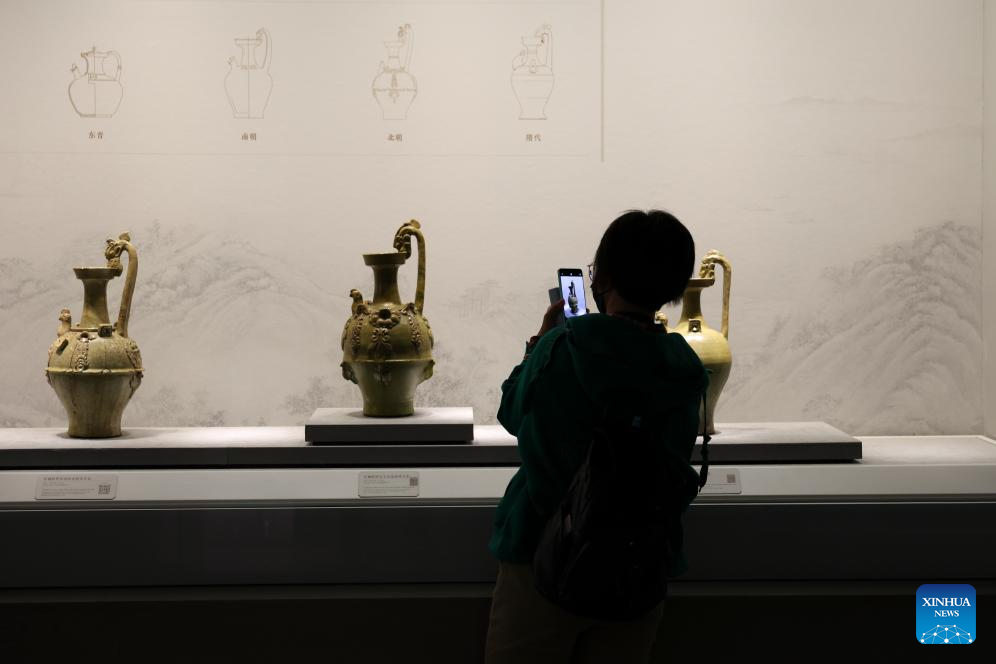
A visitor takes a photo of an exhibit at Shanxi Museum in Taiyuan, north China's Shanxi Province, April 29, 2026. (Xinhua/Yang Chenguang)
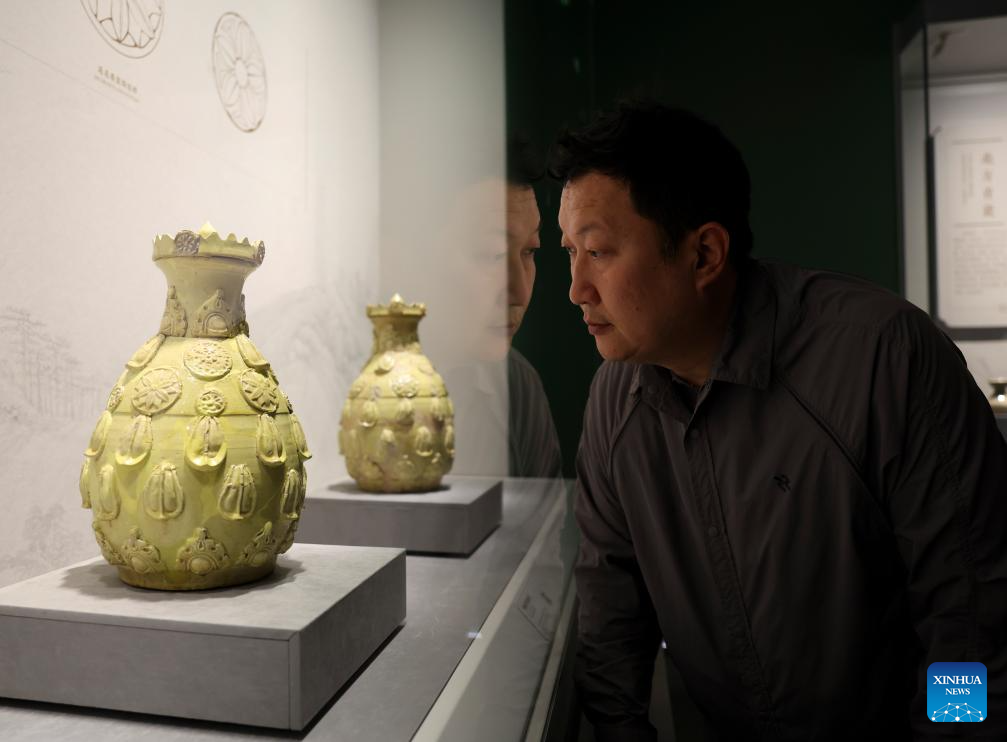
Xu Kai learns about an exhibit at Shanxi Museum in Taiyuan, north China's Shanxi Province, April 29, 2026. (Xinhua/Yang Chenguang)
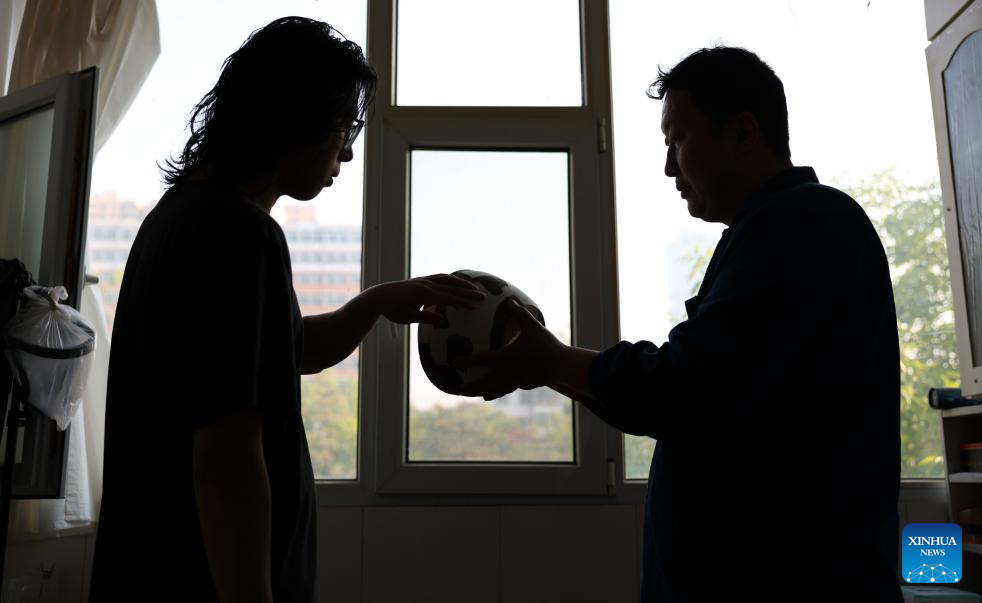
Xu Kai (R) and a colleague discuss a restoration plan for a cultural relic in Taiyuan, north China's Shanxi Province, April 29, 2026. (Xinhua/Yang Chenguang)


