

Punnor works in the office in the regional people's broadcasting station in Lhasa, southwest China's Xizang Autonomous Region, April 1, 2025. (Xinhua/Jigme Dorje)
by Xinhua writers Lyu Qiuping, Dronla and Liu Zhoupeng
LHASA, April 23 (Xinhua) -- In his small dormitory, a wall away from the Potala Palace in southwest China's Xizang Autonomous Region, Punnor, 58, has spent 35 years translating the world's classic books into Tibetan.
His translations span literature, history and philosophy, ranging from "The Old Man and the Sea" by Ernest Hemingway, the "The Sorrows of Young Werther" by Johann Wolfgang von Goethe, the poems of the renowned Chinese poet Ai Qing, to a complete world history from ancient times to the present.
Many of these Tibetan versions are not only sold in stores, but also broadcast on the radio, reaching herders and farmers in remote mountains and valleys.
Thursday marks World Book and Copyright Day. China has been supporting the publication of ethnic minority languages, with translators like Punnor forming part of this effort, bringing world classics to "the roof of the world."
Born in 1968 in a remote mountain village in Xizang's Gyangze County, Punnor did not step into a classroom until he was 12 years old. Through his hard work and a thirst for knowledge, he was admitted with top marks to Gyangze County Middle School and later to the Tibetan language and literature department at Minzu University of China in Beijing.
On campus, the diverse cultural atmosphere and various lectures not only broadened Punnor's horizons but also made him realize that although Xizang had a long and splendid culture, it still lagged far behind global civilization.
"If we want Xizang to integrate into the modern world, we first have to understand where modernity comes from," said the Tibetan.
His interest in translation began with an encounter in the campus library, where he came across "The Price of Flowers," a short story that tells of a young Indian man living in London and his friendship with a struggling British family.
"I found myself so moved that I copied it out by hand and started translating it into Tibetan," he recalled, adding that the kindness, compassion and understanding reflected in the story are universal human emotions.
In 1991, Punnor joined the regional people's broadcasting station, translating news from Mandarin to Tibetan. Over the following 10 years, he studied philosophical works by Kant and Hegel and immersed himself in classical works from Ancient Greece and Ancient Rome, as well as the Renaissance and the Enlightenment.
This strengthened his resolve to connect Tibetan readers with world literature through translation. To make his translations accurate, he also studied English and Sanskrit.
In 2004, Punnor created a radio program reading novels, granting Tibetan herders and farmers access to classic literature by "listening to books." Many of his translations, including novels and radio plays, were serialized via radio broadcasts. Some of them are also accessible online, allowing listeners to tune in at any time.
Punnor has lost track of how many books he has translated over the past three decades. But the one he considers particularly significant is a world history book that took him seven years to finish -- the first of its kind in Tibetan.
The hardest part was the names, such as ancient country names, ancient people's names and place names that no longer exist. "To ensure accuracy, I almost turned over every historical document I could find around me," he said.
With state support for publishing in minority languages, his Tibetan version of roughly 550,000 characters was published in 2018 by the regional people's publishing house.
Rinchen, an editor of the Tibetan language with the publishing house, said Punnor's translations not only accurately convey the original content but also strictly follow Tibetan grammatical norms. "The quality is remarkably high."
Punnor's translations have proven popular among Tibetan readers, with several reprinted multiple times, including a selection of "Grimm's Fairy Tales," which has gone through four reprints and reached some 20,000 copies.
According to a white paper issued last year, Xizang had published 46.85 million copies of 8,794 Tibetan-language books by the end of 2024. In addition to traditional media, like newspapers, magazines, radio programs, films, television programs and the internet, new media have also been developed in the Tibetan language, including surging official accounts on social media.
Although Punnor will retire in two years, he has no plans to rest.
Apart from giving lectures and lessons to nurture young Tibetan talent in translation, he has started retranslating the classic novel "The Romance of the Three Kingdoms," which may take five to 10 years. The task was left unfinished years ago when the original translator passed away, leaving the broadcast cut off mid-way.
Punnor still remembers an elderly herder from northern Xizang who called him in tears, begging him to finish broadcasting the novel. Every day at 4:30 p.m., the old man said, he would climb down from the mountains to catch the signal and listen.
"Retranslating the novel is my attempt to fulfill the promise I made to that herder. I have never forgotten his simple wish," he said. ■

Punnor records a Tibetan language radio program in the recording studio of the regional people's broadcasting station in Lhasa, southwest China's Xizang Autonomous Region, April 1, 2025. (Xinhua/Jigme Dorje)
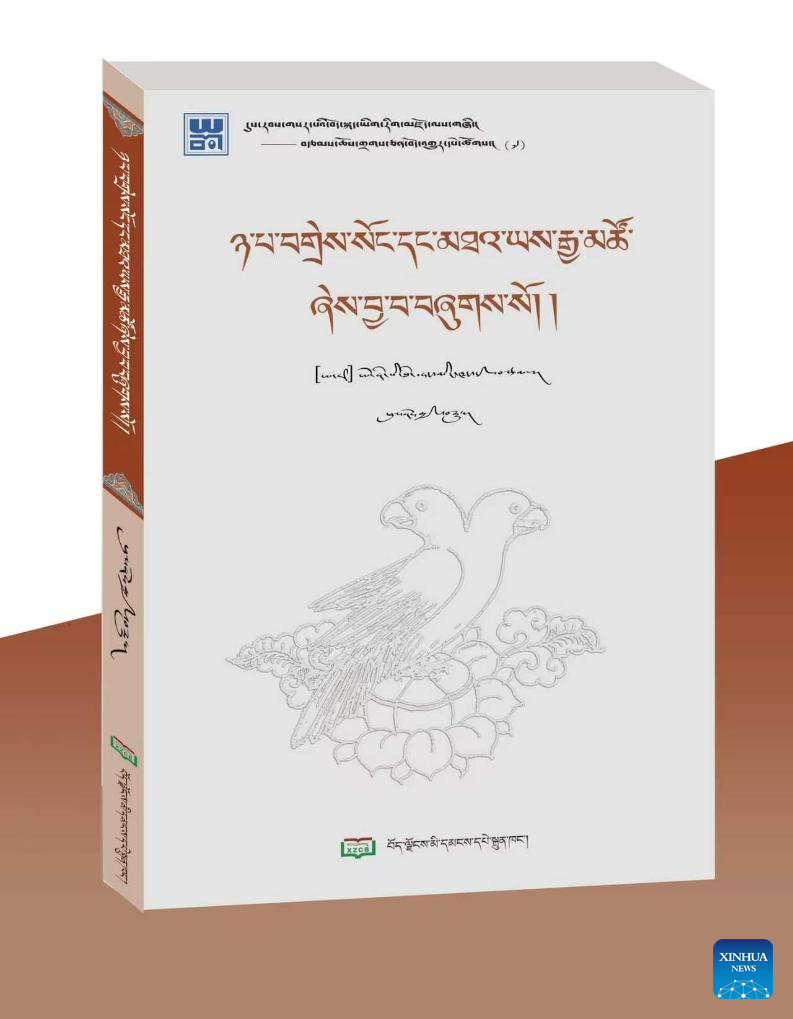
This picture shows a Tibetan-language version of "The Old Man and the Sea" translated by Punnor. (Xizang People's Publishing House/Handout via Xinhua)


