
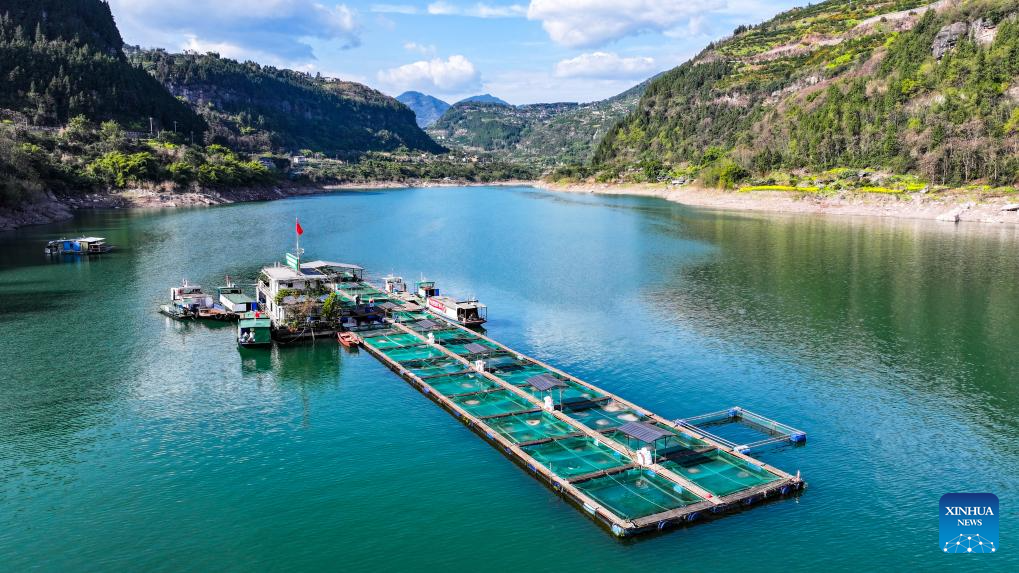
An aerial drone photo taken on March 9, 2026 shows the Dazhou base of the fisheries research institute of Wanzhou District, southwest China's Chongqing.
The Dazhou base of the fisheries research institute of Wanzhou District serves as a wild acclimation center for the rare fish species in the upper reaches of the Yangtze River. Equipped with 32 net cages covering an area of approximately 800 square meters, the base conserves over 20 rare and commercial fish species. Its annual output of rare and high-quality fish fry exceeds 20 million.
In recent years, the base has continuously strengthened the short-term wild acclimation training of fish fry before their release into natural waters, effectively helping boost the wild populations of the rare species. (Xinhua/Wang Quanchao)
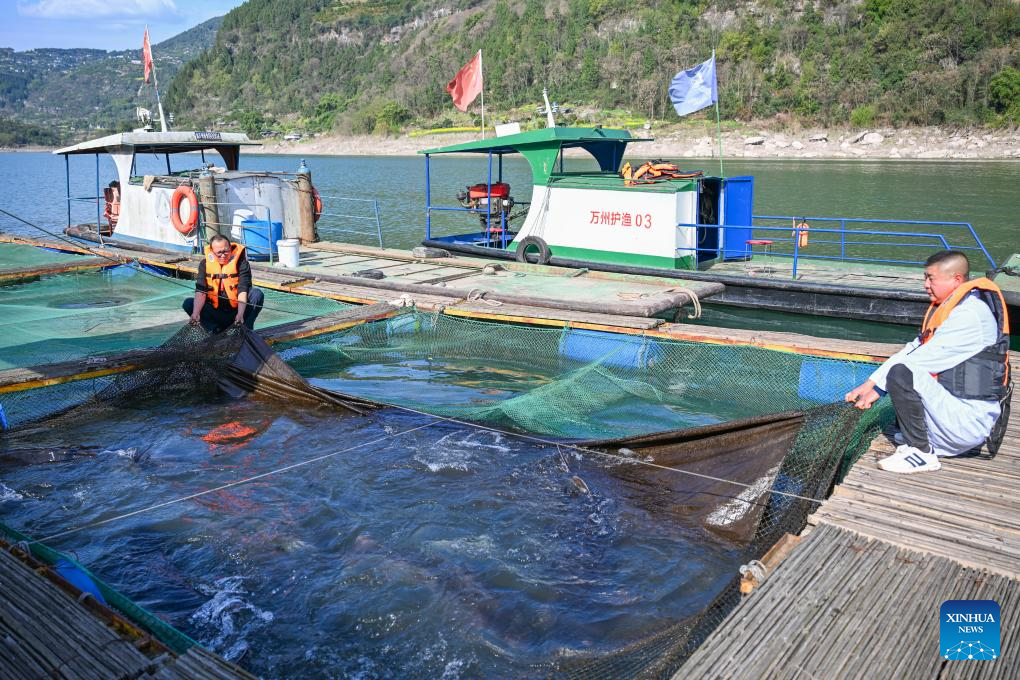
Staff members check the growth of the fish at the Dazhou base of the fisheries research institute of Wanzhou District, southwest China's Chongqing, March 9, 2026.
The Dazhou base of the fisheries research institute of Wanzhou District serves as a wild acclimation center for the rare fish species in the upper reaches of the Yangtze River. Equipped with 32 net cages covering an area of approximately 800 square meters, the base conserves over 20 rare and commercial fish species. Its annual output of rare and high-quality fish fry exceeds 20 million.
In recent years, the base has continuously strengthened the short-term wild acclimation training of fish fry before their release into natural waters, effectively helping boost the wild populations of the rare species. (Xinhua/Wang Quanchao)
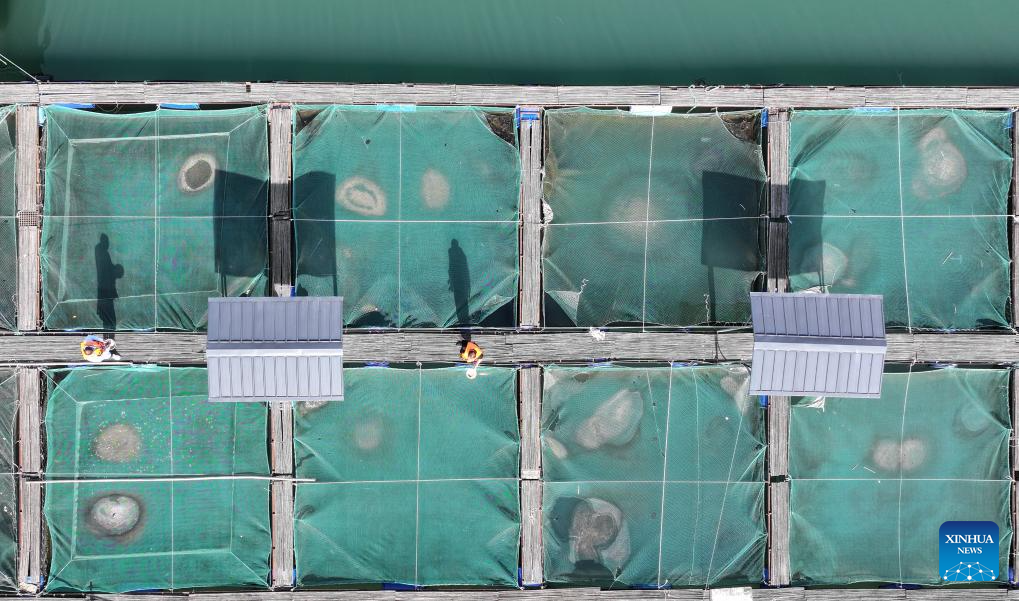
An aerial drone photo taken on March 9, 2026 shows staff members feeding the fish at the Dazhou base of the fisheries research institute of Wanzhou District, southwest China's Chongqing.
The Dazhou base of the fisheries research institute of Wanzhou District serves as a wild acclimation center for the rare fish species in the upper reaches of the Yangtze River. Equipped with 32 net cages covering an area of approximately 800 square meters, the base conserves over 20 rare and commercial fish species. Its annual output of rare and high-quality fish fry exceeds 20 million.
In recent years, the base has continuously strengthened the short-term wild acclimation training of fish fry before their release into natural waters, effectively helping boost the wild populations of the rare species. (Xinhua/Wang Quanchao)
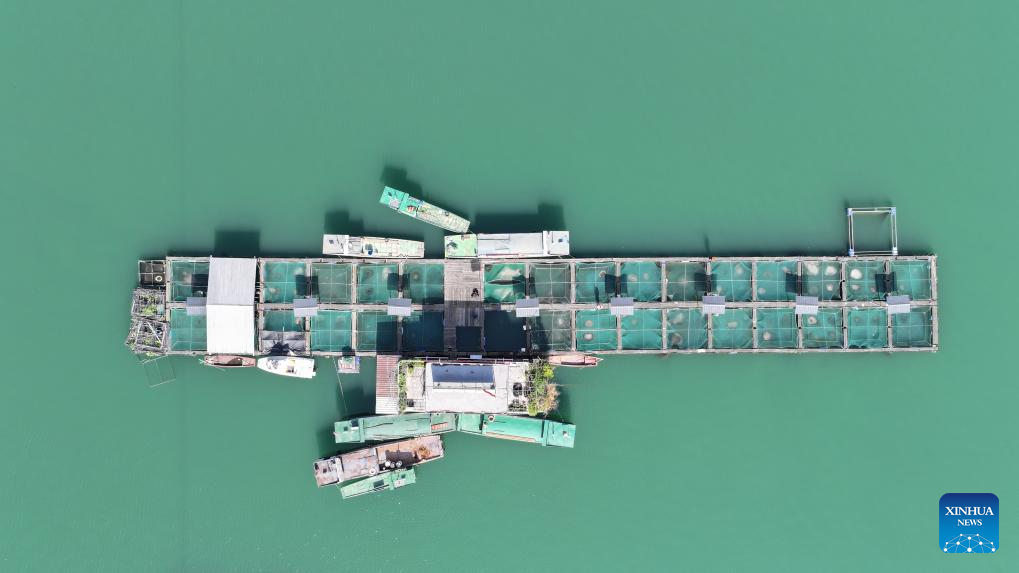
An aerial drone photo taken on March 9, 2026 shows the Dazhou base of the fisheries research institute of Wanzhou District, southwest China's Chongqing.
The Dazhou base of the fisheries research institute of Wanzhou District serves as a wild acclimation center for the rare fish species in the upper reaches of the Yangtze River. Equipped with 32 net cages covering an area of approximately 800 square meters, the base conserves over 20 rare and commercial fish species. Its annual output of rare and high-quality fish fry exceeds 20 million.
In recent years, the base has continuously strengthened the short-term wild acclimation training of fish fry before their release into natural waters, effectively helping boost the wild populations of the rare species. (Xinhua/Wang Quanchao)
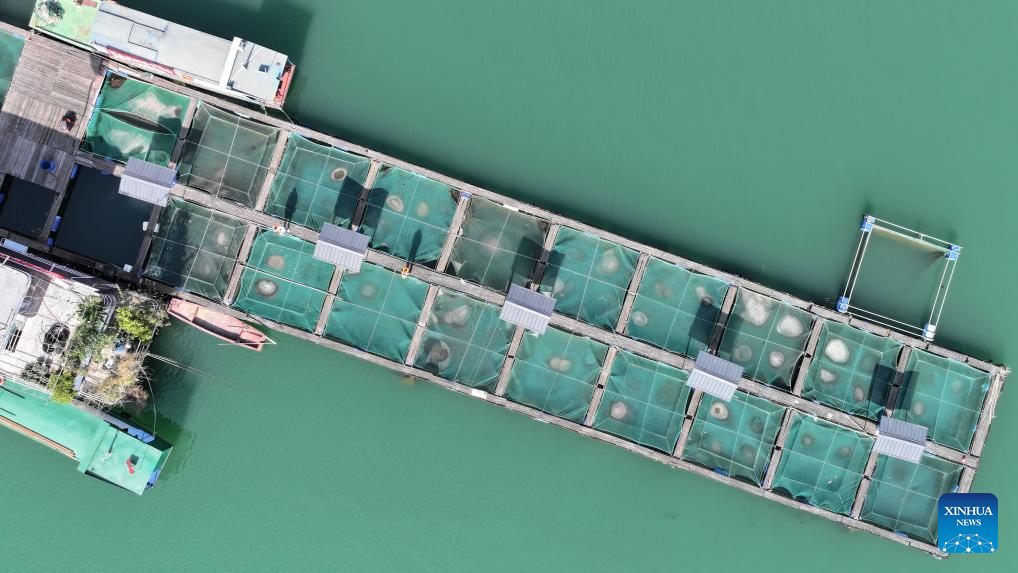
An aerial drone photo taken on March 9, 2026 shows the Dazhou base of the fisheries research institute of Wanzhou District, southwest China's Chongqing.
The Dazhou base of the fisheries research institute of Wanzhou District serves as a wild acclimation center for the rare fish species in the upper reaches of the Yangtze River. Equipped with 32 net cages covering an area of approximately 800 square meters, the base conserves over 20 rare and commercial fish species. Its annual output of rare and high-quality fish fry exceeds 20 million.
In recent years, the base has continuously strengthened the short-term wild acclimation training of fish fry before their release into natural waters, effectively helping boost the wild populations of the rare species. (Xinhua/Wang Quanchao)
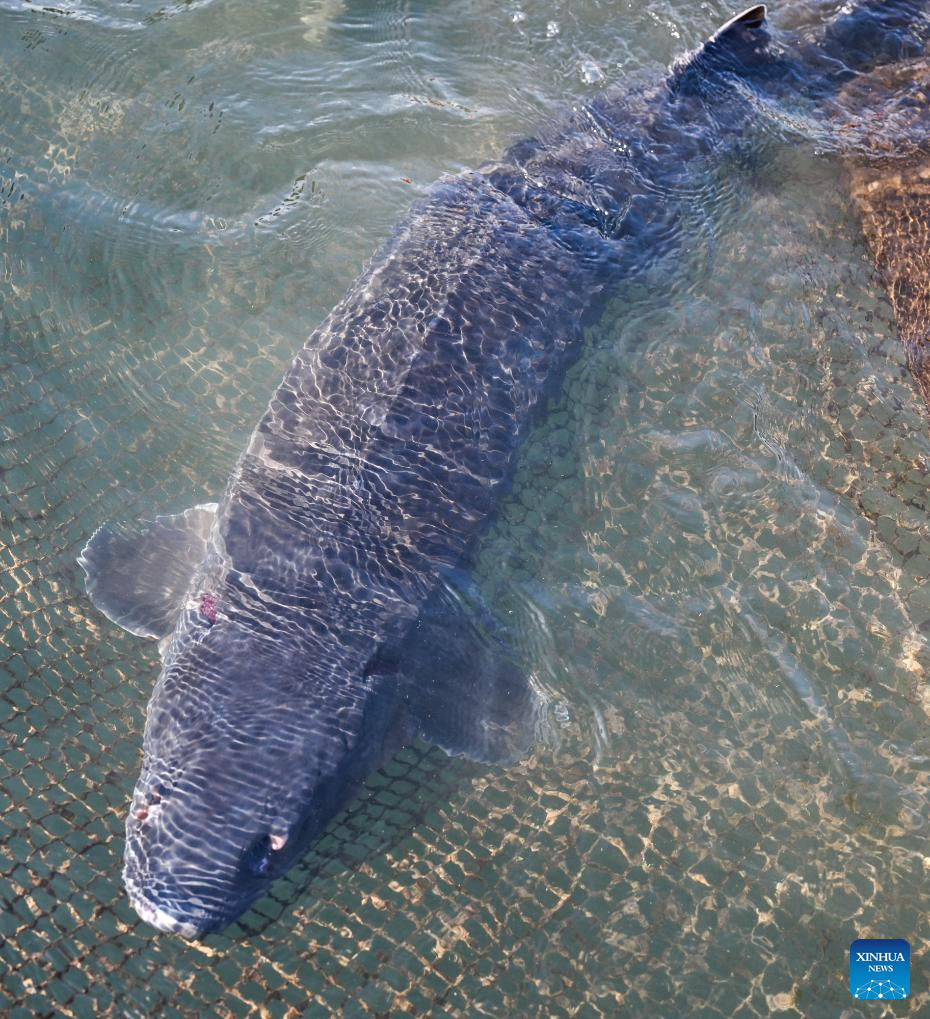
This photo taken on March 9, 2026 shows a Yangtze sturgeon at the Dazhou base of the fisheries research institute of Wanzhou District, southwest China's Chongqing.
The Dazhou base of the fisheries research institute of Wanzhou District serves as a wild acclimation center for the rare fish species in the upper reaches of the Yangtze River. Equipped with 32 net cages covering an area of approximately 800 square meters, the base conserves over 20 rare and commercial fish species. Its annual output of rare and high-quality fish fry exceeds 20 million.
In recent years, the base has continuously strengthened the short-term wild acclimation training of fish fry before their release into natural waters, effectively helping boost the wild populations of the rare species. (Xinhua/Wang Quanchao)
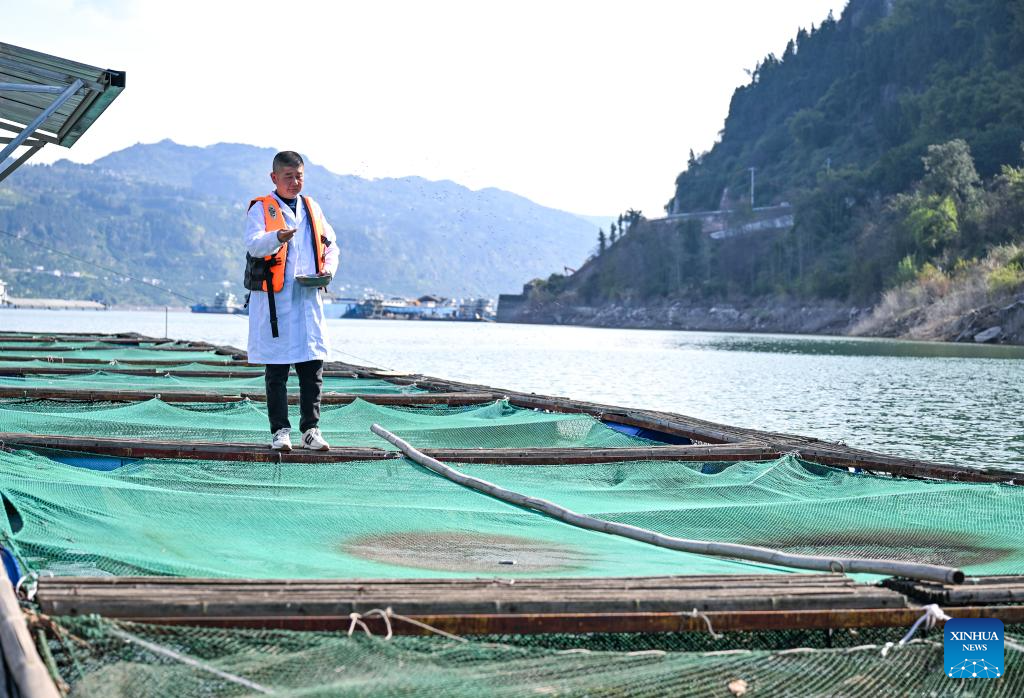
A staff member feeds the fish at the Dazhou base of the fisheries research institute of Wanzhou District, southwest China's Chongqing, March 9, 2026.
The Dazhou base of the fisheries research institute of Wanzhou District serves as a wild acclimation center for the rare fish species in the upper reaches of the Yangtze River. Equipped with 32 net cages covering an area of approximately 800 square meters, the base conserves over 20 rare and commercial fish species. Its annual output of rare and high-quality fish fry exceeds 20 million.
In recent years, the base has continuously strengthened the short-term wild acclimation training of fish fry before their release into natural waters, effectively helping boost the wild populations of the rare species. (Xinhua/Wang Quanchao)
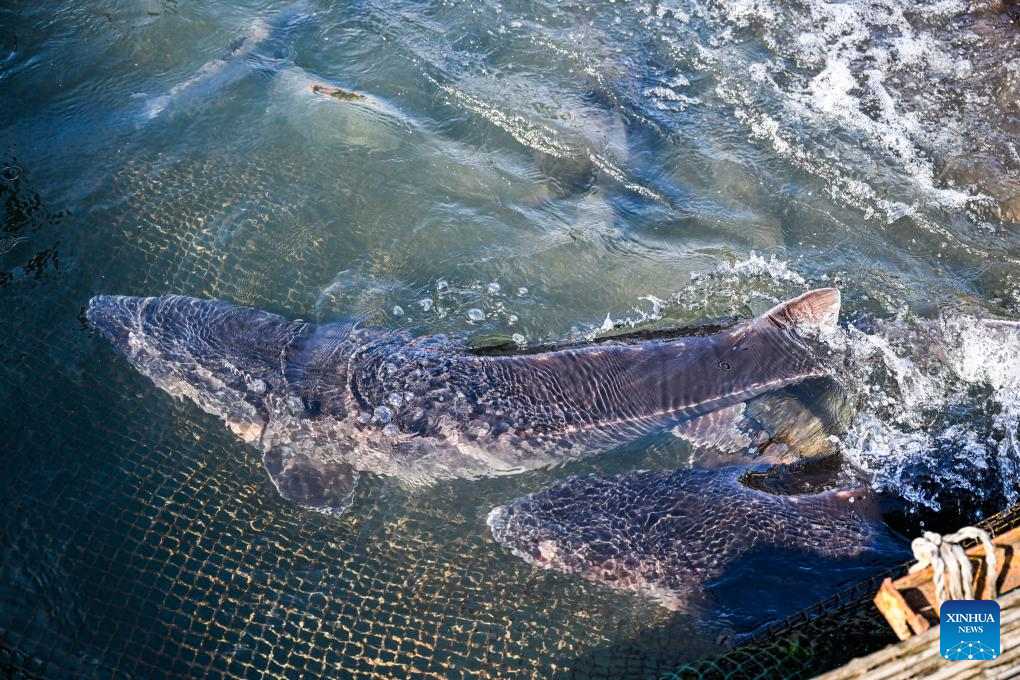
This photo taken on March 9, 2026 shows the Yangtze sturgeons at the Dazhou base of the fisheries research institute of Wanzhou District, southwest China's Chongqing.
The Dazhou base of the fisheries research institute of Wanzhou District serves as a wild acclimation center for the rare fish species in the upper reaches of the Yangtze River. Equipped with 32 net cages covering an area of approximately 800 square meters, the base conserves over 20 rare and commercial fish species. Its annual output of rare and high-quality fish fry exceeds 20 million.
In recent years, the base has continuously strengthened the short-term wild acclimation training of fish fry before their release into natural waters, effectively helping boost the wild populations of the rare species. (Xinhua/Wang Quanchao)


