
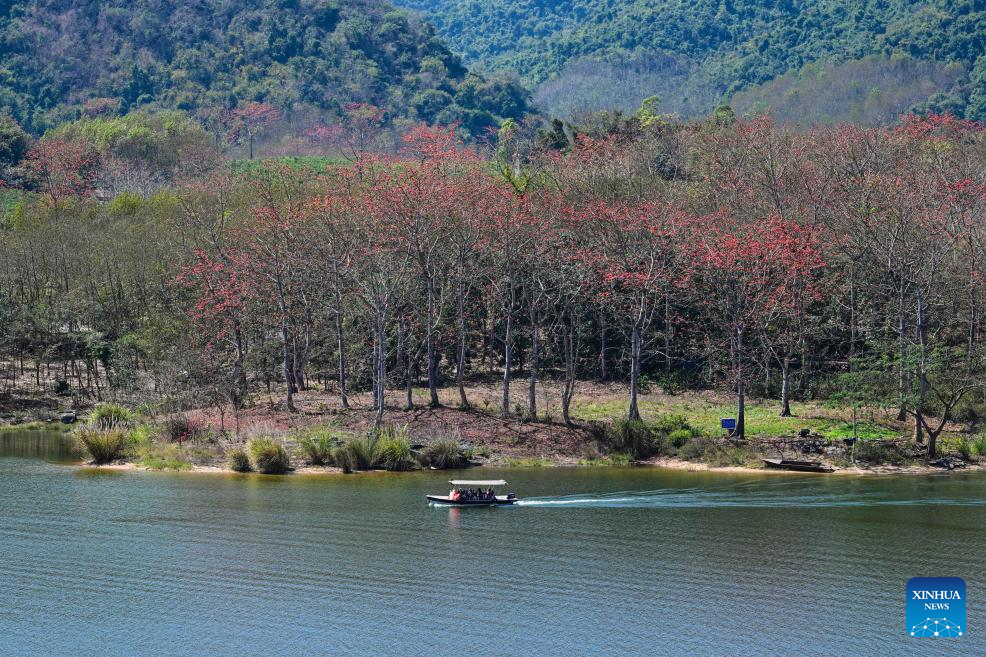
Visitors take a boat trip to enjoy the scenery of kapok flowers on the Changhua River in Changjiang Li Autonomous County, south China's Hainan Province, Feb. 15, 2026. The kapok tree, also known as the red silk-cotton tree, is a deciduous tree native to tropical and subtropical regions and is widely distributed in southern and southwestern China.
In early spring, Changjiang enters its kapok flower blooming season. The vibrant scenery draws many visitors to experience the southern region's splendid spring landscape. (Xinhua/Pu Xiaoxu)
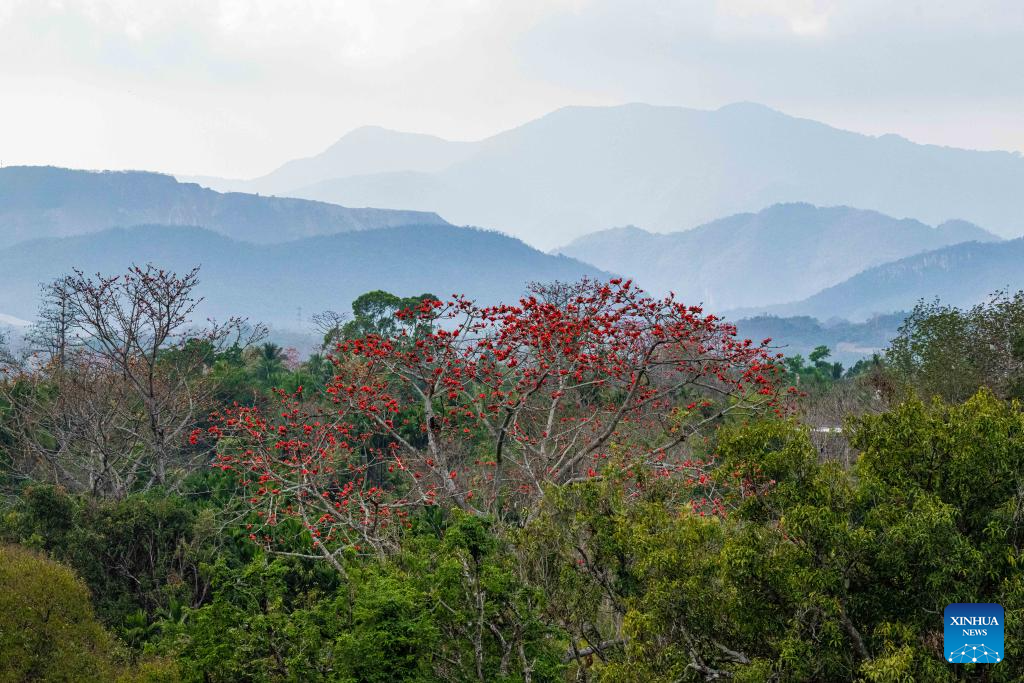
Kapok flowers are pictured in Qicha Town of Changjiang Li Autonomous County, south China's Hainan Province, Feb. 15, 2026. The kapok tree, also known as the red silk-cotton tree, is a deciduous tree native to tropical and subtropical regions and is widely distributed in southern and southwestern China.
In early spring, Changjiang enters its kapok flower blooming season. The vibrant scenery draws many visitors to experience the southern region's splendid spring landscape. (Xinhua/Pu Xiaoxu)
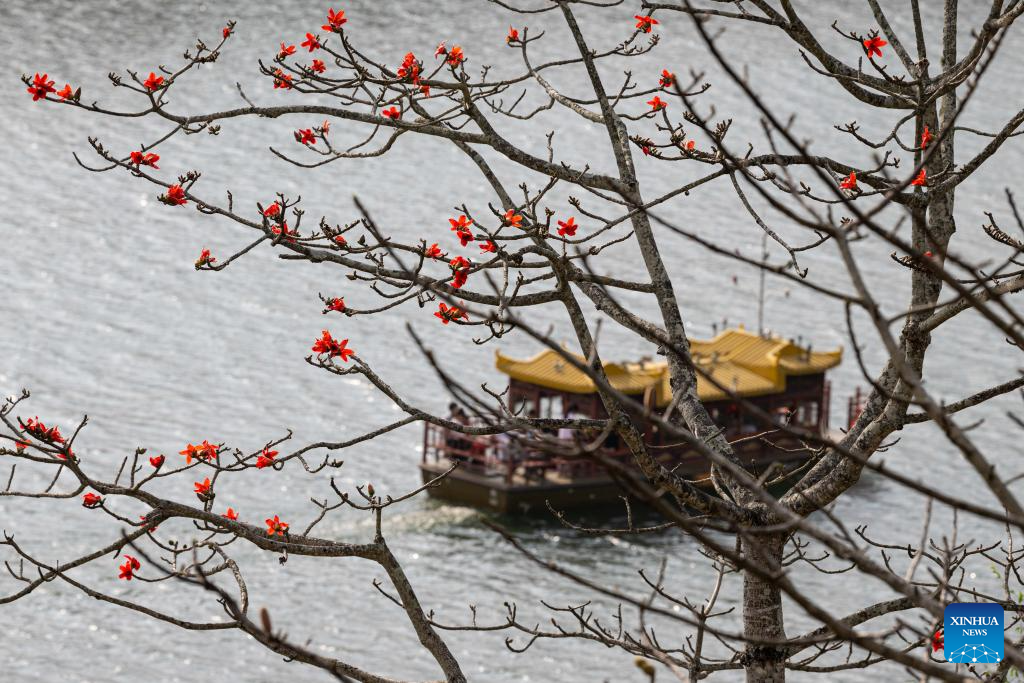
This photo taken on Feb. 14, 2026 shows the scenery of kapok flowers alongside the Changhua River in Changjiang Li Autonomous County, south China's Hainan Province. The kapok tree, also known as the red silk-cotton tree, is a deciduous tree native to tropical and subtropical regions and is widely distributed in southern and southwestern China.
In early spring, Changjiang enters its kapok flower blooming season. The vibrant scenery draws many visitors to experience the southern region's splendid spring landscape. (Xinhua/Pu Xiaoxu)
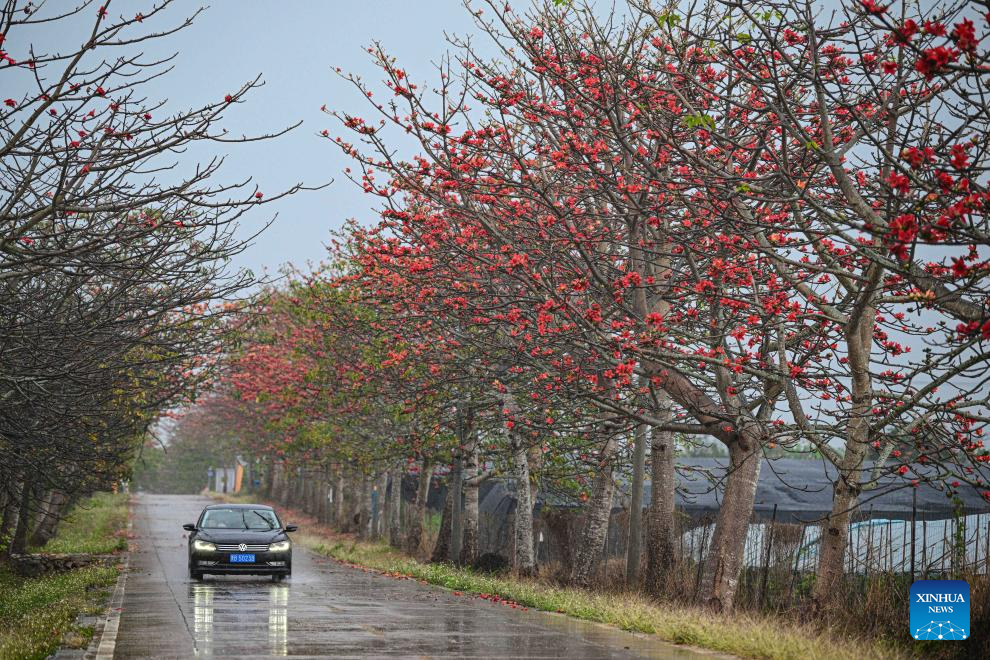
Kapok flowers are pictured in Wulie Town of Changjiang Li Autonomous County, south China's Hainan Province, Feb. 17, 2026. The kapok tree, also known as the red silk-cotton tree, is a deciduous tree native to tropical and subtropical regions and is widely distributed in southern and southwestern China.
In early spring, Changjiang enters its kapok flower blooming season. The vibrant scenery draws many visitors to experience the southern region's splendid spring landscape. (Xinhua/Pu Xiaoxu)
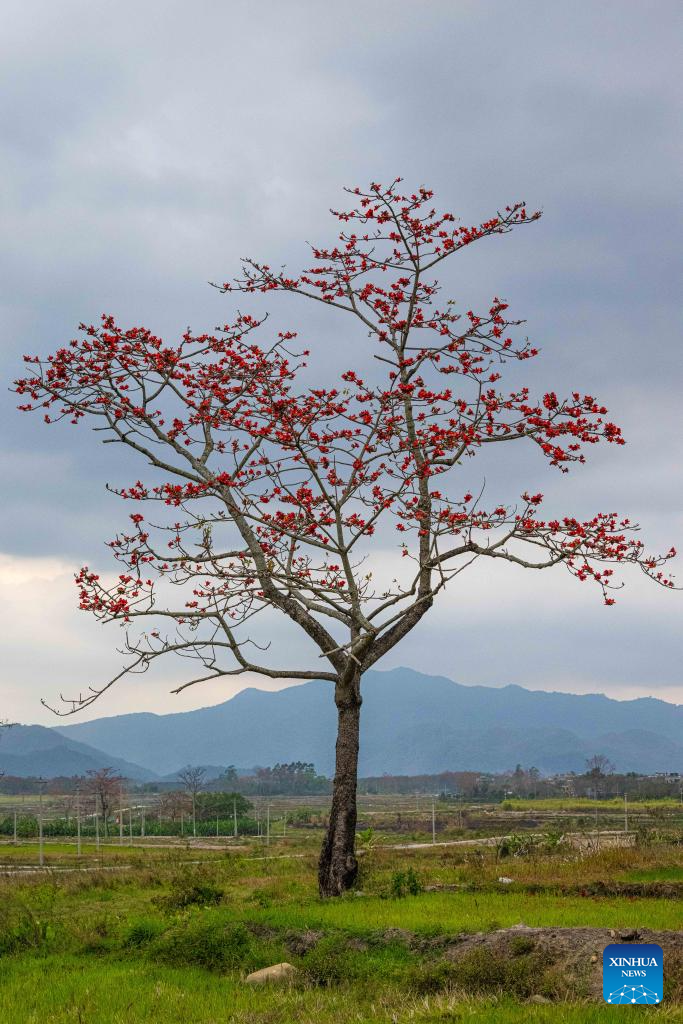
A kapok tree is pictured in Qicha Town of Changjiang Li Autonomous County, south China's Hainan Province, Feb. 14, 2026. The kapok tree, also known as the red silk-cotton tree, is a deciduous tree native to tropical and subtropical regions and is widely distributed in southern and southwestern China.
In early spring, Changjiang enters its kapok flower blooming season. The vibrant scenery draws many visitors to experience the southern region's splendid spring landscape. (Xinhua/Pu Xiaoxu)
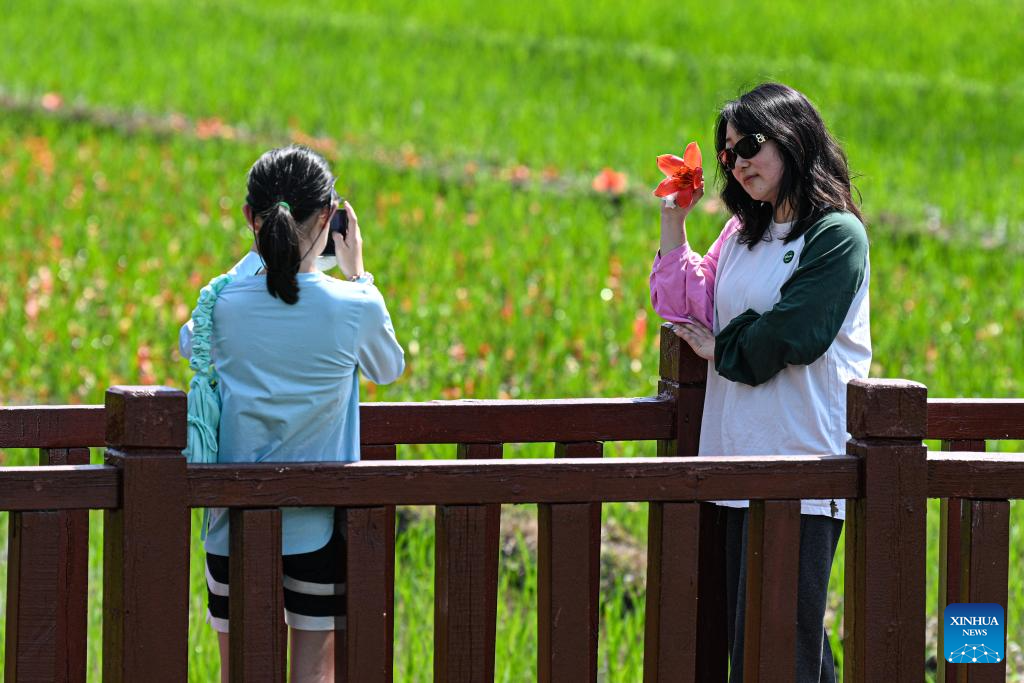
A visitor holding a fallen kapok flower poses for a photo in Chahe Town of Changjiang Li Autonomous County, south China's Hainan Province, Feb. 14, 2026. The kapok tree, also known as the red silk-cotton tree, is a deciduous tree native to tropical and subtropical regions and is widely distributed in southern and southwestern China.
In early spring, Changjiang enters its kapok flower blooming season. The vibrant scenery draws many visitors to experience the southern region's splendid spring landscape. (Xinhua/Pu Xiaoxu)
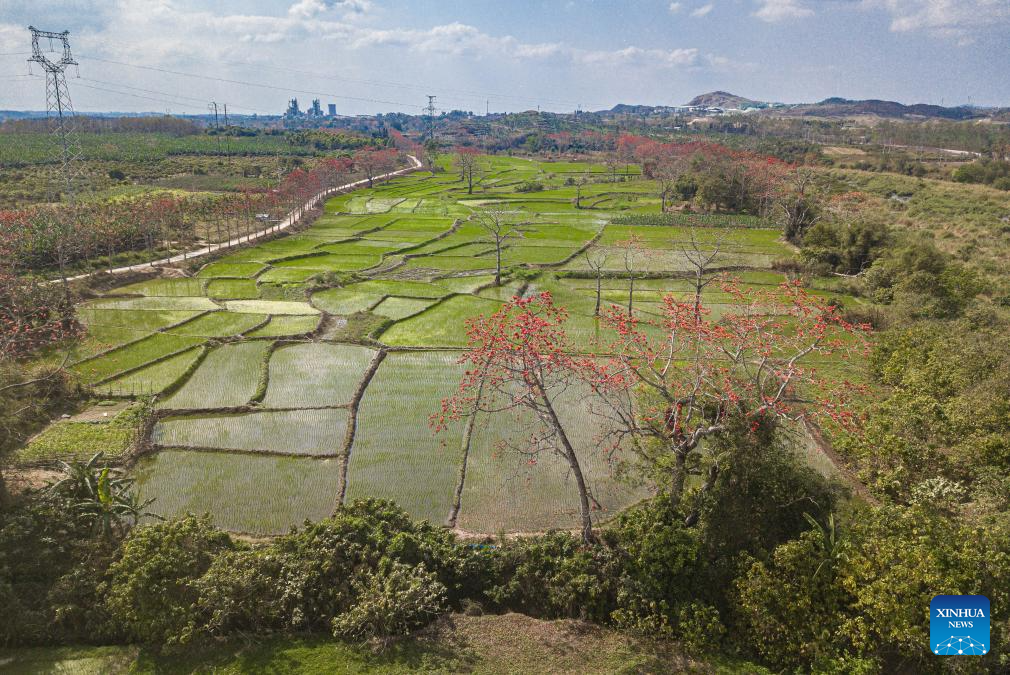
An aerial drone photo taken on Feb. 14, 2026 shows the scenery of kapok trees and paddy fields in Chahe Town of Changjiang Li Autonomous County, south China's Hainan Province. The kapok tree, also known as the red silk-cotton tree, is a deciduous tree native to tropical and subtropical regions and is widely distributed in southern and southwestern China.
In early spring, Changjiang enters its kapok flower blooming season. The vibrant scenery draws many visitors to experience the southern region's splendid spring landscape. (Xinhua/Pu Xiaoxu)
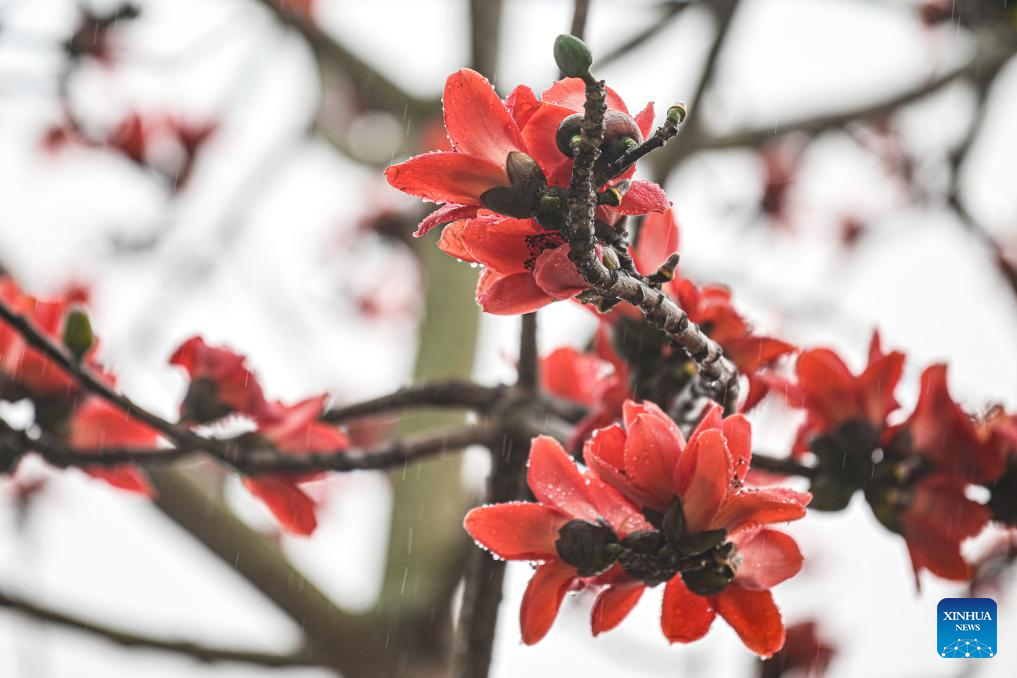
Kapok flowers are pictured in the rain in Wulie Town of Changjiang Li Autonomous County, south China's Hainan Province, Feb. 17, 2026. The kapok tree, also known as the red silk-cotton tree, is a deciduous tree native to tropical and subtropical regions and is widely distributed in southern and southwestern China.
In early spring, Changjiang enters its kapok flower blooming season. The vibrant scenery draws many visitors to experience the southern region's splendid spring landscape. (Xinhua/Pu Xiaoxu)
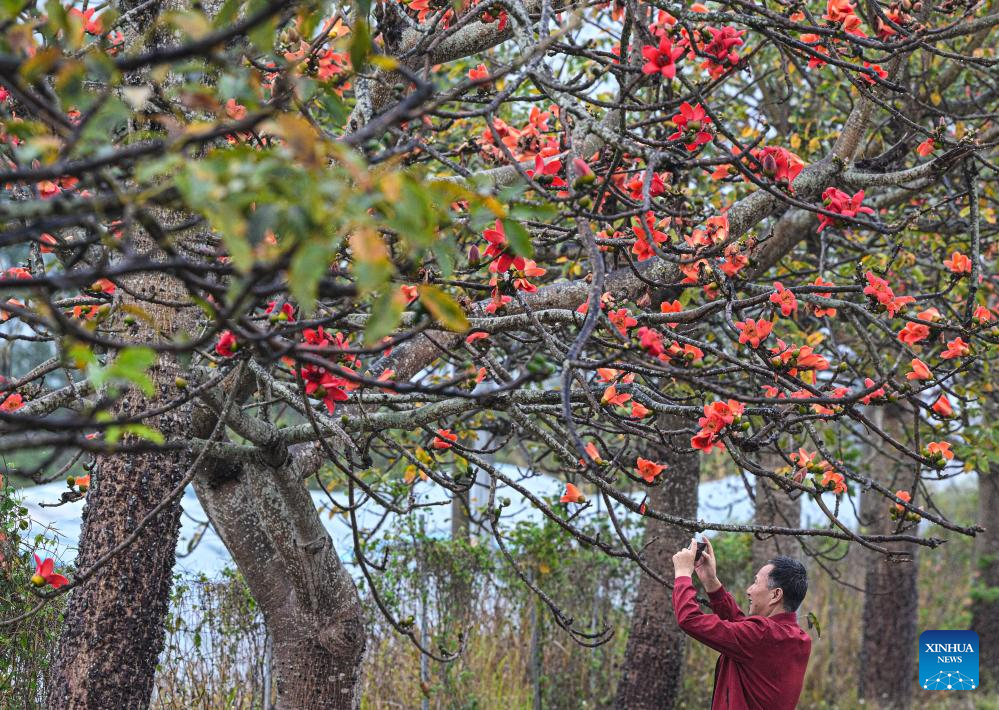
A visitor takes photos of kapok flowers in Wulie Town of Changjiang Li Autonomous County, south China's Hainan Province, Feb. 17, 2026. The kapok tree, also known as the red silk-cotton tree, is a deciduous tree native to tropical and subtropical regions and is widely distributed in southern and southwestern China.
In early spring, Changjiang enters its kapok flower blooming season. The vibrant scenery draws many visitors to experience the southern region's splendid spring landscape. (Xinhua/Pu Xiaoxu)
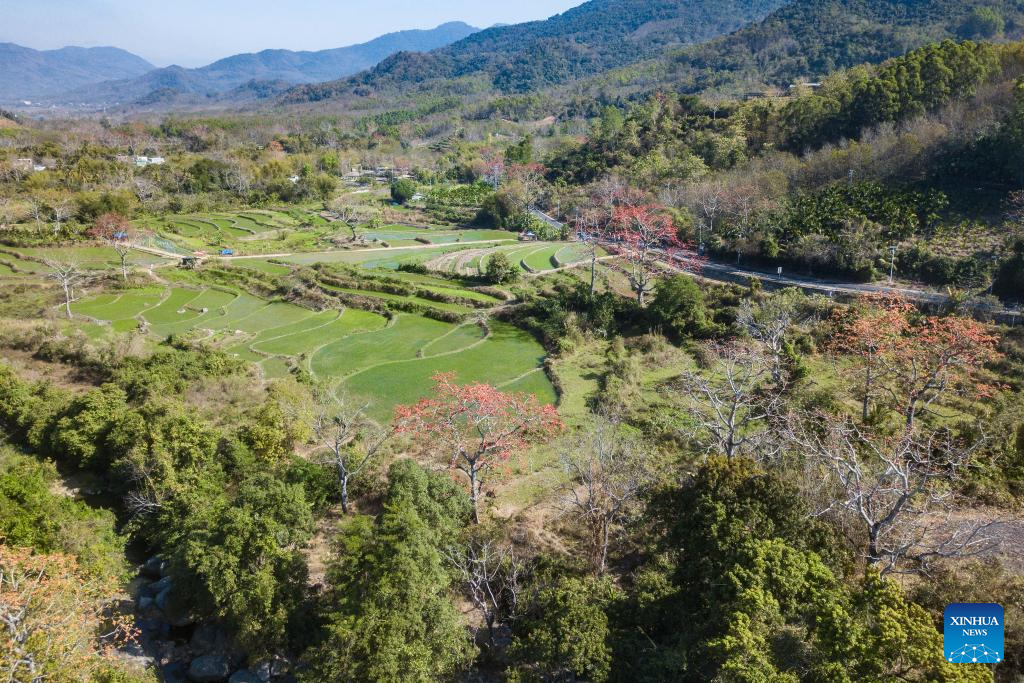
An aerial drone photo taken on Feb. 16, 2026 shows the scenery of kapok trees and paddy fields in Qicha Town of Changjiang Li Autonomous County, south China's Hainan Province. The kapok tree, also known as the red silk-cotton tree, is a deciduous tree native to tropical and subtropical regions and is widely distributed in southern and southwestern China.
In early spring, Changjiang enters its kapok flower blooming season. The vibrant scenery draws many visitors to experience the southern region's splendid spring landscape. (Xinhua/Pu Xiaoxu)


