
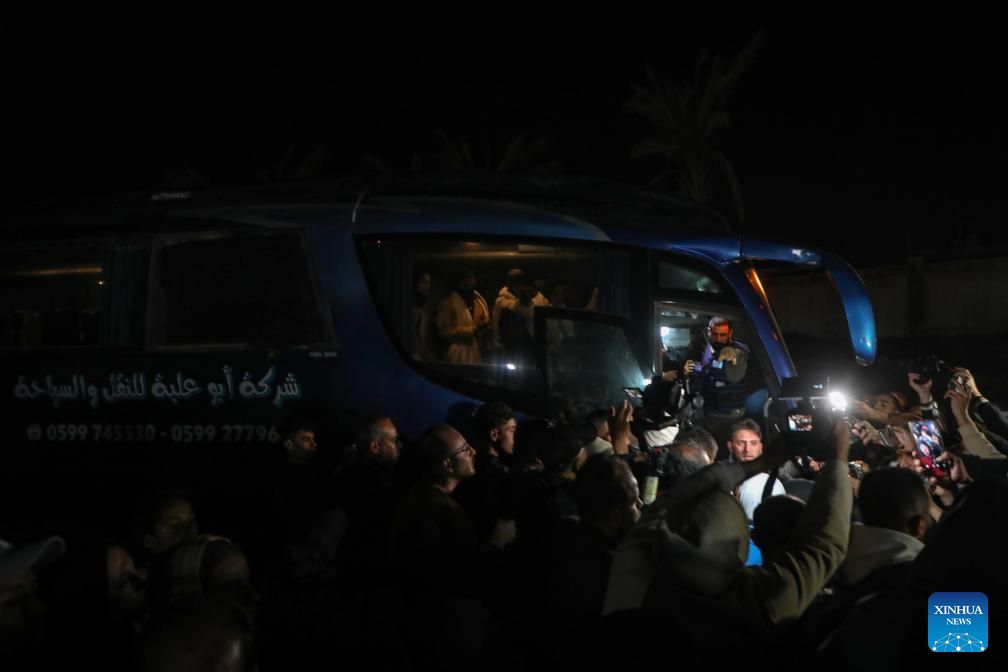
Palestinians coming through the Rafah crossing arrive at Nasser Medical Complex in Khan Younis, southern Gaza Strip, on Feb. 2, 2026. The Rafah land crossing between the Gaza Strip and Egypt resumed operation on Monday after being closed amid the recent Palestinian-Israeli conflict, marking a long-awaited development for movement in and out of Gaza. (Photo by Rizek Abdeljawad/Xinhua)
Palestinians coming through the Rafah crossing arrive at Nasser Medical Complex in Khan Younis, southern Gaza Strip, on Feb. 2, 2026. The Rafah land crossing between the Gaza Strip and Egypt resumed operation on Monday after being closed amid the recent Palestinian-Israeli conflict, marking a long-awaited development for movement in and out of Gaza. (Photo by Rizek Abdeljawad/Xinhua)
GAZA, Feb. 3 (Xinhua) -- The Rafah land crossing between the Gaza Strip and Egypt resumed operation on Monday after being closed amid the recent Palestinian-Israeli conflict, marking a long-awaited development for movement in and out of Gaza.
Before the outbreak of the war, Rafah was one of Gaza's main border crossings, particularly for residents seeking to leave the enclave. At that time, the crossing was controlled and operated by Egyptian authorities and was not under Israeli control.
Palestinians are banned from exiting Gaza via Israel unless they obtain an Israeli-issued exit permit, according to a UN report released in September 2023, just before the war began.
The report said that only certain categories of people, primarily day laborers, traders, patients and their accompaniers, and aid workers, were eligible to apply for such permits.
In August 2023, just before the war, the Egyptian authorities allowed 19,608 people to exit Gaza, it added.
In the same month, 12,076 truckloads of authorized goods entered Gaza through Israeli- and Egyptian-controlled crossings, with 37 percent entering Gaza via the Egyptian border.
During the war, Israel's military said in early May 2024 that it had started "a precise counterterrorism operation" in Rafah city and had assumed "operational control" over the Rafah crossing. The crossing has been out of service since then.
It was estimated that between 80,000 and 100,000 Palestinians crossed into Egypt from Gaza during the war. Xinhua correspondents encountered some of them on the outskirts of Cairo, where Gazans reopened restaurants and shops they once operated in Gaza.
Under a ceasefire reached in January 2025, the Rafah crossing reopened briefly for the passage of patients, before being closed again as the ceasefire collapsed and fighting resumed in March.
As part of a new peace deal reached in October 2025, and after the remains of the last Israeli hostage were found and returned to Israel in January, the Rafah crossing reopened with limited pedestrian movement.
"The reopening of the Rafah crossing means bringing life back to the Gaza Strip or at least signals the resumption of life and a return to normalcy, even if movement is limited," Palestinian political analyst Akram Atallah told Xinhua.
"It could be a prelude to reconstruction, the resettlement of people within the Gaza Strip, and the return of those who have been stranded abroad for more than two years," Atallah said.
A UN report released in late January shows that more than 18,500 patients, including 4,000 children, are still awaiting medical evacuation outside Gaza to access treatment not available in the enclave.
Reziq Shomar, a Palestinian man from Gaza City, told Xinhua that "from the beginning, the crossing has been the backbone of Gaza's population, especially for the wounded and the sick."
"I am one of the injured, and I hope its gates will open so I can receive treatment. We want medical equipment to enter, and we want people to be able to travel for treatment," he said.
"The crossing is our lifeline," he added.
For Om Ibrahim, a Palestinian woman from Gaza City, she looked forward to a family reunion after the reopening.
"My husband is outside the Palestinian territory, and my children are abroad. I am waiting for the crossing to open on burning coals," she said. "Everything would change completely; everyone is waiting to reunite with their families."
"I am waiting to travel to see my husband, while others are waiting for their families to return," she added.
Analysts said the reopening of the Rafah crossing is a positive step that could help ease suffering for people in Gaza, while warning that the ceasefire remains fragile, with significant challenges ahead. ■
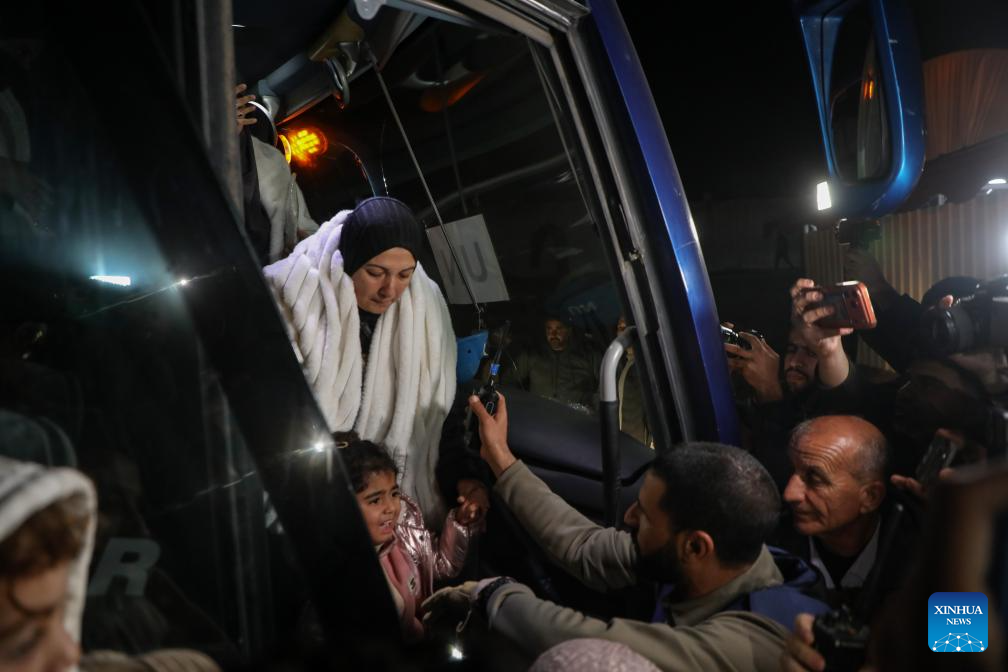
Palestinians coming through the Rafah crossing arrive at Nasser Medical Complex in Khan Younis, southern Gaza Strip, on Feb. 2, 2026. The Rafah land crossing between the Gaza Strip and Egypt resumed operation on Monday after being closed amid the recent Palestinian-Israeli conflict, marking a long-awaited development for movement in and out of Gaza. (Photo by Rizek Abdeljawad/Xinhua)
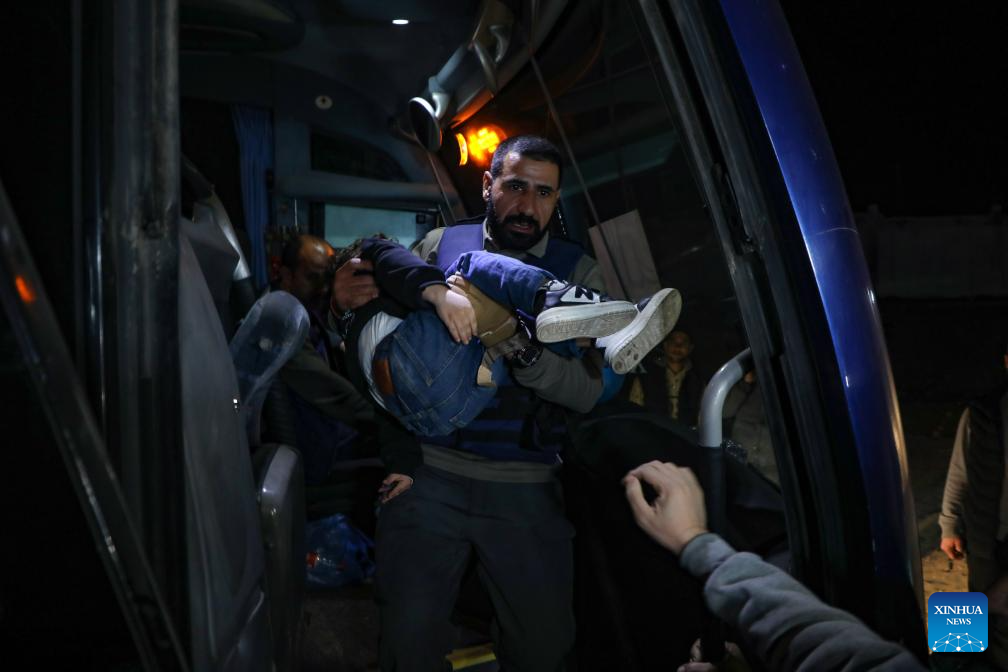
Palestinians coming through the Rafah crossing arrive at Nasser Medical Complex in Khan Younis, southern Gaza Strip, on Feb. 2, 2026. The Rafah land crossing between the Gaza Strip and Egypt resumed operation on Monday after being closed amid the recent Palestinian-Israeli conflict, marking a long-awaited development for movement in and out of Gaza. (Photo by Rizek Abdeljawad/Xinhua)
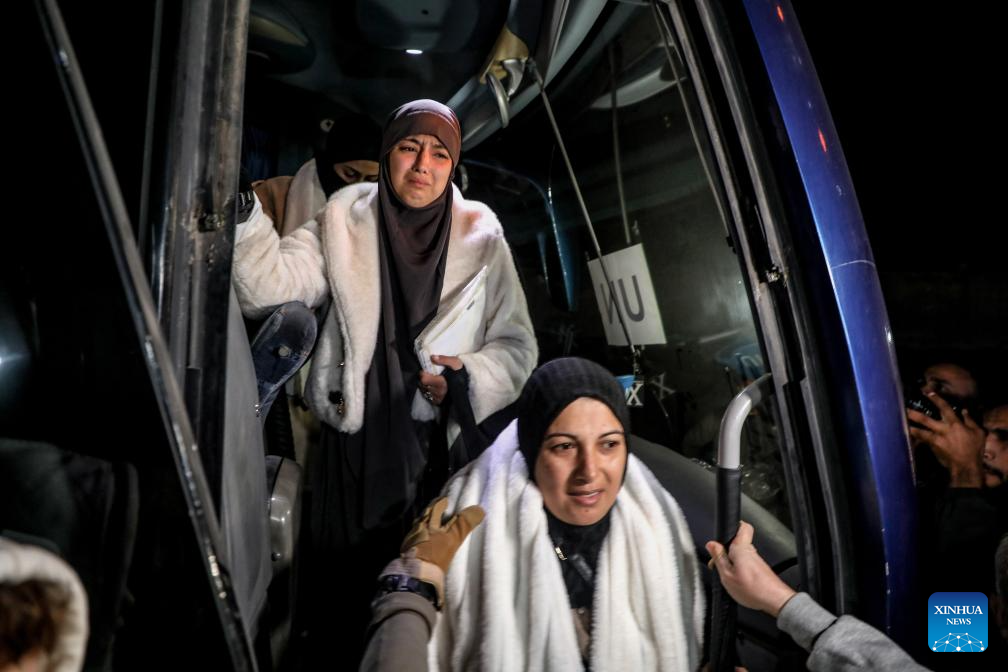
Palestinians coming through the Rafah crossing arrive at Nasser Medical Complex in Khan Younis, southern Gaza Strip, on Feb. 2, 2026. The Rafah land crossing between the Gaza Strip and Egypt resumed operation on Monday after being closed amid the recent Palestinian-Israeli conflict, marking a long-awaited development for movement in and out of Gaza. (Photo by Rizek Abdeljawad/Xinhua)


