
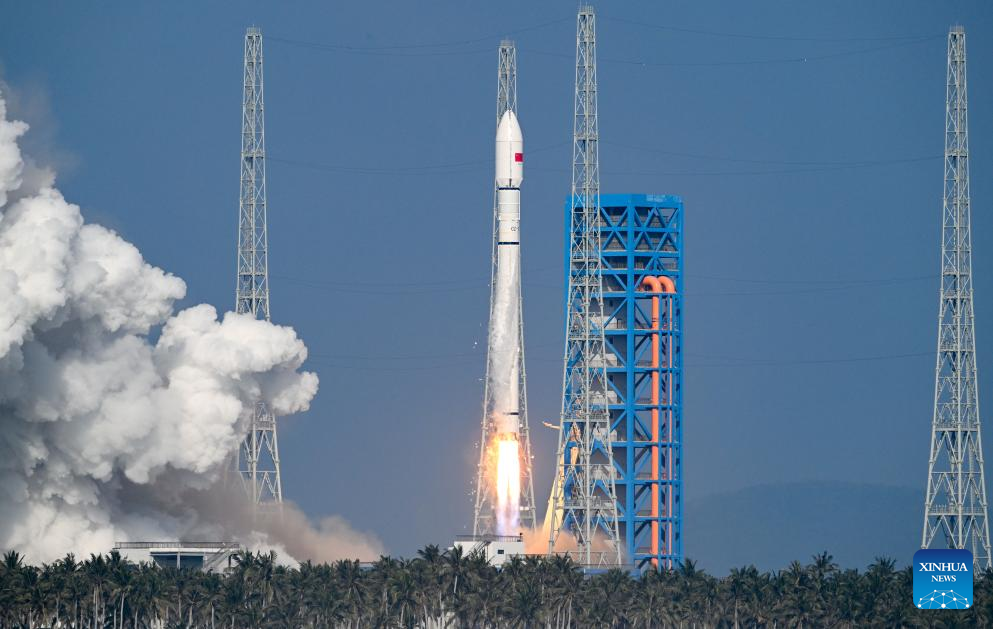
A Long March-12 carrier rocket carrying the 19th group of low-orbit internet satellites blasts off from the Hainan commercial spacecraft launch site in south China's Hainan Province, Jan. 19, 2026. (Xinhua/Yang Guanyu)
WENCHANG, Hainan, Jan. 19 (Xinhua) -- China launched a Long March-12 carrier rocket on Monday in the southern island province of Hainan, sending a group of internet satellites into space.
The rocket lifted off at 3:48 p.m. from the Hainan commercial spacecraft launch site. The payloads, the 19th group of low-orbit internet satellites, entered into preset orbit successfully.
Monday marked the second launch of low-orbit satellites for China's internet satellite constellation this year. The first of the year took place six days ago, when the 18th group of satellites was launched from the same site in Hainan.
In the recommendations for the formulation of China's 15th Five-Year Plan (2026-2030), the aerospace sector has been emphasized as an important part of the country's industrial system and real economy. Commercial aerospace companies, with high efficiency levels, market-driven technological innovation and mass production capabilities, have become an important part of China's space endeavors.
The satellite group launched on Monday was developed by GalaxySpace, which is a commercial firm based in Beijing and one of several Chinese aerospace firms to contribute to the construction of Starlink-style satellite networks over recent years. It was the second time the company has undertaken such space infrastructure development.
The seventh group of low-orbit internet satellites -- also developed by GalaxySpace -- was successfully launched into space on Aug. 4, 2025.
Hu Zhao, chief model designer at GalaxySpace, said that the satellites launched on Monday are equipped with technologies developed by the company. For their R&D, the company fully integrated the entire digital process for the first time, greatly improving production efficiency.
"Satellite mass production capacity is seen as key to the development of new space infrastructure," Hu said.
While continuously shortening its development cycle, GalaxySpace's smart satellite factory has built a complete industrial ecosystem from R&D and the production of satellite parts to the integration and testing of complete satellites, he added.
For smartphone-satellite direct connection technology, for example, GalaxySpace has built a framework including antennas, solar wings and satellite-borne base stations. It has successfully launched over 40 satellites equipped with such technology.
Yang Kuan, vice president of the Beijing Institute of Technology's aerospace policy and law institute, said that low-orbit satellite constellations are not only the core support for emerging application scenarios such as smartphone-satellite direct connection, but are also a key to building an integrated 6G space-ground information network.
Commercial aerospace companies like GalaxySpace are cutting launch costs, accelerating technological iteration rates and playing an increasingly important role in expanding China's new space economy, Yang said. ■
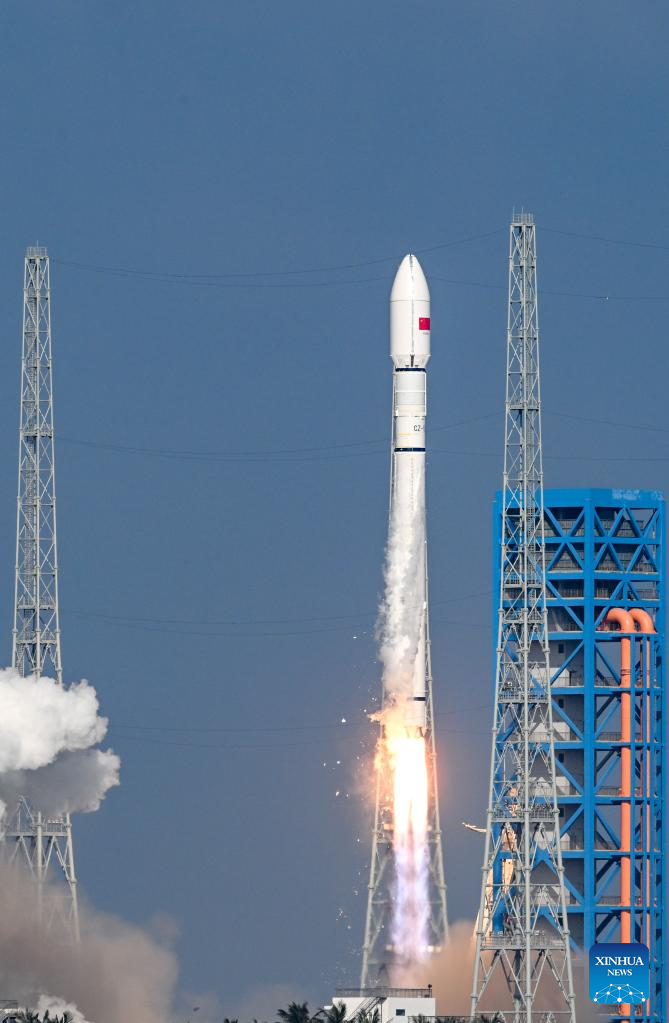
A Long March-12 carrier rocket carrying the 19th group of low-orbit internet satellites blasts off from the Hainan commercial spacecraft launch site in south China's Hainan Province, Jan. 19, 2026. (Xinhua/Yang Guanyu)
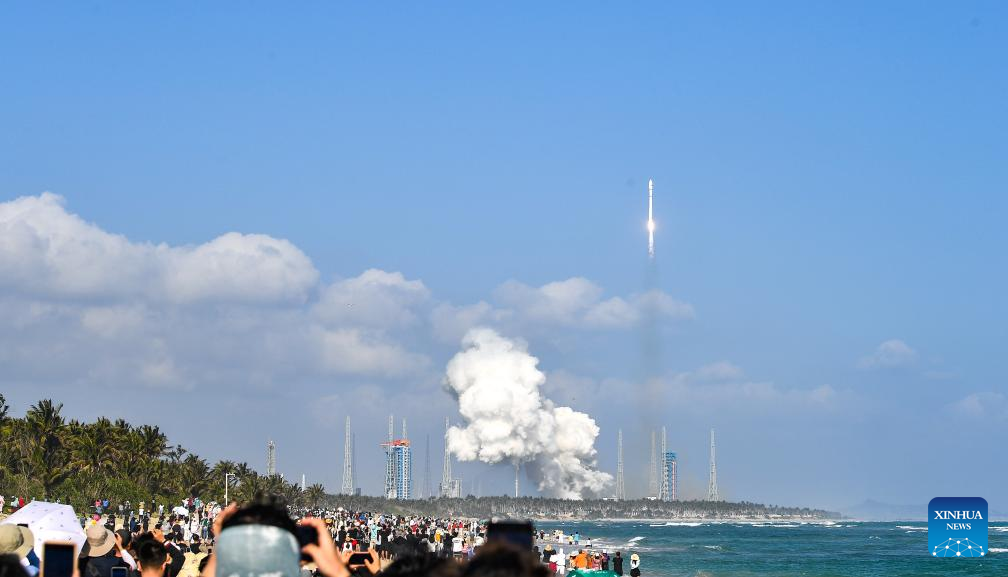
A Long March-12 carrier rocket carrying the 19th group of low-orbit internet satellites blasts off from the Hainan commercial spacecraft launch site in south China's Hainan Province, Jan. 19, 2026. (Xinhua/Yang Guanyu)
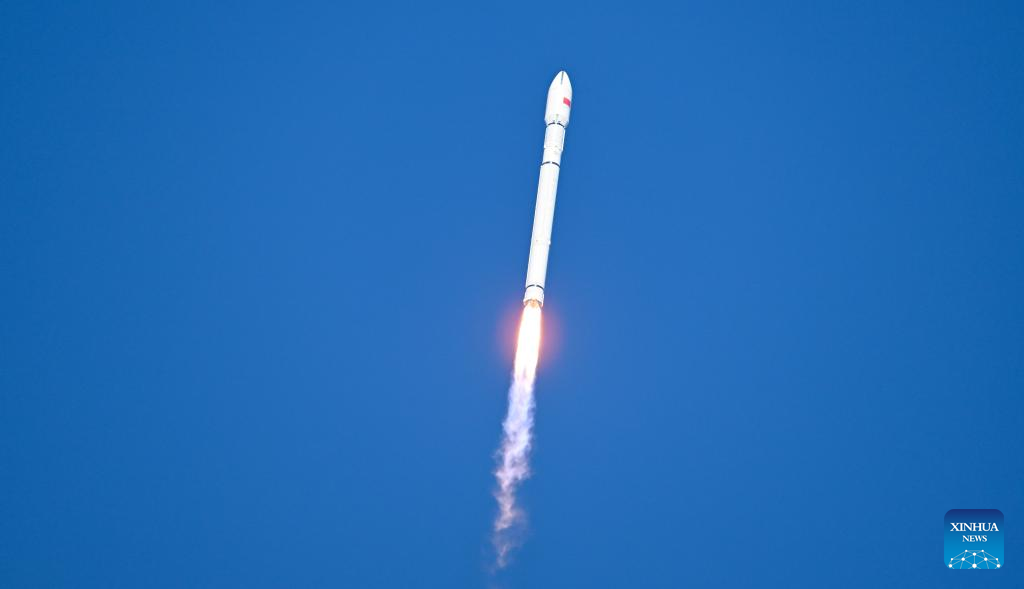
A Long March-12 carrier rocket carrying the 19th group of low-orbit internet satellites blasts off from the Hainan commercial spacecraft launch site in south China's Hainan Province, Jan. 19, 2026. (Xinhua/Yang Guanyu)

In this photo taken with slow shutter speed, the Long March-12 carrier rocket, carrying the 19th group of low-orbit internet satellites, blasts off from the Hainan commercial spacecraft launch site in south China's Hainan Province, Jan. 19, 2026. (Xinhua/Yang Guanyu)
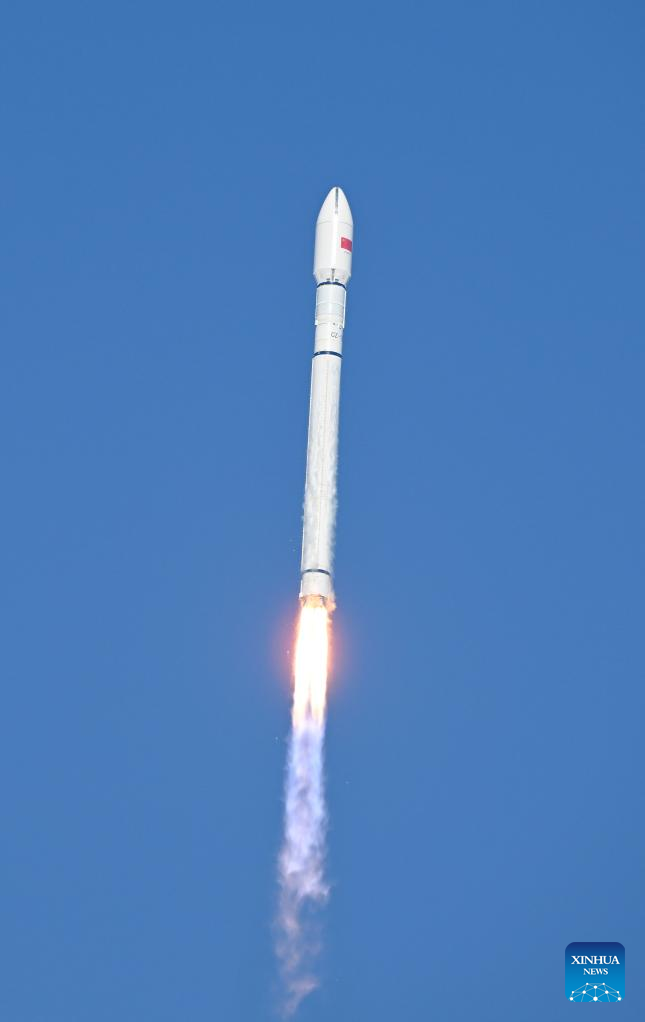
A Long March-12 carrier rocket carrying the 19th group of low-orbit internet satellites blasts off from the Hainan commercial spacecraft launch site in south China's Hainan Province, Jan. 19, 2026. (Xinhua/Yang Guanyu)
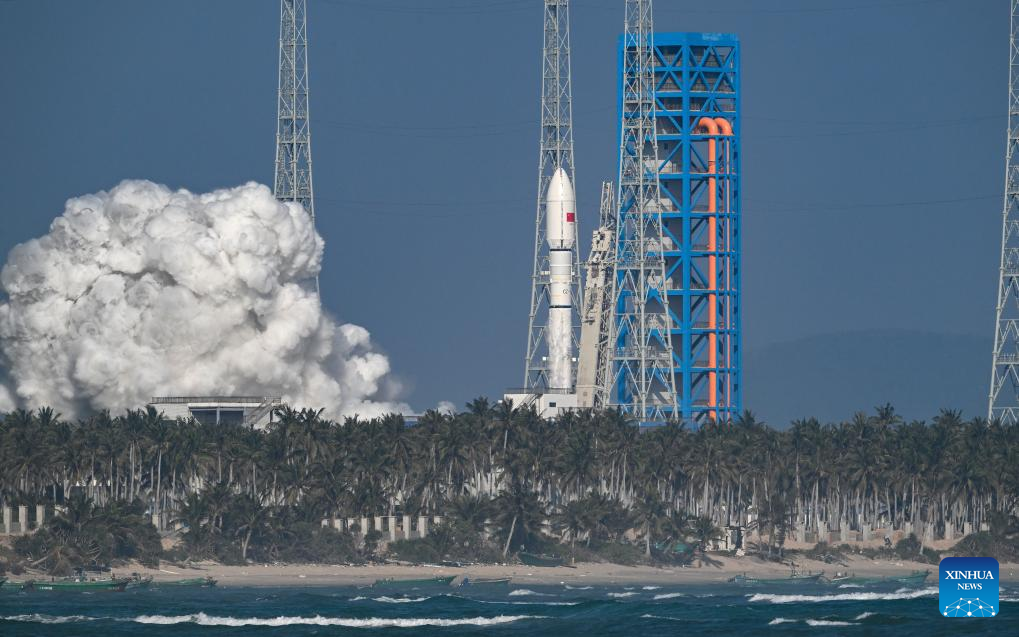
A Long March-12 carrier rocket carrying the 19th group of low-orbit internet satellites blasts off from the Hainan commercial spacecraft launch site in south China's Hainan Province, Jan. 19, 2026. (Xinhua/Yang Guanyu)
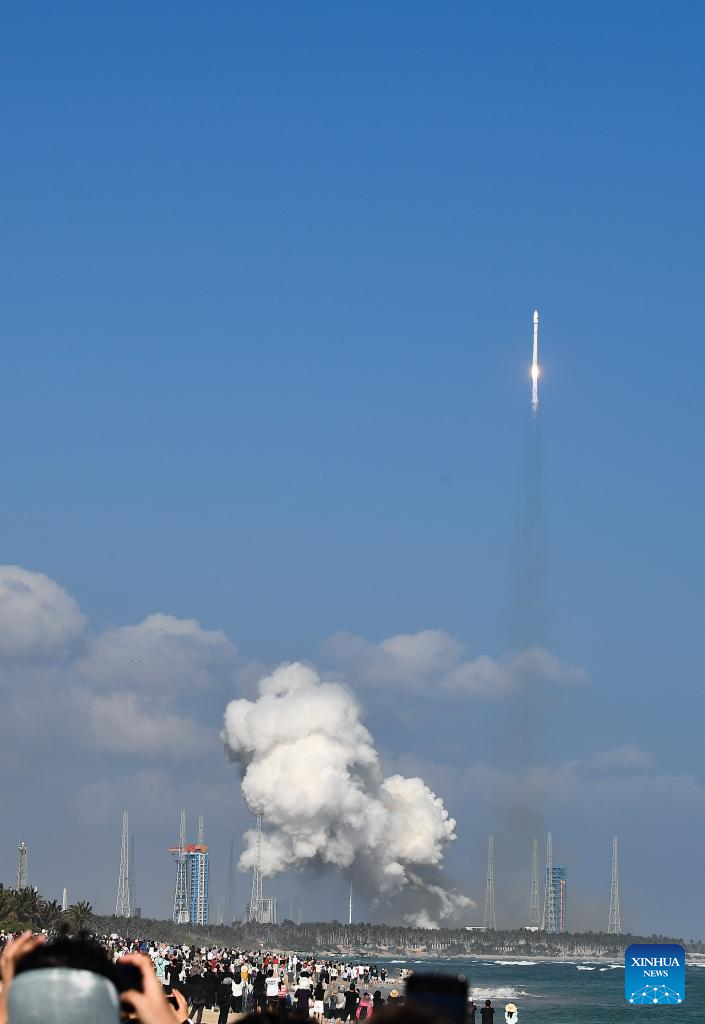
A Long March-12 carrier rocket carrying the 19th group of low-orbit internet satellites blasts off from the Hainan commercial spacecraft launch site in south China's Hainan Province, Jan. 19, 2026. (Xinhua/Yang Guanyu)
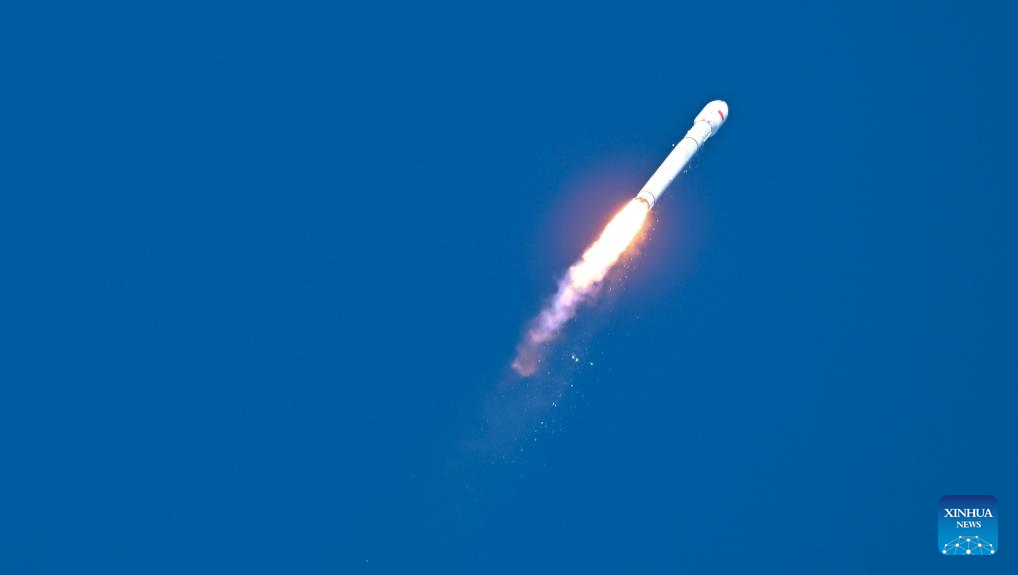
A Long March-12 carrier rocket carrying the 19th group of low-orbit internet satellites blasts off from the Hainan commercial spacecraft launch site in south China's Hainan Province, Jan. 19, 2026. (Xinhua/Yang Guanyu)


