
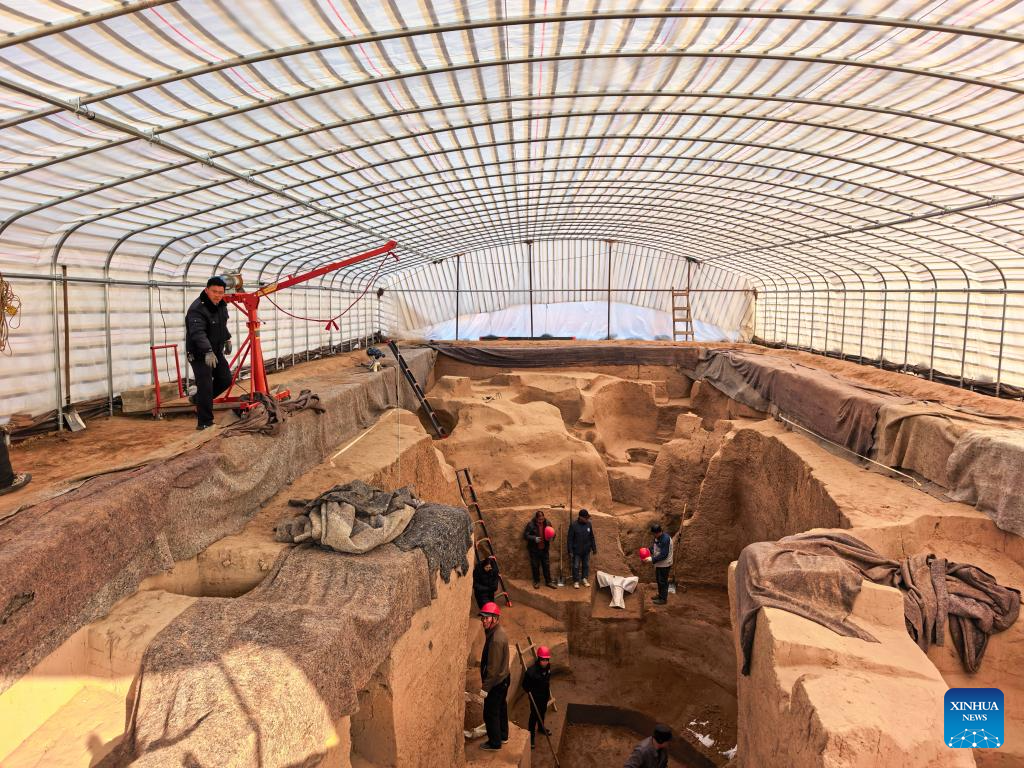
This undated file photo shows the excavation site of the royal mausoleum zone of the Yin Ruins, in Anyang, central China's Henan Province. (The Institute of Archaeology of the Chinese Academy of Social Sciences/Handout via Xinhua)
ZHENGZHOU, Jan. 9 (Xinhua) -- China's nobility may have curated their own collection of rare fauna over 3,000 years ago, long before imperial menageries flourished in Europe, according to researchers.
At a work conference held on Friday, archaeologists working at the Yin Ruins in Anyang, central China's Henan Province, announced the discovery of what they call "the earliest known complex of artificially raised wildlife in China," dating back to the Shang Dynasty (1600-1046 BC).
It followed research into the bountiful wildlife remains in sacrificial pits in the royal mausoleum zone of the Yin Ruins, recognized as the first documented capital site of the late Shang Dynasty.
In 19 small to medium-sized pits, the archaeologists uncovered a treasure trove of wildlife bones belonging to creatures including short-horned domesticated water buffalo, deer, wolves, tigers, leopards, foxes, serows, wild boars, porcupines, and at least five species of birds -- swans, cranes, geese, falcons and eagles.
"They were likely not captured in some random hunts," said Li Xiaomeng, an assistant researcher from the Institute of Archaeology of the Chinese Academy of Social Sciences. "Instead, they were probably raised in the parks or enclosures of the Shang Dynasty kings or other high-ranking nobles."
The clearest clue came from the discovery of bronze bells attached to some animals' necks. In total, 29 bells were unearthed from 13 of the 19 pits.
Niu Shishan, the excavation project leader and a researcher at the institute, sees a sophisticated system at play. "The presence of such a vast collection of wildlife and the standardized treatment of these animals indicate a well-established network for acquiring, breeding and managing wildlife back in the Shang Dynasty," Niu said.
Through multidisciplinary research, the team has unveiled the origins and husbandry practices of the animals found in the sacrificial pits. "This further confirms the Shang Dynasty's powerful resource control and logistics reach," Niu added.
The existence of numerous animal sacrificial pits also reveals the extravaganza and complexity of the Shang royal families' rituals, as well as the sophistication of the animal sacrificial system of the dynasty, according to Niu.
Anyang, the last capital of the Shang Dynasty, has been a focal point of archaeological significance since work began at the Yin Ruins in 1928. The site has yielded a wealth of exquisite bronzes, oracle bone inscriptions, and other cultural relics. ■
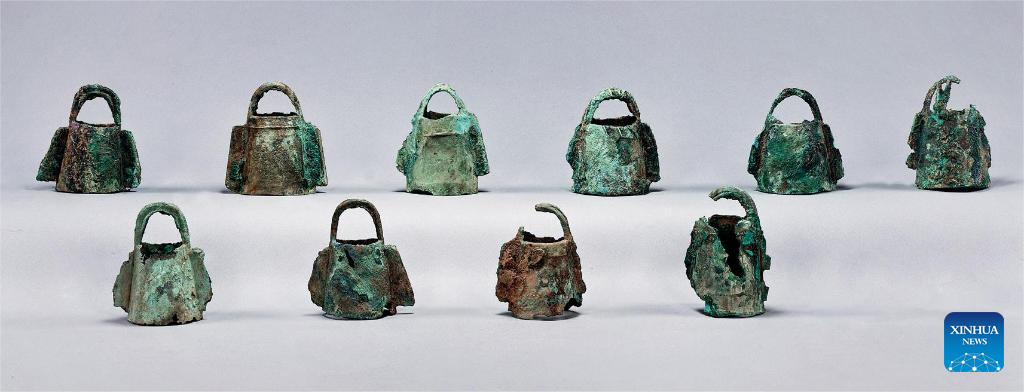
This undated file photo shows the bronze bells unearthed from a sacrificial pit in the royal mausoleum zone of the Yin Ruins, in Anyang, central China's Henan Province. (The Institute of Archaeology of the Chinese Academy of Social Sciences/Handout via Xinhua)
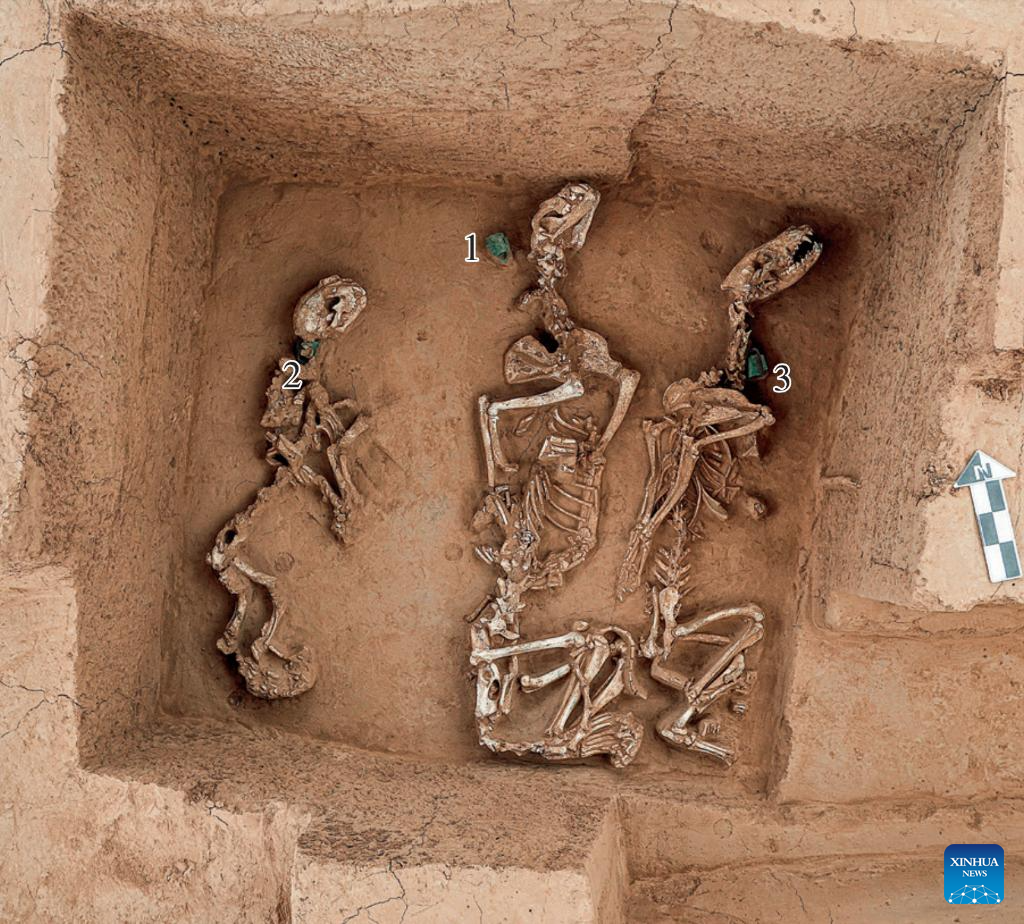
This undated file photo shows the bronze bells (marked with numbers) in a sacrificial pit in the royal mausoleum zone of the Yin Ruins, in Anyang, central China's Henan Province. (The Institute of Archaeology of the Chinese Academy of Social Sciences/Handout via Xinhua)


