
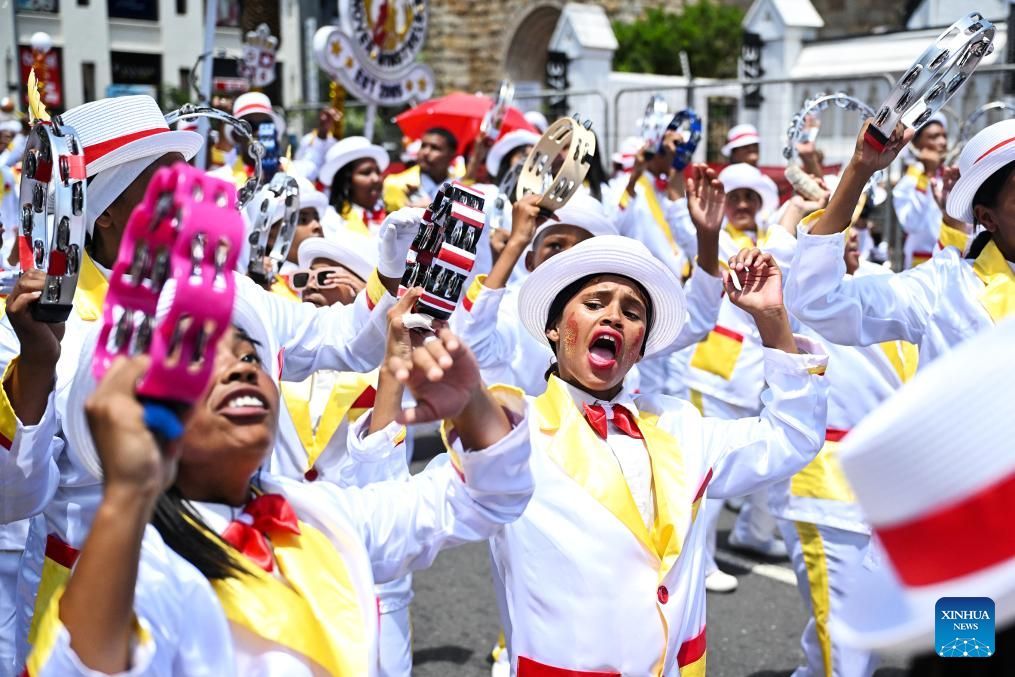
Performers take part in the annual Cape Town Minstrel Carnival parade in Cape Town, South Africa, Jan. 5, 2026. Tens of thousands of people gathered in Cape Town on Monday for the annual Cape Town Minstrel Carnival, a key part of the city's New Year celebrations. The carnival, officially known as the Cape Town Street Parade, is widely regarded as Africa's largest cultural festival. Its origins date back to the colonial era, when enslaved people were granted a single day after New Year's Day to celebrate. Over the years, the event has evolved into a vibrant cultural tradition marked by music, dance, and elaborate costumes.(Photo by Xabiso Mkhabela/Xinhua)
CAPE TOWN, Jan. 5 (Xinhua) -- Tens of thousands of people gathered in Cape Town, the legislative capital of South Africa, on Monday for the annual Cape Town Minstrel Carnival, a key part of the city's New Year celebrations.
The carnival, officially known as the Cape Town Street Parade, is widely regarded as Africa's largest cultural festival. Its origins date back to the colonial era, when enslaved people were granted a single day after New Year's Day to celebrate. Over the years, the event has evolved into a vibrant cultural tradition marked by music, dance, and elaborate costumes.
Historically held on Jan. 2, the celebration features minstrel groups known as the Kaapse Klopse. This year's carnival took place on Jan. 5 and was broadcast live on national television for the first time.
According to the City of Cape Town, the event was expected to attract between 80,000 and 100,000 spectators from across the country and around the world.
The Monday parade saw about 20,000 performers from at least 16 minstrel troupes march from Chiappini Street along a 1.2-km stretch of Somerset Road before heading into the DHL Stadium.
Dressed in brightly colored costumes with top hats and painted faces, performers played lively music on drums, trumpets, and trombones as crowds lined the streets, clapping and cheering. Children followed the dancers, while families and visitors took photos and waved along the route.
For many participants, the parade is the highlight of the year, offering an opportunity to showcase months of preparation and to celebrate their cultural heritage. City officials said the event continues to serve as a platform for community unity and the preservation of the Kaapse Klopse tradition. ■
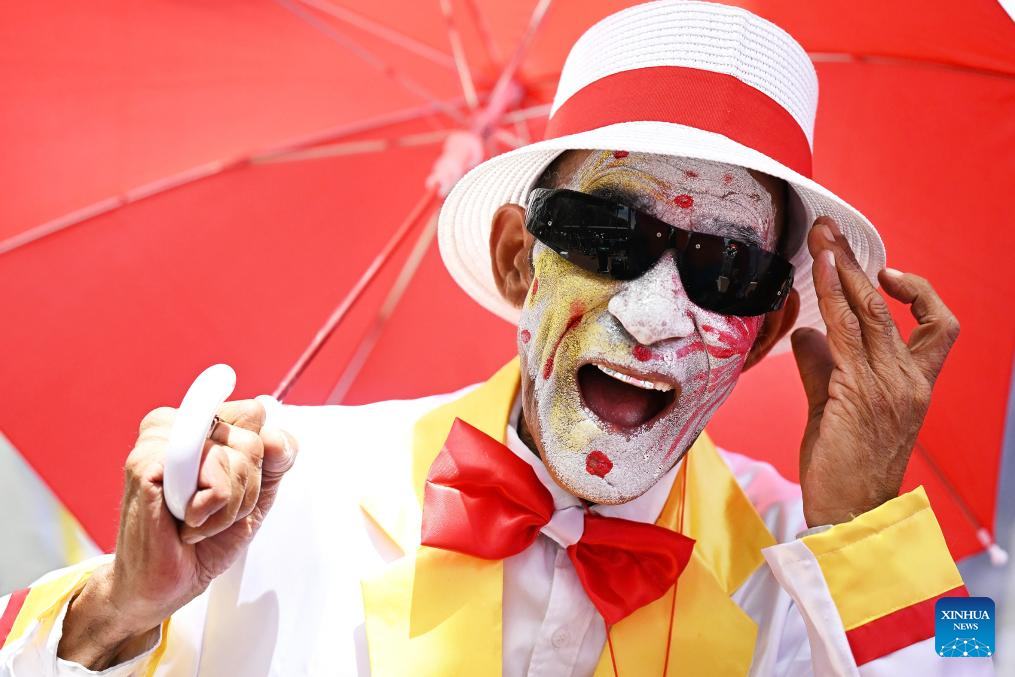
A performer takes part in the annual Cape Town Minstrel Carnival parade in Cape Town, South Africa, Jan. 5, 2026.
Tens of thousands of people gathered in Cape Town on Monday for the annual Cape Town Minstrel Carnival, a key part of the city's New Year celebrations.
The carnival, officially known as the Cape Town Street Parade, is widely regarded as Africa's largest cultural festival. Its origins date back to the colonial era, when enslaved people were granted a single day after New Year's Day to celebrate. Over the years, the event has evolved into a vibrant cultural tradition marked by music, dance, and elaborate costumes.(Photo by Xabiso Mkhabela/Xinhua)
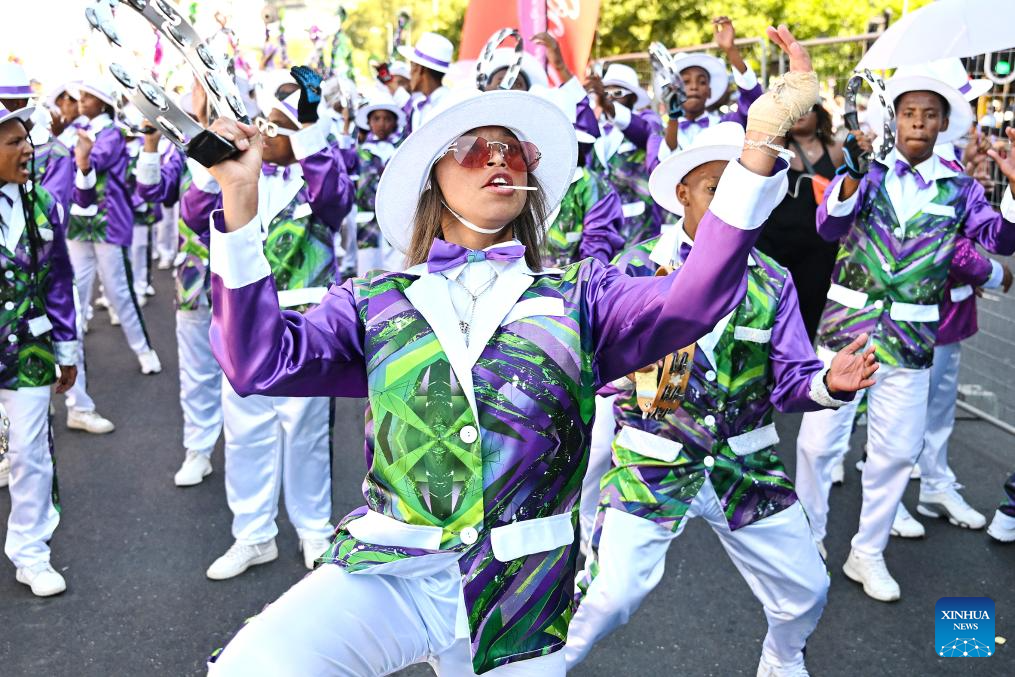
Performers take part in the annual Cape Town Minstrel Carnival parade in Cape Town, South Africa, Jan. 5, 2026.
Tens of thousands of people gathered in Cape Town on Monday for the annual Cape Town Minstrel Carnival, a key part of the city's New Year celebrations.
The carnival, officially known as the Cape Town Street Parade, is widely regarded as Africa's largest cultural festival. Its origins date back to the colonial era, when enslaved people were granted a single day after New Year's Day to celebrate. Over the years, the event has evolved into a vibrant cultural tradition marked by music, dance, and elaborate costumes.
(Photo by Xabiso Mkhabela/Xinhua)
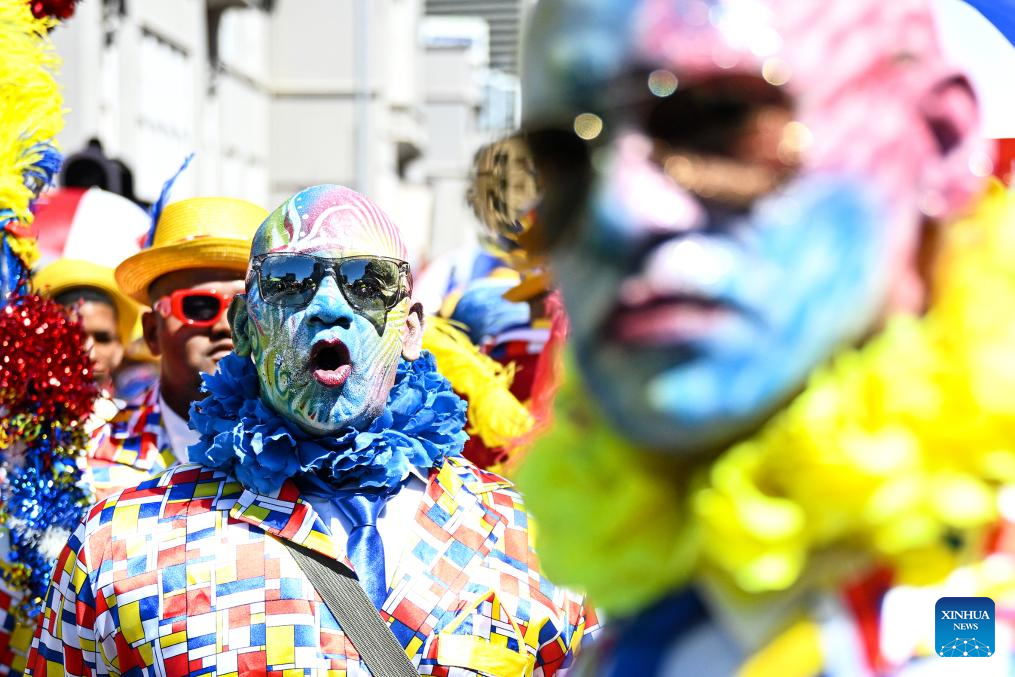
Performers take part in the annual Cape Town Minstrel Carnival parade in Cape Town, South Africa, Jan. 5, 2026.
Tens of thousands of people gathered in Cape Town on Monday for the annual Cape Town Minstrel Carnival, a key part of the city's New Year celebrations.
The carnival, officially known as the Cape Town Street Parade, is widely regarded as Africa's largest cultural festival. Its origins date back to the colonial era, when enslaved people were granted a single day after New Year's Day to celebrate. Over the years, the event has evolved into a vibrant cultural tradition marked by music, dance, and elaborate costumes.
(Photo by Xabiso Mkhabela/Xinhua)
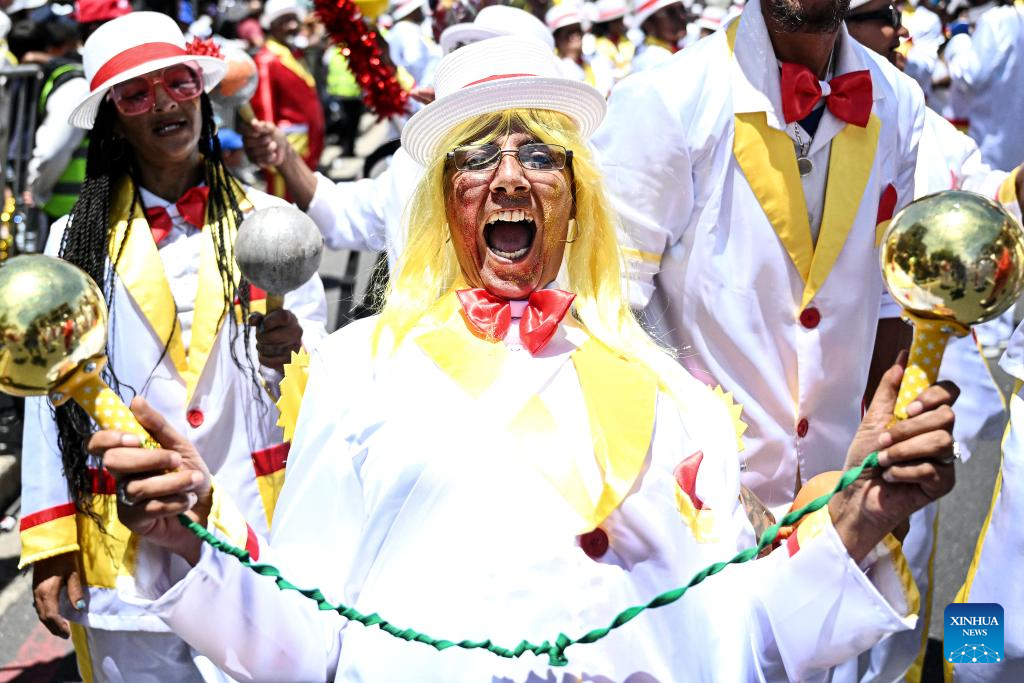
A performer takes part in the annual Cape Town Minstrel Carnival parade in Cape Town, South Africa, Jan. 5, 2026.
Tens of thousands of people gathered in Cape Town on Monday for the annual Cape Town Minstrel Carnival, a key part of the city's New Year celebrations.
The carnival, officially known as the Cape Town Street Parade, is widely regarded as Africa's largest cultural festival. Its origins date back to the colonial era, when enslaved people were granted a single day after New Year's Day to celebrate. Over the years, the event has evolved into a vibrant cultural tradition marked by music, dance, and elaborate costumes.
(Photo by Xabiso Mkhabela/Xinhua)
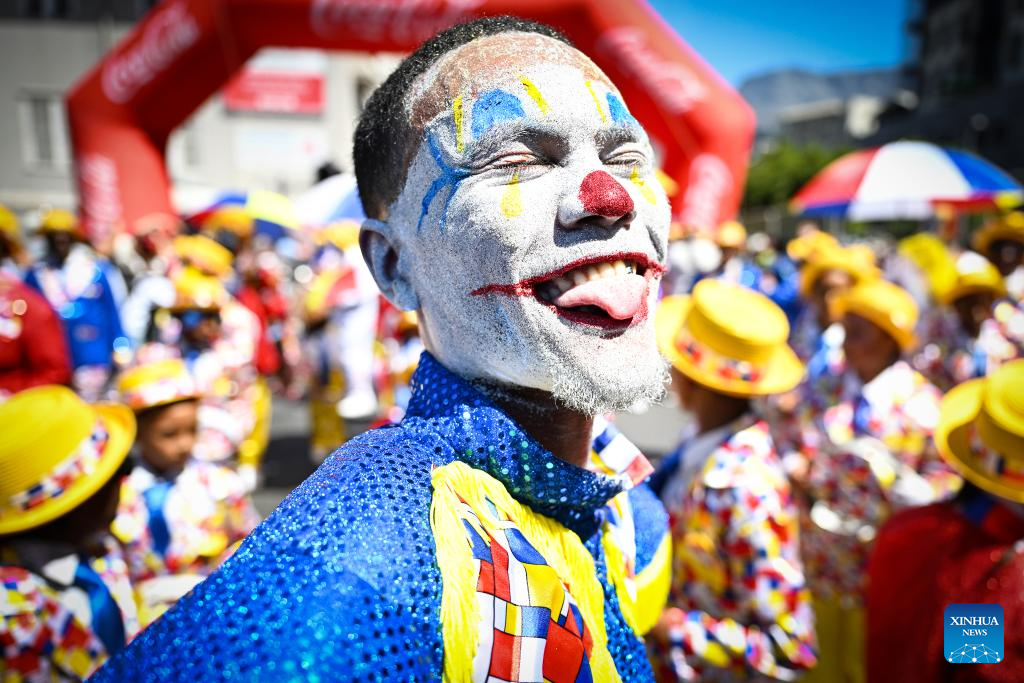
A performer takes part in the annual Cape Town Minstrel Carnival parade in Cape Town, South Africa, Jan. 5, 2026.
Tens of thousands of people gathered in Cape Town on Monday for the annual Cape Town Minstrel Carnival, a key part of the city's New Year celebrations.
The carnival, officially known as the Cape Town Street Parade, is widely regarded as Africa's largest cultural festival. Its origins date back to the colonial era, when enslaved people were granted a single day after New Year's Day to celebrate. Over the years, the event has evolved into a vibrant cultural tradition marked by music, dance, and elaborate costumes.
(Photo by Xabiso Mkhabela/Xinhua)
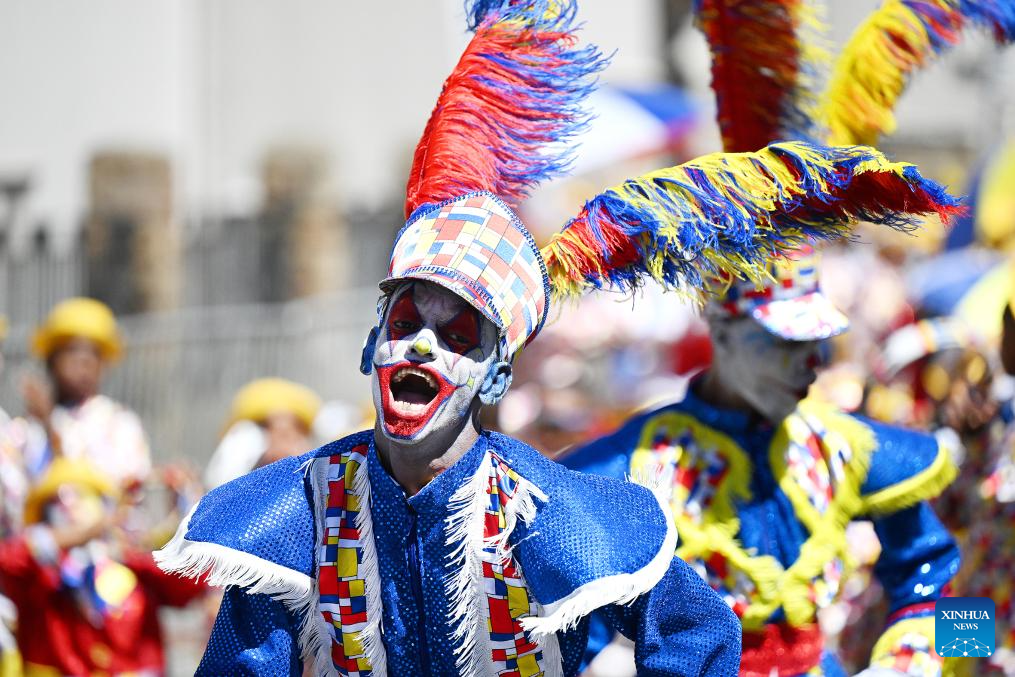
A performer takes part in the annual Cape Town Minstrel Carnival parade in Cape Town, South Africa, Jan. 5, 2026.
Tens of thousands of people gathered in Cape Town on Monday for the annual Cape Town Minstrel Carnival, a key part of the city's New Year celebrations.
The carnival, officially known as the Cape Town Street Parade, is widely regarded as Africa's largest cultural festival. Its origins date back to the colonial era, when enslaved people were granted a single day after New Year's Day to celebrate. Over the years, the event has evolved into a vibrant cultural tradition marked by music, dance, and elaborate costumes.
(Photo by Xabiso Mkhabela/Xinhua)
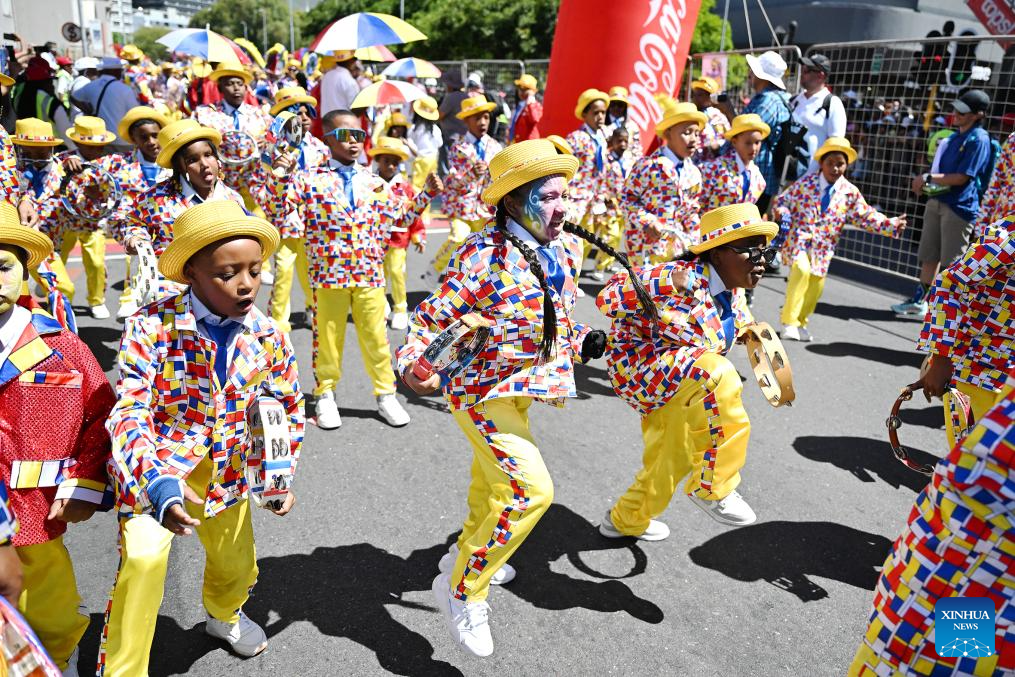
Performers take part in the annual Cape Town Minstrel Carnival parade in Cape Town, South Africa, Jan. 5, 2026.
Tens of thousands of people gathered in Cape Town on Monday for the annual Cape Town Minstrel Carnival, a key part of the city's New Year celebrations.
The carnival, officially known as the Cape Town Street Parade, is widely regarded as Africa's largest cultural festival. Its origins date back to the colonial era, when enslaved people were granted a single day after New Year's Day to celebrate. Over the years, the event has evolved into a vibrant cultural tradition marked by music, dance, and elaborate costumes.
(Photo by Xabiso Mkhabela/Xinhua)

Spectators enjoy the annual Cape Town Minstrel Carnival parade in Cape Town, South Africa, Jan. 5, 2026.
Tens of thousands of people gathered in Cape Town on Monday for the annual Cape Town Minstrel Carnival, a key part of the city's New Year celebrations.
The carnival, officially known as the Cape Town Street Parade, is widely regarded as Africa's largest cultural festival. Its origins date back to the colonial era, when enslaved people were granted a single day after New Year's Day to celebrate. Over the years, the event has evolved into a vibrant cultural tradition marked by music, dance, and elaborate costumes.
(Photo by Xabiso Mkhabela/Xinhua)


