
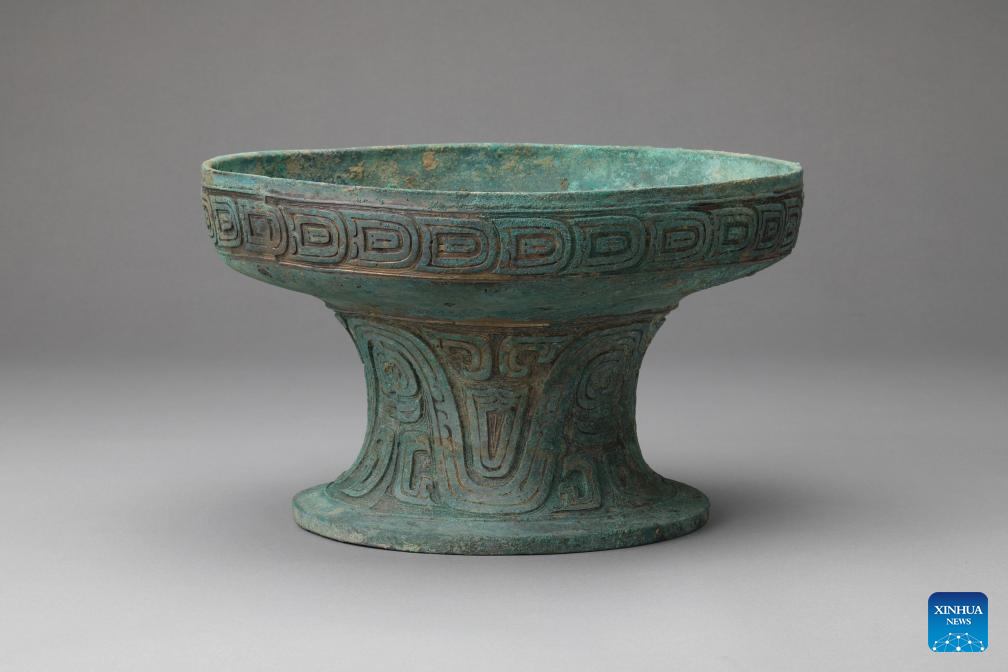
This undated file photo shows a bronzeware unearthed from the Changchun Ruins in Fuping County, Weinan City of northwest China's Shaanxi Province. A cluster of 31 tombs dating back nearly 3,000 years was discovered in northwest China's Shaanxi Province, providing evidence for the study of political and social development of that period, said archaeologists on Tuesday.(Shaanxi Academy of Archaeology/Handout via Xinhua)
XI'AN, Jan. 6 (Xinhua) -- A cluster of 31 tombs dating back nearly 3,000 years was discovered in northwest China's Shaanxi Province, providing evidence for the study of political and social development of that period, said archaeologists on Tuesday.
The tombs were an important part of the Changchun Ruins in Fuping County, Weinan City, where excavation was conducted since August 2022 jointly by the Shaanxi Provincial Institute of Archaeology (SPIA), the Weinan Museum, and the Fuping's culture and tourism bureau.
Archaeologists have also found five pits with remains of chariots and horses.
Li Yanfeng, an associate researcher with the SPIA, noted that the tombs can be classified into four categories based on their morphological features with hierarchical differences. Among them, the tombs numbered M1 and M2 are of a relatively high grade, each with three layers of coffins. More than 300 artifacts, including sets, were unearthed and are made of copper, jade, stone, lacquer, and shells, among others. Of those artifacts, the jade pendants with human and dragon patterns, jade halberds and stone chimes are particularly exquisite.
In the smaller tombs, only single coffins were used, and no bronze objects were buried with them. Researchers only found pottery containers and shell ornaments, from which they deduced that the tomb owners might have been commoners.
By comparing pottery and bronze wares and conducting carbon-14 tests on M1 and M2 human bones, archaeologists determined that the remains in the excavation area could date to the middle to late period of the Western Zhou Dynasty (1046 BC - 771 BC), according to Li. The owner of tomb M2 is male and is presumed to be the ruler of the settlement, while buried in tomb M1 is his wife.
"Although the tombs vary in rank, they are distributed in an orderly manner, reflecting the characteristics of 'family burial' and a 'centralized public cemetery system,'" said Li, who added that due to the lack of inscriptions on the unearthed artifacts so far, it is hard to confirm the identities of this group.
"The excavation not only provides the physical materials of high-level tombs of the Western Zhou Dynasty in the area, but also offers evidence for the study of politics and society of the time," he added. ■
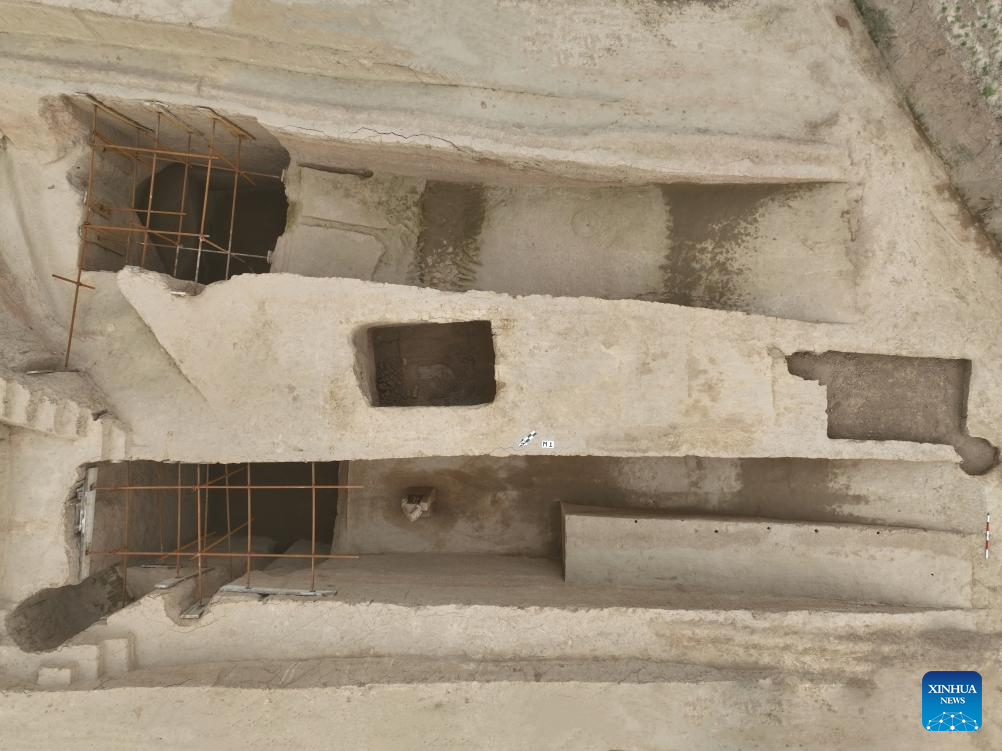
This undated file photo shows two tombs at the Changchun Ruins in Fuping County, Weinan City of northwest China's Shaanxi Province. A cluster of 31 tombs dating back nearly 3,000 years was discovered in northwest China's Shaanxi Province, providing evidence for the study of political and social development of that period, said archaeologists on Tuesday.(Shaanxi Academy of Archaeology/Handout via Xinhua)
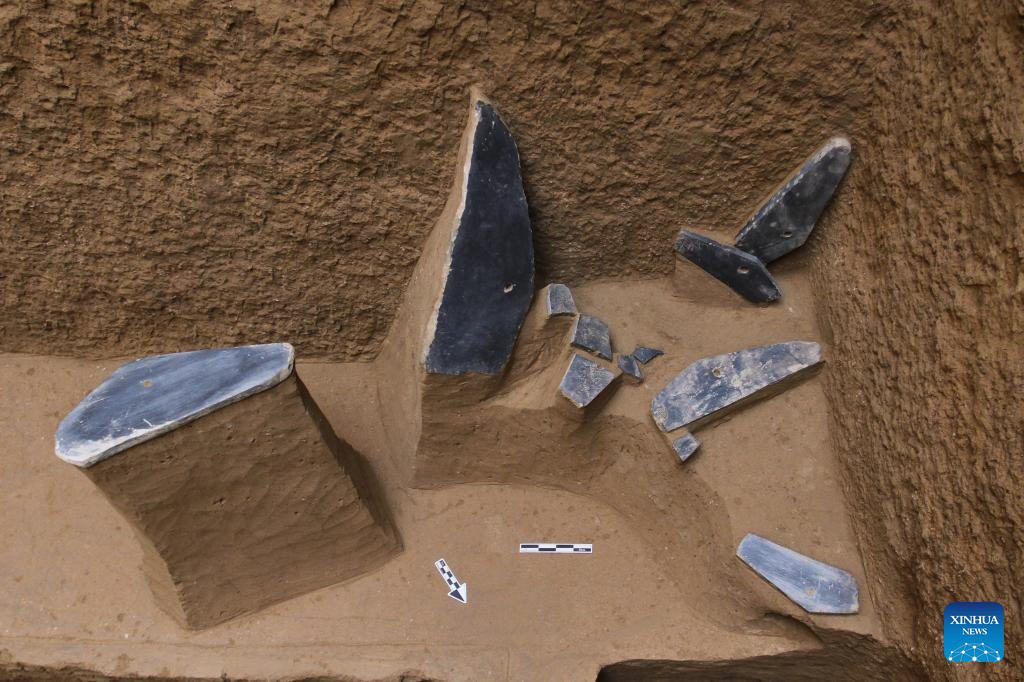
This undated file photo shows the archeological artifacts unearthed from the Changchun Ruins in Fuping County, Weinan City of northwest China's Shaanxi Province. A cluster of 31 tombs dating back nearly 3,000 years was discovered in northwest China's Shaanxi Province, providing evidence for the study of political and social development of that period, said archaeologists on Tuesday.(Shaanxi Academy of Archaeology/Handout via Xinhua)
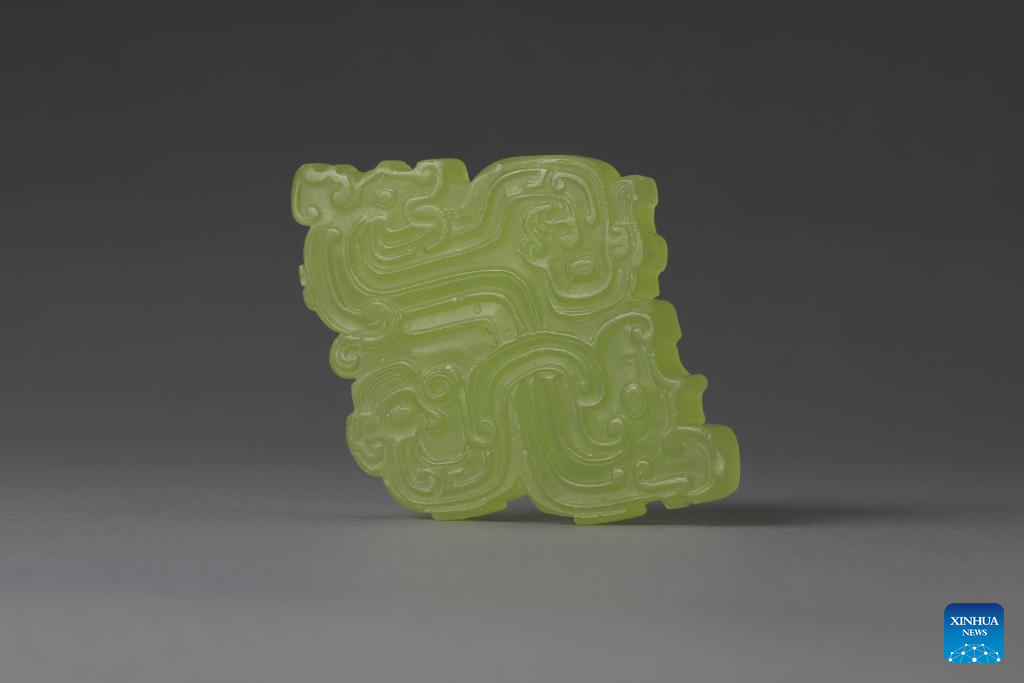
This undated file photo shows a jadeware unearthed from a tomb of the Changchun Ruins in Fuping County, Weinan City of northwest China's Shaanxi Province. A cluster of 31 tombs dating back nearly 3,000 years was discovered in northwest China's Shaanxi Province, providing evidence for the study of political and social development of that period, said archaeologists on Tuesday.(Shaanxi Academy of Archaeology/Handout via Xinhua)
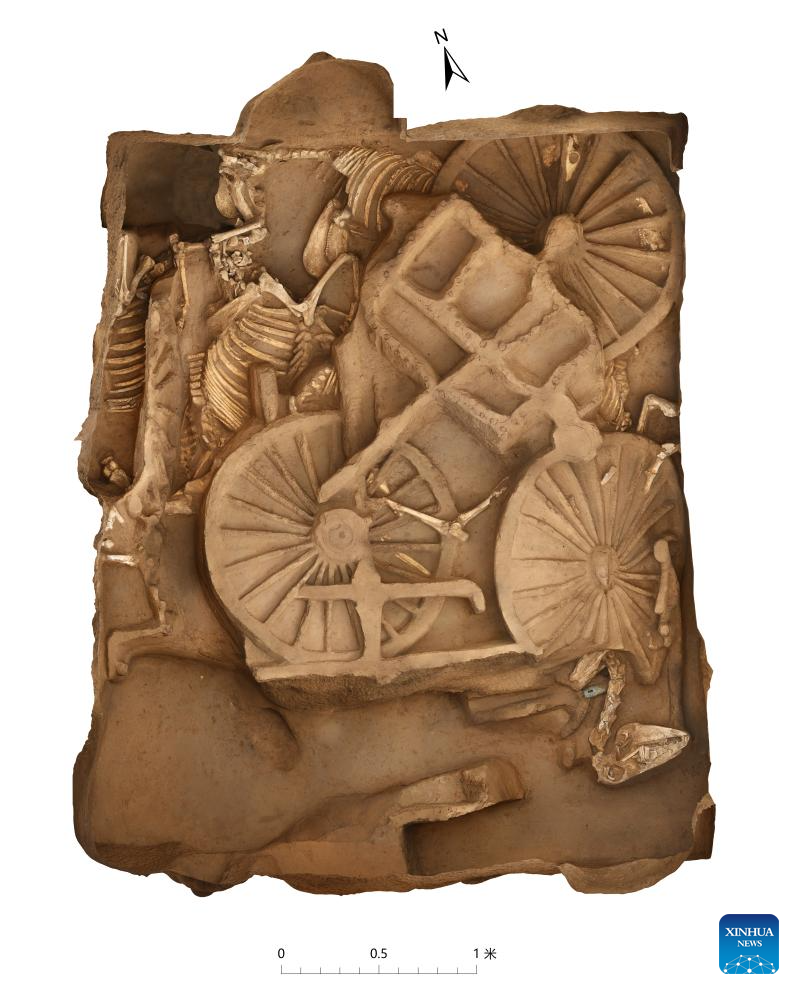
This image shows a pit with remains of chariots and horses at a tomb of the Changchun Ruins in Fuping County, Weinan City of northwest China's Shaanxi Province. A cluster of 31 tombs dating back nearly 3,000 years was discovered in northwest China's Shaanxi Province, providing evidence for the study of political and social development of that period, said archaeologists on Tuesday.(Shaanxi Academy of Archaeology/Handout via Xinhua)


