
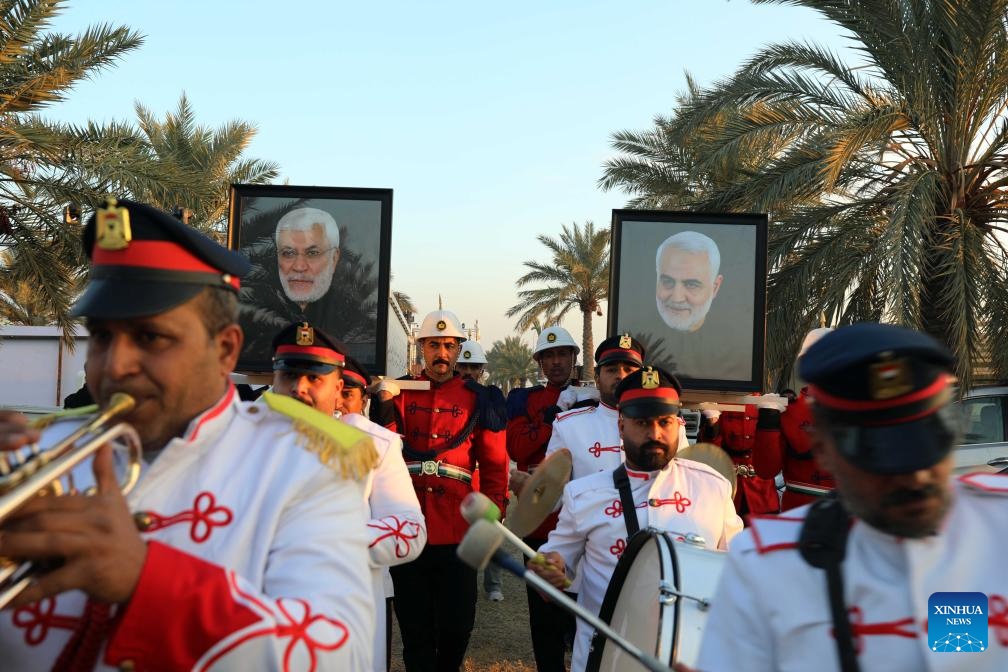
This photo taken on Jan. 2, 2026 shows the symbolic funeral processions for Iran's Quds Force commander Qassem Soleimani and Deputy Chief of Iraq's Popular Mobilization Forces Abu Mahdi al-Muhandis, who were killed in a U.S. drone strike on Jan. 3, 2020, in Baghdad, Iraq. (Xinhua/Khalil Dawood)
BAGHDAD, Jan. 3 (Xinhua) -- Under the stark glow of red and green spotlights, the entrance to Iraq's Baghdad International Airport, officially renamed Martyr Abu Mahdi al-Muhandis Street in 2024, was transformed into a somber memorial scene on Friday.
Thousands gathered for a commemoration marking the sixth anniversary of the killing of Iran's Quds Force commander Qassem Soleimani and Abu Mahdi al-Muhandis, deputy chief of Iraq's Popular Mobilization Forces (PMF) in a drone strike on Jan. 3, 2020.
The air hung heavy with incense and funeral chants as mourners moved through a space frozen in time -- a landscape meticulously preserved to recall the moment of the attack.
Near the airport, a poignant monument made from the scorched and twisted wreckage of the targeted vehicles has been erected. White doves, symbols of peace, now adorn the metal remains -- a stark contrast between the violence of the attack and the enduring call for dignity and peace.
Some mourners gathered before the wreckage to pray quietly, their personal grief blending into collective mourning. Along a nearby wall, hundreds of candles flickered beside handwritten messages in Arabic and Farsi.
Military bands and PMF units held solemn parades, while symbolic funeral processions carried coffins draped in Iraqi flags, accompanied by chants of "No, No America!"
The night's political message was unambiguous: the U.S. strike was an act of aggression that had only hardened Iraqi opposition to external intervention.
Abu Mohammed al-Shammari, a PMF official, condemned the assassination as a product of Washington's pursuit of global dominance.
"The Americans seek to impose hegemony over Arab nations, independent states, and oil-producing countries," he said, adding that such nations are targeted for disrupting U.S. interests and long-term plans.
Iraqi lawyer Ahmed Ali Abbas al-Jubouri echoed the sentiment, calling the killing "an insulting and disgraceful act."
"The U.S. continues on a path of killing, destruction, and sabotage," he said, accusing Washington of using military power to "impose hegemony and plunder nations' wealth" rather than foster peace.
Along the road to Baghdad International Airport, large billboards bearing the portraits of Soleimani and al-Muhandis stand with a solemn vow: "We will never forget the blood of the martyrs."
"We will never forget the crimes committed by the United States," a participant said. ■

A security member guards during a commemoration marking the sixth anniversary of the killing of Iran's Quds Force commander Qassem Soleimani and Abu Mahdi al-Muhandis, deputy chief of Iraq's Popular Mobilization Forces (PMF), in a drone strike on Jan. 3, 2020, in Baghdad, Iraq, Jan. 2, 2026. (Xinhua/Khalil Dawood)
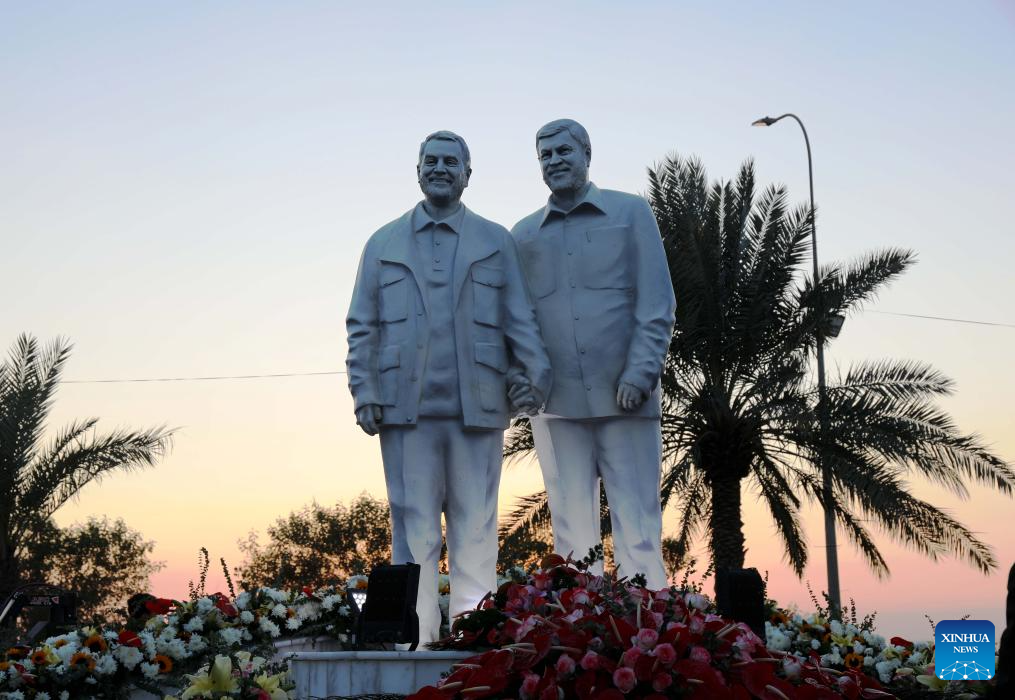
This photo taken on Jan. 2, 2026 shows memorial statues of Iran's Quds Force commander Qassem Soleimani (L) and Deputy Chief of Iraq's Popular Mobilization Forces Abu Mahdi al-Muhandis, who were killed in a U.S. drone strike on Jan. 3, 2020, in Baghdad, Iraq. (Xinhua/Khalil Dawood)


