
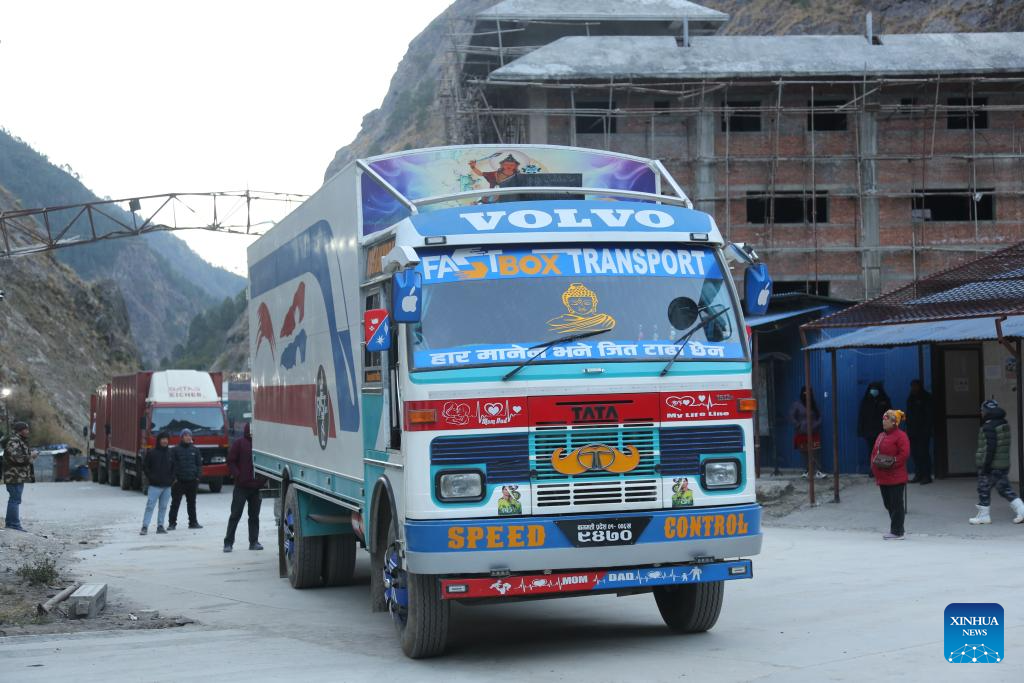
A truck waits to go through the Gyirong Port in southwest China's Xizang Autonomous Region via a steel temporary access bridge at the Rasuwa Port in Nepal, Jan. 1, 2026. China-Nepal Gyirong-Rasuwa Port, one of the largest land ports between the two countries, resumed customs and passenger clearance on Thursday morning, nearly six months after the area was struck by flood. (Xinhua/Zhang Ping)
LHASA, Jan. 1 (Xinhua) -- China-Nepal Gyirong-Rasuwa Port, one of the largest land ports between the two countries, resumed customs and passenger clearance on Thursday morning, nearly six months after the area was struck by flood.
Gyirong Port in southwest China's Xizang Autonomous Region is a vital trade corridor. Customs data show that the port saw imports and exports worth 4.25 billion yuan (about 604 million U.S. dollars) in 2024, ranking first among ports in the region and accounting for nearly 30 percent of the total China-Nepal trade volume.
However, a flood in July 2025 swept away the bridge connecting Gyirong Port and Rasuwa Port in Nepal, suspending bilateral personnel exchanges and goods trade. Since then, the Chinese and Nepalese governments have worked closely to resume customs clearance.
A steel temporary access bridge was built and passed acceptance. Through joint efforts, cross-border services resumed. "Thanks to the makeshift bridge built by China, I can resume my job," said Nepalese truck driver Thokra Rohit, who came to Gyirong to load goods.
In 1961, Gyirong Port attained approval for opening. In 2017, the port was designated as an international port, thereby allowing access to individuals from countries besides China and Nepal. ■
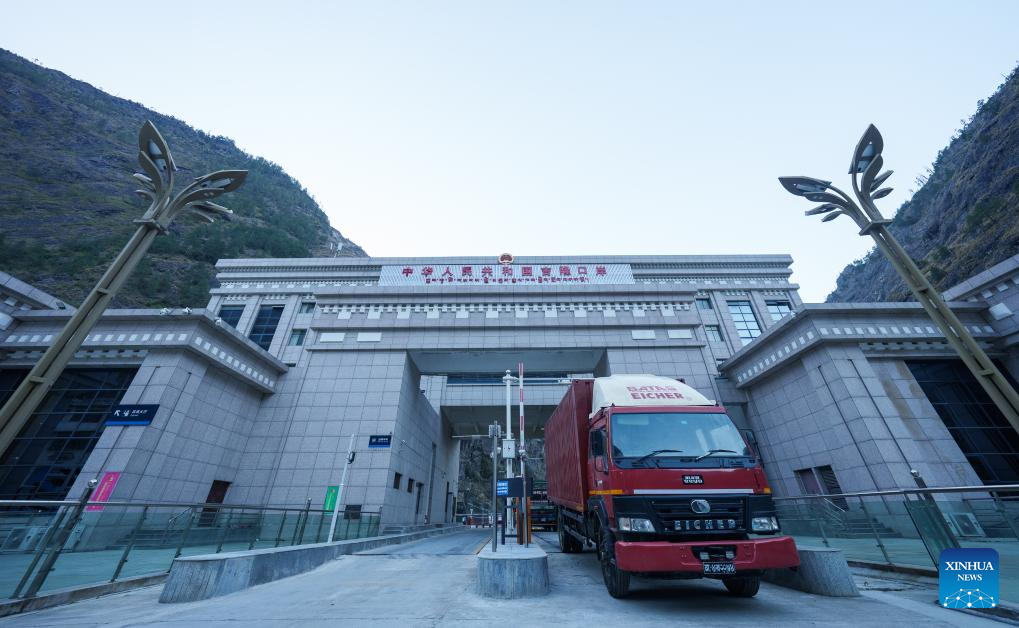
A truck from Nepal goes through the Gyirong Port after inspection in southwest China's Xizang Autonomous Region, Jan. 1, 2026. China-Nepal Gyirong-Rasuwa Port, one of the largest land ports between the two countries, resumed customs and passenger clearance on Thursday morning, nearly six months after the area was struck by flood. (Xinhua/Tenzin Nyida)
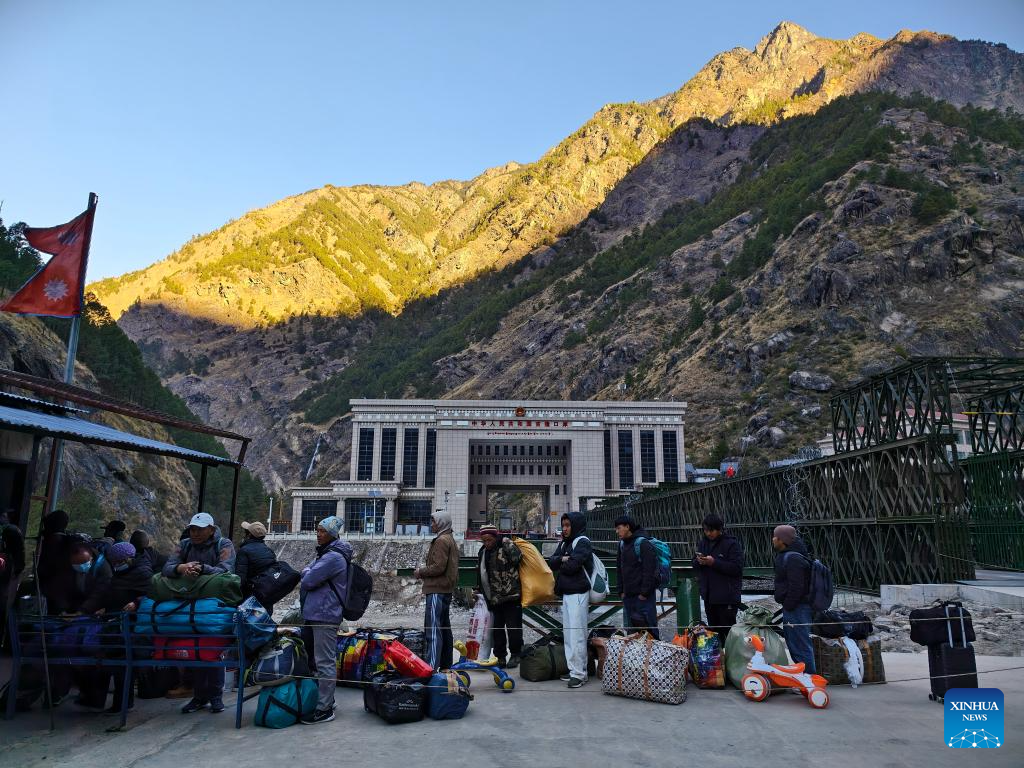
This photo taken with a mobile phone shows people waiting for passenger clearance after passing a steel temporary access bridge from China at the Rasuwa Port in Nepal, Jan. 1, 2026. China-Nepal Gyirong-Rasuwa Port, one of the largest land ports between the two countries, resumed customs and passenger clearance on Thursday morning, nearly six months after the area was struck by flood. (Xinhua/Zhang Ping)

An aerial drone photo taken on Jan. 1, 2026 shows a truck from Nepal running on a steel temporary access bridge to go through the Gyirong Port in southwest China's Xizang Autonomous Region. China-Nepal Gyirong-Rasuwa Port, one of the largest land ports between the two countries, resumed customs and passenger clearance on Thursday morning, nearly six months after the area was struck by flood. (Xinhua/Tenzin Nyida)
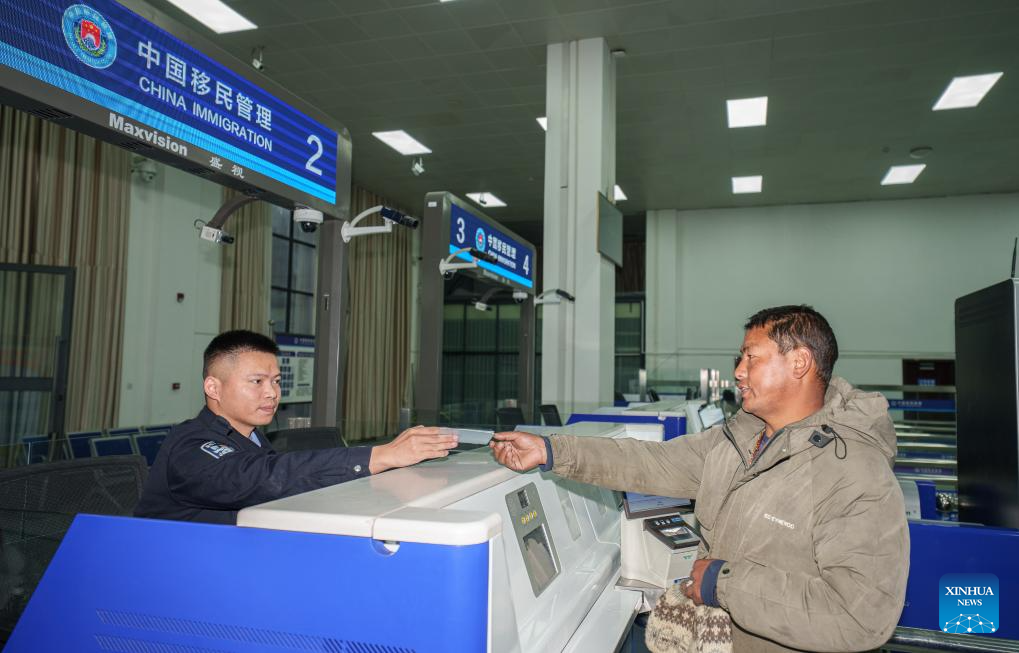
An immigration officer checks the identity of a passenger at the Gyirong Port in southwest China's Xizang Autonomous Region, Jan. 1, 2026. China-Nepal Gyirong-Rasuwa Port, one of the largest land ports between the two countries, resumed customs and passenger clearance on Thursday morning, nearly six months after the area was struck by flood. (Xinhua/Tenzin Nyida)
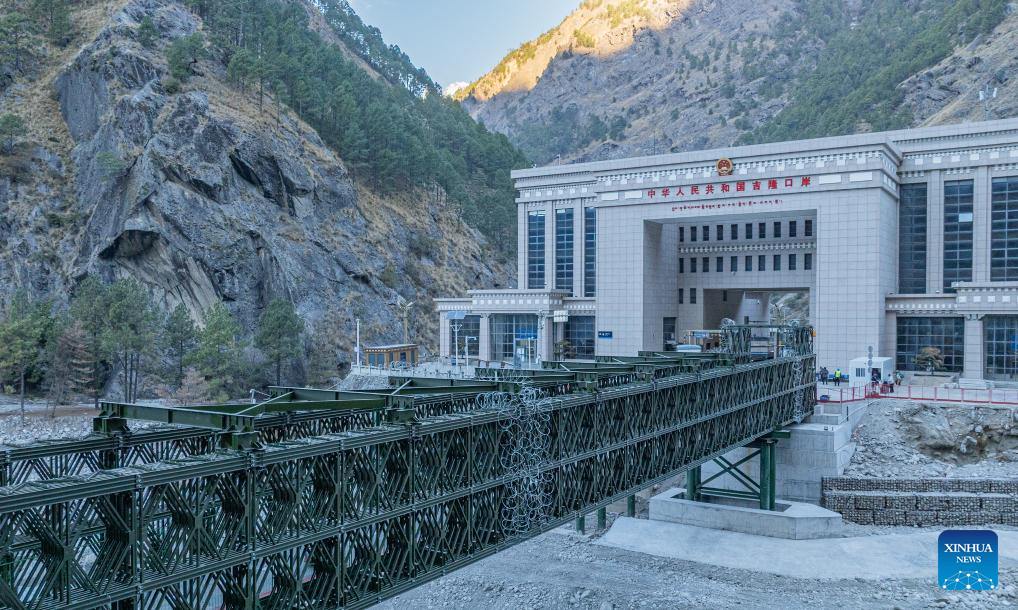
A drone photo taken on Jan. 1, 2026 shows a steel temporary access bridge and the Gyirong Port in southwest China's Xizang Autonomous Region. China-Nepal Gyirong-Rasuwa Port, one of the largest land ports between the two countries, resumed customs and passenger clearance on Thursday morning, nearly six months after the area was struck by flood. (Xinhua/Tenzin Nyida)
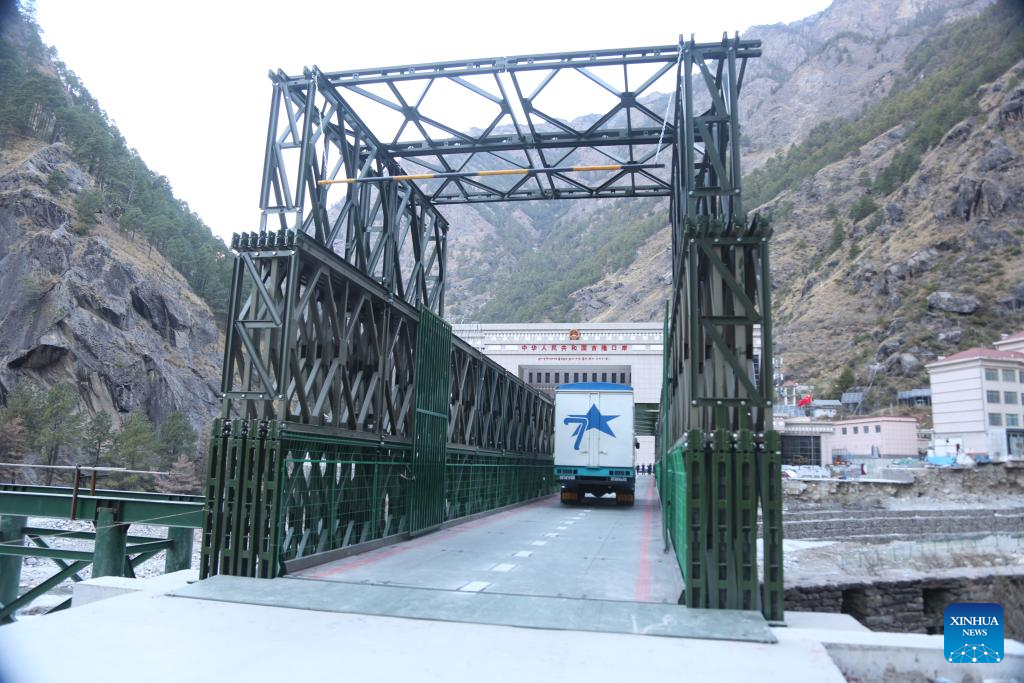
A photo taken from the Rasuwa Port in Nepal on Jan. 1, 2026 shows a truck running on a steel temporary access bridge to go through the Gyirong Port in southwest China's Xizang Autonomous Region. China-Nepal Gyirong-Rasuwa Port, one of the largest land ports between the two countries, resumed customs and passenger clearance on Thursday morning, nearly six months after the area was struck by flood. (Xinhua/Zhang Ping)


