BEIJING, Dec. 13 (Xinhua) -- When China observed its 12th national memorial day on Saturday to mourn the more than 300,000 Chinese civilians and unarmed soldiers killed by Japanese troops during the Nanjing Massacre in 1937, new historical documents that underpin Japan's wartime atrocities were released, underlining the truth that justice is unshakable in the presence of irrefutable evidence.
The post-war order of the Asia-Pacific region hinges on Japan being a "pacifist" nation. But since the end of World War II, right-wing forces in Japan have never repented despite the immense atrocities and crimes committed by Japanese militarists. These forces deny, distort or falsify Japan's aggression and brutality, including the Nanjing Massacre and the actions of its notorious Unit 731.
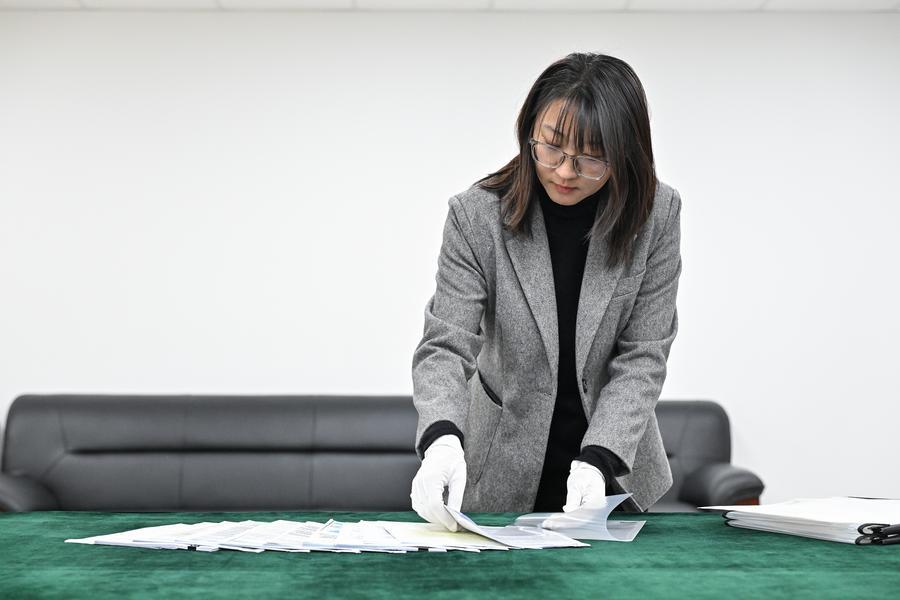
Archive copies recently provided to China's Central Archives by Russia show further concrete evidence of the bacterial warfare launched by Japan's Unit 731 in northeast China. Complementing existing data and information, these documents make the factual accounts of the crimes of Japanese militarists even more complete, confirming that Japan's biological warfare was a top-down and state-organized war crime. In addition to these documents, numerous other concrete evidences have proved the authenticity of the Nanjing Massacre.
Archives collected by both government authorities and the public, provide clear and objective accounts of history that are minimally susceptible to subjective bias or denial. Maintaining these archives properly and increasing awareness of them are particularly meaningful tasks in preserving truth and upholding justice.
These latest documents deal a significant blow to any attempt to deny these atrocities and whitewash war criminals. In a blatant bid to interfere in China's domestic affairs, Japanese Prime Minister Sanae Takaichi recently made provocative remarks concerning China's Taiwan region, hinting a threat of force against China. Driven by a pathological fantasy of regaining colonial dominance, Japanese right-wingers have worked tirelessly to shake off Japan's identity as a defeated nation, all in support of their wishful thinking of restoring Japan's "military power."
When faced with such indisputable evidence, can these right-wingers still have the audacity to gloss over the real history? True historical narratives are now even more evident and clearly beyond feeble attempts at denial by a handful of malicious and deluded Japanese right-wingers. Any tolerance of or ambivalence toward this dangerous path will only invite greater peril to the Asia-Pacific region and the world at large.
People in China and other peaceful countries will most definitely not allow a resurgence of Japanese militarism, and will work together to safeguard the legacy of the World War II victory and the post-war international order. Countries with a conscience and a sense of justice must also work together to keep historical archives alive and open. This is of profound significance in safeguarding post-war peace and justice, serving as a solemn tribute to the victims of that tragic war.
The correct view of World War II history should become an important force in uniting the common values of humanity, and a powerful tool in promoting world peace and development. Holding Japan accountable for its role in this shameful chapter of history is not about fueling hate or revenge, but rather a lesson that must be passed on to future generations: Never again.
Japanese right-wingers should face up to the real historical accounts, draw lessons earnestly, completely sever ties with militarism and honestly repent for atrocities. ■