
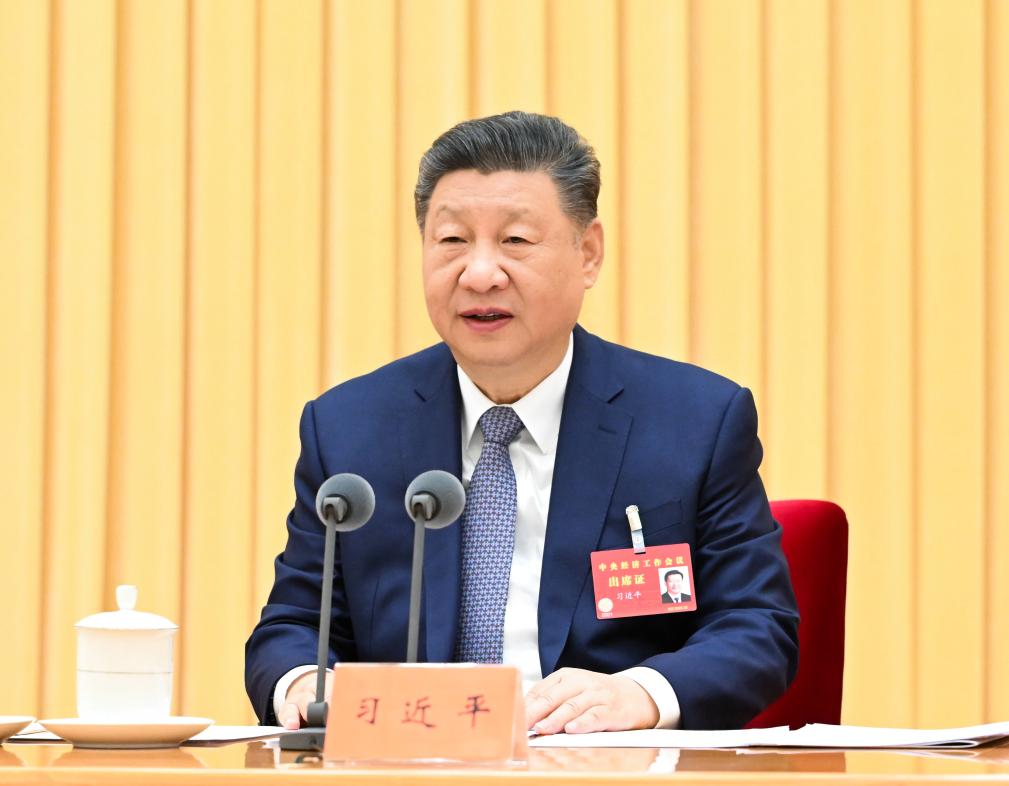
Xi Jinping, general secretary of the Communist Party of China Central Committee, Chinese president and chairman of the Central Military Commission, delivers an important speech at the annual Central Economic Work Conference in Beijing, capital of China. The conference was held in Beijing from Wednesday to Thursday. (Xinhua/Yan Yan)
BEIJING, Dec. 11 (Xinhua) -- The annual Central Economic Work Conference was held in Beijing from Wednesday to Thursday as Chinese leaders decided priorities for the economic work in 2026.
Xi Jinping, general secretary of the Communist Party of China (CPC) Central Committee, Chinese president and chairman of the Central Military Commission, delivered an important speech at the conference.
In his speech, Xi reviewed the country's economic work in 2025, analyzed the current economic situation and arranged next year's economic work.
It was noted at the meeting that 2025 is a truly extraordinary year, and the main targets for economic and social development will be successfully achieved.
As the 14th Five-Year Plan (2021-2025) is set to approach a successful conclusion, the meeting noted that over the past five years, China has effectively navigated various shocks and challenges, and achieved new major accomplishments in the cause of the Party and the country.
It is necessary to fully tap the economic potential, continue to pursue both policy support and reform and innovation, ensure both market vitality and effective regulation, combine investment in physical assets with investment in human capital, and respond to external challenges by strengthening internal capabilities, the meeting said.
Noting that there are still long-standing and new challenges in China's economic development, and the impact of changes in the external environment has deepened while risks and hidden dangers persist in some key areas, the meeting said that these issues can be resolved through efforts, and the underlying conditions and fundamental trends sustaining China's long-term economic growth remain unchanged.
The conference stressed the need to fully and faithfully apply the new development philosophy, move faster to forge a new development paradigm and focus on promoting high-quality development.
China will adhere to the general principle of pursuing progress while ensuring stability, better coordinate domestic economic work with struggles in the international economic and trade arena, and ensure both development and security.
The country will implement more proactive and impactful macroeconomic policies, formulate more far-sighted, more targeted and better-coordinated policies, continuously expand domestic demand and optimize supply, and develop new quality productive forces according to local conditions.
Efforts will be made to develop a unified national market and continuously prevent and defuse risks in key areas. It is imperative to secure the steady development of employment, businesses, markets and expectations, getting the 15th Five-Year Plan (2026-2030) off to a good start.
China will continue to implement a more proactive fiscal policy and maintain necessary fiscal deficits, overall debt levels and expenditure scale, while standardizing tax incentives and fiscal subsidy policies.
Greater attention should be given to addressing local fiscal difficulties, and Party and government bodies will continue to keep their belts tightened.
China will continue implementing a moderately loose monetary policy, employ various monetary policy tools such as reserve requirement ratios and interest rates in a flexible and efficient manner to maintain ample liquidity.
China will guide financial institutions to scale up support for domestic demand expansion, sci-tech innovation, micro, small and medium enterprises, and other key areas.
The RMB exchange rate will be kept generally stable at an adaptive, balanced level, the meeting said, adding that China will make macro policy orientations more consistent and effective, and refine expectations management mechanisms to bolster social confidence.
In terms of tasks of next year's economic work, the meeting said domestic demand will remain as a focus in building a robust domestic market.
Special initiatives should be advanced to boost consumption, and the supply of high-quality consumer goods and services should be expanded. Unreasonable restrictions in the consumption sector should be removed, and the potential of service consumption should be unlocked.
China will work to stabilize and revive investment, appropriately increase the scale of investment within the central government budget, and continue to leverage the role of new policy-based financial instruments. China will also advance urban renewal in a high-quality manner.
It will be essential to enhance innovation-driven development to accelerate the cultivation of new growth drivers. China will develop international technological innovation centers in Beijing (Beijing-Tianjin-Hebei region), Shanghai (Yangtze River Delta), and the Guangdong-Hong Kong-Macao Greater Bay Area.
Efforts will be made to advance the AI Plus Initiative, improve AI governance and foster innovation in science and technology finance.
During the meeting, it was emphasized that deepening reform is essential to enhance the momentum and vitality of high-quality development.
China will intensify efforts to address involution, formulate and implement a reform plan involving state-owned assets and state-owned enterprises, and improve supporting regulations and policies for the law on promoting the private sector. The country will also continue to deepen comprehensive reforms in capital market investment and financing.
The meeting underscored the need to steadily advance institutional opening up, expand self-initiated opening up in the service sector in an orderly manner, and make solid progress in developing the Hainan Free Trade Port.
Efforts should be made to support service export, actively develop digital and green trade, reform and improve the systems for promoting foreign investment, and improve overseas integrated service systems, according to the meeting.
The meeting also highlighted the need to promote high-quality Belt and Road cooperation, as well as negotiate and sign more regional and bilateral trade and investment agreements.
Coordination in development should be promoted to facilitate integrated urban-rural development and regional synergy, it said, noting that coordinated steps should be taken to advance urbanization with a focus on counties and all-around rural revitalization, promoting high-quality development of county economies.
China will ensure that the total area of farmland remains above the specified red line and keep the prices of grain and other major agricultural products at a reasonable level. It will continue to consolidate the achievements of poverty alleviation and ensure that no large-scale relapse into poverty occurs, as well as promote high-quality development of the marine economy, according to the meeting.
With carbon emissions peaking and carbon neutrality as the goals, efforts should be made to promote a comprehensive green transformation.
It is necessary to further advance energy conservation and carbon reduction in key industries, formulate an outline for building China into an energy powerhouse, expand the application of green electricity and strengthen the development of national carbon emissions trading market, said the meeting.
It also stressed the need to implement a comprehensive waste management initiative, solidly advance the Three-North Shelterbelt Forest Program and enhance the country's capacity to respond to extreme weather events.
Prioritizing people's livelihoods, practical measures will be taken to get things done for the people, the meeting said.
Efforts will be made to stabilize employment for key groups such as college graduates and migrant workers, adjust the distribution of educational resources, deepen the reform of medical insurance payment methods, and strengthen care and assistance for people in difficulty, the meeting said.
It is imperative to help maintain the birth rate at a stable level, the meeting said, adding that solid work should be done in workplace safety, disaster prevention, mitigation, and relief, and food and drug safety.
The meeting also stressed defusing risks in key areas actively and prudently, with a focus on stabilizing the real estate market. Efforts should be made to steadily advance the construction of "quality homes" and defuse local government debt risks in an orderly manner.
The country must tap new space for demand growth to strengthen the domestic circulation, promote the deep integration of scientific and technological innovation with industrial innovation to develop new quality productive forces, and unswervingly deepen reform and expand opening-up so as to unleash the momentum and vitality for high-quality development.
More efforts should be made to better safeguard and improve people's livelihoods and actively and prudently defuse risks in key areas, the meeting noted.
The need was stressed at the meeting to uphold the centralized and unified leadership of the CPC Central Committee. The meeting also called for doing a good job in economic work according to local conditions, and for a correct understanding of what it means to perform well. It also urged efforts to well formulate the 15th Five-Year plans at national and local levels and relevant special plans, and pursue high-quality and sustainable development.
A good job must be done to ensure adequate supply of major goods related to people's basic needs at the turn of the year, take care of the work and lives of people in need, and forestall and defuse risks of major and serious accidents, said the meeting.
The meeting also emphasized the need to more closely unite around the CPC Central Committee with Comrade Xi Jinping at its core, strive to achieve the goals and tasks for economic and social development next year and get the 15th Five-Year Plan period (2026-2030) off to a good start.
The meeting was attended by Li Qiang, Zhao Leji, Wang Huning, Cai Qi, Ding Xuexiang and Li Xi, who are all members of the Standing Committee of the Political Bureau of the CPC Central Committee.
Li Qiang made a concluding speech, putting forward requirements for implementing the guiding principles of Xi's important speech and doing a good job in the economic work next year. ■
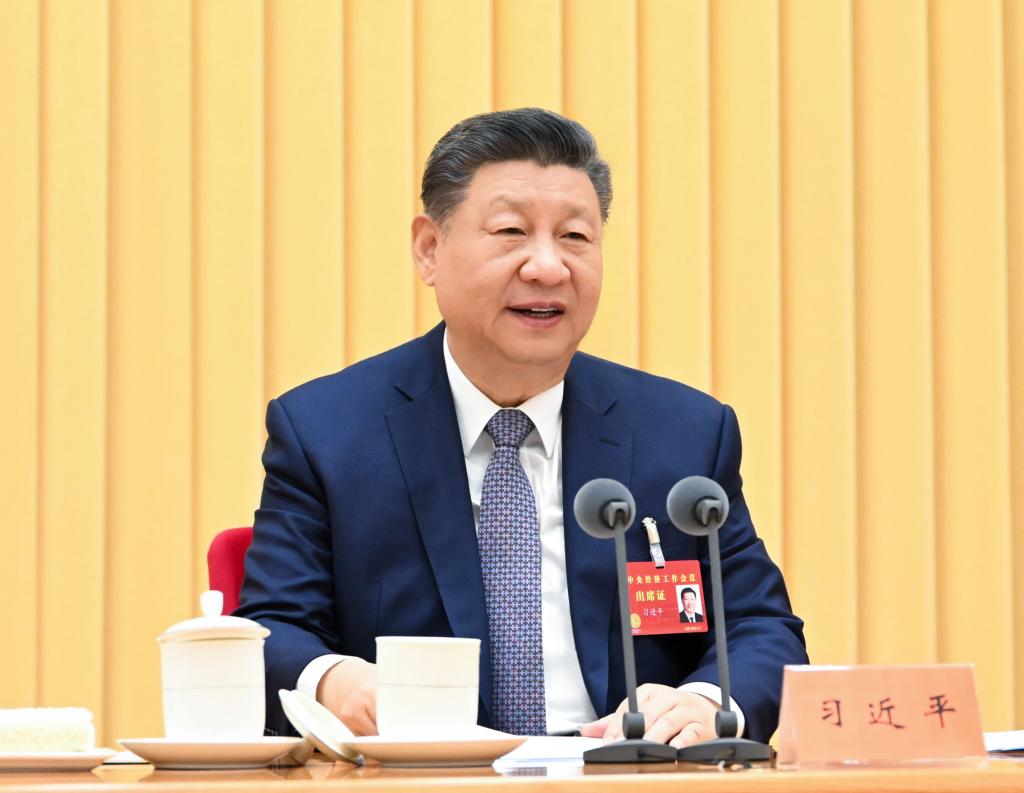
Xi Jinping, general secretary of the Communist Party of China Central Committee, Chinese president and chairman of the Central Military Commission, delivers an important speech at the annual Central Economic Work Conference in Beijing, capital of China. The conference was held in Beijing from Wednesday to Thursday. (Xinhua/Xie Huanchi)
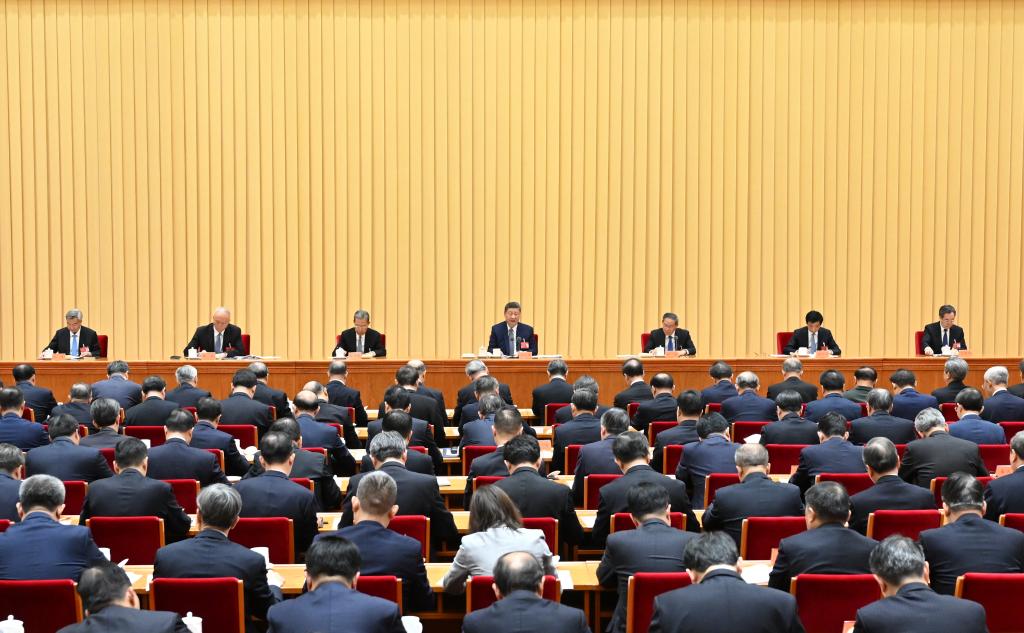
Xi Jinping, general secretary of the Communist Party of China Central Committee, Chinese president and chairman of the Central Military Commission, delivers an important speech at the annual Central Economic Work Conference in Beijing, capital of China. The conference was held in Beijing from Wednesday to Thursday. Li Qiang, Zhao Leji, Wang Huning, Cai Qi, Ding Xuexiang and Li Xi attended the conference. (Xinhua/Xie Huanchi)
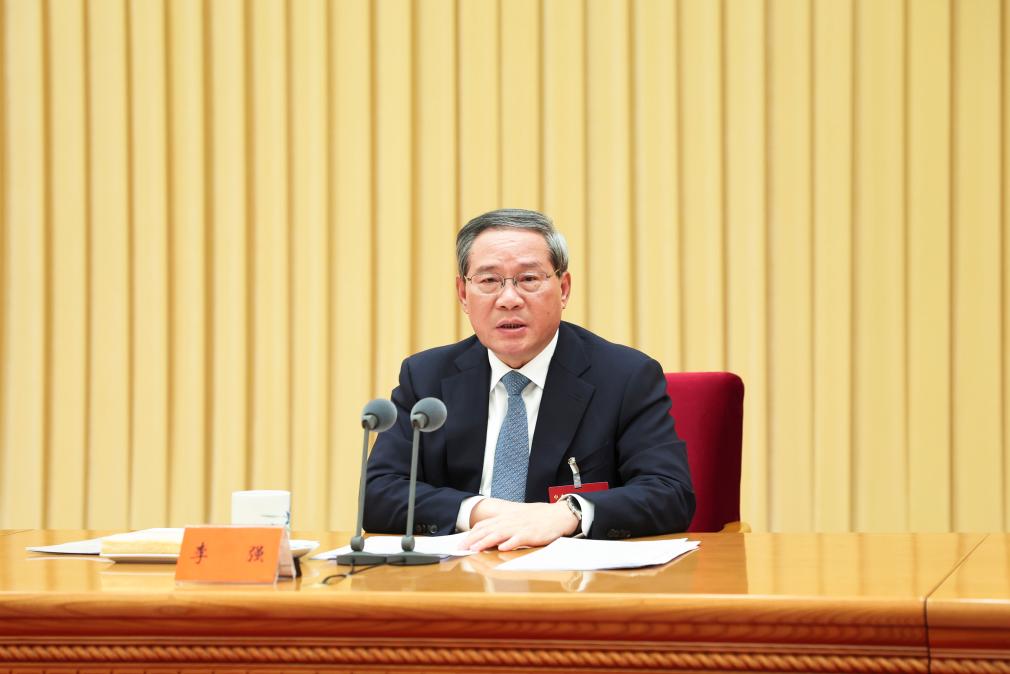
Li Qiang, a member of the Standing Committee of the Political Bureau of the Communist Party of China Central Committee, speaks at the annual Central Economic Work Conference in Beijing, capital of China. The conference was held in Beijing from Wednesday to Thursday. (Xinhua/Huang Jingwen)


