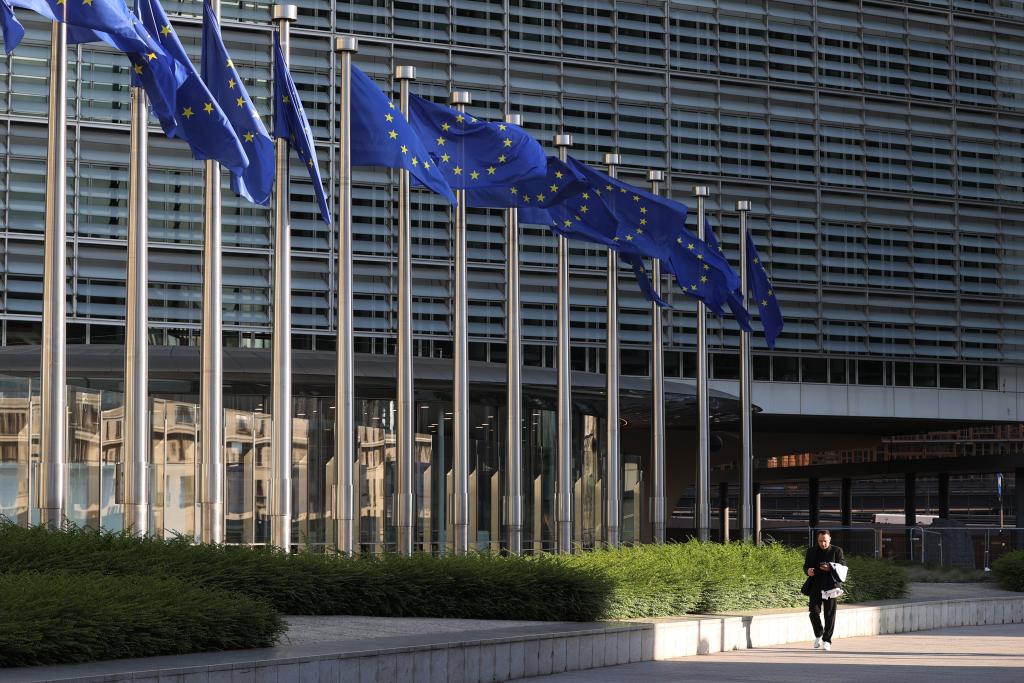
The EU's antitrust investigation against U.S. tech giants and the U.S. putting down the EU in its National Security Strategy expose a growing split in transatlantic relations.
BRUSSELS, Dec. 9 (Xinhua) -- From Europe's sweeping crackdown on American big tech to a hard-edged new U.S. national security strategy, transatlantic tensions are mounting.
In the past week, the European Commission opened two antitrust investigations into U.S. tech giant Google and Meta, and fined Elon Musk's platform X 120 million euros (about 139.49 million U.S. dollars) in its first non-compliance decision under the Digital Services Act (DSA).
Simultaneously, the White House published a new National Security Strategy warning that Europe faces the "prospect of civilizational erasure." This has triggered an unusually sharp backlash from European leaders.
Analysts say the rift between the United States and Europe is widening, a trend that is reinforcing Europe's drive for greater "strategic autonomy" and making the split increasingly difficult to reverse.
DIGITAL SOVEREIGNTY DISPUTE
On Dec. 5, the European Commission issued its first non-compliance decision under the DSA, fining X 120 million euros for the deceptive design of its blue checkmark, a lack of transparency in its advertising repository, and failing to provide researchers with access to public data.
X owner Elon Musk then blasted the European Union (EU) for the fine, warning that his response would target the officials responsible for the penalty.

U.S. Secretary of State Marco Rubio has condemned the fine as an attack on American companies and an act of censorship against Americans online. Meanwhile, Deputy Secretary of State Christopher Landau argued that the EU's regulatory stance could damage shared Western security and values.
However, EU tech chief Henna Virkkunen has insisted the law "has nothing to do with censorship."
On Tuesday, the Commission opened a separate antitrust investigation into whether Google has breached EU anticompetitive rules.
U.S. National Public Radio said that Europe has been striving to establish itself as the global authority for digital regulation. The Trump administration has pushed back against perceived curbs on U.S. companies' profits, highlighting a growing division over the concept of digital sovereignty, which has transformed long-standing allies into competitors.
U.S. SECURITY STRATEGY RATTLES EUROPE
While the tech battles have exposed an economic rift, the new U.S. National Security Strategy has raised the issues of identity and values.
Several U.S. and European outlets have pointed out that in the 30-page document, barely two and a half pages are devoted to Europe, a level of neglect they say no previous U.S. strategy document has shown toward its European allies.
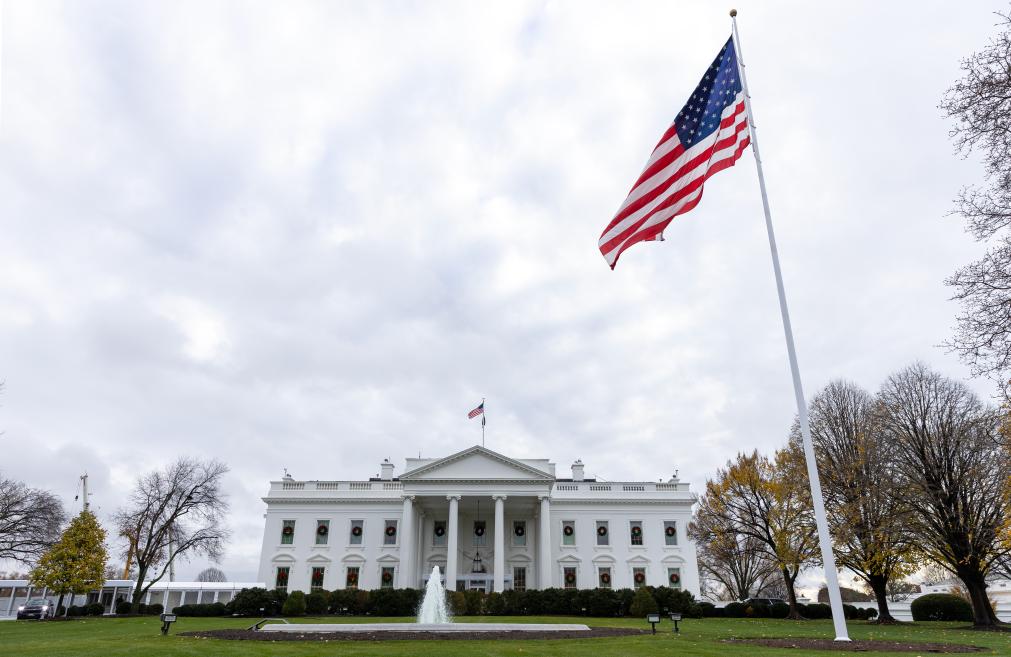
Analysts believe the new Strategy underlines how Europe is being pushed down the list of U.S. priorities. "For Trump, however, Europe seems increasingly irrelevant or, on a bad day, even an adversary," said Leonard A. Schuette, an international security program fellow at the Belfer Center at the Harvard Kennedy School.
Some experts also argue that the strategy extends the rift into the realm of the shared values that once underpinned the transatlantic security alliance. The Financial Times reported that the document "highlights the ideological gulf that has opened up between Washington and its traditional allies."
The Strategy also calls on the U.S. to "cultivate resistance within European nations" to what it describes as Europe's current trajectory, and commends far-right "patriotic" parties across the continent.
Liana Fix, a senior fellow for Europe at the Council on Foreign Relations, pointed out that the document frames Europe's problems in "civilizational" terms, which is radically different from any past administration's view of Europe. Fix concluded that it "marks the end of the transatlantic alliance based on liberal values."
STRATEGIC AUTONOMY BECOMING MORE URGENT
Europe's drive for strategic autonomy is looking more urgent than ever, faced with tariff threats, tech enforcement battles, and the new U.S. strategy document.
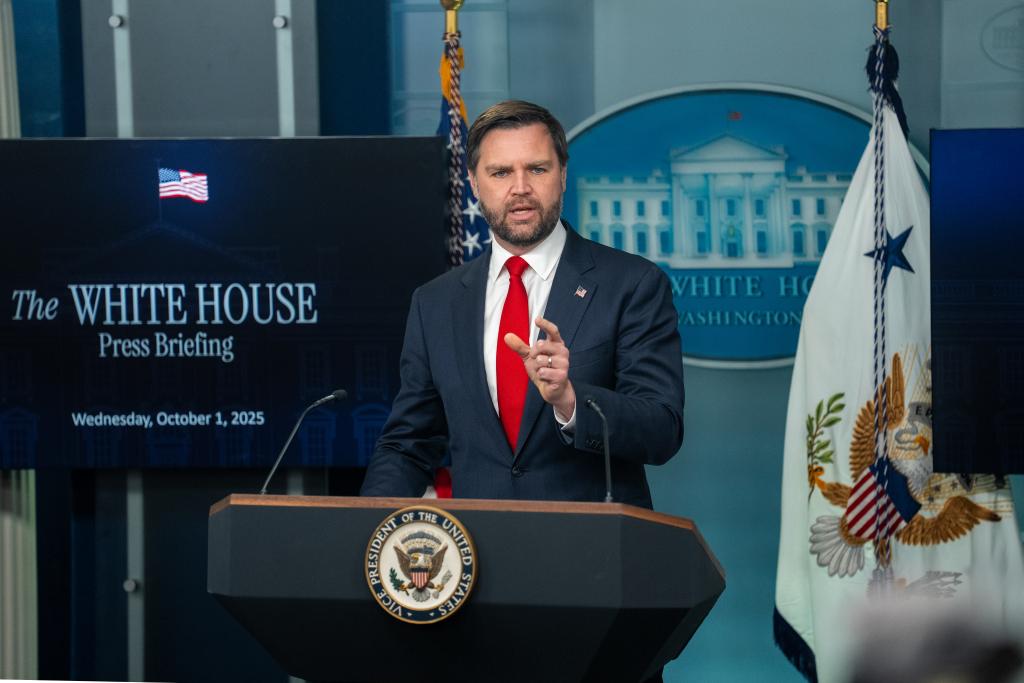
From U.S. Vice President JD Vance's blunt criticism of Europe at the Munich Security Conference early this year, to the U.S. tendency to bypass European allies in negotiations on Ukraine, the pattern of "America First" decisions has pushed Europe toward strengthening its own strategic autonomy.
In recent months, the EU has invoked its digital regulations to launch a series of enforcement actions against major U.S. tech firms. Analysts describe these moves as a direct response to the U.S. use of tariff threats to interfere with the bloc's digital regulatory agenda.
At the same time, several European countries have begun raising defense budgets and expanding joint military cooperation in an effort to reduce long-standing dependence on the U.S. in security and defense.
A recent paper published by the European Union Institute for Security Studies warns that Europe is not facing a "storm that will pass." It is a multi-round contest in which power, alliances, and resilience are built over time, the paper said.
To prepare for what comes next, the paper urges Europe to "collect more cards and learn to play them smartly," including boosting defense capabilities, investing in strategic industries, and rebuilding Europe's economic security, so it can safeguard its own security and democratic future. (1 euro = 1.16 U.S. dollars) ■