
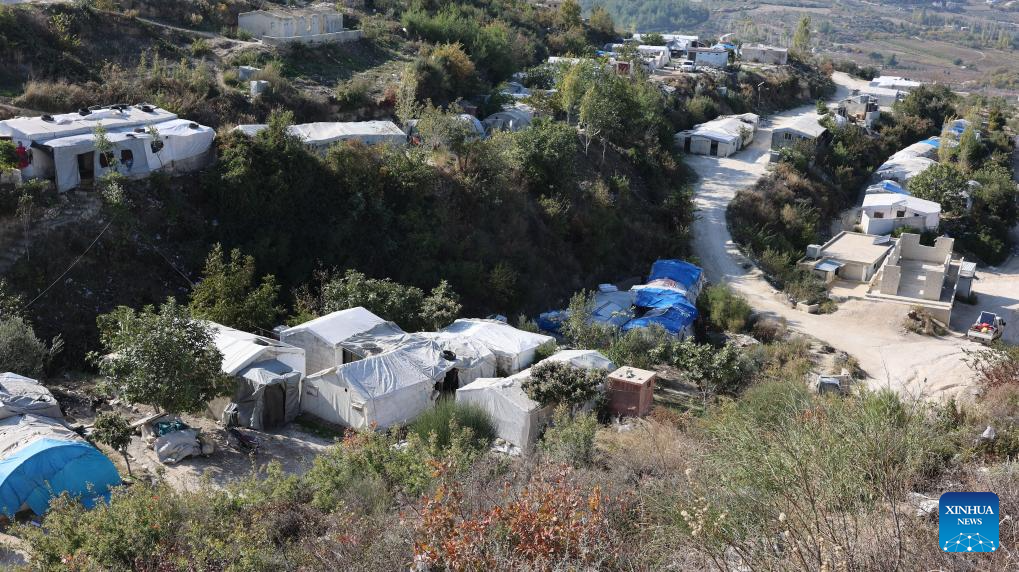
Temporary tents are seen at Khirbet al-Joz refugee camp in Idlib, Syria, Nov. 20, 2025. (Xinhua)
DAMASCUS, Dec. 7 (Xinhua) -- A year after Syria's prolonged civil conflict ended with the fall of the Bashar al-Assad government, many Syrian families are finding that while the fighting has ceased, displacement persists.
Across Aleppo and parts of Idlib provinces in northern Syria, families who spent years in camps have begun returning to their hometowns only to find them unrecognizable: flattened, emptied, and lacking the basic infrastructure that gives meaning to the word "return."
In the village of Ain Daqneh, in the northern countryside of Aleppo, entire neighborhoods that once housed hundreds of families have been reduced to collapsed stone walls and tangled concrete.
Yousef Mohammad Deeb, a man in his 40s from Ain Daqneh, shared with Xinhua his experience returning from the Bab al-Salam camp, a major Syrian refugee settlement near the Turkish border north of Aleppo, after 10 years of displacement.
"When we came here, we saw the destruction. The whole village is demolished, and there is nothing here. There are no houses to live in, and until now we are still in the camps," he said.
"The good thing is that the war has stopped, but we still don't know what the future holds for us," he added.
For most refugees and displaced people, returning has revealed a harsh reality: the war may be over, but reconstruction has barely begun. Many are unable to rebuild or even find temporary shelter beyond the tents they once hoped to leave behind.
Mohammad Yassin Ibrahim, also from Ain Daqneh and in his 30s, who likewise spent nearly 10 years in Bab al-Salam camp, told Xinhua that returning is only the beginning, and the road to reconstruction remains incredibly long.
"The infrastructure is destroyed. We hope for help from any side to assist residents in returning by repairing the infrastructure, the schools, the streets, in any way," he said.
Aside from the destroyed homes, local officials said families returning are now confronted with new dangers such as unexploded ordnance and collapsing buildings.
"After so many years, we were happy that the war, the destruction, and the killing ended, and that we could return to our village. But there's nowhere to live. If we set up a tent, we're afraid for the children because of the tunnels and landmines," said Khaled Othman, head of Ain Daqneh.
He added that the economic toll of years of displacement has made rebuilding nearly impossible for ordinary people.
"People can't handle it. After years of displacement, those who once had a good income now have nothing, and some are in debt. With these sky-high costs and living expenses, no one can afford to rebuild their homes," Othman said.
Throughout the village, cracked school walls, shattered electricity poles, and destroyed water networks lay bare the extensive work needed before families can truly return.
The situation is even harsher in the camps of Idlib, where thousands of internally displaced Syrians still live in tents with no timeline for returning.
Fadi Mohammed Sbeqji, displaced from Jabal al-Akrad in Latakia, expressed his frustration. Speaking to Xinhua, the 30-year-old father of two said his struggle is far from over.
"I have been displaced from Latakia for 12 years, and I don't own a house. We begged people to lend us a place so we could leave this place," he said. "Nothing has changed for us. Yes, the fighting ended, but we haven't felt any difference."
According to the UN refugee agency, more than 3 million Syrian refugees -- abroad or internally displaced -- have returned since late 2024. However, many are returning to places with no functioning infrastructure, no schools, no health services, and limited livelihood opportunities.
The return will not be sustainable without funding to restore vital infrastructure such as electricity, water, schools, and health facilities, said Kelly Clements, the UN deputy high commissioner for refugees, calling for international support to avoid renewed displacement.
"We want to return to our homes, but all our houses are destroyed. My brothers and I are all old, and we have no income to live on," said Ilham Jilaq, 63, from Idlib. ■
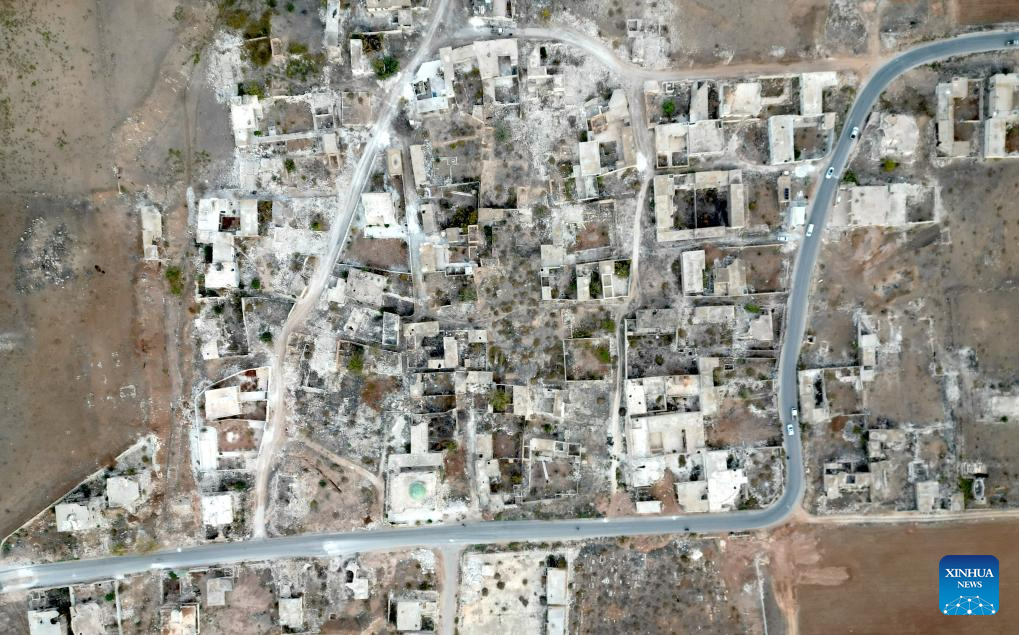
This aerial drone photo taken on Dec. 4, 2025 shows damaged houses in Ain Daqneh, in the northern countryside of Aleppo, Syria. (Xinhua)
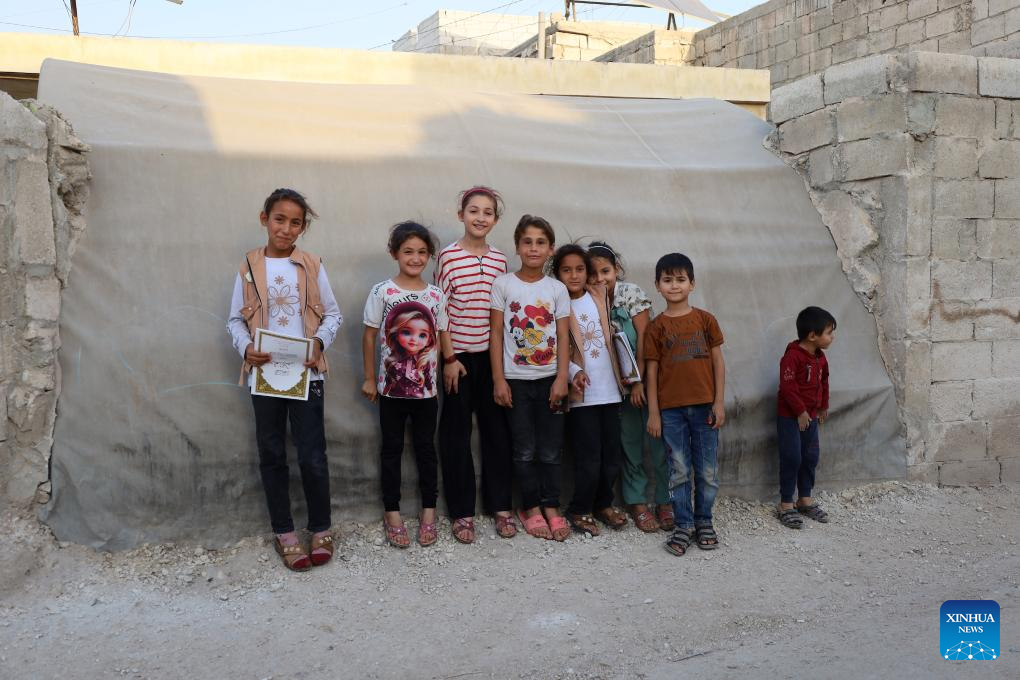
Children are seen at Karama refugee camp in Idlib, Syria, Sept. 25, 2025. (Xinhua)
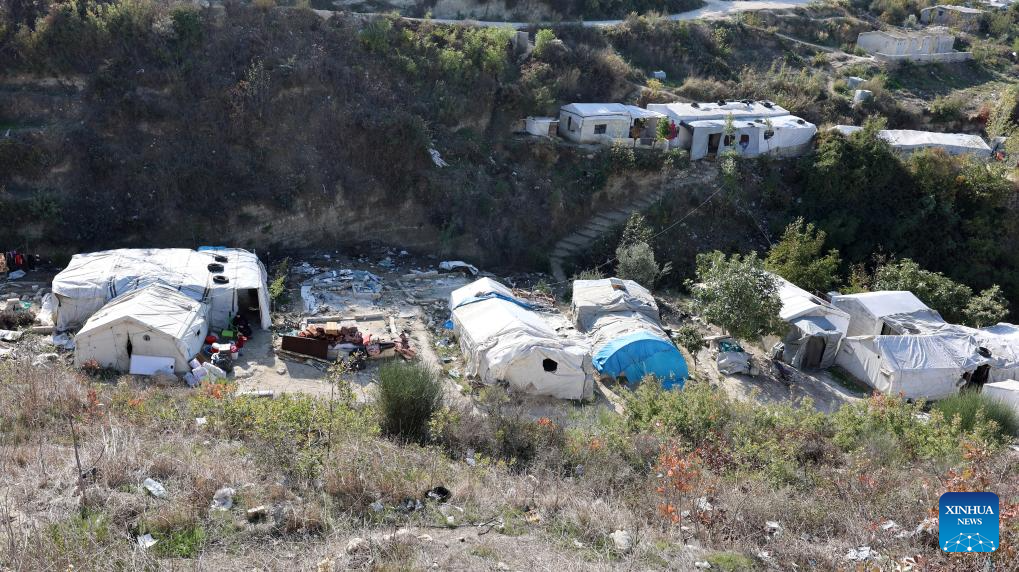
Temporary tents are seen at Khirbet al-Joz refugee camp in Idlib, Syria, Nov. 20, 2025. (Xinhua)


