
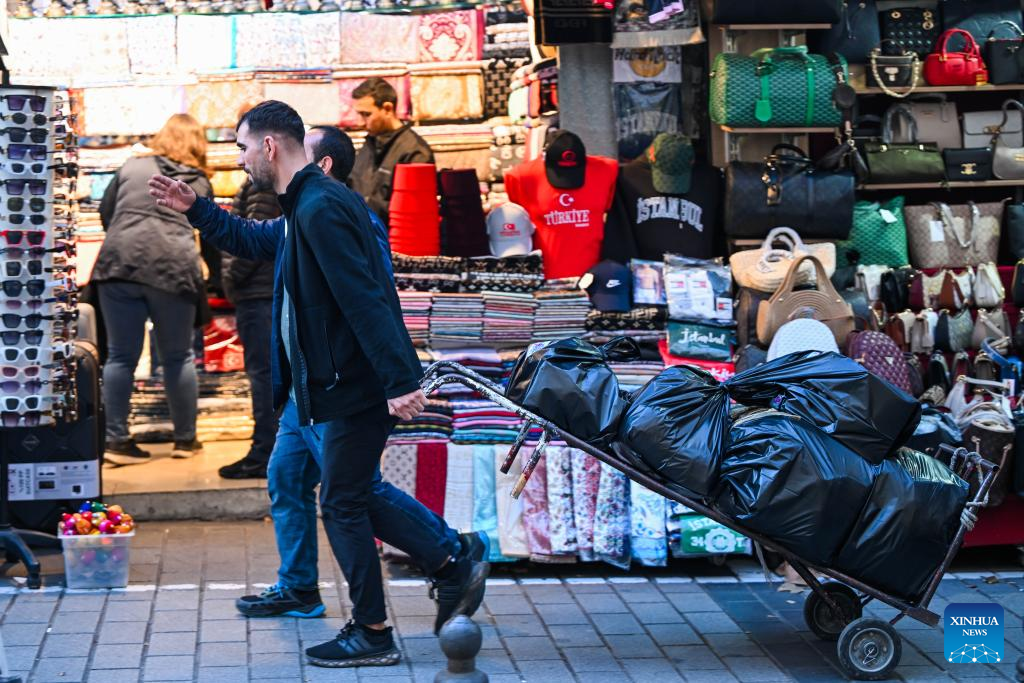
A porter transports goods with a handcart under a customer's guidance near the Grand Bazaar in Istanbul, Türkiye, Nov. 24, 2025. In the old quarters of Istanbul, one often encounters a familiar scene: men weaving through narrow streets, carrying heavy loads on their backs or pushing them on handcarts. Known in Turkish as "hamal," these traditional porters represent a profession that dates back to the Ottoman era and endures to this day.
The porters'tools are simple -- a thick shoulder strap or a sturdy handcart. Dozens of kilograms, sometimes even loads exceeding a hundred kilograms, are lifted and transported with steady precision before disappearing into the maze-like streets.
The Grand Bazaar, the Spice Bazaar, and the commercial district of Eminonu are among Istanbul's oldest and busiest trading hubs. Dense shopfronts, heavy foot traffic, and a network of narrow alleys and intersections leave little room for motor vehicles, which have allowed the hamal profession to survive and remain indispensable.
In these labyrinthine streets, they shoulder countless small-scale logistics tasks, quietly sustaining the commercial lifeblood of the city. In Istanbul, being a porter is not only a traditional craft -- it is a foundational force that has supported the city's commercial vitality for centuries. (Xinhua/Liu Lei)
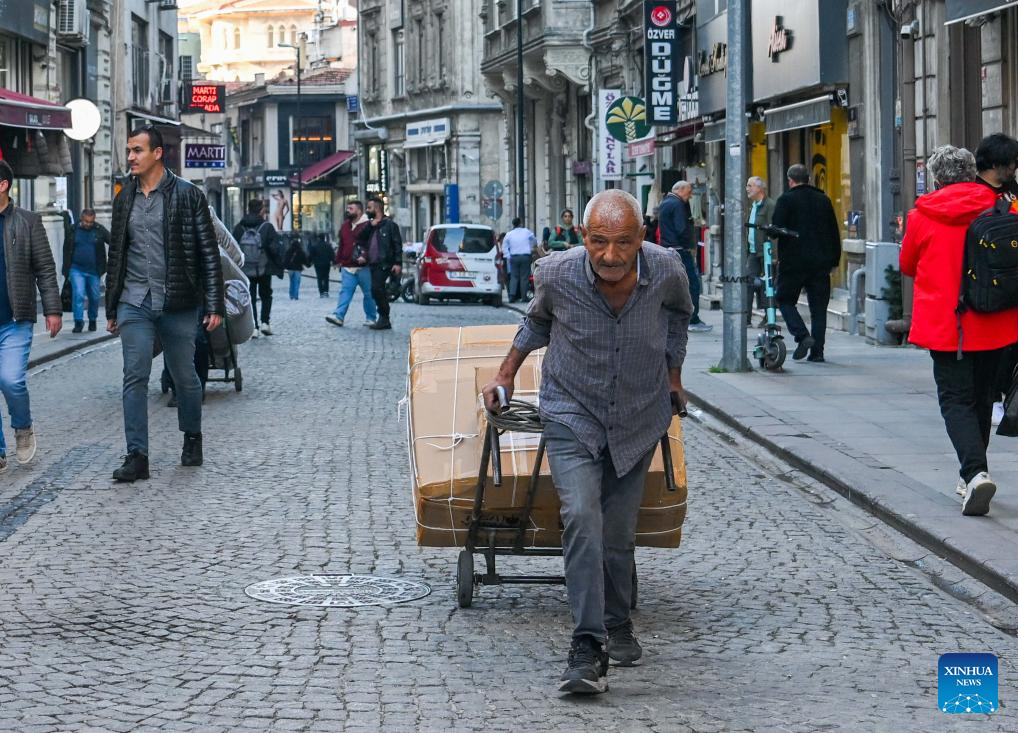
A porter transports goods with a handcart in the Eminonu commercial district of Istanbul, Türkiye, Nov. 25, 2025. In the old quarters of Istanbul, one often encounters a familiar scene: men weaving through narrow streets, carrying heavy loads on their backs or pushing them on handcarts. Known in Turkish as "hamal," these traditional porters represent a profession that dates back to the Ottoman era and endures to this day.
The porters'tools are simple -- a thick shoulder strap or a sturdy handcart. Dozens of kilograms, sometimes even loads exceeding a hundred kilograms, are lifted and transported with steady precision before disappearing into the maze-like streets.
The Grand Bazaar, the Spice Bazaar, and the commercial district of Eminonu are among Istanbul's oldest and busiest trading hubs. Dense shopfronts, heavy foot traffic, and a network of narrow alleys and intersections leave little room for motor vehicles, which have allowed the hamal profession to survive and remain indispensable.
In these labyrinthine streets, they shoulder countless small-scale logistics tasks, quietly sustaining the commercial lifeblood of the city. In Istanbul, being a porter is not only a traditional craft -- it is a foundational force that has supported the city's commercial vitality for centuries. (Xinhua/Liu Lei)
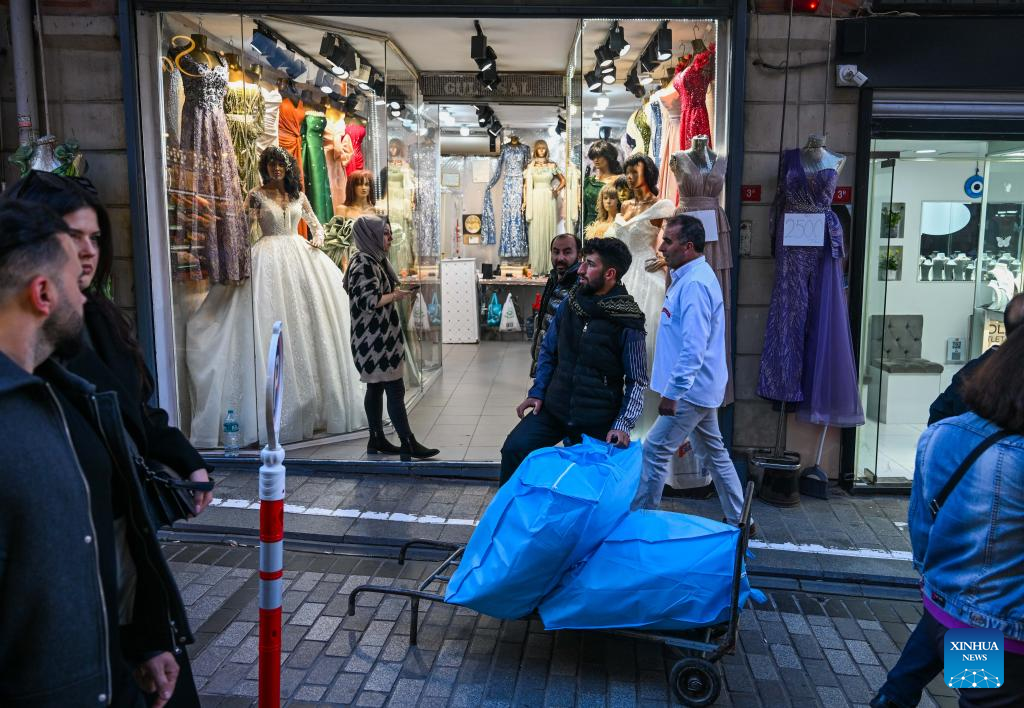
A porter loads goods in front of a bridal shop near the Grand Bazaar in Istanbul, Türkiye, Nov. 25, 2025. In the old quarters of Istanbul, one often encounters a familiar scene: men weaving through narrow streets, carrying heavy loads on their backs or pushing them on handcarts. Known in Turkish as "hamal," these traditional porters represent a profession that dates back to the Ottoman era and endures to this day.
The porters'tools are simple -- a thick shoulder strap or a sturdy handcart. Dozens of kilograms, sometimes even loads exceeding a hundred kilograms, are lifted and transported with steady precision before disappearing into the maze-like streets.
The Grand Bazaar, the Spice Bazaar, and the commercial district of Eminonu are among Istanbul's oldest and busiest trading hubs. Dense shopfronts, heavy foot traffic, and a network of narrow alleys and intersections leave little room for motor vehicles, which have allowed the hamal profession to survive and remain indispensable.
In these labyrinthine streets, they shoulder countless small-scale logistics tasks, quietly sustaining the commercial lifeblood of the city. In Istanbul, being a porter is not only a traditional craft -- it is a foundational force that has supported the city's commercial vitality for centuries. (Xinhua/Liu Lei)
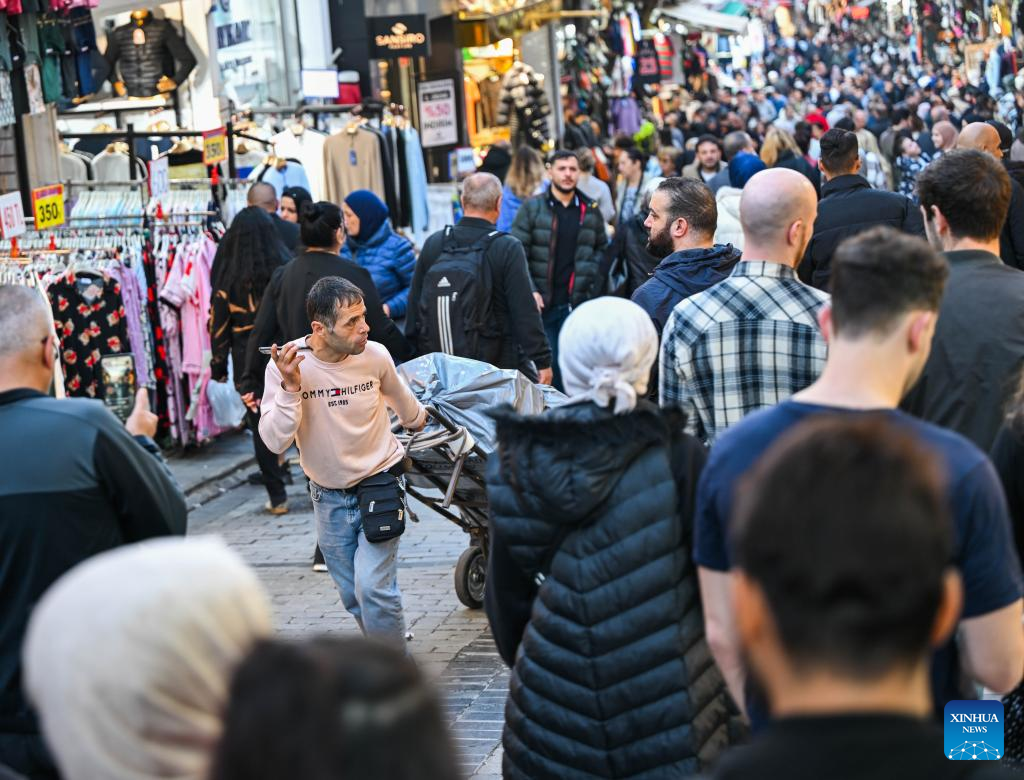
A porter transports goods with a handcart near the Grand Bazaar in Istanbul, Türkiye, Nov. 24, 2025. In the old quarters of Istanbul, one often encounters a familiar scene: men weaving through narrow streets, carrying heavy loads on their backs or pushing them on handcarts. Known in Turkish as "hamal," these traditional porters represent a profession that dates back to the Ottoman era and endures to this day.
The porters'tools are simple -- a thick shoulder strap or a sturdy handcart. Dozens of kilograms, sometimes even loads exceeding a hundred kilograms, are lifted and transported with steady precision before disappearing into the maze-like streets.
The Grand Bazaar, the Spice Bazaar, and the commercial district of Eminonu are among Istanbul's oldest and busiest trading hubs. Dense shopfronts, heavy foot traffic, and a network of narrow alleys and intersections leave little room for motor vehicles, which have allowed the hamal profession to survive and remain indispensable.
In these labyrinthine streets, they shoulder countless small-scale logistics tasks, quietly sustaining the commercial lifeblood of the city. In Istanbul, being a porter is not only a traditional craft -- it is a foundational force that has supported the city's commercial vitality for centuries. (Xinhua/Liu Lei)
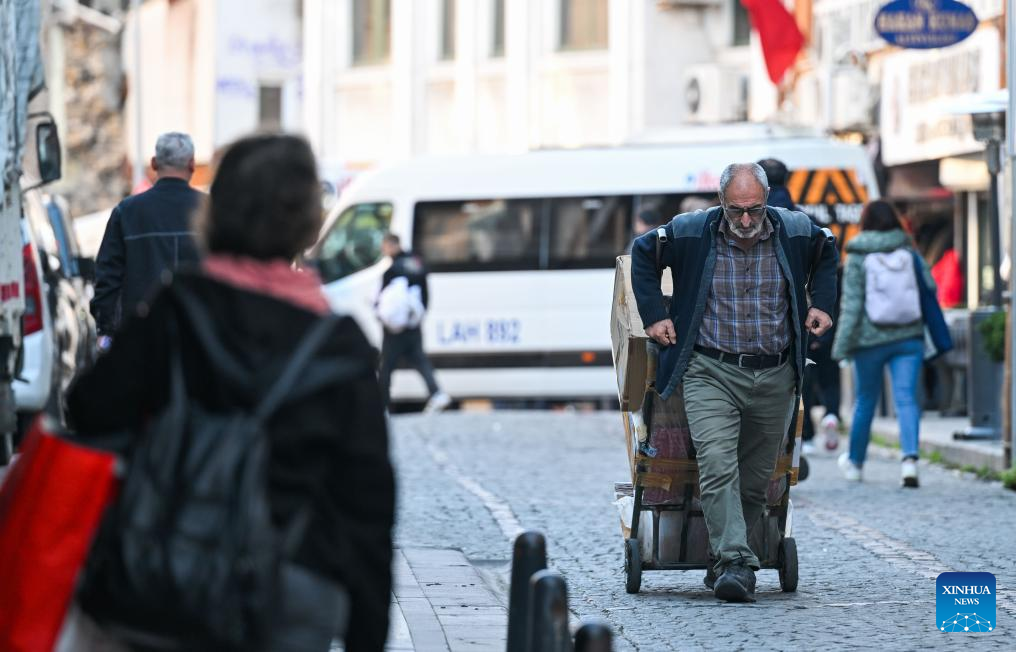
A porter transports goods with a handcart in the Eminonu commercial district of Istanbul, Türkiye, Nov. 25, 2025. In the old quarters of Istanbul, one often encounters a familiar scene: men weaving through narrow streets, carrying heavy loads on their backs or pushing them on handcarts. Known in Turkish as "hamal," these traditional porters represent a profession that dates back to the Ottoman era and endures to this day.
The porters'tools are simple -- a thick shoulder strap or a sturdy handcart. Dozens of kilograms, sometimes even loads exceeding a hundred kilograms, are lifted and transported with steady precision before disappearing into the maze-like streets.
The Grand Bazaar, the Spice Bazaar, and the commercial district of Eminonu are among Istanbul's oldest and busiest trading hubs. Dense shopfronts, heavy foot traffic, and a network of narrow alleys and intersections leave little room for motor vehicles, which have allowed the hamal profession to survive and remain indispensable.
In these labyrinthine streets, they shoulder countless small-scale logistics tasks, quietly sustaining the commercial lifeblood of the city. In Istanbul, being a porter is not only a traditional craft -- it is a foundational force that has supported the city's commercial vitality for centuries. (Xinhua/Liu Lei)
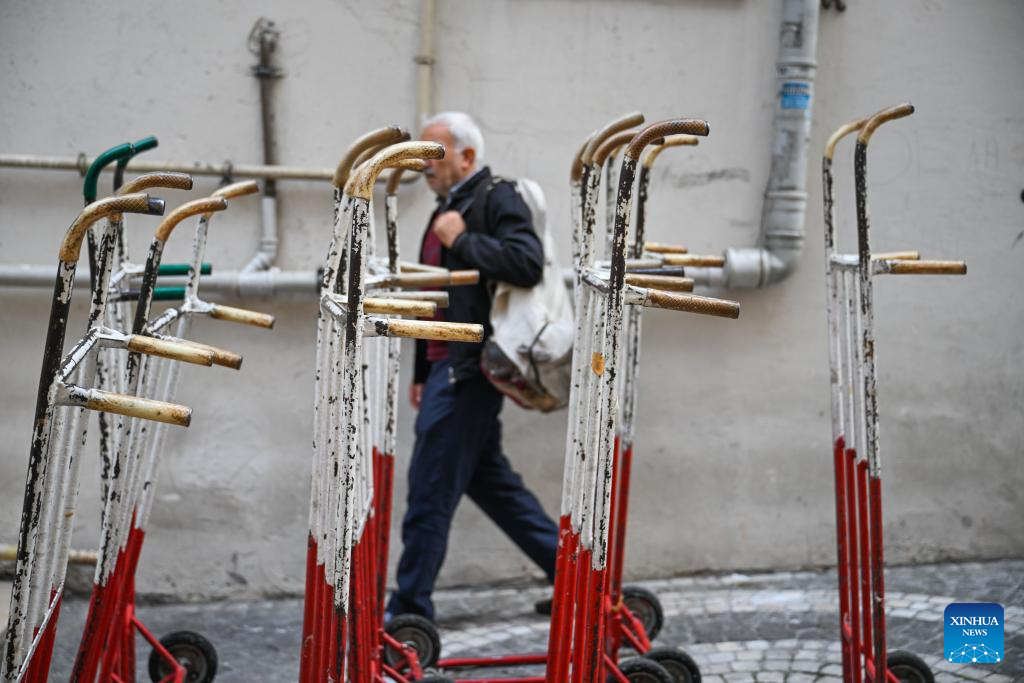
A porter walks past a row of handcarts in the Eminonu commercial district of Istanbul, Türkiye, Nov. 6, 2025. In the old quarters of Istanbul, one often encounters a familiar scene: men weaving through narrow streets, carrying heavy loads on their backs or pushing them on handcarts. Known in Turkish as "hamal," these traditional porters represent a profession that dates back to the Ottoman era and endures to this day.
The porters'tools are simple -- a thick shoulder strap or a sturdy handcart. Dozens of kilograms, sometimes even loads exceeding a hundred kilograms, are lifted and transported with steady precision before disappearing into the maze-like streets.
The Grand Bazaar, the Spice Bazaar, and the commercial district of Eminonu are among Istanbul's oldest and busiest trading hubs. Dense shopfronts, heavy foot traffic, and a network of narrow alleys and intersections leave little room for motor vehicles, which have allowed the hamal profession to survive and remain indispensable.
In these labyrinthine streets, they shoulder countless small-scale logistics tasks, quietly sustaining the commercial lifeblood of the city. In Istanbul, being a porter is not only a traditional craft -- it is a foundational force that has supported the city's commercial vitality for centuries. (Xinhua/Liu Lei)
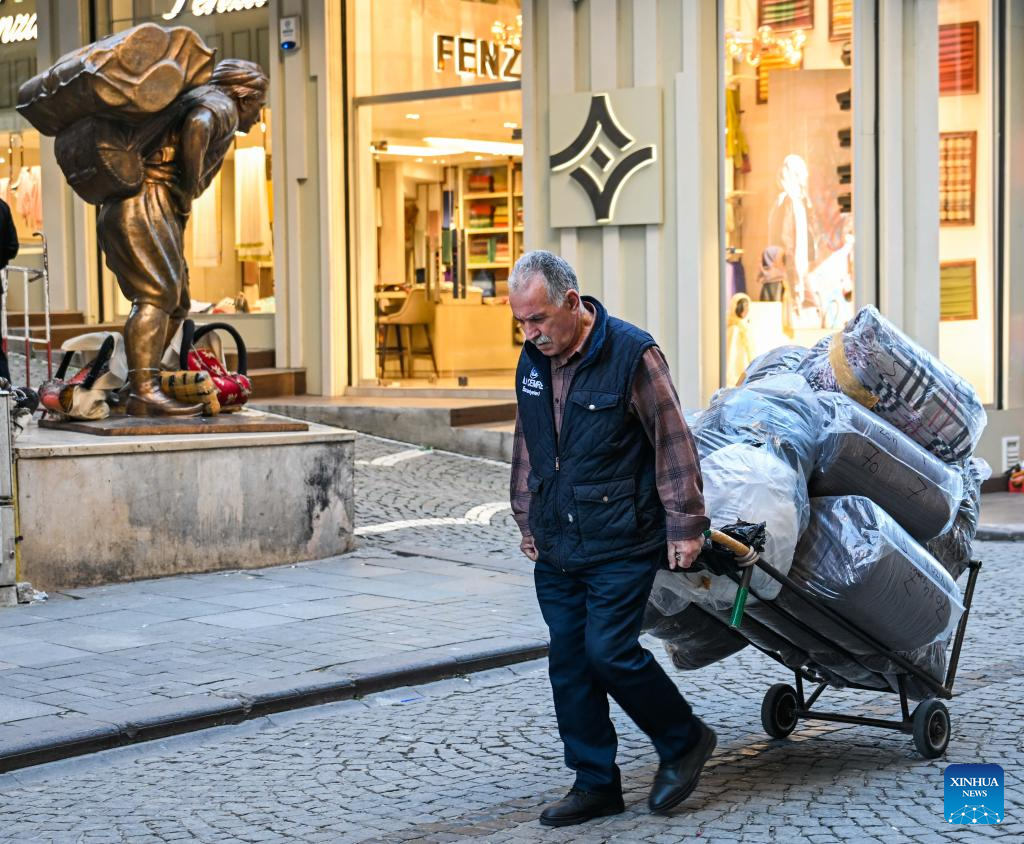
A porter transports goods with a handcart in the Eminonu commercial district of Istanbul, Türkiye, Nov. 25, 2025. In the old quarters of Istanbul, one often encounters a familiar scene: men weaving through narrow streets, carrying heavy loads on their backs or pushing them on handcarts. Known in Turkish as "hamal," these traditional porters represent a profession that dates back to the Ottoman era and endures to this day.
The porters'tools are simple -- a thick shoulder strap or a sturdy handcart. Dozens of kilograms, sometimes even loads exceeding a hundred kilograms, are lifted and transported with steady precision before disappearing into the maze-like streets.
The Grand Bazaar, the Spice Bazaar, and the commercial district of Eminonu are among Istanbul's oldest and busiest trading hubs. Dense shopfronts, heavy foot traffic, and a network of narrow alleys and intersections leave little room for motor vehicles, which have allowed the hamal profession to survive and remain indispensable.
In these labyrinthine streets, they shoulder countless small-scale logistics tasks, quietly sustaining the commercial lifeblood of the city. In Istanbul, being a porter is not only a traditional craft -- it is a foundational force that has supported the city's commercial vitality for centuries. (Xinhua/Liu Lei)
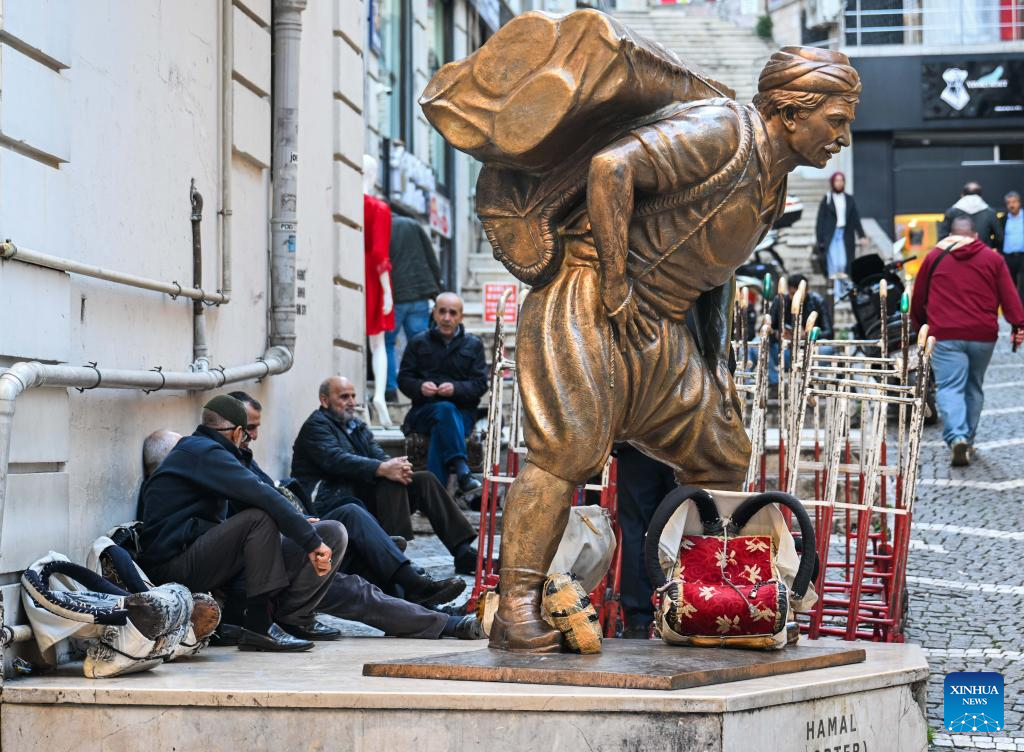
Porters rest next to a statue of a porter in the Eminonu commercial district of Istanbul, Türkiye, Nov. 25, 2025. In the old quarters of Istanbul, one often encounters a familiar scene: men weaving through narrow streets, carrying heavy loads on their backs or pushing them on handcarts. Known in Turkish as "hamal," these traditional porters represent a profession that dates back to the Ottoman era and endures to this day.
The porters'tools are simple -- a thick shoulder strap or a sturdy handcart. Dozens of kilograms, sometimes even loads exceeding a hundred kilograms, are lifted and transported with steady precision before disappearing into the maze-like streets.
The Grand Bazaar, the Spice Bazaar, and the commercial district of Eminonu are among Istanbul's oldest and busiest trading hubs. Dense shopfronts, heavy foot traffic, and a network of narrow alleys and intersections leave little room for motor vehicles, which have allowed the hamal profession to survive and remain indispensable.
In these labyrinthine streets, they shoulder countless small-scale logistics tasks, quietly sustaining the commercial lifeblood of the city. In Istanbul, being a porter is not only a traditional craft -- it is a foundational force that has supported the city's commercial vitality for centuries. (Xinhua/Liu Lei)
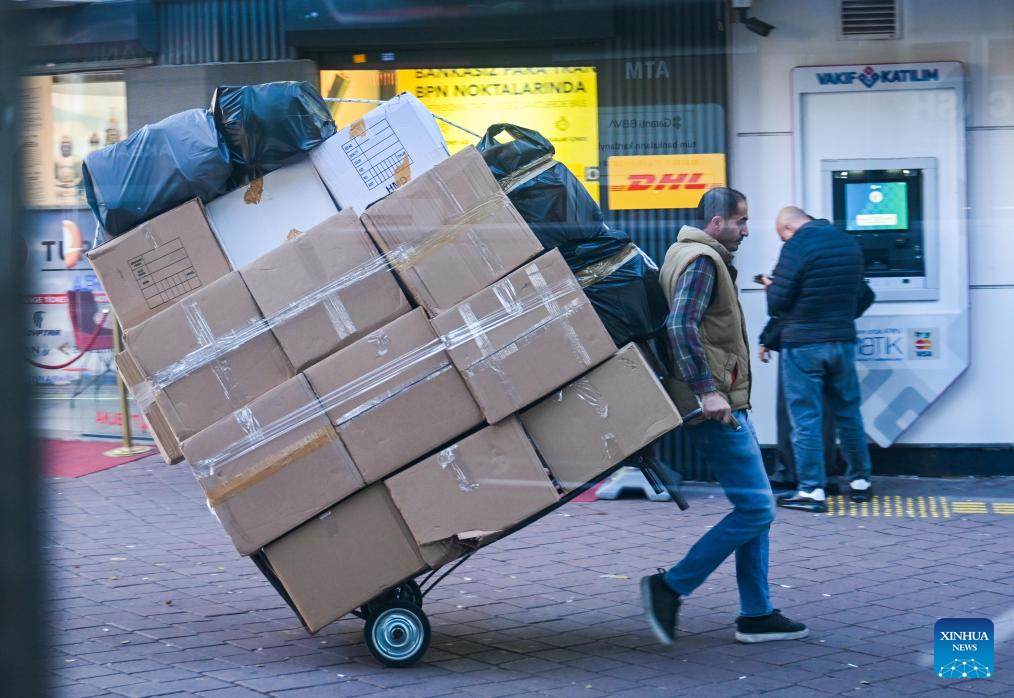
A porter pulls goods along the street near the Spice Bazaar in Istanbul, Türkiye, Nov. 25, 2025. In the old quarters of Istanbul, one often encounters a familiar scene: men weaving through narrow streets, carrying heavy loads on their backs or pushing them on handcarts. Known in Turkish as "hamal," these traditional porters represent a profession that dates back to the Ottoman era and endures to this day.
The porters'tools are simple -- a thick shoulder strap or a sturdy handcart. Dozens of kilograms, sometimes even loads exceeding a hundred kilograms, are lifted and transported with steady precision before disappearing into the maze-like streets.
The Grand Bazaar, the Spice Bazaar, and the commercial district of Eminonu are among Istanbul's oldest and busiest trading hubs. Dense shopfronts, heavy foot traffic, and a network of narrow alleys and intersections leave little room for motor vehicles, which have allowed the hamal profession to survive and remain indispensable.
In these labyrinthine streets, they shoulder countless small-scale logistics tasks, quietly sustaining the commercial lifeblood of the city. In Istanbul, being a porter is not only a traditional craft -- it is a foundational force that has supported the city's commercial vitality for centuries. (Xinhua/Liu Lei)
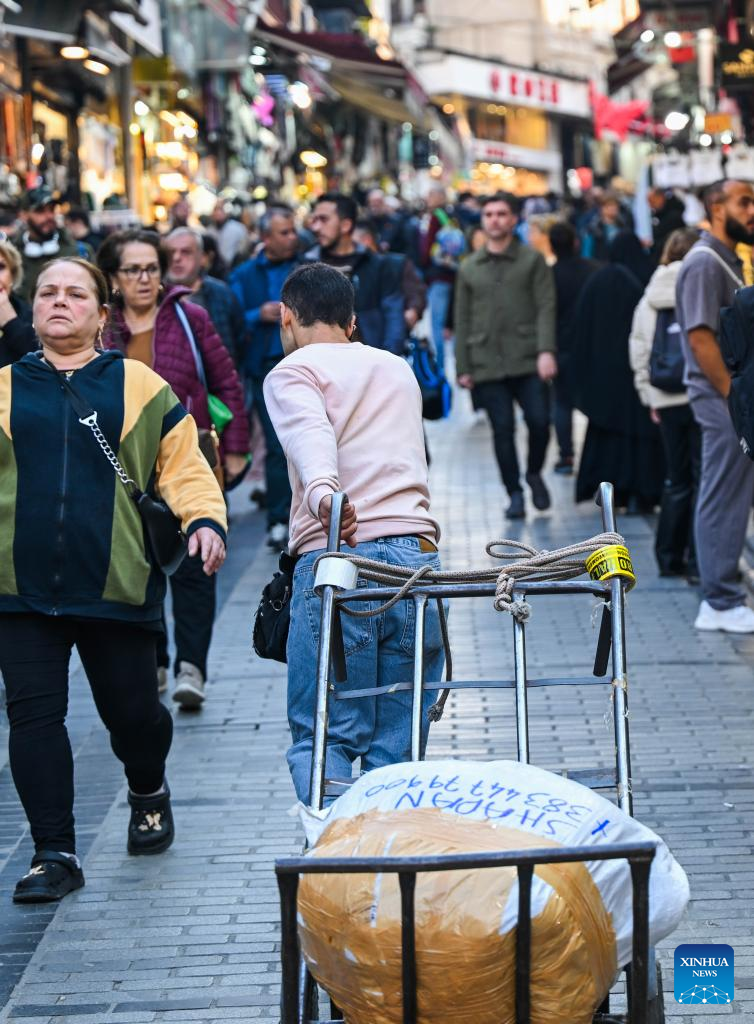
A porter transports goods with a handcart near the Grand Bazaar in Istanbul, Türkiye, Nov. 24, 2025. In the old quarters of Istanbul, one often encounters a familiar scene: men weaving through narrow streets, carrying heavy loads on their backs or pushing them on handcarts. Known in Turkish as "hamal," these traditional porters represent a profession that dates back to the Ottoman era and endures to this day.
The porters'tools are simple -- a thick shoulder strap or a sturdy handcart. Dozens of kilograms, sometimes even loads exceeding a hundred kilograms, are lifted and transported with steady precision before disappearing into the maze-like streets.
The Grand Bazaar, the Spice Bazaar, and the commercial district of Eminonu are among Istanbul's oldest and busiest trading hubs. Dense shopfronts, heavy foot traffic, and a network of narrow alleys and intersections leave little room for motor vehicles, which have allowed the hamal profession to survive and remain indispensable.
In these labyrinthine streets, they shoulder countless small-scale logistics tasks, quietly sustaining the commercial lifeblood of the city. In Istanbul, being a porter is not only a traditional craft -- it is a foundational force that has supported the city's commercial vitality for centuries. (Xinhua/Liu Lei)
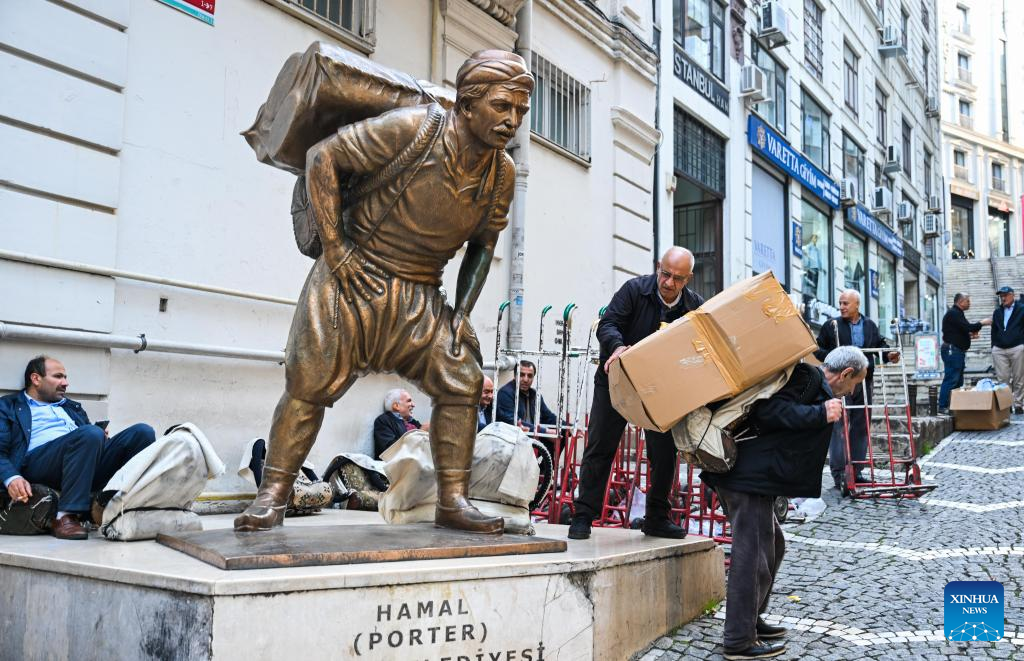
A porter lifts goods onto his shoulders with the help of a colleague in the Eminonu commercial district of Istanbul, Türkiye, Nov. 6, 2025. In the old quarters of Istanbul, one often encounters a familiar scene: men weaving through narrow streets, carrying heavy loads on their backs or pushing them on handcarts. Known in Turkish as "hamal," these traditional porters represent a profession that dates back to the Ottoman era and endures to this day.
The porters'tools are simple -- a thick shoulder strap or a sturdy handcart. Dozens of kilograms, sometimes even loads exceeding a hundred kilograms, are lifted and transported with steady precision before disappearing into the maze-like streets.
The Grand Bazaar, the Spice Bazaar, and the commercial district of Eminonu are among Istanbul's oldest and busiest trading hubs. Dense shopfronts, heavy foot traffic, and a network of narrow alleys and intersections leave little room for motor vehicles, which have allowed the hamal profession to survive and remain indispensable.
In these labyrinthine streets, they shoulder countless small-scale logistics tasks, quietly sustaining the commercial lifeblood of the city. In Istanbul, being a porter is not only a traditional craft -- it is a foundational force that has supported the city's commercial vitality for centuries. (Xinhua/Liu Lei)
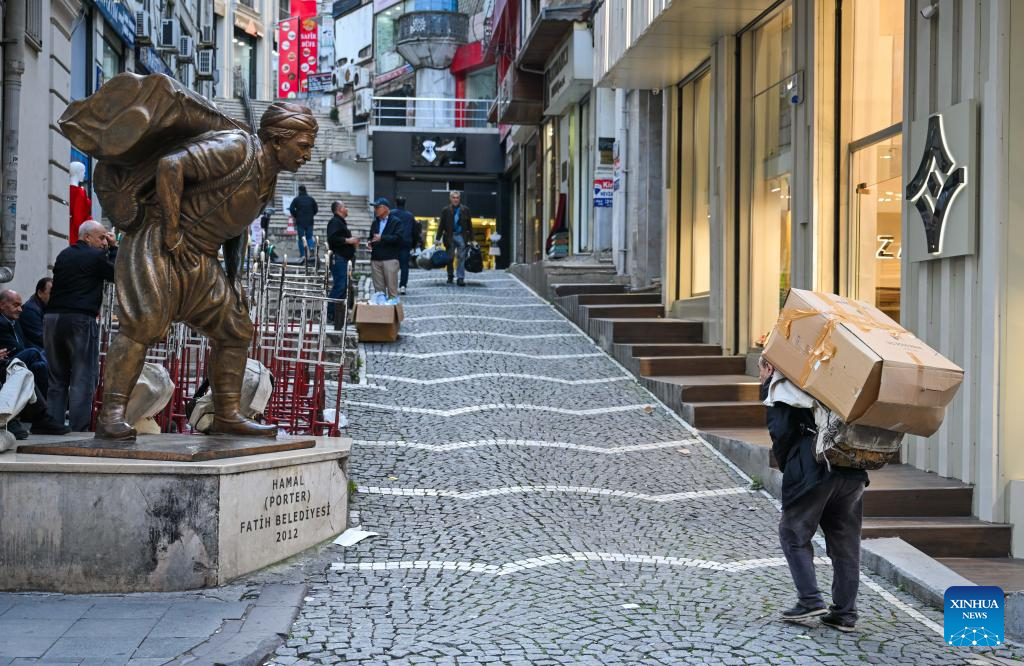
A porter carries goods past a statue of a porter in the Eminonu commercial district of Istanbul, Türkiye, Nov. 6, 2025. In the old quarters of Istanbul, one often encounters a familiar scene: men weaving through narrow streets, carrying heavy loads on their backs or pushing them on handcarts. Known in Turkish as "hamal," these traditional porters represent a profession that dates back to the Ottoman era and endures to this day.
The porters'tools are simple -- a thick shoulder strap or a sturdy handcart. Dozens of kilograms, sometimes even loads exceeding a hundred kilograms, are lifted and transported with steady precision before disappearing into the maze-like streets.
The Grand Bazaar, the Spice Bazaar, and the commercial district of Eminonu are among Istanbul's oldest and busiest trading hubs. Dense shopfronts, heavy foot traffic, and a network of narrow alleys and intersections leave little room for motor vehicles, which have allowed the hamal profession to survive and remain indispensable.
In these labyrinthine streets, they shoulder countless small-scale logistics tasks, quietly sustaining the commercial lifeblood of the city. In Istanbul, being a porter is not only a traditional craft -- it is a foundational force that has supported the city's commercial vitality for centuries. (Xinhua/Liu Lei)
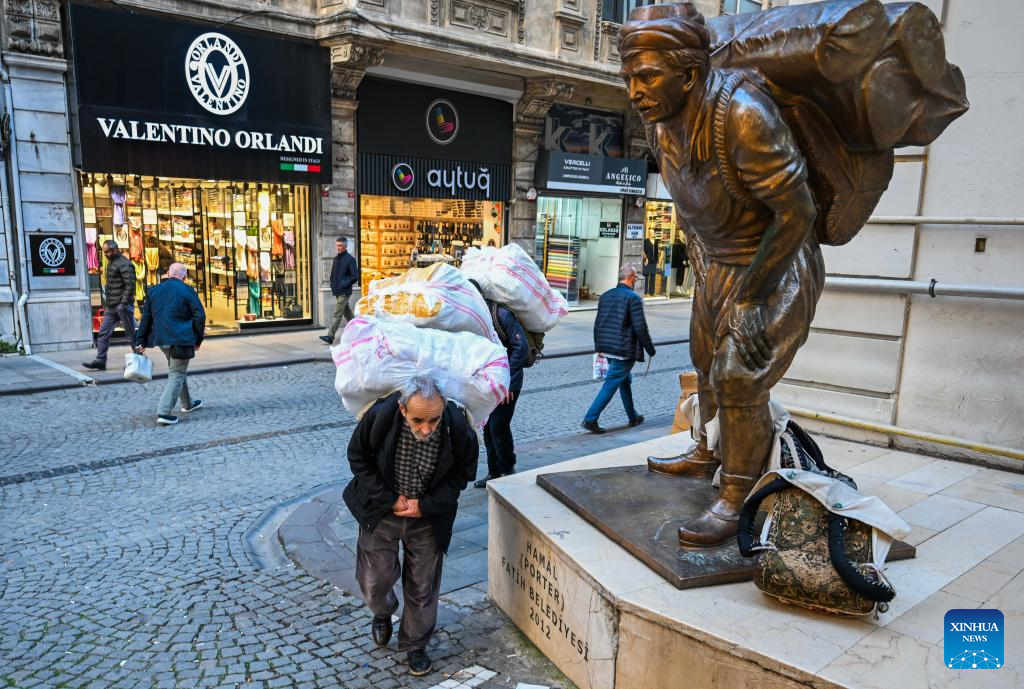
Porters carry goods past a statue of a porter in the Eminonu commercial district of Istanbul, Türkiye, Nov. 6, 2025. In the old quarters of Istanbul, one often encounters a familiar scene: men weaving through narrow streets, carrying heavy loads on their backs or pushing them on handcarts. Known in Turkish as "hamal," these traditional porters represent a profession that dates back to the Ottoman era and endures to this day.
The porters'tools are simple -- a thick shoulder strap or a sturdy handcart. Dozens of kilograms, sometimes even loads exceeding a hundred kilograms, are lifted and transported with steady precision before disappearing into the maze-like streets.
The Grand Bazaar, the Spice Bazaar, and the commercial district of Eminonu are among Istanbul's oldest and busiest trading hubs. Dense shopfronts, heavy foot traffic, and a network of narrow alleys and intersections leave little room for motor vehicles, which have allowed the hamal profession to survive and remain indispensable.
In these labyrinthine streets, they shoulder countless small-scale logistics tasks, quietly sustaining the commercial lifeblood of the city. In Istanbul, being a porter is not only a traditional craft -- it is a foundational force that has supported the city's commercial vitality for centuries. (Xinhua/Liu Lei)


