
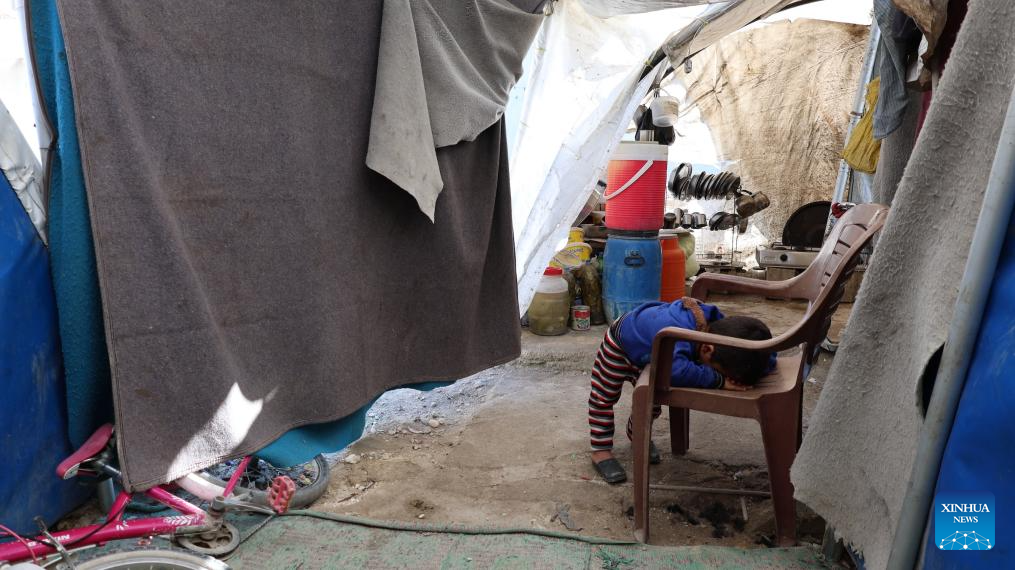
A child leans over on a chair at a camp in Khirbet al-Joz of northwestern Idlib province, Syria, Nov. 20, 2025.(Str/Xinhua)
by Hummam Sheikh Ali
KHIRBET AL-JOZ, Syria, Nov. 29 (Xinhua) -- In the wind-swept camps scattered across the hills of Khirbet al-Joz near the Turkish border, thousands of Syrians who fled their homes during the war continue to live in tents years after the fighting subsided, unable to return to the homes they left behind.
"My home in al-Shughur is destroyed, there is no roof, only the walls. Inside, everything is ruined. I cannot stay there. So here we are, all this time, sitting on a floor of dirt in a tent," said Nadia Kurdi, a woman in her seventies from the town of al-Shughur in the Idlib Governorate of northwestern Syria, who has lived in the camp for five years.
The dilemma is shared by many displaced Syrians, who found that the end of hostilities does not mark the beginning of recovery. Instead, it has ushered in a new kind of stagnation, one defined by destroyed homes, dwindling aid, and an uncertain future.
Inside her thin, weathered tent in Ataa al-Khair, one of 80 camps around Khirbet al-Joz in northwestern Idlib province, her husband, Hassan Qurais, recalled how the flow of humanitarian assistance that once helped sustain the family has sharply diminished since major aid organizations shifted priorities.
"After the war ended, they completely forgot us. We used to receive bread and food baskets, but after the war, they shifted their focus toward the communities where people are beginning to return, rather than the camps," he told Xinhua.
The camps in northwestern Idlib stretch across a rugged hillside overlooking the Turkish border, where clusters of makeshift tents cling to uneven terrain. Many families live in shelters pieced together from worn tarpaulin, plastic sheeting and scraps of timber, offering little protection from the winter winds.
Nearby, the ruins of partially collapsed stone houses serve as stark reminders of homes reduced to hollow shells. Narrow dirt paths weave between the tents, cutting through scattered debris and broken cinderblocks as residents navigate daily life with almost no services or reliable infrastructure.
Inside the tents, conditions are equally dire. One shelter, reinforced with metallic insulation and patched with blankets, serves simultaneously as a living room, kitchen, and storage area. Mattresses lean against the walls, and an old refrigerator tilts in a corner. Outside, residents gather near small fires or salvage materials from the rubble, while children play in dusty alleyways lined with twisted metal, torn fabric and piles of discarded items.
Across the camp, 33-year-old Fadi Mohammed Sbeqji, from Jabal al-Akrad in Latakia province, packed his belongings into a borrowed vehicle as he prepared to leave the settlement where his family had lived for years. He was moving to a small house someone allowed him to use.
"I have been displaced from Latakia for 12 years and I don't own a house. We begged people to lend us a room so we could leave this place. Here, there is no water, no services, nothing at all. The fighting ended, but we haven't felt any difference. The poverty is the same. No work, nothing at all," he said.
Ilham Jilaq, 63, said she had endured winter after winter with almost no support to keep warm or buy essentials.
"We fled because of the war and came here. We want to return to our homes, but all our houses are destroyed. My brothers and I are all old now, and we have no income to live on. Today I had to borrow 20 Turkish liras (47 U.S. cents) just to buy bread and have something to eat," she told Xinhua.
Wiping her tears, she voiced the longing shared by most families here.
"I hope they repair my home so I can return and live as I did before the war. That's the only thing I wish for, and I wish it for everyone like me."
According to Mamdouh al-Hardan, head of the Social Affairs and Labor Office in rural Idlib, around 6,000 families live in 80 camps stretching from Darkoush to Khirbet al-Joz.
"These families lack the most basic necessities," he told Xinhua. "They cannot return to their villages because the infrastructure is destroyed either partially or completely." He acknowledged that his office has no resources to assist them, whether with food or winter support.
The UN refugee agency reports that more than 2.3 million Syrians have returned home since late 2024, but many have found it impossible to resettle due to the destruction. Humanitarian officials say reconstruction -- particularly of housing, schools, and livelihoods -- remains urgent for both returnees and those still displaced.
As another winter arrives, residents of Khirbet al-Joz brace for cold nights in tents that leak during rain and offer little insulation. Caught between the ruins of homes they cannot rebuild and camps they can no longer endure, they wait for a future that remains just out of reach. ■
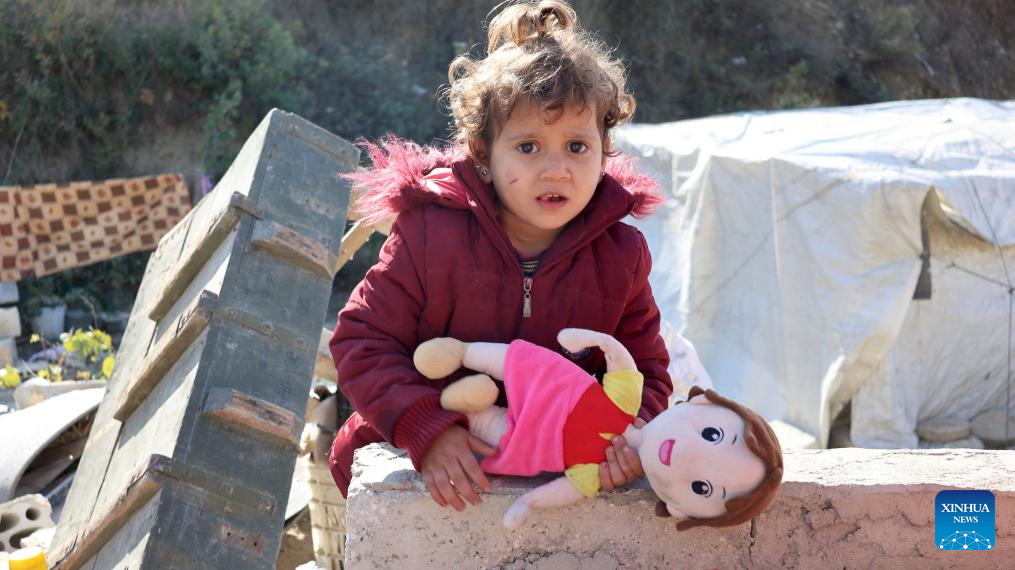
A child holds a doll outside a makeshift tent at a camp in Khirbet al-Joz of northwestern Idlib province, Syria, Nov. 20, 2025. (Str/Xinhua)
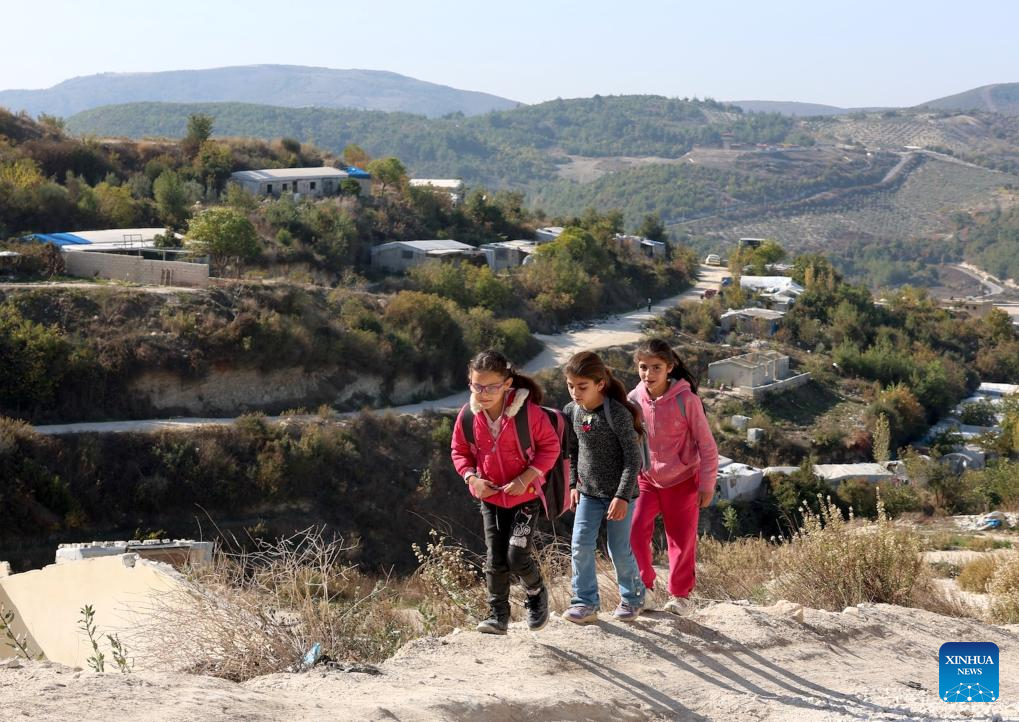
Girls walk up a hillside path overlooking the makeshift displacement camps in Khirbet al-Joz of northwestern Idlib province, Syria, Nov. 20, 2025. (Str/Xinhua)
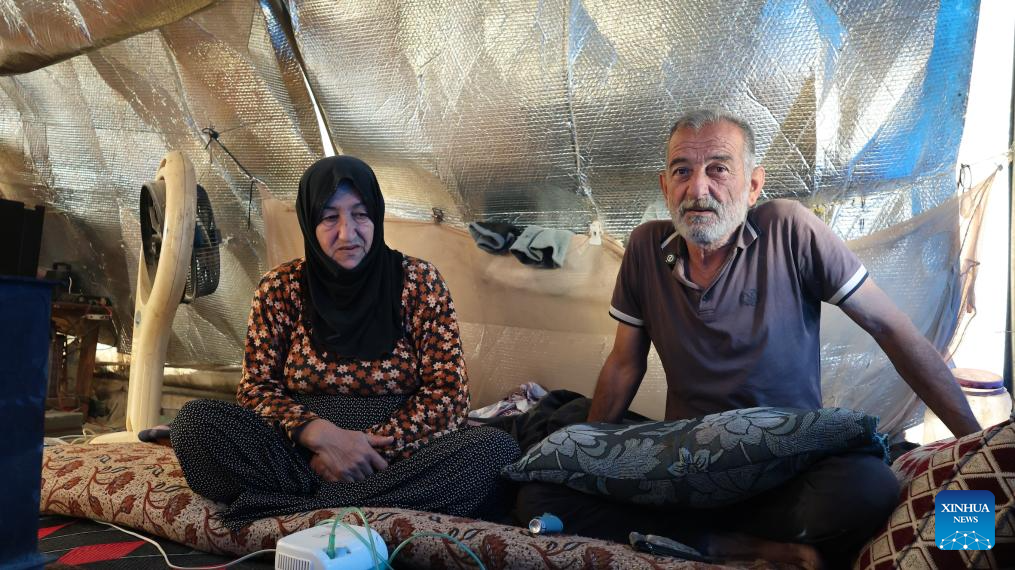
Nadia Kurdi and her husband Hassan Qurais, sit inside their tent at a camp in Khirbet al-Joz of northwestern Idlib province, Syria, Nov. 20, 2025. (Str/Xinhua)
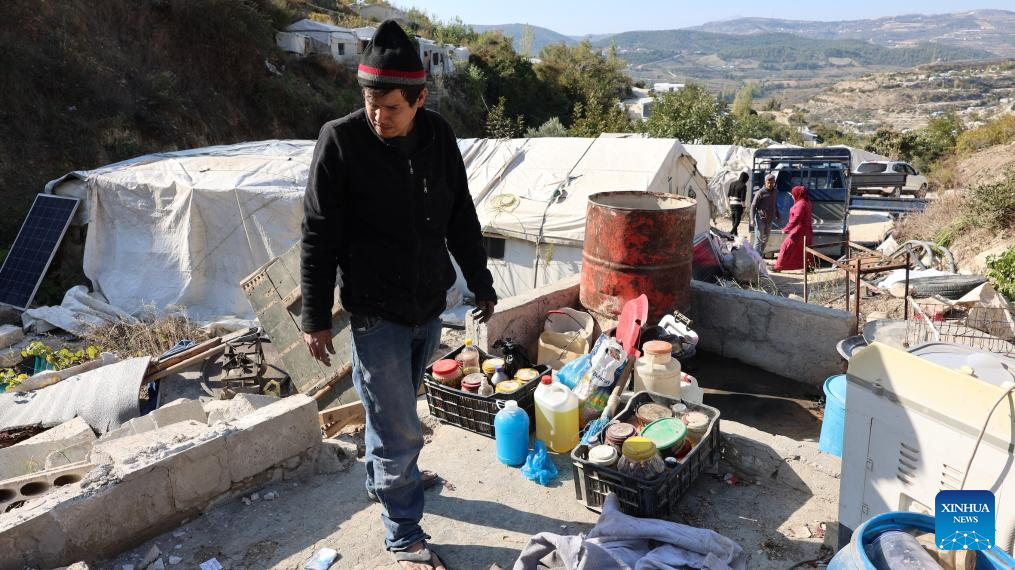
Fadi Mohammed Sbeqji packs his belongings while dismantling his tent at a camp in Khirbet al-Joz of northwestern Idlib province, Syria, Nov. 20, 2025. (Str/Xinhua)
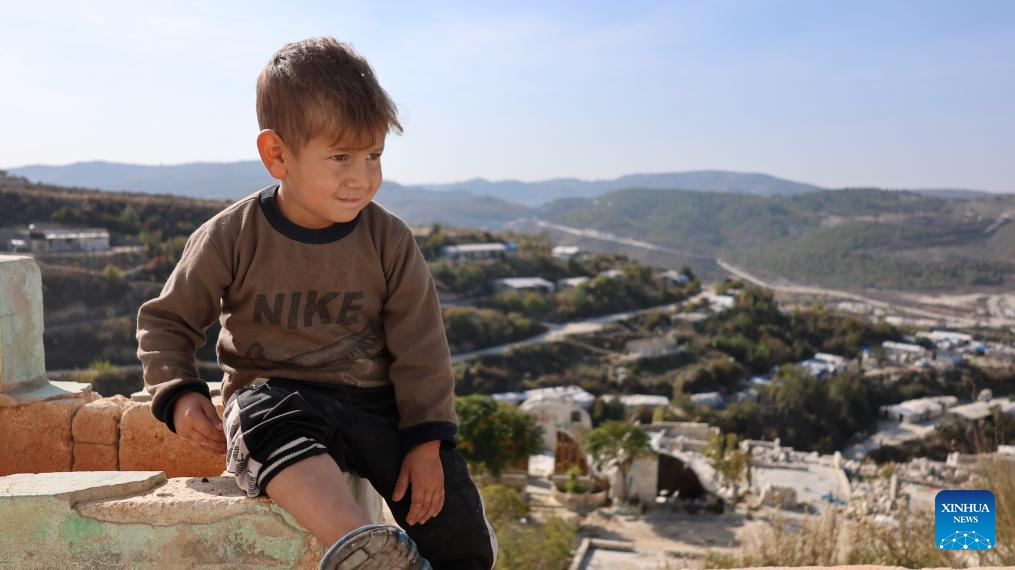
A child sits at a camp in Khirbet al-Joz of northwestern Idlib province, Syria, Nov. 20, 2025. (Str/Xinhua)
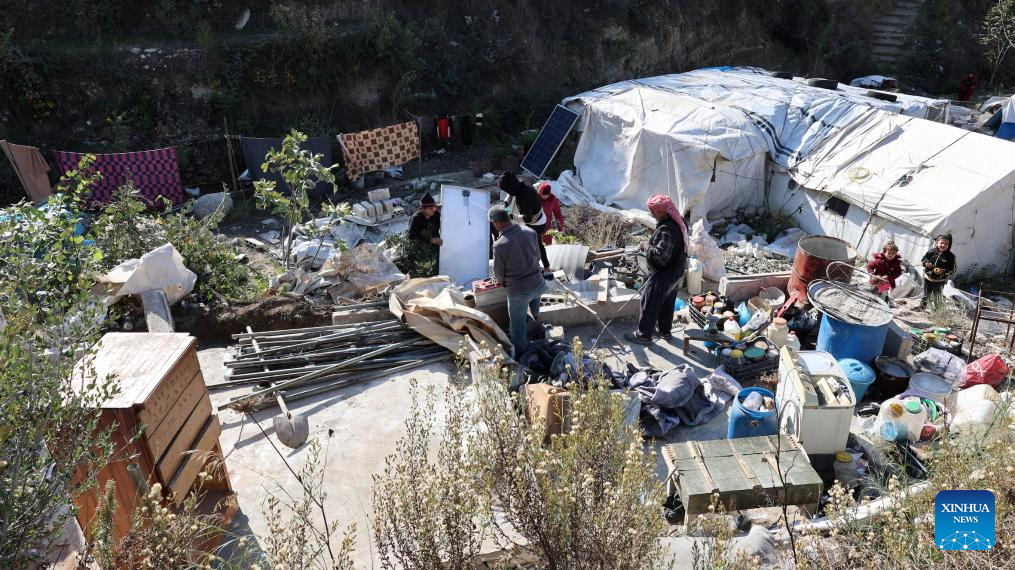
People sort through belongings outside their tents at a camp in Khirbet al-Joz of northwestern Idlib province, Syria, Nov. 20, 2025. (Str/Xinhua)
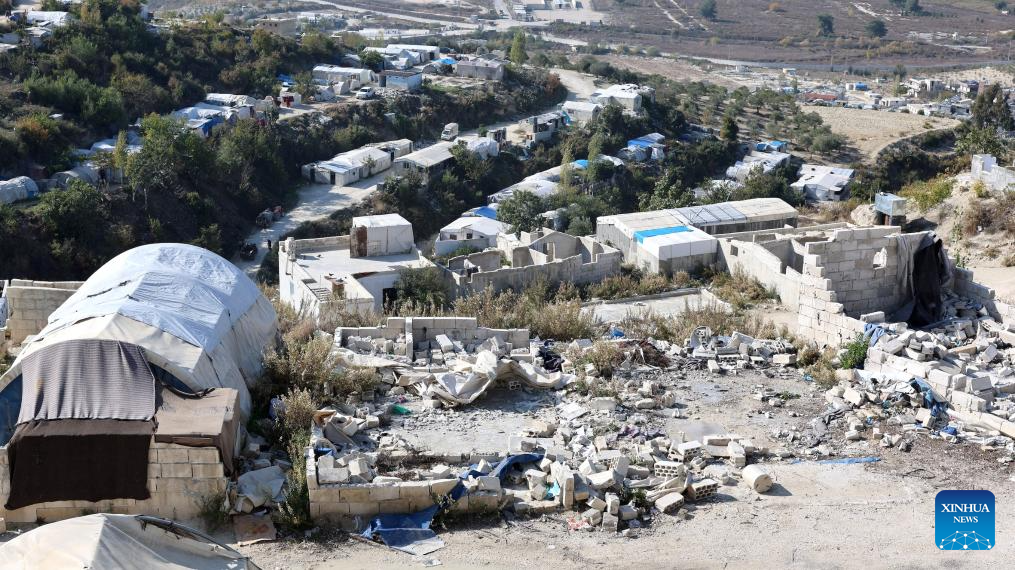
This photo taken on Nov. 20, 2025 shows a view of camps in Khirbet al-Joz of northwestern Idlib province, Syria.(Str/Xinhua)


