
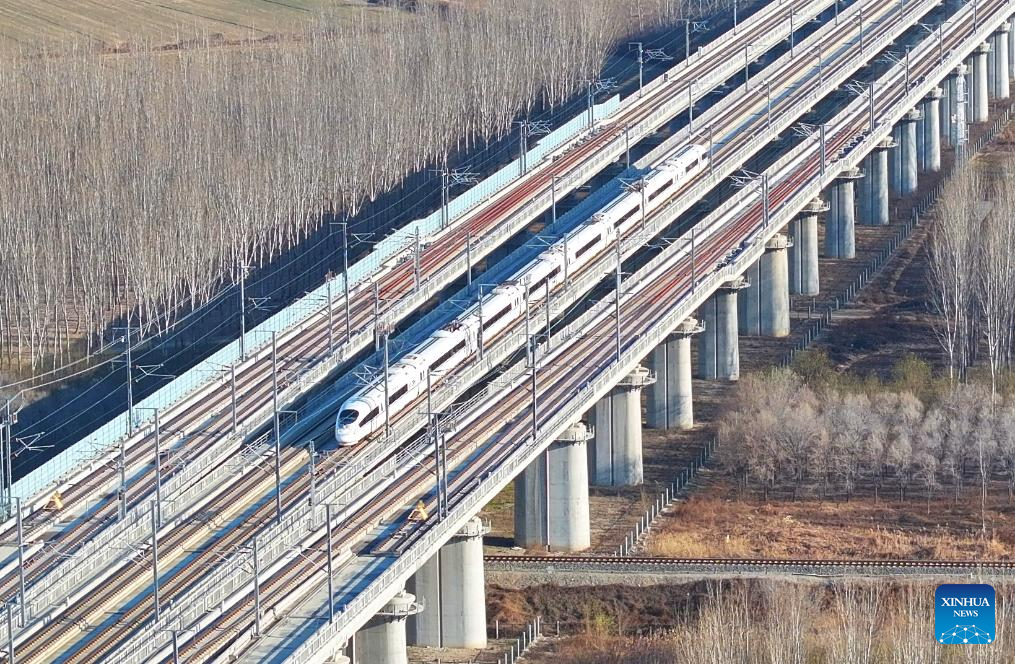
An aerial drone photo take on Nov. 25, 2025 shows a train running on Beijing-Tangshan intercity railway, in Baodi District, north China's Tianjin. Tianjin achieved significant progress in the construction of its high-speed rail intercity network during the 14th Five-Year Plan period (2021-2025). The "30-minute commuting circle" among Beijing, Tianjin and core area of Xiong'an, along with the "1-to-1.5-hour transportation circle" connecting major cities in the Beijing-Tianjin-Hebei region have turned into reality.
The operational mileage of high-speed rails within Tianjin reached 410 kilometers, an increase of 100 kilometers, or 32 percent, compared to the end of the 13th Five-Year Plan period (2016-2020).
The Beijing-Tianjin-Hebei rail transit network will continue to be improved during the 15th Five-Year Plan period (2026-2030), providing key transportation support for the coordinated development of the region. (Xinhua/Li Ran)
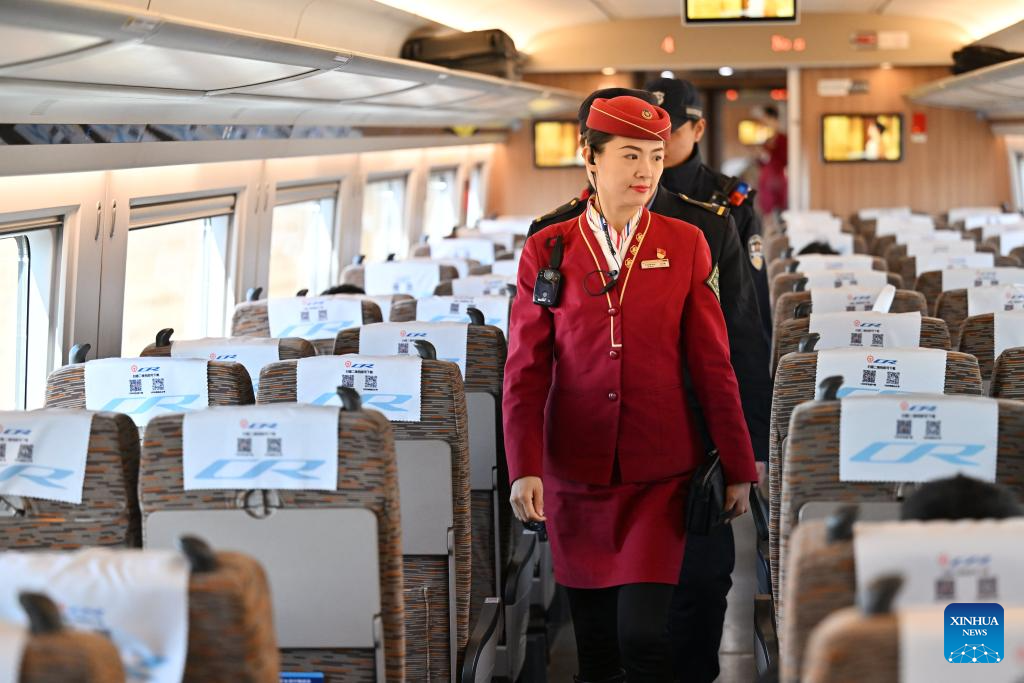
The conductor of a Tianjin-Daxing Airport Intercity Railway train patrols inside a carriage, Nov. 25, 2025. Tianjin achieved significant progress in the construction of its high-speed rail intercity network during the 14th Five-Year Plan period (2021-2025). The "30-minute commuting circle" among Beijing, Tianjin and core area of Xiong'an, along with the "1-to-1.5-hour transportation circle" connecting major cities in the Beijing-Tianjin-Hebei region have turned into reality.
The operational mileage of high-speed rails within Tianjin reached 410 kilometers, an increase of 100 kilometers, or 32 percent, compared to the end of the 13th Five-Year Plan period (2016-2020).
The Beijing-Tianjin-Hebei rail transit network will continue to be improved during the 15th Five-Year Plan period (2026-2030), providing key transportation support for the coordinated development of the region. (Xinhua/Li Ran)
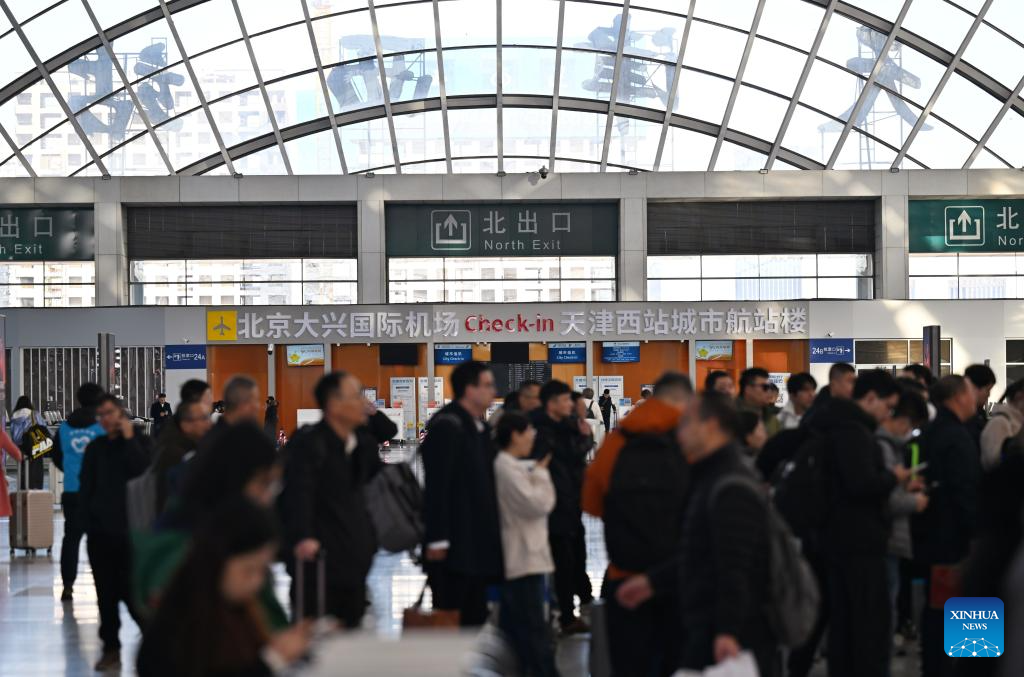
Passengers are pictured at the departure hall at Tianjin West Railway Station in Tianjin, north China, Nov. 25, 2025. Tianjin achieved significant progress in the construction of its high-speed rail intercity network during the 14th Five-Year Plan period (2021-2025). The "30-minute commuting circle" among Beijing, Tianjin and core area of Xiong'an, along with the "1-to-1.5-hour transportation circle" connecting major cities in the Beijing-Tianjin-Hebei region have turned into reality.
The operational mileage of high-speed rails within Tianjin reached 410 kilometers, an increase of 100 kilometers, or 32 percent, compared to the end of the 13th Five-Year Plan period (2016-2020).
The Beijing-Tianjin-Hebei rail transit network will continue to be improved during the 15th Five-Year Plan period (2026-2030), providing key transportation support for the coordinated development of the region. (Xinhua/Li Ran)
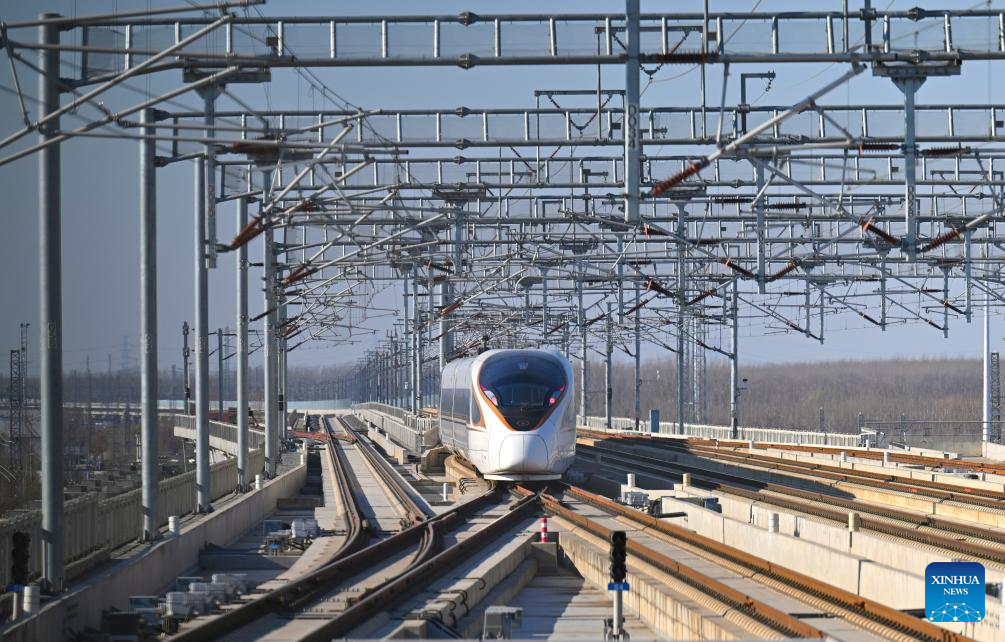
A train departs from Baodi Railway Station in Baodi District, north China's Tianjin, Nov. 25, 2025. Tianjin achieved significant progress in the construction of its high-speed rail intercity network during the 14th Five-Year Plan period (2021-2025). The "30-minute commuting circle" among Beijing, Tianjin and core area of Xiong'an, along with the "1-to-1.5-hour transportation circle" connecting major cities in the Beijing-Tianjin-Hebei region have turned into reality.
The operational mileage of high-speed rails within Tianjin reached 410 kilometers, an increase of 100 kilometers, or 32 percent, compared to the end of the 13th Five-Year Plan period (2016-2020).
The Beijing-Tianjin-Hebei rail transit network will continue to be improved during the 15th Five-Year Plan period (2026-2030), providing key transportation support for the coordinated development of the region. (Xinhua/Li Ran)
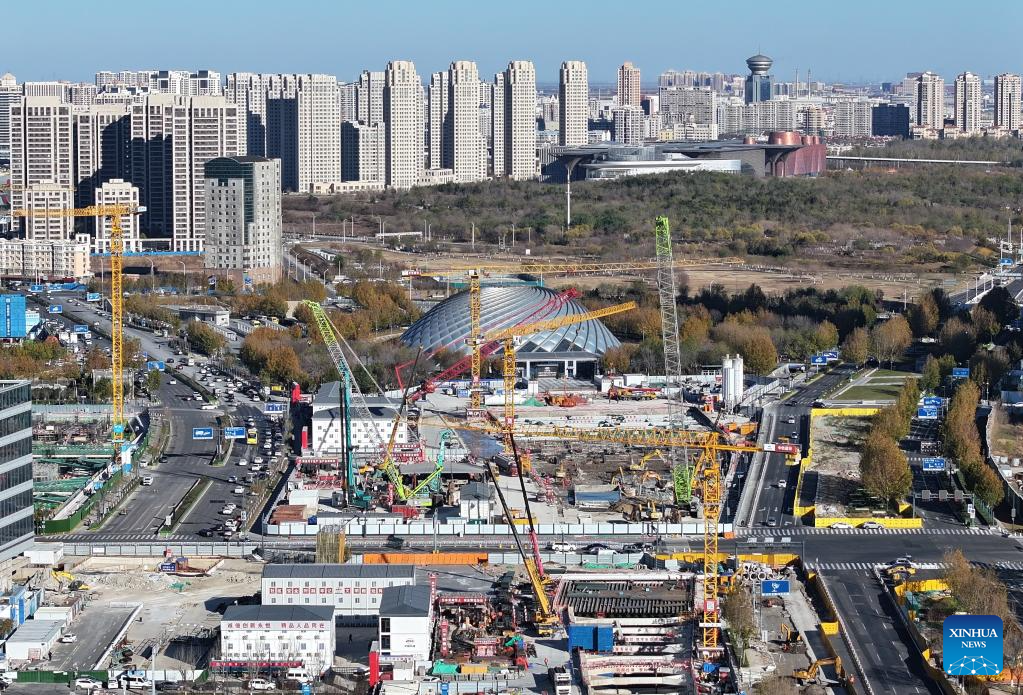
An aerial drone photo take on Nov. 27, 2025 shows the construction site of Tianjin-Weifang High-Speed Railway in Binhai New Area, north China's Tianjin. Tianjin achieved significant progress in the construction of its high-speed rail intercity network during the 14th Five-Year Plan period (2021-2025). The "30-minute commuting circle" among Beijing, Tianjin and core area of Xiong'an, along with the "1-to-1.5-hour transportation circle" connecting major cities in the Beijing-Tianjin-Hebei region have turned into reality.
The operational mileage of high-speed rails within Tianjin reached 410 kilometers, an increase of 100 kilometers, or 32 percent, compared to the end of the 13th Five-Year Plan period (2016-2020).
The Beijing-Tianjin-Hebei rail transit network will continue to be improved during the 15th Five-Year Plan period (2026-2030), providing key transportation support for the coordinated development of the region. (Xinhua/Li Ran)
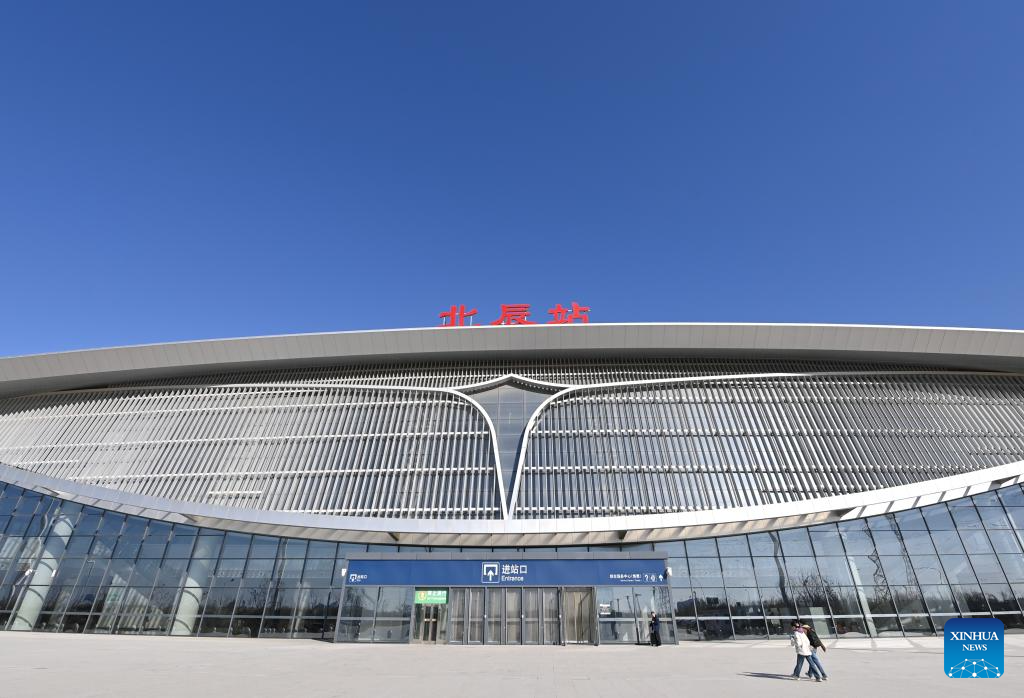
Passengers enters the Beichen Railway Station in Tianjin, north China, Nov. 25, 2025. Tianjin achieved significant progress in the construction of its high-speed rail intercity network during the 14th Five-Year Plan period (2021-2025). The "30-minute commuting circle" among Beijing, Tianjin and core area of Xiong'an, along with the "1-to-1.5-hour transportation circle" connecting major cities in the Beijing-Tianjin-Hebei region have turned into reality.
The operational mileage of high-speed rails within Tianjin reached 410 kilometers, an increase of 100 kilometers, or 32 percent, compared to the end of the 13th Five-Year Plan period (2016-2020).
The Beijing-Tianjin-Hebei rail transit network will continue to be improved during the 15th Five-Year Plan period (2026-2030), providing key transportation support for the coordinated development of the region. (Xinhua/Li Ran)
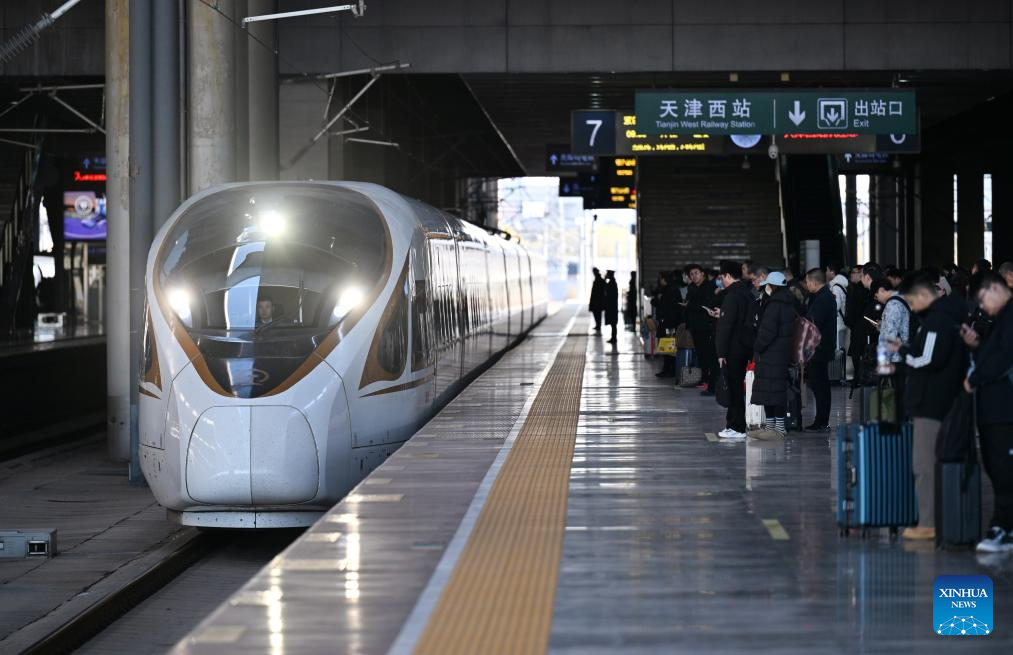
Passengers wait for a Tianjin-Daxing Airport Intercity Railway train at Tianjin West Railway Station in Tianjin, north China, Nov. 25, 2025. Tianjin achieved significant progress in the construction of its high-speed rail intercity network during the 14th Five-Year Plan period (2021-2025). The "30-minute commuting circle" among Beijing, Tianjin and core area of Xiong'an, along with the "1-to-1.5-hour transportation circle" connecting major cities in the Beijing-Tianjin-Hebei region have turned into reality.
The operational mileage of high-speed rails within Tianjin reached 410 kilometers, an increase of 100 kilometers, or 32 percent, compared to the end of the 13th Five-Year Plan period (2016-2020).
The Beijing-Tianjin-Hebei rail transit network will continue to be improved during the 15th Five-Year Plan period (2026-2030), providing key transportation support for the coordinated development of the region. (Xinhua/Li Ran)

Passengers are pictured on a Tianjin-Daxing Airport Intercity Railway train, Nov. 25, 2025. Tianjin achieved significant progress in the construction of its high-speed rail intercity network during the 14th Five-Year Plan period (2021-2025). The "30-minute commuting circle" among Beijing, Tianjin and core area of Xiong'an, along with the "1-to-1.5-hour transportation circle" connecting major cities in the Beijing-Tianjin-Hebei region have turned into reality.
The operational mileage of high-speed rails within Tianjin reached 410 kilometers, an increase of 100 kilometers, or 32 percent, compared to the end of the 13th Five-Year Plan period (2016-2020).
The Beijing-Tianjin-Hebei rail transit network will continue to be improved during the 15th Five-Year Plan period (2026-2030), providing key transportation support for the coordinated development of the region. (Xinhua/Li Ran)
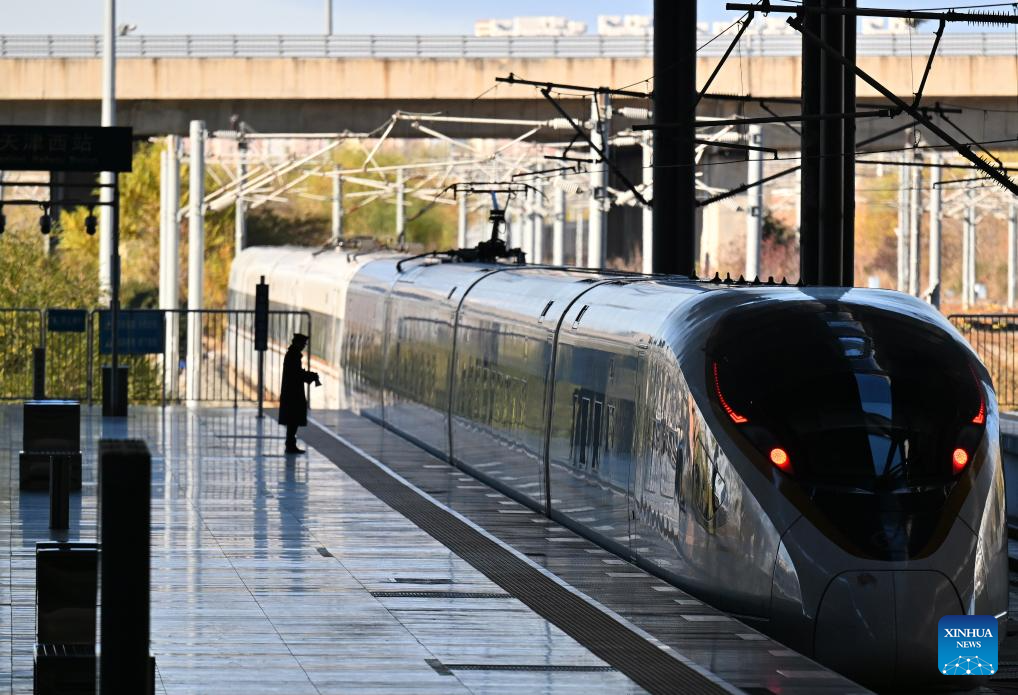
A train departs from Tianjin West Railway Station in Tianjin, north China, Nov. 25, 2025. Tianjin achieved significant progress in the construction of its high-speed rail intercity network during the 14th Five-Year Plan period (2021-2025). The "30-minute commuting circle" among Beijing, Tianjin and core area of Xiong'an, along with the "1-to-1.5-hour transportation circle" connecting major cities in the Beijing-Tianjin-Hebei region have turned into reality.
The operational mileage of high-speed rails within Tianjin reached 410 kilometers, an increase of 100 kilometers, or 32 percent, compared to the end of the 13th Five-Year Plan period (2016-2020).
The Beijing-Tianjin-Hebei rail transit network will continue to be improved during the 15th Five-Year Plan period (2026-2030), providing key transportation support for the coordinated development of the region. (Xinhua/Li Ran)
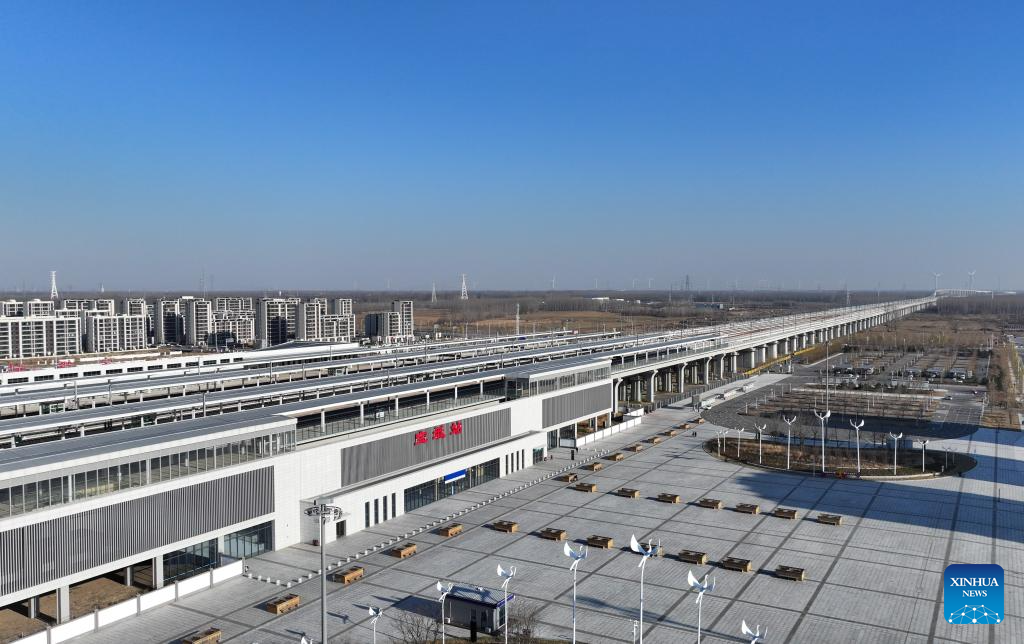
An aerial drone photo take on Nov. 25, 2025 shows a view of Baodi Railway Station in Baodi District, north China's Tianjin. Tianjin achieved significant progress in the construction of its high-speed rail intercity network during the 14th Five-Year Plan period (2021-2025). The "30-minute commuting circle" among Beijing, Tianjin and core area of Xiong'an, along with the "1-to-1.5-hour transportation circle" connecting major cities in the Beijing-Tianjin-Hebei region have turned into reality.
The operational mileage of high-speed rails within Tianjin reached 410 kilometers, an increase of 100 kilometers, or 32 percent, compared to the end of the 13th Five-Year Plan period (2016-2020).
The Beijing-Tianjin-Hebei rail transit network will continue to be improved during the 15th Five-Year Plan period (2026-2030), providing key transportation support for the coordinated development of the region. (Xinhua/Li Ran)
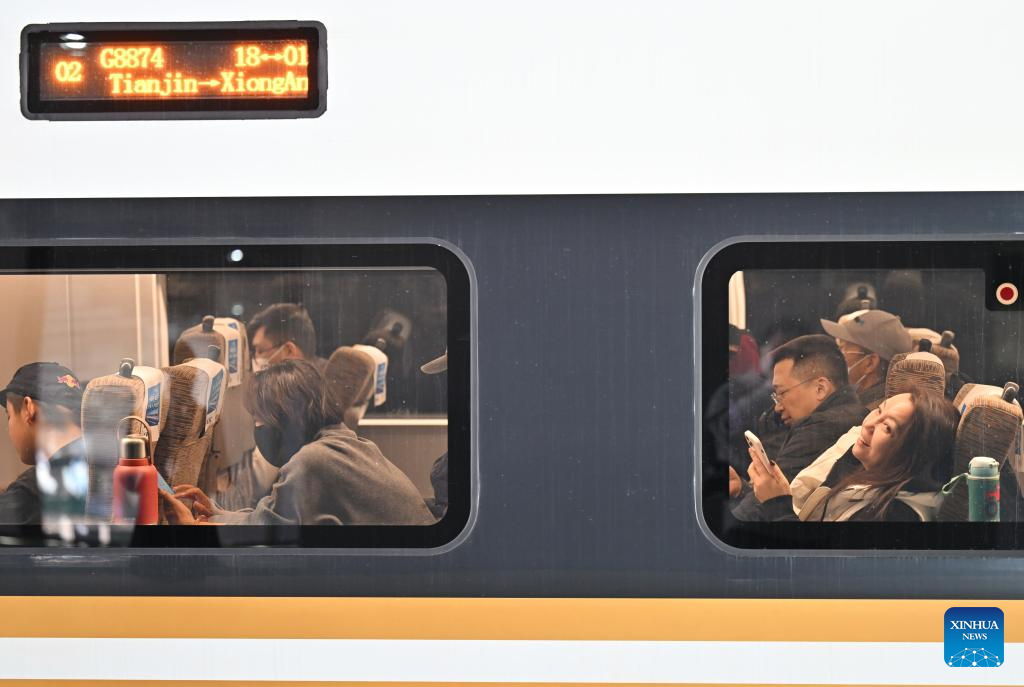
Passengers are pictured on a Tianjin-Daxing Airport Intercity Railway train, Nov. 25, 2025. Tianjin achieved significant progress in the construction of its high-speed rail intercity network during the 14th Five-Year Plan period (2021-2025). The "30-minute commuting circle" among Beijing, Tianjin and core area of Xiong'an, along with the "1-to-1.5-hour transportation circle" connecting major cities in the Beijing-Tianjin-Hebei region have turned into reality.
The operational mileage of high-speed rails within Tianjin reached 410 kilometers, an increase of 100 kilometers, or 32 percent, compared to the end of the 13th Five-Year Plan period (2016-2020).
The Beijing-Tianjin-Hebei rail transit network will continue to be improved during the 15th Five-Year Plan period (2026-2030), providing key transportation support for the coordinated development of the region. (Xinhua/Li Ran)
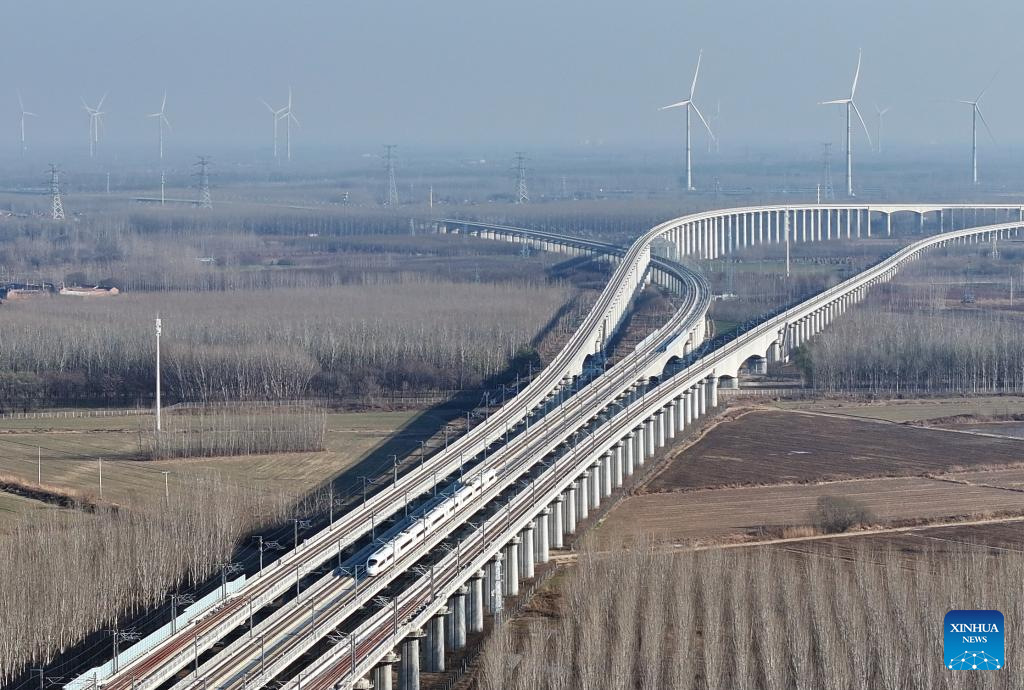
An aerial drone photo take on Nov. 25, 2025 shows a train running on Beijing-Tangshan intercity railway, in Baodi District, north China's Tianjin. Tianjin achieved significant progress in the construction of its high-speed rail intercity network during the 14th Five-Year Plan period (2021-2025). The "30-minute commuting circle" among Beijing, Tianjin and core area of Xiong'an, along with the "1-to-1.5-hour transportation circle" connecting major cities in the Beijing-Tianjin-Hebei region have turned into reality.
The operational mileage of high-speed rails within Tianjin reached 410 kilometers, an increase of 100 kilometers, or 32 percent, compared to the end of the 13th Five-Year Plan period (2016-2020).
The Beijing-Tianjin-Hebei rail transit network will continue to be improved during the 15th Five-Year Plan period (2026-2030), providing key transportation support for the coordinated development of the region. (Xinhua/Li Ran)
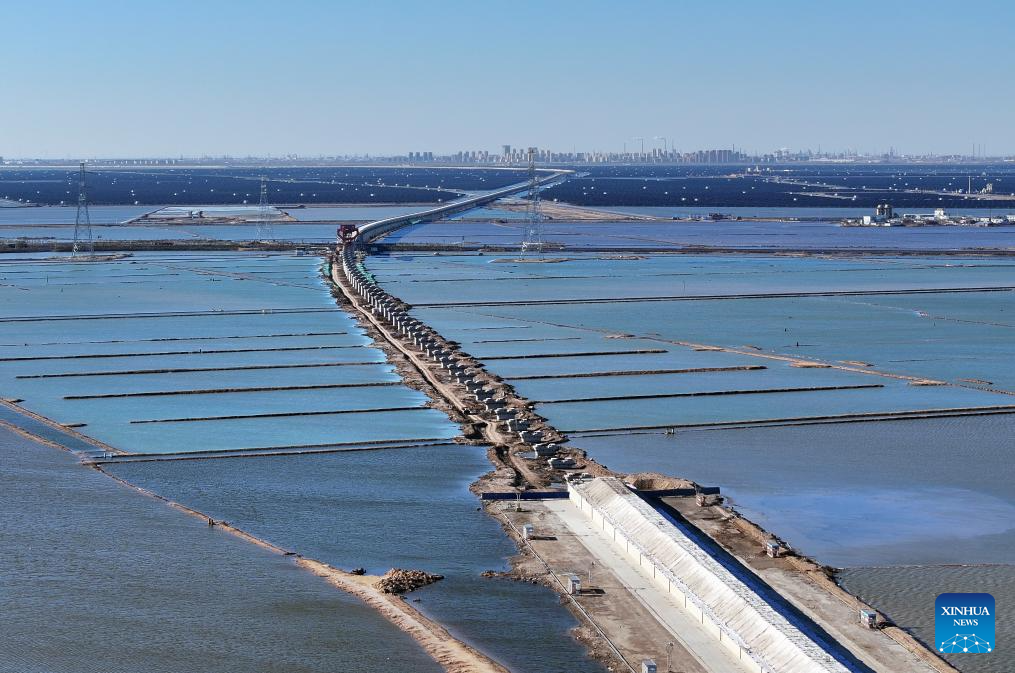
An aerial drone photo take on Nov. 27, 2025 shows the construction site of Tianjin-Weifang High-Speed Railway in Binhai New Area, north China's Tianjin. Tianjin achieved significant progress in the construction of its high-speed rail intercity network during the 14th Five-Year Plan period (2021-2025). The "30-minute commuting circle" among Beijing, Tianjin and core area of Xiong'an, along with the "1-to-1.5-hour transportation circle" connecting major cities in the Beijing-Tianjin-Hebei region have turned into reality.
The operational mileage of high-speed rails within Tianjin reached 410 kilometers, an increase of 100 kilometers, or 32 percent, compared to the end of the 13th Five-Year Plan period (2016-2020).
The Beijing-Tianjin-Hebei rail transit network will continue to be improved during the 15th Five-Year Plan period (2026-2030), providing key transportation support for the coordinated development of the region. (Xinhua/Li Ran)


