
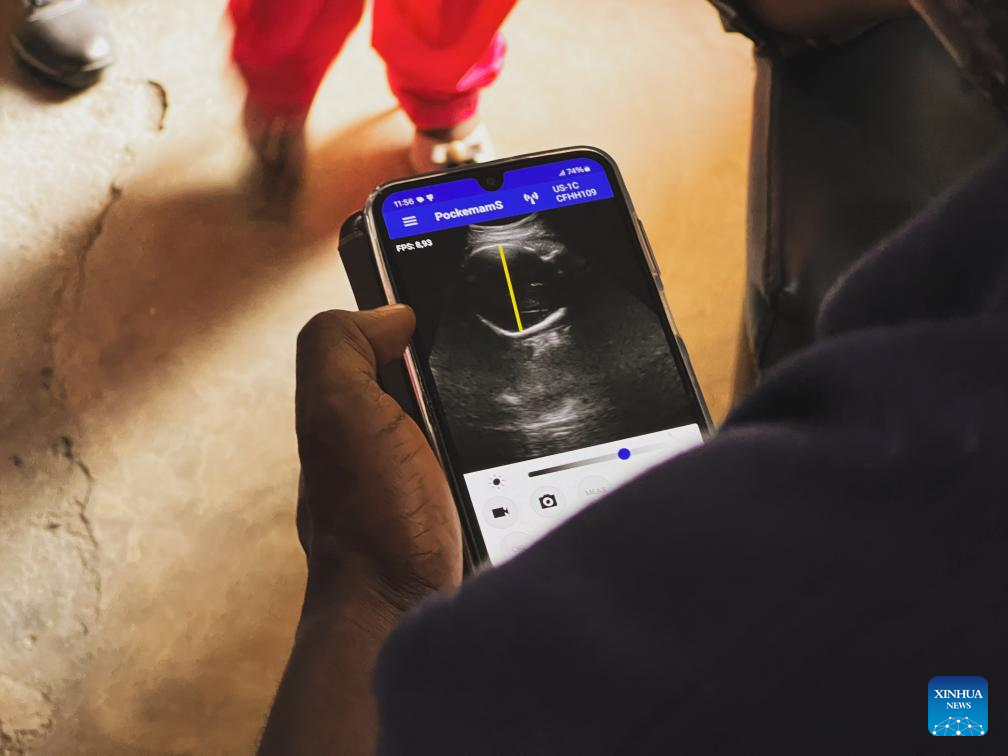
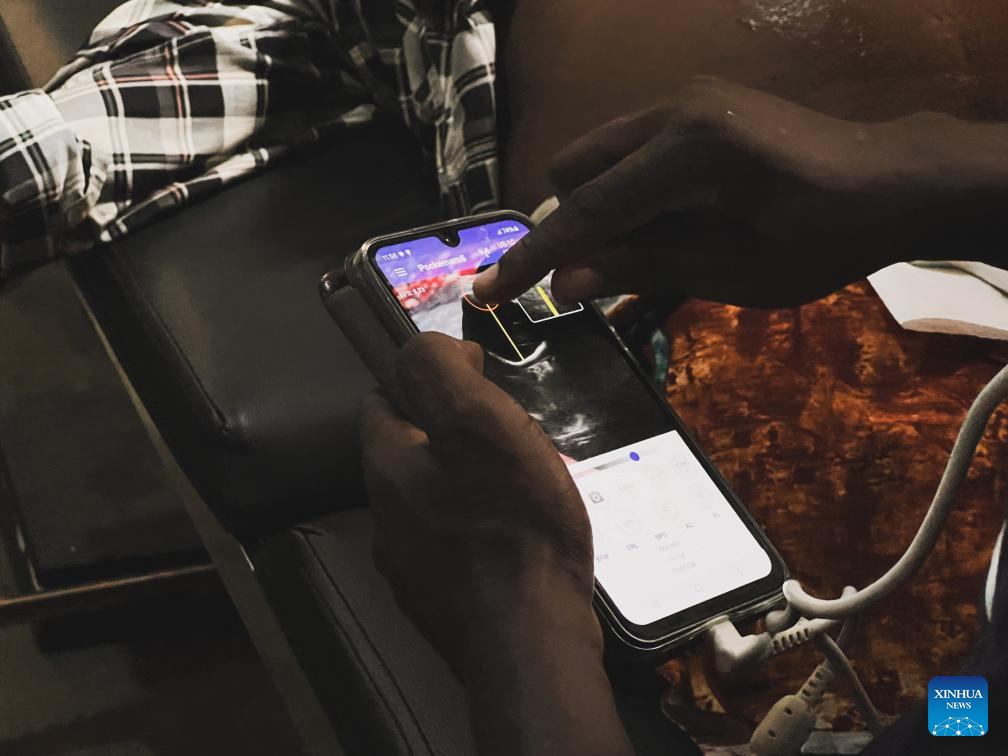
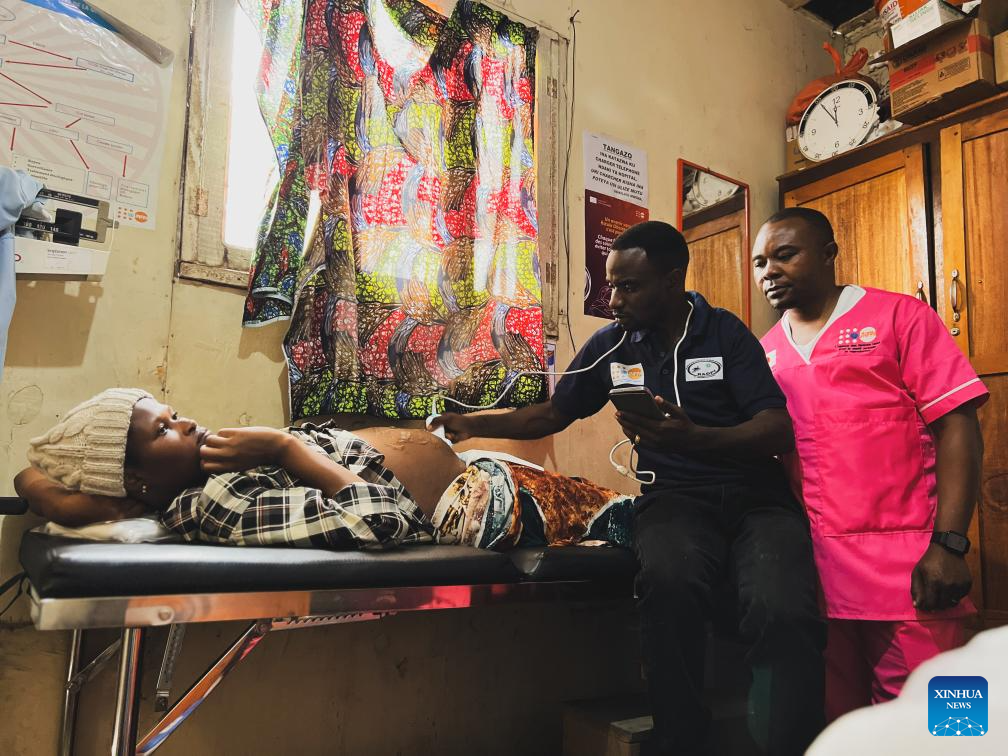
This photo taken with a mobile phone shows a doctor using a mobile ultrasound application to monitor a pregnant patient at a health center in Goma, North Kivu Province, the Democratic Republic of the Congo (DRC), on Nov. 21, 2025. (Str/Xinhua)
GOMA, DR Congo, Nov. 28 (Xinhua) -- Kahambu Grace caught the first glimpse of her unborn baby after eight months of pregnancy.
Grace, in her 30s, recently made her way through crowded streets and military checkpoints in Goma, a city under rebel control in eastern Democratic Republic of the Congo (DRC), to attend her prenatal appointment at the Lubango Health Center.
Her face a mix of fatigue and determination, she joined a slow-moving morning queue, each step bringing her closer to an image of the life growing inside her.
For years, Grace, already a mother of two, could not afford a single prenatal exam. But finally, lying on a narrow examination bed, the mother-to-be watched her baby appear on a smartphone screen, a device that converts ultrasound readings into real-time images, which she had never seen before.
"I didn't know the position of my baby because I didn't have money," she said. "I'm very happy today. It reassures me that my baby is healthy. We don't have enough means for big hospitals."
The mobile ultrasound fits in the palm of a hand. A lightweight probe paired with a smartphone provides diagnostic insight once available only in fully equipped hospitals. In a city where roads are cut off, hospitals are overwhelmed, and referrals are often impossible, the device is finally bringing basic prenatal care within reach.
Grace's relief mirrors the quiet fears faced by thousands of pregnant women trying to navigate motherhood amid insecurity.
Goma, the capital of North Kivu Province and once a bustling urban hub of more than one million people, has been under the control of the March 23 Movement (M23) rebels since late January. Here, pregnancy is not only a personal journey but also a testament to community resilience.
Shortages persist, displacement endures, and insecurity shadows daily life. Temporary clinics established in displacement sites and overburdened health centers have become vital lifelines for women and girls who might otherwise face pregnancy without any medical support.
Amid the fragile reality, clinics remain open and health workers continue to report for duty, while women keep walking to seek care.
Inside Lubango Health Center, midwife Jean Kasereka moved between patients with practiced calm. He recalled a time when most women arrived in labor having undergone no exam -- not from neglect, but because conflict, distance, and lack of resources stood in their way.
"We have suffered a lot," he said. "Many mothers came to give birth without any exam."
For frontline health workers, each avoided complication is a small victory in a setting where delays can be fatal.
"Now, it (the mobile ultrasound) is a blessing. Vulnerable women are happy, and it helps us follow their pregnancies closely and prevent danger," said Kasereka.
Since 2022, the United Nations Population Fund (UNFPA) has been rolling out the initiative across Goma and the surrounding areas of North Kivu, where the M23 rebels control large swathes of territory amid intensified fighting with the DRC military.
Solange Ngolosok, a UNFPA staff member in the region, said the initiative was designed to provide practical ways to reach women despite frequent movement and insecurity.
"The first deployments (of the mobile ultrasound) were in conflict-affected areas, Goma, Karisimbi, and the Kirotshe health zone, including fixed clinics UNFPA established in displacement sites to respond to the needs of vulnerable women and girls," Ngolosok said.
The scale of need is staggering. According to the United Nations, more than 2.4 million people have been displaced since January 2025, bringing the tally of internally displaced persons to nearly 6 million, including a significant number of pregnant women.
For Grace and countless others, the simple act of seeing their unborn child is more than a medical check -- it is a moment of hope, a reminder that life persists and resilience endures, even in the shadow of conflict. ■
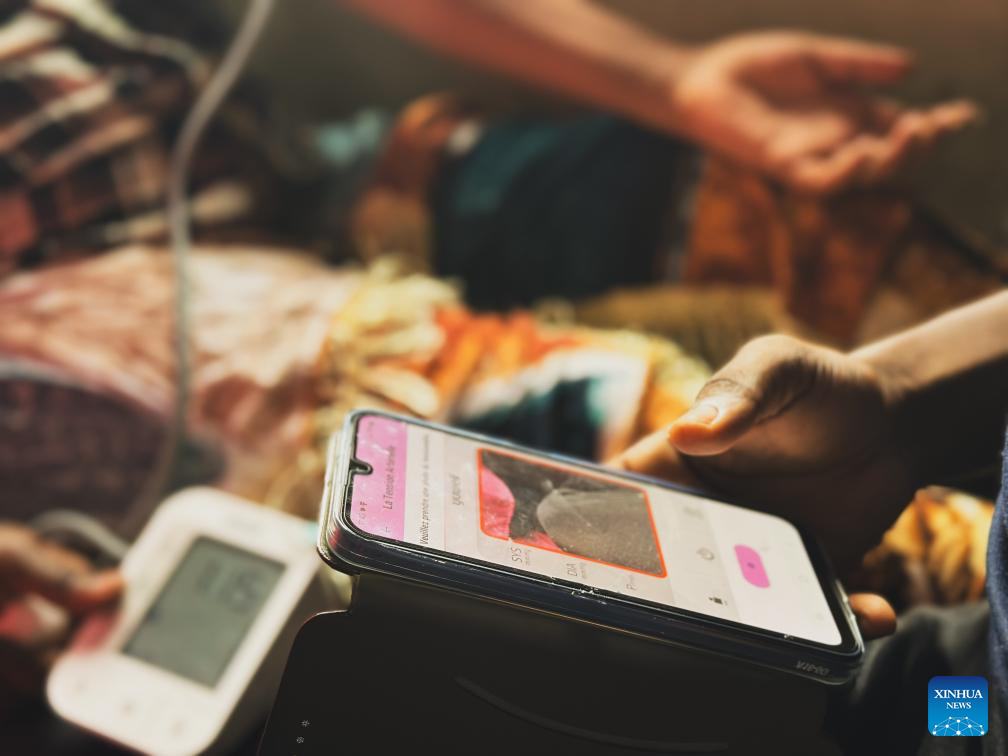
This photo taken with a mobile phone shows a doctor using a mobile ultrasound application to monitor a pregnant patient at a health center in Goma, North Kivu Province, the Democratic Republic of the Congo (DRC), on Nov. 21, 2025. (Str/Xinhua)
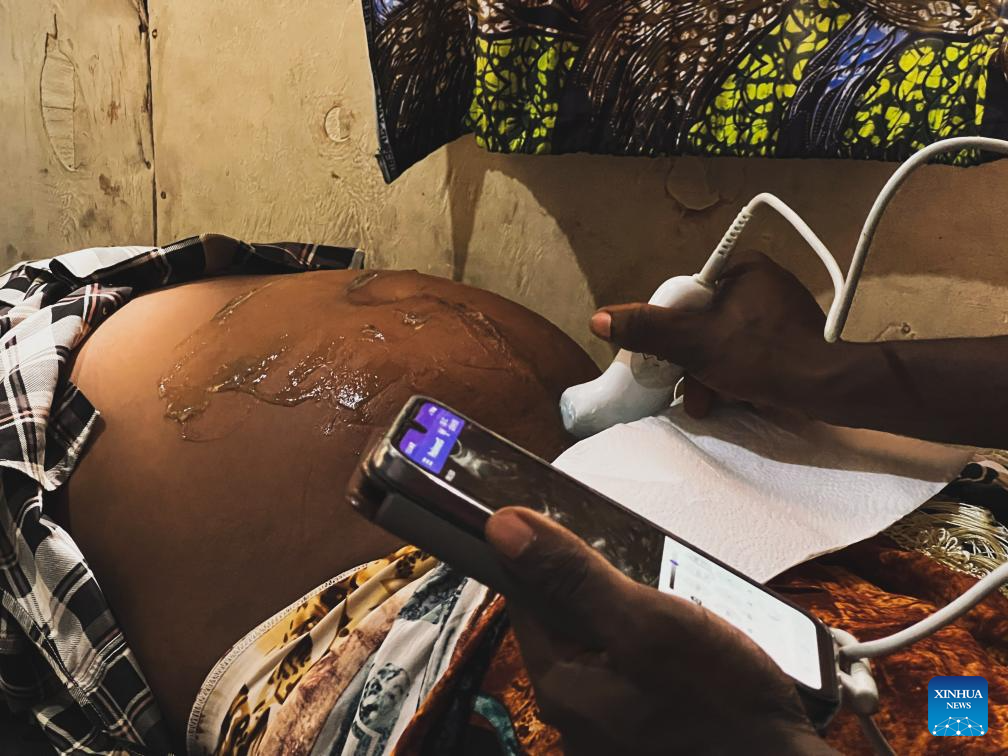
This photo taken with a mobile phone shows a doctor using a mobile ultrasound application to monitor a pregnant patient at a health center in Goma, North Kivu Province, the Democratic Republic of the Congo (DRC), on Nov. 21, 2025. (Str/Xinhua)
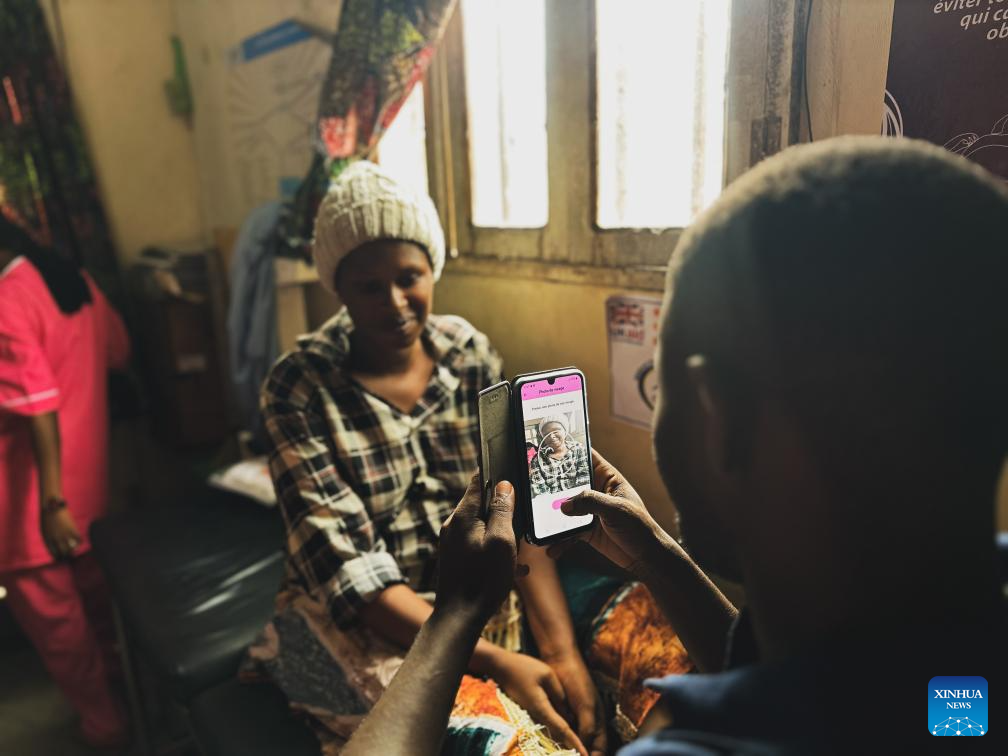
This photo taken with a mobile phone shows a doctor using a mobile ultrasound application to monitor a pregnant patient at a health center in Goma, North Kivu Province, the Democratic Republic of the Congo (DRC), on Nov. 21, 2025. (Str/Xinhua)
This photo taken with a mobile phone shows a doctor using a mobile ultrasound application to monitor a pregnant patient at a health center in Goma, North Kivu Province, the Democratic Republic of the Congo (DRC), on Nov. 21, 2025. (Str/Xinhua)
This photo taken with a mobile phone shows a doctor using a mobile ultrasound application to monitor a pregnant patient at a health center in Goma, North Kivu Province, the Democratic Republic of the Congo (DRC), on Nov. 21, 2025. (Str/Xinhua)


