
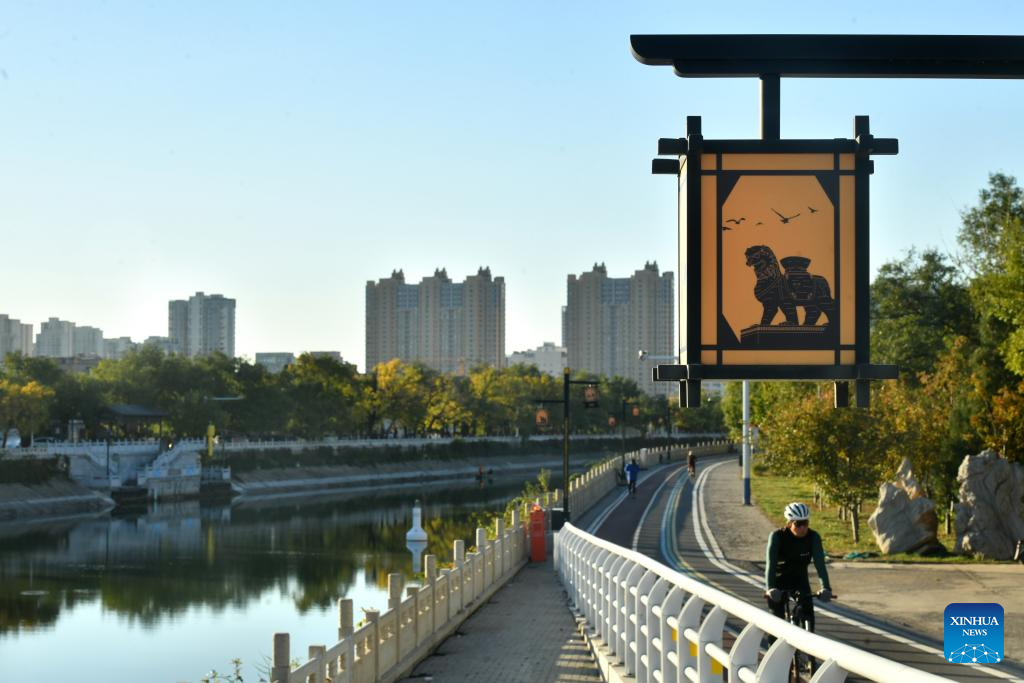
A man rides on an embankment road along the Grand Canal in Yunhe District of Cangzhou, north China's Hebei Province, Oct. 30, 2025.
The Grand Canal, which connects Beijing in northern China and the eastern Chinese city of Hangzhou, has a history of more than 2,500 years and is known as the world's longest artificial waterway. An embankment road has been built along the Cangzhou section of the canal, extending 308 kilometers and connecting over 300 villages across the city. The road links natural landscapes, historical and cultural sites, and human landscapes along its line. In addition, more than ten themed parks and relevant supporting facilities have been accordingly constructed along the line, forming a multi-functional space that integrates tourism, leisure, fitness, and recreation activities. The road has not only benefited the locals but also promoted regional connectivity and injected vitality into economic and social development. (Xinhua/Mu Yu)
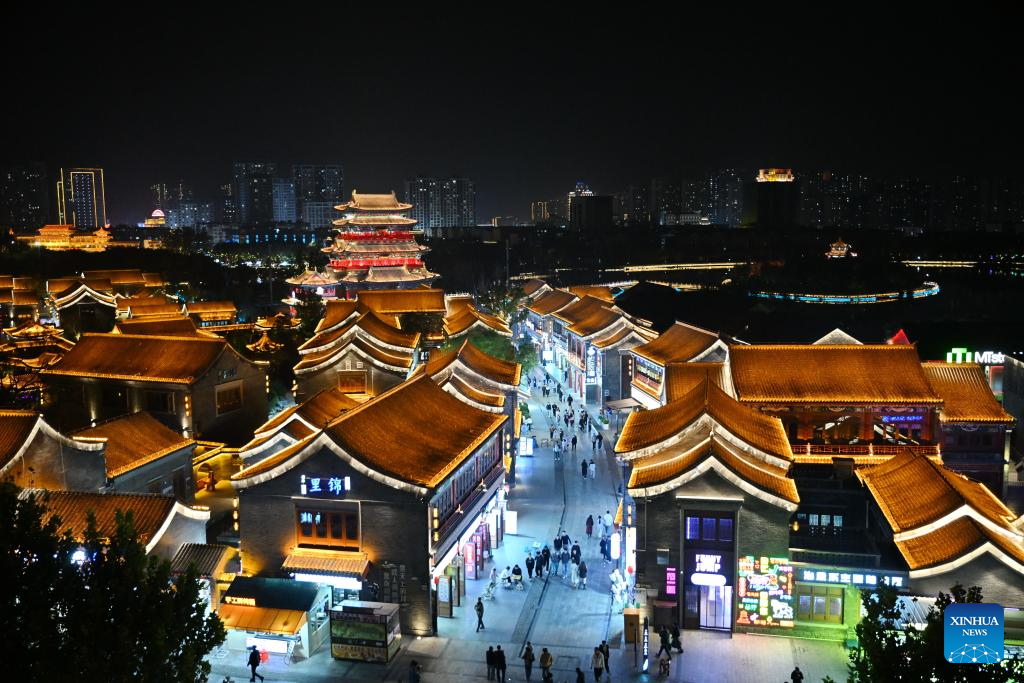
People visit a cultural block along the Grand Canal in Yunhe District of Cangzhou, north China's Hebei Province, Oct. 29, 2025.
The Grand Canal, which connects Beijing in northern China and the eastern Chinese city of Hangzhou, has a history of more than 2,500 years and is known as the world's longest artificial waterway. An embankment road has been built along the Cangzhou section of the canal, extending 308 kilometers and connecting over 300 villages across the city. The road links natural landscapes, historical and cultural sites, and human landscapes along its line. In addition, more than ten themed parks and relevant supporting facilities have been accordingly constructed along the line, forming a multi-functional space that integrates tourism, leisure, fitness, and recreation activities. The road has not only benefited the locals but also promoted regional connectivity and injected vitality into economic and social development. (Xinhua/Mu Yu)
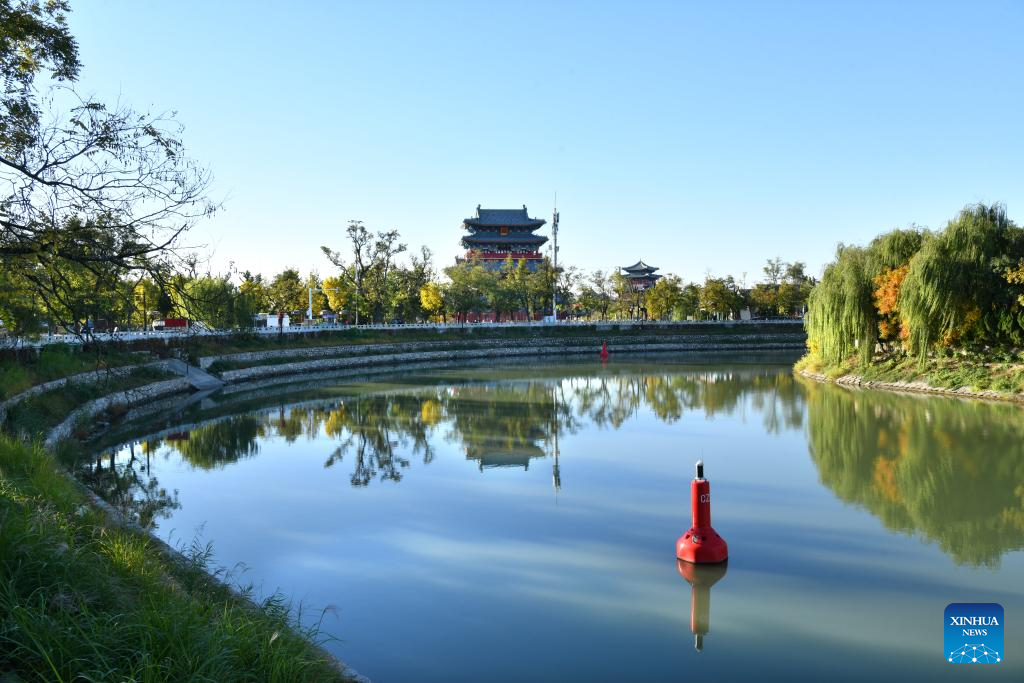
This photo taken on Oct. 30, 2025 shows the scenery of the Grand Canal and an embankment road in Yunhe District of Cangzhou, north China's Hebei Province.
The Grand Canal, which connects Beijing in northern China and the eastern Chinese city of Hangzhou, has a history of more than 2,500 years and is known as the world's longest artificial waterway. An embankment road has been built along the Cangzhou section of the canal, extending 308 kilometers and connecting over 300 villages across the city. The road links natural landscapes, historical and cultural sites, and human landscapes along its line. In addition, more than ten themed parks and relevant supporting facilities have been accordingly constructed along the line, forming a multi-functional space that integrates tourism, leisure, fitness, and recreation activities. The road has not only benefited the locals but also promoted regional connectivity and injected vitality into economic and social development. (Xinhua/Mu Yu)
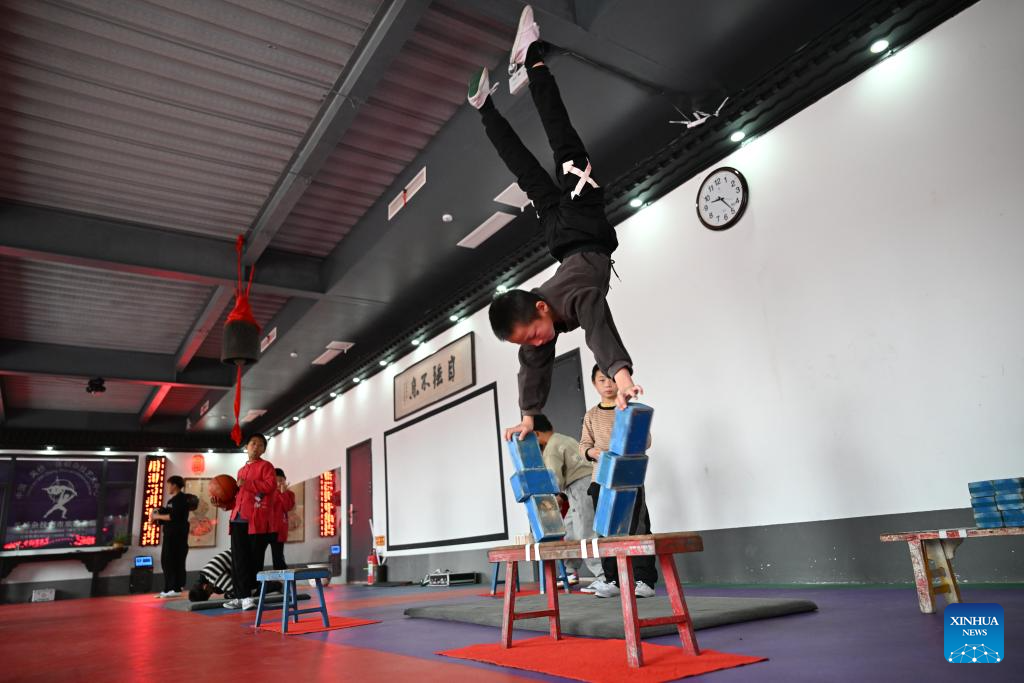
A student practices acrobatic skills at an acrobatic courtyard, which is located along an embankment road of the Grand Canal, in Wuqiao County of Cangzhou, north China's Hebei Province, Oct. 28, 2025.
The Grand Canal, which connects Beijing in northern China and the eastern Chinese city of Hangzhou, has a history of more than 2,500 years and is known as the world's longest artificial waterway. An embankment road has been built along the Cangzhou section of the canal, extending 308 kilometers and connecting over 300 villages across the city. The road links natural landscapes, historical and cultural sites, and human landscapes along its line. In addition, more than ten themed parks and relevant supporting facilities have been accordingly constructed along the line, forming a multi-functional space that integrates tourism, leisure, fitness, and recreation activities. The road has not only benefited the locals but also promoted regional connectivity and injected vitality into economic and social development. (Xinhua/Mu Yu)

This photo taken on Oct. 29, 2025 shows the night scenery of the Grand Canal in Yunhe District of Cangzhou, north China's Hebei Province.
The Grand Canal, which connects Beijing in northern China and the eastern Chinese city of Hangzhou, has a history of more than 2,500 years and is known as the world's longest artificial waterway. An embankment road has been built along the Cangzhou section of the canal, extending 308 kilometers and connecting over 300 villages across the city. The road links natural landscapes, historical and cultural sites, and human landscapes along its line. In addition, more than ten themed parks and relevant supporting facilities have been accordingly constructed along the line, forming a multi-functional space that integrates tourism, leisure, fitness, and recreation activities. The road has not only benefited the locals but also promoted regional connectivity and injected vitality into economic and social development. (Xinhua/Mu Yu)
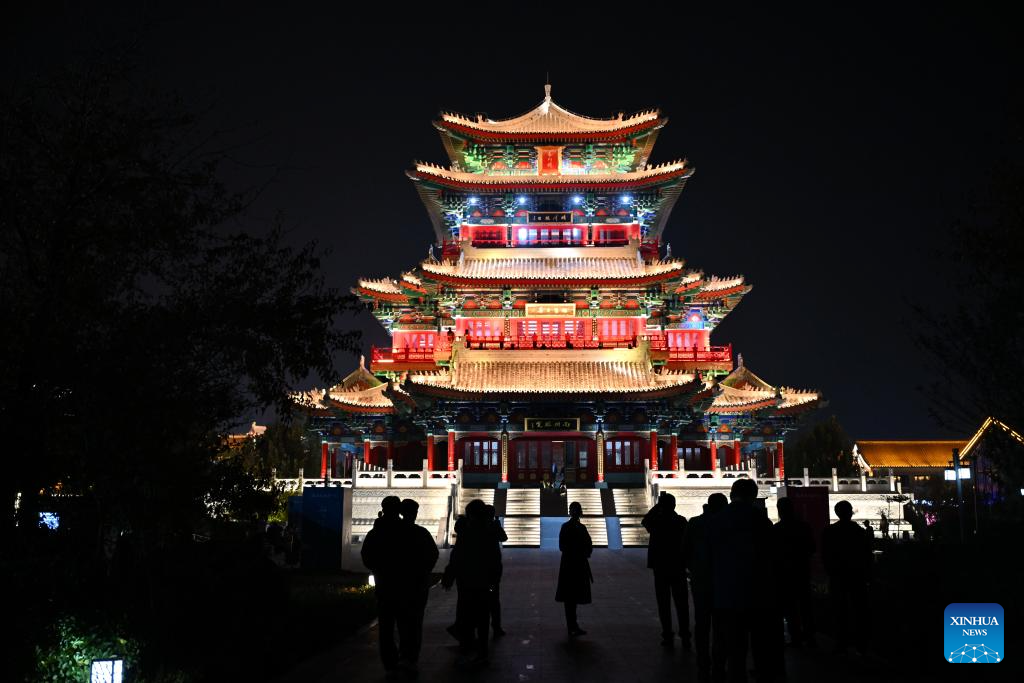
People visit the Nanchuan Tower along the Grand Canal in Yunhe District of Cangzhou, north China's Hebei Province, Oct. 29, 2025.
The Grand Canal, which connects Beijing in northern China and the eastern Chinese city of Hangzhou, has a history of more than 2,500 years and is known as the world's longest artificial waterway. An embankment road has been built along the Cangzhou section of the canal, extending 308 kilometers and connecting over 300 villages across the city. The road links natural landscapes, historical and cultural sites, and human landscapes along its line. In addition, more than ten themed parks and relevant supporting facilities have been accordingly constructed along the line, forming a multi-functional space that integrates tourism, leisure, fitness, and recreation activities. The road has not only benefited the locals but also promoted regional connectivity and injected vitality into economic and social development. (Xinhua/Mu Yu)
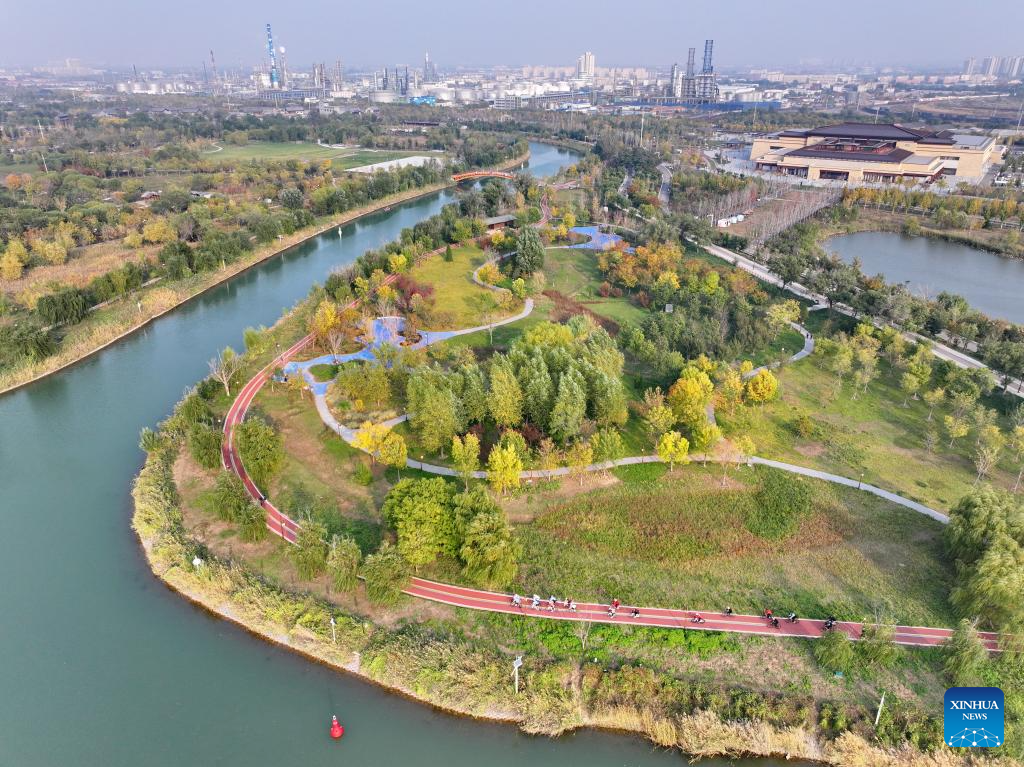
An aerial drone photo taken on Oct. 29, 2025 shows the scenery of an embankment road along the Grand Canal in Yunhe District of Cangzhou, north China's Hebei Province.
The Grand Canal, which connects Beijing in northern China and the eastern Chinese city of Hangzhou, has a history of more than 2,500 years and is known as the world's longest artificial waterway. An embankment road has been built along the Cangzhou section of the canal, extending 308 kilometers and connecting over 300 villages across the city. The road links natural landscapes, historical and cultural sites, and human landscapes along its line. In addition, more than ten themed parks and relevant supporting facilities have been accordingly constructed along the line, forming a multi-functional space that integrates tourism, leisure, fitness, and recreation activities. The road has not only benefited the locals but also promoted regional connectivity and injected vitality into economic and social development. (Xinhua/Mu Yu)
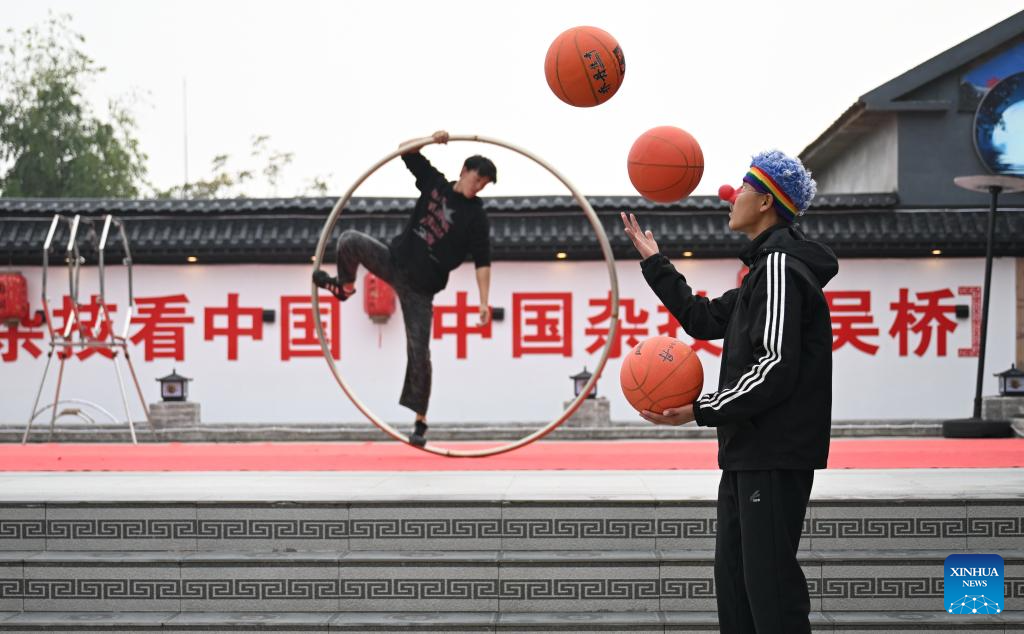
Students practice acrobatic skills at an acrobatic courtyard, which is located along an embankment road of the Grand Canal, in Wuqiao County of Cangzhou, north China's Hebei Province, Oct. 28, 2025.
The Grand Canal, which connects Beijing in northern China and the eastern Chinese city of Hangzhou, has a history of more than 2,500 years and is known as the world's longest artificial waterway. An embankment road has been built along the Cangzhou section of the canal, extending 308 kilometers and connecting over 300 villages across the city. The road links natural landscapes, historical and cultural sites, and human landscapes along its line. In addition, more than ten themed parks and relevant supporting facilities have been accordingly constructed along the line, forming a multi-functional space that integrates tourism, leisure, fitness, and recreation activities. The road has not only benefited the locals but also promoted regional connectivity and injected vitality into economic and social development. (Xinhua/Mu Yu)
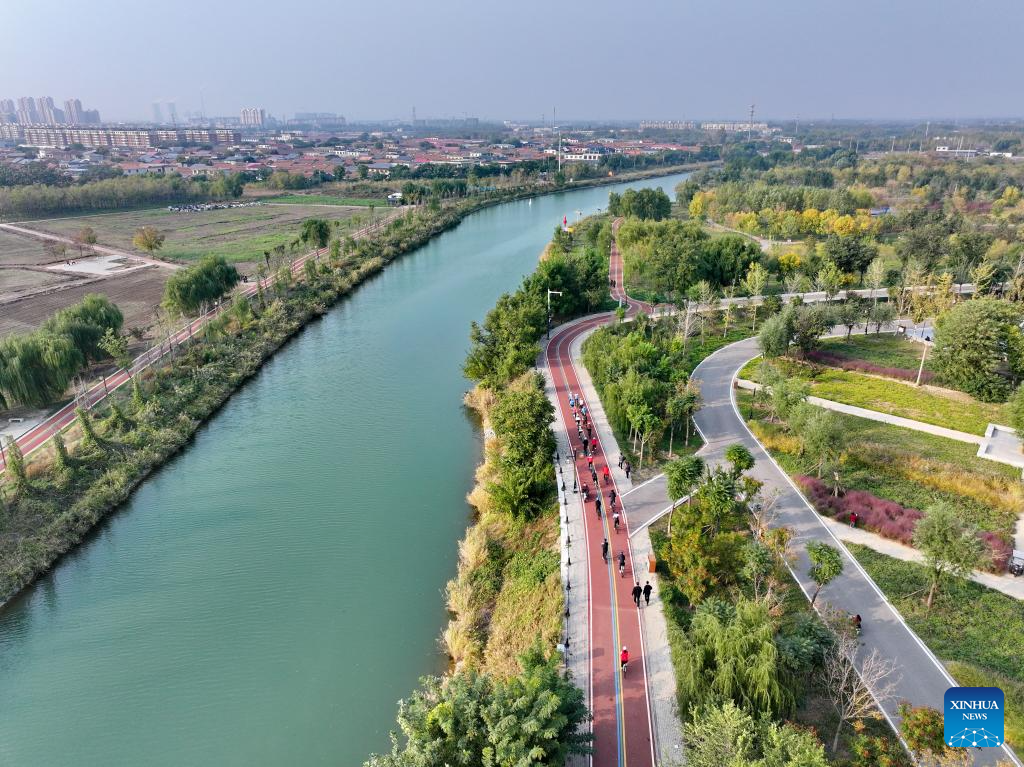
An aerial drone photo taken on Oct. 29, 2025 shows people riding on an embankment road along the Grand Canal in Yunhe District of Cangzhou, north China's Hebei Province.
The Grand Canal, which connects Beijing in northern China and the eastern Chinese city of Hangzhou, has a history of more than 2,500 years and is known as the world's longest artificial waterway. An embankment road has been built along the Cangzhou section of the canal, extending 308 kilometers and connecting over 300 villages across the city. The road links natural landscapes, historical and cultural sites, and human landscapes along its line. In addition, more than ten themed parks and relevant supporting facilities have been accordingly constructed along the line, forming a multi-functional space that integrates tourism, leisure, fitness, and recreation activities. The road has not only benefited the locals but also promoted regional connectivity and injected vitality into economic and social development. (Xinhua/Mu Yu)
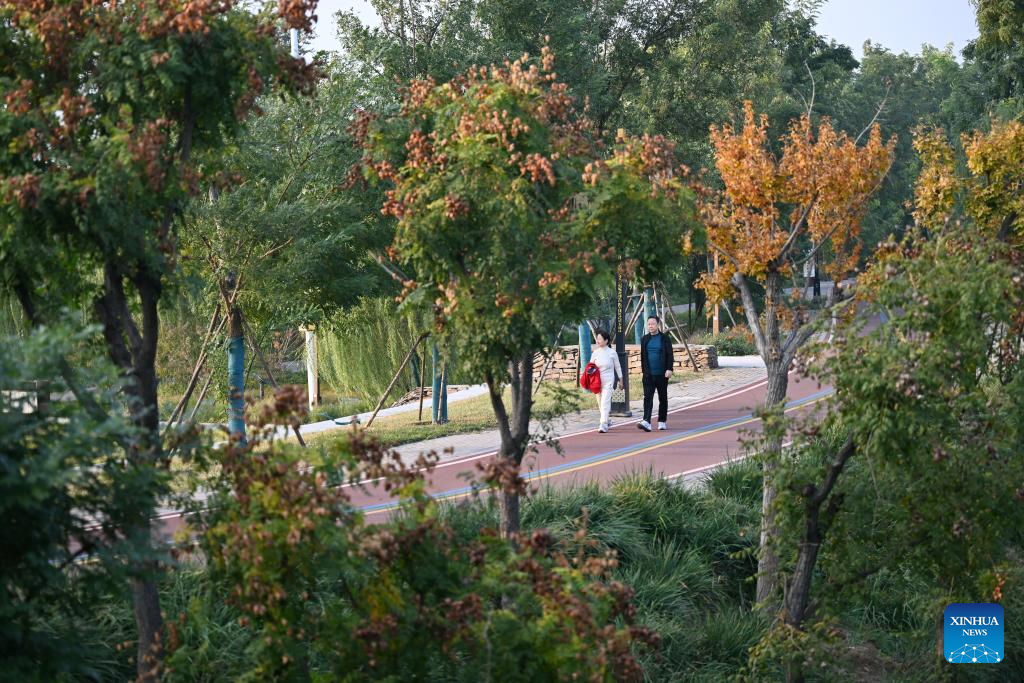
People take a walk on an embankment road along the Grand Canal in Yunhe District of Cangzhou, north China's Hebei Province, Oct. 29, 2025.
The Grand Canal, which connects Beijing in northern China and the eastern Chinese city of Hangzhou, has a history of more than 2,500 years and is known as the world's longest artificial waterway. An embankment road has been built along the Cangzhou section of the canal, extending 308 kilometers and connecting over 300 villages across the city. The road links natural landscapes, historical and cultural sites, and human landscapes along its line. In addition, more than ten themed parks and relevant supporting facilities have been accordingly constructed along the line, forming a multi-functional space that integrates tourism, leisure, fitness, and recreation activities. The road has not only benefited the locals but also promoted regional connectivity and injected vitality into economic and social development. (Xinhua/Mu Yu)
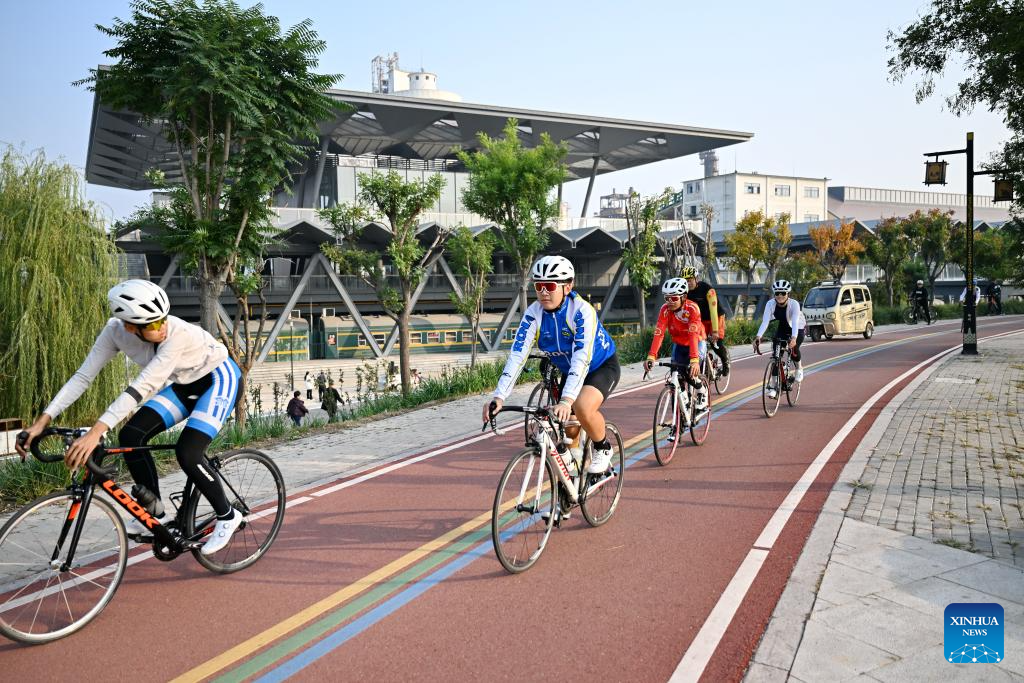
People ride on an embankment road along the Grand Canal in Yunhe District of Cangzhou, north China's Hebei Province, Oct. 29, 2025.
The Grand Canal, which connects Beijing in northern China and the eastern Chinese city of Hangzhou, has a history of more than 2,500 years and is known as the world's longest artificial waterway. An embankment road has been built along the Cangzhou section of the canal, extending 308 kilometers and connecting over 300 villages across the city. The road links natural landscapes, historical and cultural sites, and human landscapes along its line. In addition, more than ten themed parks and relevant supporting facilities have been accordingly constructed along the line, forming a multi-functional space that integrates tourism, leisure, fitness, and recreation activities. The road has not only benefited the locals but also promoted regional connectivity and injected vitality into economic and social development. (Xinhua/Mu Yu)
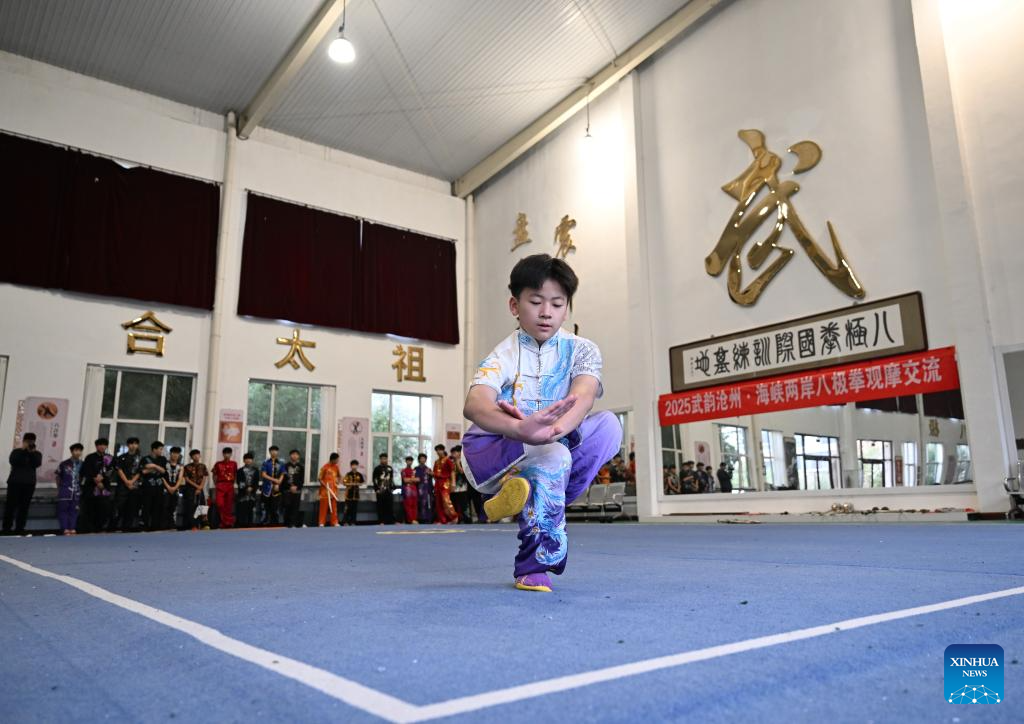
A student practices martial arts at a training base, which is located along an embankment road of the Grand Canal, in Qingxian County of Cangzhou, north China's Hebei Province, Oct. 31, 2025.
The Grand Canal, which connects Beijing in northern China and the eastern Chinese city of Hangzhou, has a history of more than 2,500 years and is known as the world's longest artificial waterway. An embankment road has been built along the Cangzhou section of the canal, extending 308 kilometers and connecting over 300 villages across the city. The road links natural landscapes, historical and cultural sites, and human landscapes along its line. In addition, more than ten themed parks and relevant supporting facilities have been accordingly constructed along the line, forming a multi-functional space that integrates tourism, leisure, fitness, and recreation activities. The road has not only benefited the locals but also promoted regional connectivity and injected vitality into economic and social development. (Xinhua/Mu Yu)
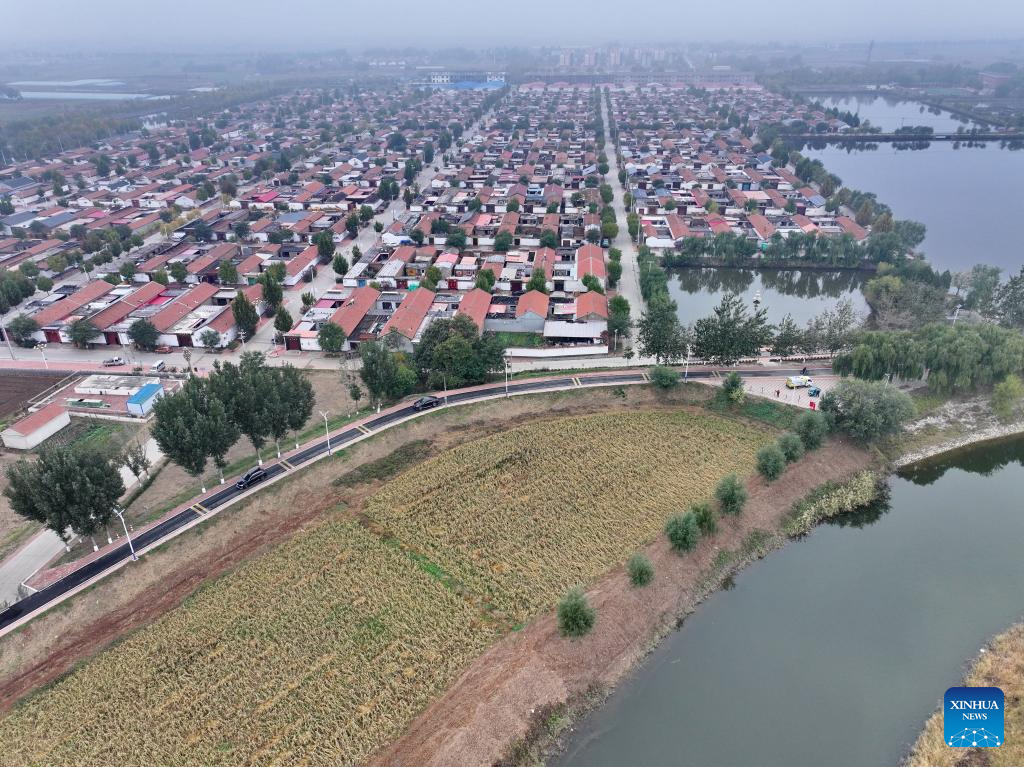
An aerial drone photo taken on Oct. 31, 2025 shows a village along an embankment road of the Grand Canal in Qingxian County of Cangzhou, north China's Hebei Province.
The Grand Canal, which connects Beijing in northern China and the eastern Chinese city of Hangzhou, has a history of more than 2,500 years and is known as the world's longest artificial waterway. An embankment road has been built along the Cangzhou section of the canal, extending 308 kilometers and connecting over 300 villages across the city. The road links natural landscapes, historical and cultural sites, and human landscapes along its line. In addition, more than ten themed parks and relevant supporting facilities have been accordingly constructed along the line, forming a multi-functional space that integrates tourism, leisure, fitness, and recreation activities. The road has not only benefited the locals but also promoted regional connectivity and injected vitality into economic and social development. (Xinhua/Mu Yu)
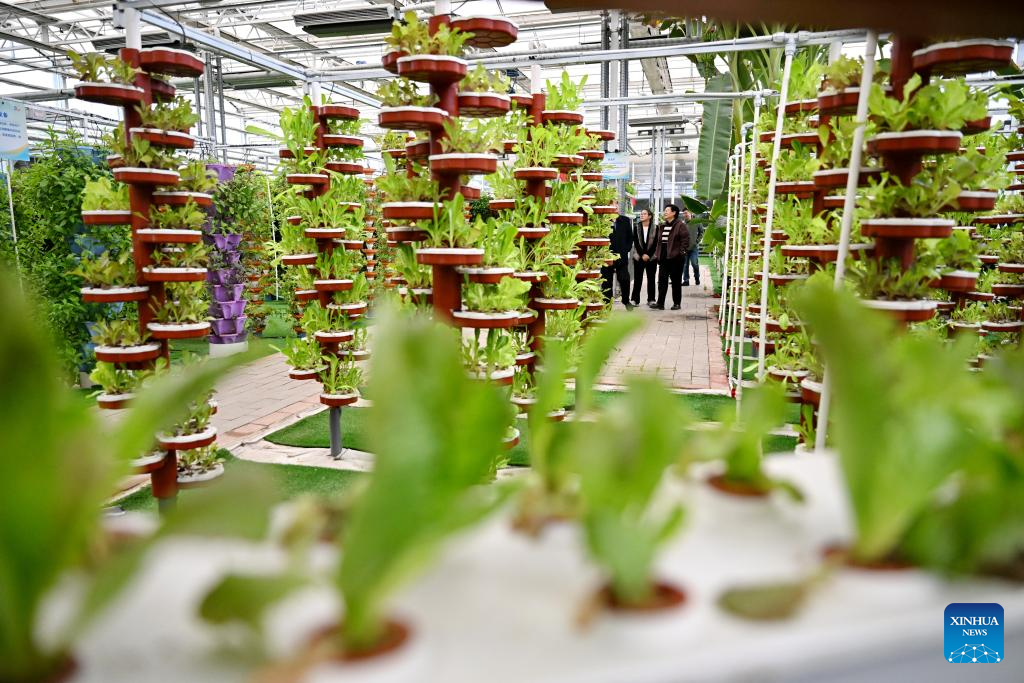
Tourists visit an intelligent greenhouse, which is located along an embankment road of the Grand Canal, in Simazhuang Village of Qingxian County, Cangzhou, north China's Hebei Province, Oct. 31, 2025.
The Grand Canal, which connects Beijing in northern China and the eastern Chinese city of Hangzhou, has a history of more than 2,500 years and is known as the world's longest artificial waterway. An embankment road has been built along the Cangzhou section of the canal, extending 308 kilometers and connecting over 300 villages across the city. The road links natural landscapes, historical and cultural sites, and human landscapes along its line. In addition, more than ten themed parks and relevant supporting facilities have been accordingly constructed along the line, forming a multi-functional space that integrates tourism, leisure, fitness, and recreation activities. The road has not only benefited the locals but also promoted regional connectivity and injected vitality into economic and social development. (Xinhua/Mu Yu)

Staff members arrange vegetables at an agricultural cooperative, which is located along an embankment road of the Grand Canal, in Simazhuang Village of Qingxian County, Cangzhou, north China's Hebei Province, Oct. 31, 2025.
The Grand Canal, which connects Beijing in northern China and the eastern Chinese city of Hangzhou, has a history of more than 2,500 years and is known as the world's longest artificial waterway. An embankment road has been built along the Cangzhou section of the canal, extending 308 kilometers and connecting over 300 villages across the city. The road links natural landscapes, historical and cultural sites, and human landscapes along its line. In addition, more than ten themed parks and relevant supporting facilities have been accordingly constructed along the line, forming a multi-functional space that integrates tourism, leisure, fitness, and recreation activities. The road has not only benefited the locals but also promoted regional connectivity and injected vitality into economic and social development. (Xinhua/Mu Yu)


