
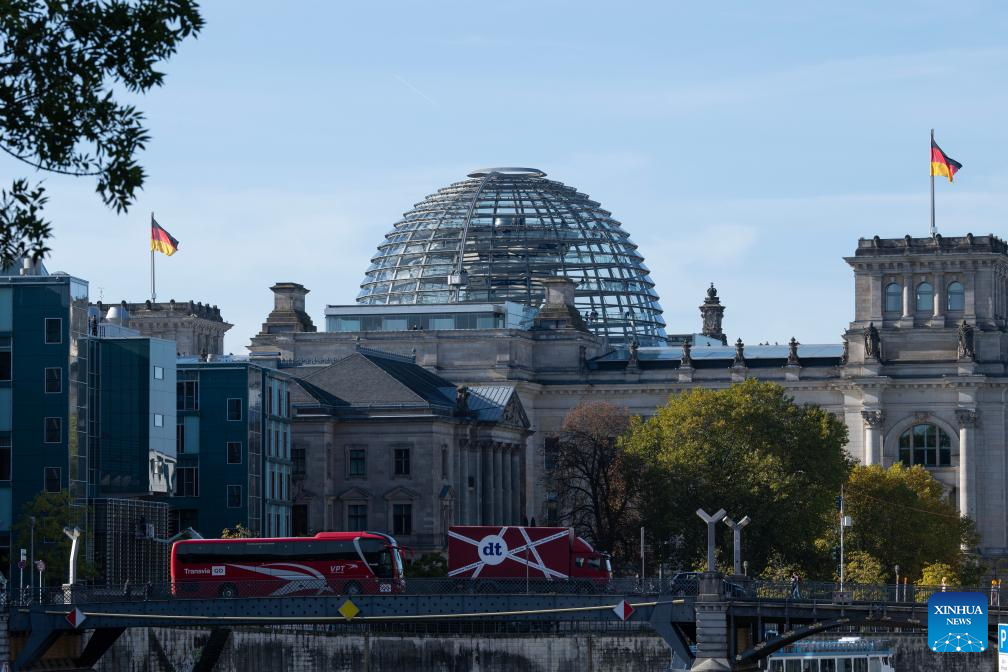
The Reichstag building is pictured in Berlin, Germany, Oct. 29, 2025. Germany's gross domestic product (GDP) was flat in Q3 compared to the previous three months, provisional data from the Federal Statistical Office (Destatis) showed. (Xinhua/Zhang Haofu)
by Xinhua writer Che Yunlong
BERLIN, Oct. 30 (Xinhua) -- Germany's fragile recovery from two years of economic contraction faces another setback. Official data released Thursday showed that the economy stagnated in the third quarter (Q3), dashing hopes for a turnaround.
The figures, which fell short of analysts' expectations, underscore how Washington's trade policies continue to weigh on Europe's largest economy, while Berlin's fiscal stimulus has yet to deliver the promised boost.
DATA DAMPENS RECOVERY HOPES
Germany's gross domestic product (GDP) was flat in Q3 compared to the previous three months, provisional data from the Federal Statistical Office (Destatis) showed.
The reading contrasted with forecasts by five leading German economic institutes, which had projected a 0.2-percent quarterly expansion in their joint autumn outlook, suggesting their full-year growth forecast of 0.2 percent for 2025 may now be too optimistic.
"The German economy remained sluggish at the start of second half-year," Destatis said. Carsten Brzeski, global head of macro at ING Research, cautioned that output remains below its late-2019 level.
The outlook will remain uncertain until final figures are published in late November, which will reveal whether the economy is heading for a third straight year of stagnation following contractions of 0.7 percent in 2023 and 0.5 percent in 2024.
Data from Destatis also showed an uptick in investment in machinery and equipment in Q3, a rare bright spot in the economy. However, exports extended their decline from Q2, when they slipped 0.1 percent. Separate trade data showed overseas shipments fell another 0.2 percent in July and 0.5 percent in August, suggesting exporters faced an even tougher quarter amid weakening global demand and rising protectionism.
EXPORT WOES UNDER U.S. TARIFFS
Germany's export engine, long the backbone of its industrial power, had been expected to drive recovery this year. But hopes dimmed after Washington sharply raised tariffs on European cars, steel and aluminum, hitting sectors central to the country's economic power.
Following the tariff hikes, leading economic institutes cut their 2025 growth forecast to 0.1 percent, down from 0.8 percent projected last autumn. The levies, which took full effect in Q2, contributed to a 0.2-percent contraction in output, erasing the modest 0.3-percent rebound recorded at the start of the year.
The strain has only deepened since. Destatis data showed Germany's exports to the U.S. fell for five consecutive months, sliding 20.1 percent year-on-year in August to 10.9 billion euros (12.6 billion U.S. dollars), the weakest level since late 2021.
Meanwhile, trade with China surged, helping Beijing reclaim its position as Germany's largest trade partner in the first eight months of the year. Yet stronger exports to China have done little to offset the broader downturn. Between April and August, total exports fell in four of five months, including a sharp 1.4-percent month-on-month drop in May. The hit has been particularly severe in the automotive and parts sectors, the key sources of Germany's trade surplus with the United States.
"Germany as an export powerhouse is under massive pressure, suffering from weaker demand, rising costs and growing protectionism," said Dirk Jandura, president of the German Wholesale and Foreign Trade Association (BGA).
Although the European Union (EU) and the United States reached a deal in late July to lower tariffs to 15 percent, industry groups, including the German Association of the Automotive Industry, warned the rate remains punitive compared with pre-hike levels and will continue to burden exporters.
The BGA expects German foreign trade to remain weak in 2025, forecasting a 2.5-percent drop in exports, below earlier projections. Analysts increasingly believe exports will not drive Germany's recovery, citing a stronger euro and volatile U.S. trade policy as key risks.
Reflecting this shift, Germany's Federal Ministry for Economic Affairs and Energy said in its October projection that even if GDP rises this year, "the recovery -- unlike Germany's typical pattern -- will be driven not by exports but by domestic demand this time."
REFORM EFFORTS AN UPHILL BATTLE
With exports faltering, hopes now rest on a revival in domestic demand supported by fiscal policy. Economists, however, warn that persistent structural hurdles continue to undermine Germany's recovery prospects.
Earlier this year, Berlin unveiled an ambitious fiscal package, including a 500-billion-euro infrastructure fund and plans to relax the debt ceiling for defense spending. The announcements initially sparked optimism, with economic institutes calling it a "shot in the arm" for the sluggish economy.
But the promised boost has yet to materialize. Policy uncertainty stemming from divisions within the ruling coalition has weakened the impact of the measures and slowed implementation.
Even as the cabinet in late July approved record public investment in its draft 2026 federal budget, debates over how to close the resulting fiscal gap have exposed deep divisions within the coalition.
"The scale of Germany's announced fiscal stimulus remains significant, and this money will eventually reach the economy," Brzeski said. However, the effect will likely be less marked and come later than expected due to slow implementation, he added.
Beyond fiscal measures, the government has struggled to agree on the sweeping reforms needed to strengthen competitiveness. Chancellor Friedrich Merz has promised an "autumn of reforms," but progress has been limited. As Brzeski noted, the administration "remains stuck in a 20th-century growth model without a clear plan to propel the German economy forward."
Clemens Fuest, president of the Munich-based ifo Institute, voiced similar concerns. In a recent interview, he warned that Germany was in "economic decline" and urged the government to present a comprehensive reform package within six months to revitalize growth.
Still, some optimism remains. The ifo business climate index ticked up slightly in October as sentiment among 9,000 surveyed executives improved. Even if the economy faces a third straight year of stagnation, many still expect Europe's biggest economy to return to growth in 2026. (1 euro = 1.16 U.S. dollar) ■
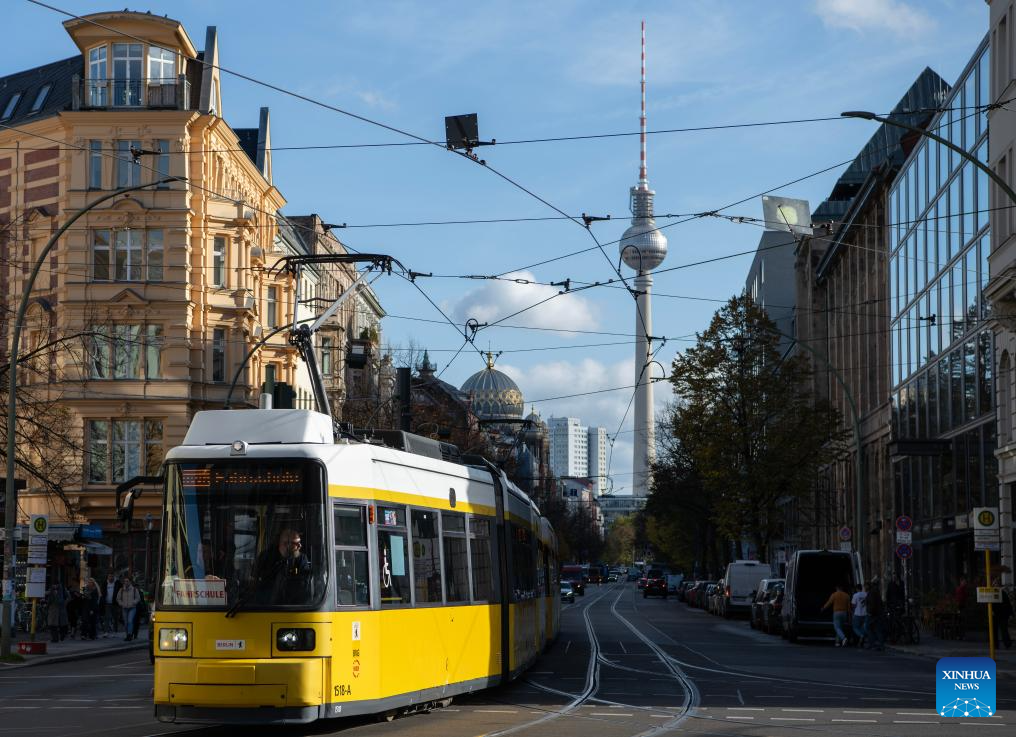
This photo taken on Oct. 29, 2025 shows a street view in Berlin, Germany. Germany's gross domestic product (GDP) was flat in Q3 compared to the previous three months, provisional data from the Federal Statistical Office (Destatis) showed. (Xinhua/Zhang Haofu)
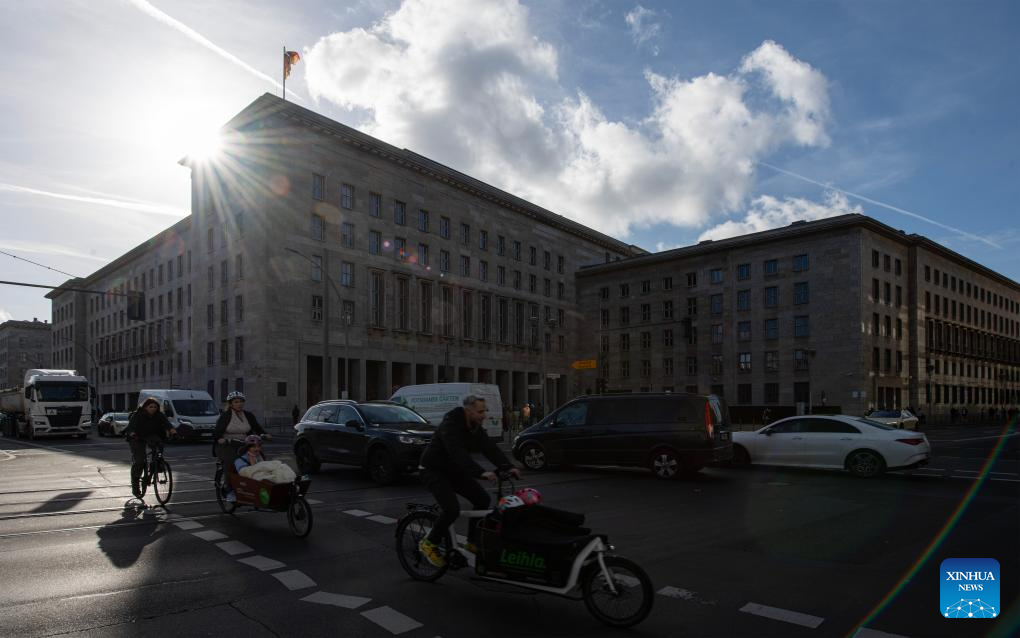
The Federal Ministry of Finance building is pictured in Berlin, Germany, Oct. 29, 2025. Germany's gross domestic product (GDP) was flat in Q3 compared to the previous three months, provisional data from the Federal Statistical Office (Destatis) showed. (Xinhua/Zhang Haofu)

The Brandenburg Gate is pictured in Berlin, Germany, Oct. 29, 2025. Germany's gross domestic product (GDP) was flat in Q3 compared to the previous three months, provisional data from the Federal Statistical Office (Destatis) showed. (Xinhua/Zhang Haofu)

The Berlin Victory Column is pictured in Berlin, Germany, Oct. 29, 2025. Germany's gross domestic product (GDP) was flat in Q3 compared to the previous three months, provisional data from the Federal Statistical Office (Destatis) showed. (Xinhua/Zhang Haofu)


