

A drone photo taken on March 19, 2025 shows tourists riding camels in the Qikou ancient town of Linxian County, north China's Shanxi Province. Qikou, an ancient town along the Yellow River, was an important trade ferry in history, where merchants unloaded goods such as fur, wool and herbs from boats coming upriver and switched to land transportation to further deliver them to cites like Taiyuan, Beijing, and Tianjin. Such a geographical advantage made Qikou an important port until the 1970s.
However, Qikou's glory gradually faded in the following decades as land transportation network improved along the Yellow River area.
In recent years, local government has been making efforts to renovate and protect the historical buildings and ancient residences here, promoting the integrated development of culture and tourism. (Xinhua/Zhan Yan)

An aerial drone photo taken on Oct. 29, 2025 shows a view of the Qikou ancient town in Linxian County, north China's Shanxi Province. Qikou, an ancient town along the Yellow River, was an important trade ferry in history, where merchants unloaded goods such as fur, wool and herbs from boats coming upriver and switched to land transportation to further deliver them to cites like Taiyuan, Beijing, and Tianjin. Such a geographical advantage made Qikou an important port until the 1970s.
However, Qikou's glory gradually faded in the following decades as land transportation network improved along the Yellow River area.
In recent years, local government has been making efforts to renovate and protect the historical buildings and ancient residences here, promoting the integrated development of culture and tourism. (Xinhua/Zhan Yan)

An aerial drone photo taken on Oct. 29, 2025 shows a view of the Qikou ancient town in Linxian County, north China's Shanxi Province. Qikou, an ancient town along the Yellow River, was an important trade ferry in history, where merchants unloaded goods such as fur, wool and herbs from boats coming upriver and switched to land transportation to further deliver them to cites like Taiyuan, Beijing, and Tianjin. Such a geographical advantage made Qikou an important port until the 1970s.
However, Qikou's glory gradually faded in the following decades as land transportation network improved along the Yellow River area.
In recent years, local government has been making efforts to renovate and protect the historical buildings and ancient residences here, promoting the integrated development of culture and tourism. (Xinhua/Zhan Yan)
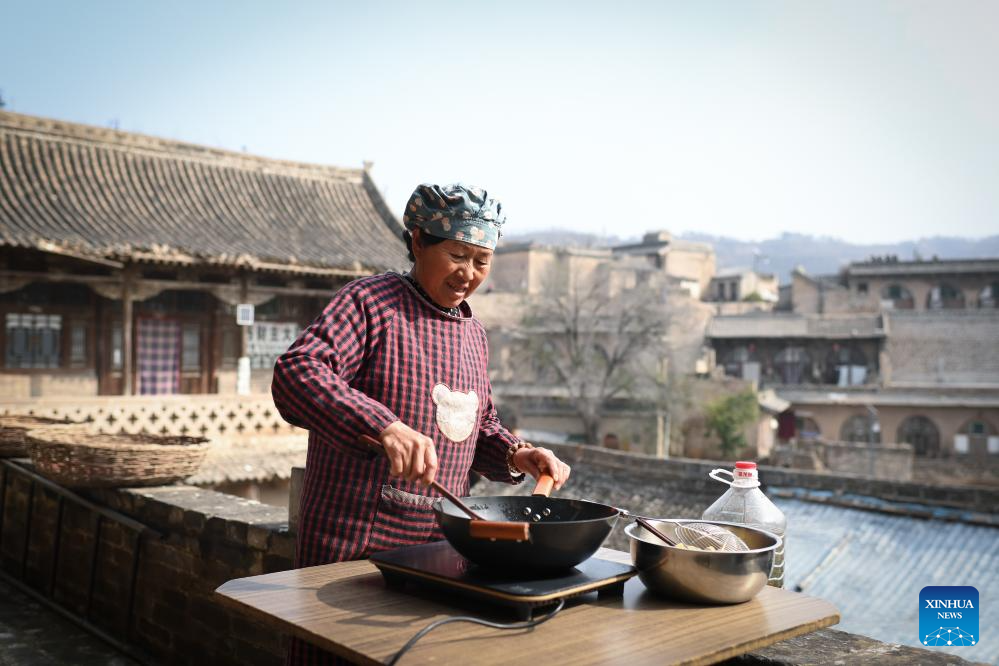
A villager makes local snack in the Qikou ancient town of Linxian County, north China's Shanxi Province on Oct. 30, 2025. Qikou, an ancient town along the Yellow River, was an important trade ferry in history, where merchants unloaded goods such as fur, wool and herbs from boats coming upriver and switched to land transportation to further deliver them to cites like Taiyuan, Beijing, and Tianjin. Such a geographical advantage made Qikou an important port until the 1970s.
However, Qikou's glory gradually faded in the following decades as land transportation network improved along the Yellow River area.
In recent years, local government has been making efforts to renovate and protect the historical buildings and ancient residences here, promoting the integrated development of culture and tourism. (Photo by Liu Liangliang/Xinhua)
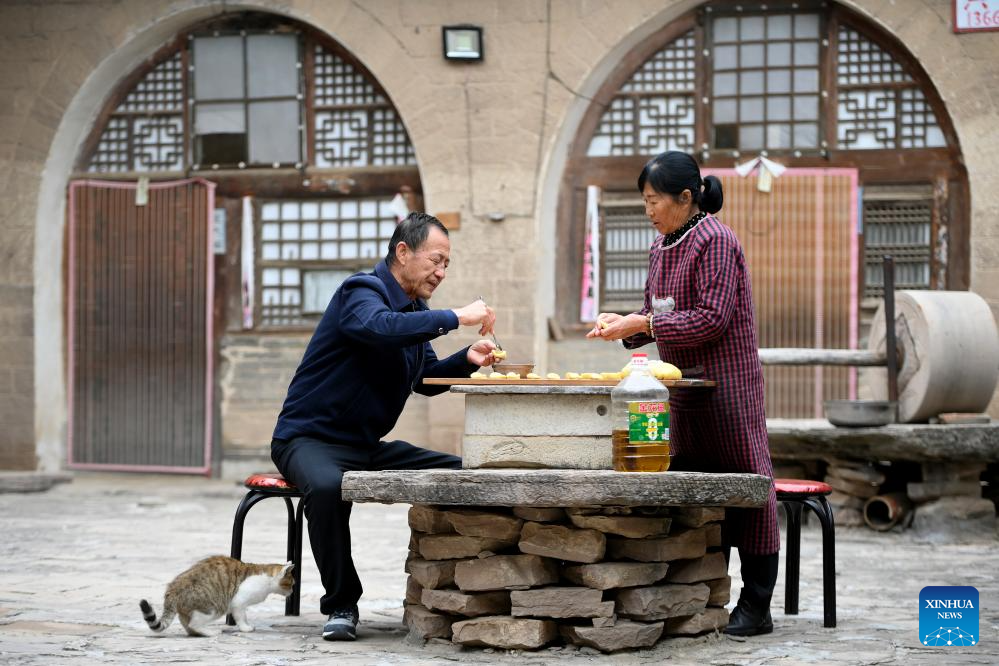
Villagers make local snack in the Qikou ancient town of Linxian County, north China's Shanxi Province on Oct. 30, 2025. Qikou, an ancient town along the Yellow River, was an important trade ferry in history, where merchants unloaded goods such as fur, wool and herbs from boats coming upriver and switched to land transportation to further deliver them to cites like Taiyuan, Beijing, and Tianjin. Such a geographical advantage made Qikou an important port until the 1970s.
However, Qikou's glory gradually faded in the following decades as land transportation network improved along the Yellow River area.
In recent years, local government has been making efforts to renovate and protect the historical buildings and ancient residences here, promoting the integrated development of culture and tourism. (Photo by Liu Liangliang/Xinhua)
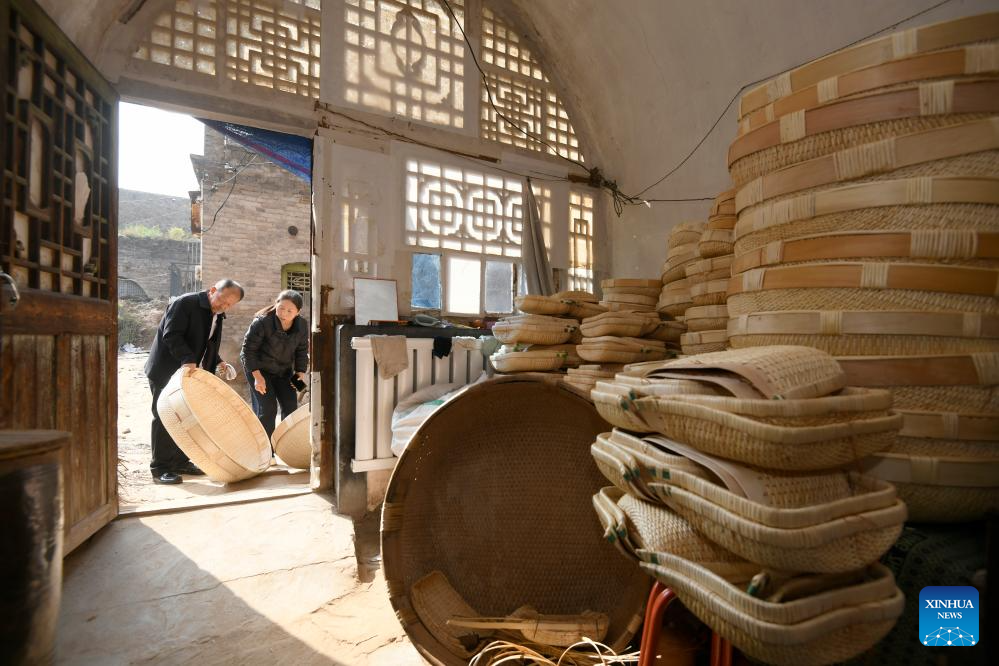
A shop owner (R) introduces homemade willow weaving products to a customer in the Qikou ancient town of Linxian County, north China's Shanxi Province on Oct. 30, 2025. Qikou, an ancient town along the Yellow River, was an important trade ferry in history, where merchants unloaded goods such as fur, wool and herbs from boats coming upriver and switched to land transportation to further deliver them to cites like Taiyuan, Beijing, and Tianjin. Such a geographical advantage made Qikou an important port until the 1970s.
However, Qikou's glory gradually faded in the following decades as land transportation network improved along the Yellow River area.
In recent years, local government has been making efforts to renovate and protect the historical buildings and ancient residences here, promoting the integrated development of culture and tourism. (Photo by Liu Liangliang/Xinhua)

A villager makes a cloth toy in the Qikou ancient town of Linxian County, north China's Shanxi Province on Oct. 30, 2025. Qikou, an ancient town along the Yellow River, was an important trade ferry in history, where merchants unloaded goods such as fur, wool and herbs from boats coming upriver and switched to land transportation to further deliver them to cites like Taiyuan, Beijing, and Tianjin. Such a geographical advantage made Qikou an important port until the 1970s.
However, Qikou's glory gradually faded in the following decades as land transportation network improved along the Yellow River area.
In recent years, local government has been making efforts to renovate and protect the historical buildings and ancient residences here, promoting the integrated development of culture and tourism. (Photo by Liu Liangliang/Xinhua)
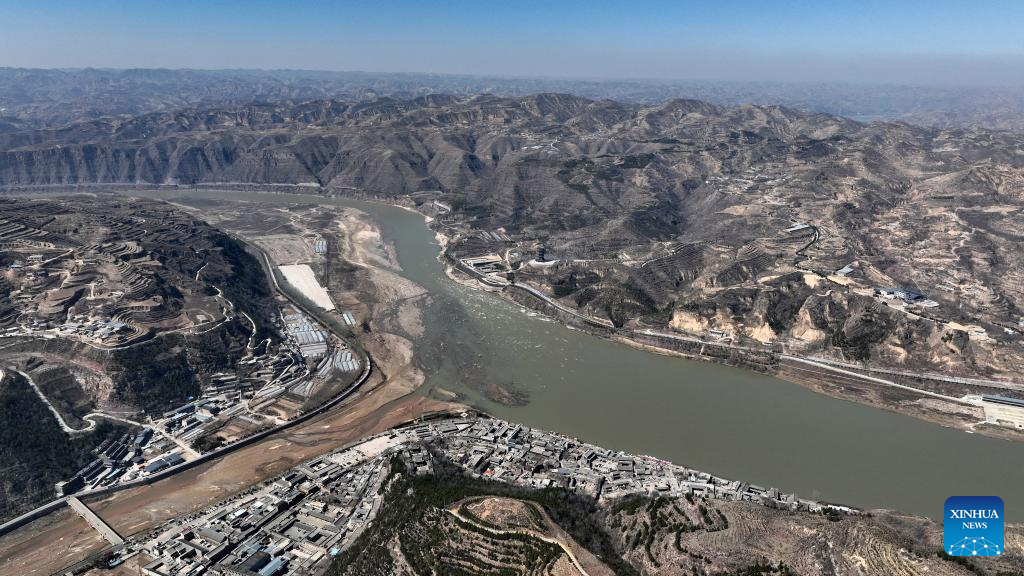
An aerial drone photo taken on March 19, 2025 shows a view of the Qikou ancient town in Linxian County, north China's Shanxi Province. Qikou, an ancient town along the Yellow River, was an important trade ferry in history, where merchants unloaded goods such as fur, wool and herbs from boats coming upriver and switched to land transportation to further deliver them to cites like Taiyuan, Beijing, and Tianjin. Such a geographical advantage made Qikou an important port until the 1970s.
However, Qikou's glory gradually faded in the following decades as land transportation network improved along the Yellow River area.
In recent years, local government has been making efforts to renovate and protect the historical buildings and ancient residences here, promoting the integrated development of culture and tourism. (Xinhua/Zhan Yan)

An aerial drone photo taken on Oct. 29, 2025 shows a view of the Qikou ancient town in Linxian County, north China's Shanxi Province. Qikou, an ancient town along the Yellow River, was an important trade ferry in history, where merchants unloaded goods such as fur, wool and herbs from boats coming upriver and switched to land transportation to further deliver them to cites like Taiyuan, Beijing, and Tianjin. Such a geographical advantage made Qikou an important port until the 1970s.
However, Qikou's glory gradually faded in the following decades as land transportation network improved along the Yellow River area.
In recent years, local government has been making efforts to renovate and protect the historical buildings and ancient residences here, promoting the integrated development of culture and tourism. (Xinhua/Zhan Yan)

An aerial drone photo taken on Oct. 29, 2025 shows tourists visiting the Qikou ancient town of Linxian County, north China's Shanxi Province. Qikou, an ancient town along the Yellow River, was an important trade ferry in history, where merchants unloaded goods such as fur, wool and herbs from boats coming upriver and switched to land transportation to further deliver them to cites like Taiyuan, Beijing, and Tianjin. Such a geographical advantage made Qikou an important port until the 1970s.
However, Qikou's glory gradually faded in the following decades as land transportation network improved along the Yellow River area.
In recent years, local government has been making efforts to renovate and protect the historical buildings and ancient residences here, promoting the integrated development of culture and tourism. (Xinhua/Zhan Yan)
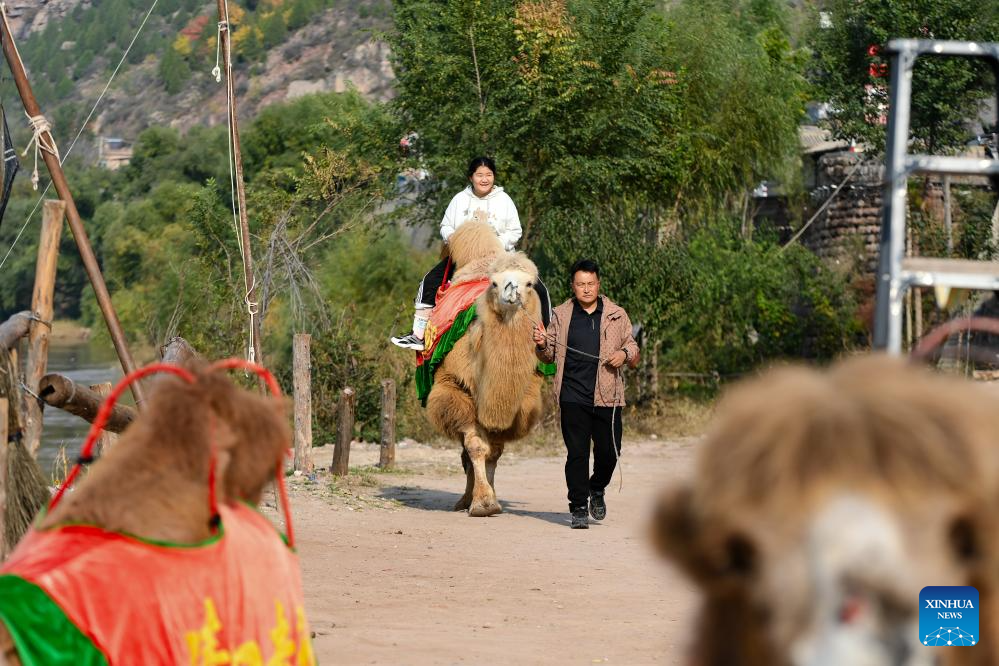
A tourist rides a camel in the Qikou ancient town of Linxian County, north China's Shanxi Province on Oct. 30, 2025. Qikou, an ancient town along the Yellow River, was an important trade ferry in history, where merchants unloaded goods such as fur, wool and herbs from boats coming upriver and switched to land transportation to further deliver them to cites like Taiyuan, Beijing, and Tianjin. Such a geographical advantage made Qikou an important port until the 1970s.
However, Qikou's glory gradually faded in the following decades as land transportation network improved along the Yellow River area.
In recent years, local government has been making efforts to renovate and protect the historical buildings and ancient residences here, promoting the integrated development of culture and tourism. (Photo by Liu Liangliang/Xinhua)

Tourists dance in the Qikou ancient town of Linxian County, north China's Shanxi Province on Oct. 30, 2025. Qikou, an ancient town along the Yellow River, was an important trade ferry in history, where merchants unloaded goods such as fur, wool and herbs from boats coming upriver and switched to land transportation to further deliver them to cites like Taiyuan, Beijing, and Tianjin. Such a geographical advantage made Qikou an important port until the 1970s.
However, Qikou's glory gradually faded in the following decades as land transportation network improved along the Yellow River area.
In recent years, local government has been making efforts to renovate and protect the historical buildings and ancient residences here, promoting the integrated development of culture and tourism. (Photo by Liu Liangliang/Xinhua)

A villager makes a cloth toy in the Qikou ancient town of Linxian County, north China's Shanxi Province on Oct. 30, 2025. Qikou, an ancient town along the Yellow River, was an important trade ferry in history, where merchants unloaded goods such as fur, wool and herbs from boats coming upriver and switched to land transportation to further deliver them to cites like Taiyuan, Beijing, and Tianjin. Such a geographical advantage made Qikou an important port until the 1970s.
However, Qikou's glory gradually faded in the following decades as land transportation network improved along the Yellow River area.
In recent years, local government has been making efforts to renovate and protect the historical buildings and ancient residences here, promoting the integrated development of culture and tourism. (Photo by Liu Liangliang/Xinhua)

People walk in the Qikou ancient town of Linxian County, north China's Shanxi Province, Oct. 30, 2025. Qikou, an ancient town along the Yellow River, was an important trade ferry in history, where merchants unloaded goods such as fur, wool and herbs from boats coming upriver and switched to land transportation to further deliver them to cites like Taiyuan, Beijing, and Tianjin. Such a geographical advantage made Qikou an important port until the 1970s.
However, Qikou's glory gradually faded in the following decades as land transportation network improved along the Yellow River area.
In recent years, local government has been making efforts to renovate and protect the historical buildings and ancient residences here, promoting the integrated development of culture and tourism. (Photo by Liu Liangliang/Xinhua)
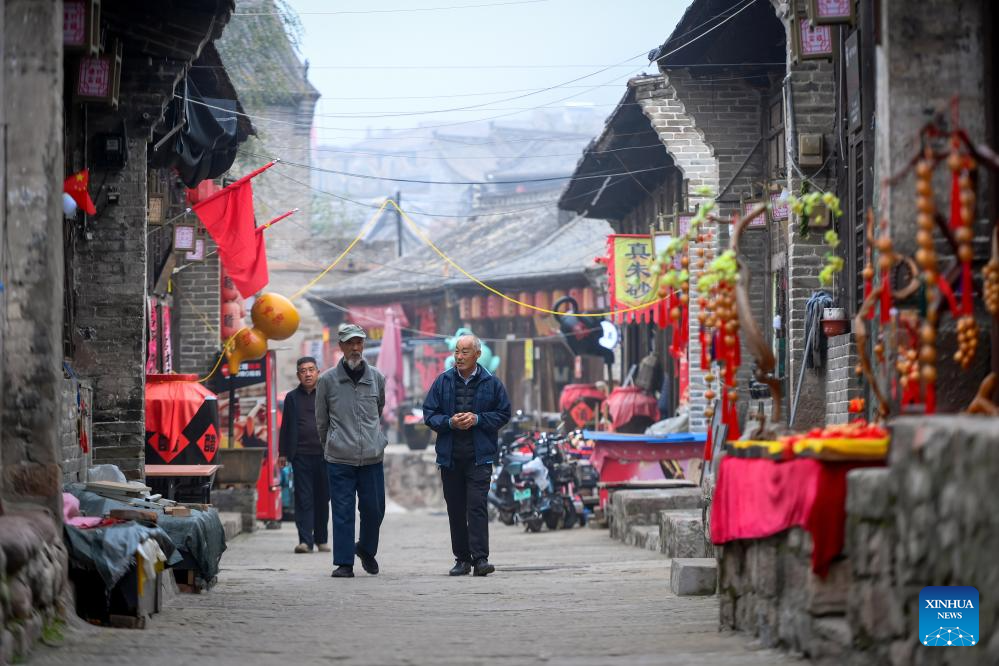
People walk in the Qikou ancient town of Linxian County, north China's Shanxi Province on Oct. 30, 2025. Qikou, an ancient town along the Yellow River, was an important trade ferry in history, where merchants unloaded goods such as fur, wool and herbs from boats coming upriver and switched to land transportation to further deliver them to cites like Taiyuan, Beijing, and Tianjin. Such a geographical advantage made Qikou an important port until the 1970s.
However, Qikou's glory gradually faded in the following decades as land transportation network improved along the Yellow River area.
In recent years, local government has been making efforts to renovate and protect the historical buildings and ancient residences here, promoting the integrated development of culture and tourism. (Photo by Liu Liangliang/Xinhua)
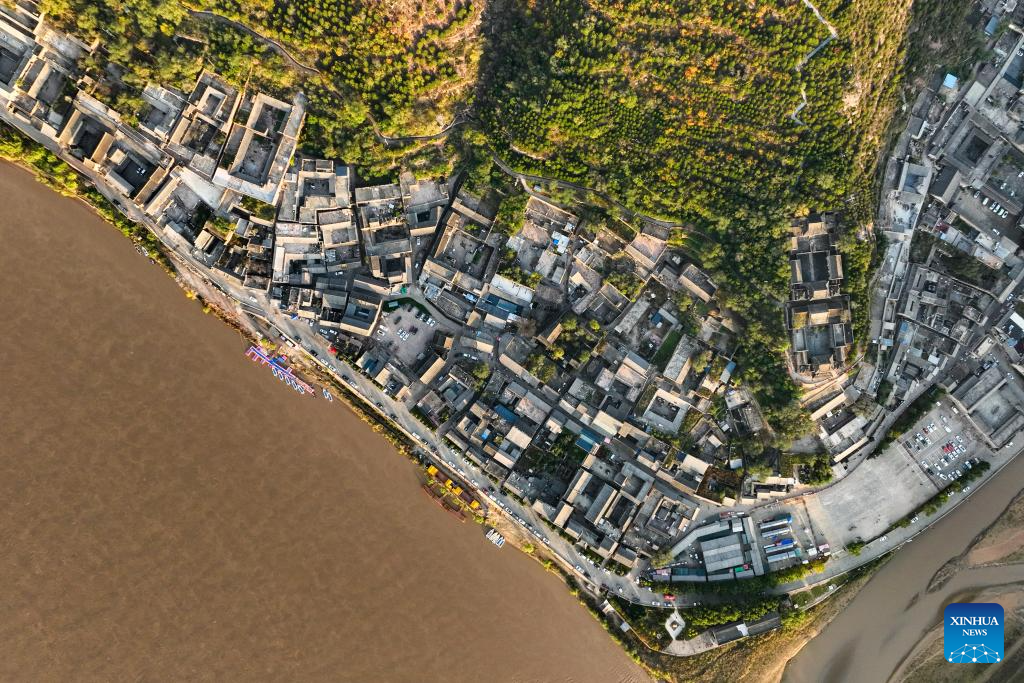
An aerial drone photo taken on Oct. 29, 2025 shows a view of the Qikou ancient town in Linxian County, north China's Shanxi Province. Qikou, an ancient town along the Yellow River, was an important trade ferry in history, where merchants unloaded goods such as fur, wool and herbs from boats coming upriver and switched to land transportation to further deliver them to cites like Taiyuan, Beijing, and Tianjin. Such a geographical advantage made Qikou an important port until the 1970s.
However, Qikou's glory gradually faded in the following decades as land transportation network improved along the Yellow River area.
In recent years, local government has been making efforts to renovate and protect the historical buildings and ancient residences here, promoting the integrated development of culture and tourism. (Xinhua/Zhan Yan)

An aerial drone photo taken on Oct. 29, 2025 shows a night view of the Qikou ancient town in Linxian County, north China's Shanxi Province. Qikou, an ancient town along the Yellow River, was an important trade ferry in history, where merchants unloaded goods such as fur, wool and herbs from boats coming upriver and switched to land transportation to further deliver them to cites like Taiyuan, Beijing, and Tianjin. Such a geographical advantage made Qikou an important port until the 1970s.
However, Qikou's glory gradually faded in the following decades as land transportation network improved along the Yellow River area.
In recent years, local government has been making efforts to renovate and protect the historical buildings and ancient residences here, promoting the integrated development of culture and tourism. (Xinhua/Zhan Yan)


