
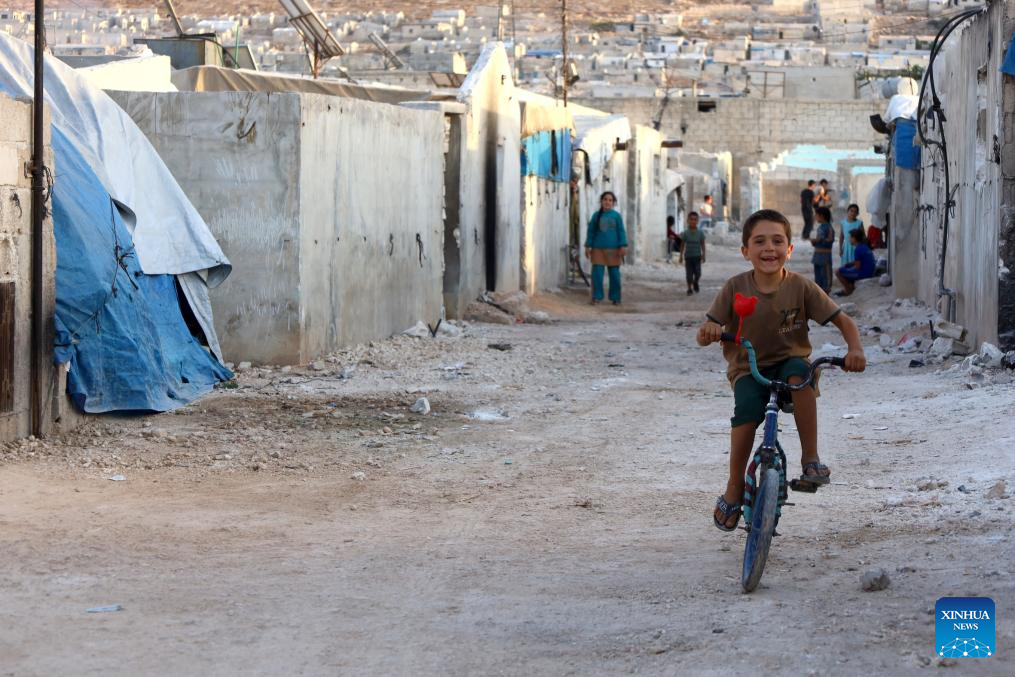
A boy rides his bicycle in the Karama Camps in Idlib province, northwestern Syria, Sept. 25, 2025. (Str/Xinhua)
by Hummam Sheikh Ali
KARAMA CAMPS, Syria, Sept. 29 (Xinhua) -- On the rocky hills of northern Idlib, near the Turkish border, the Karama Camps sprawl like a city of the displaced. From above, it is a mosaic of cinder block shelters and tin roofs, crisscrossed by dirt alleys where children play barefoot among rubble and trash. What began as rows of tents has hardened into a precarious permanence.
Here, life is suspended between two painful truths: the dream of return, and the reality that for many, there is no home left to return to.
Before the fall of former Syrian President Bashar al-Assad's government in late 2024, the Karama Camps -- a cluster of more than 140 settlements stretching between the villages of Qah and Atmeh -- housed close to 1 million displaced Syrians. Today, aid organizations say more than 70 percent of those families still cannot return home, their houses either destroyed, looted, or uninhabitable.
For Walaa al-Khabbaz, who fled the central Syrian town of Kafr Zita in 2013 and now lives in the Kuwait Preachers Camp of the Karama Camps, the trauma of return is as heavy as displacement itself.
"For me, it is like being caught between two fires -- the war has ended, and you return to your village only to find you no longer have a home. I go and look at the rubble of my house and come back with tears in my eyes. Honestly, the pain is indescribable. Everywhere I look, the destruction is overwhelming, especially in my neighborhood," she told Xinhua.
Her voice softened with a fragile hope: "My wish is that things improve, that our villages are rebuilt from the ground up, so that one day we no longer speak of camps. Even a single room, just enough to live in, would be enough to end this exile."
For others, the attempts to return have only led to a second displacement. Umm Mohammad, a widow from the northwestern Syrian city of Saraqib and mother of six, fled her home 13 years ago. Today, she lives in the Sham Sharif Camp, where she recounted her family's brief and painful homecoming experience.
"The day we had longed for finally came, the day we returned to our homes. But what we found were ruins -- collapsed houses, destroyed schools, a village with no life. My children had no schools, my older ones had no universities to attend, and I had no income to support them. We could not stay. I returned here to the camp," she told Xinhua.
Yet the camps offer little relief. "The situation here is worsening, too. Services have declined, even water is scarce. Most aid organizations have stopped working. We are left with nothing, and I honestly don't know where to go," she said.
Mohammad's plea is simple: "We hope to return to our villages, for our children to go back to school, for a dignified life with the basics -- nothing more."
Jameel Saeed, living in the Karama Camps for six years and now manager of the Sham Sharif Camp, confirmed that returns have been minimal.
"Most of those who have not returned are people whose homes are flattened to the ground, roofless, or looted -- doors and windows stolen. I am one of them. My own house is cracked and unsafe, it would take 5,000 U.S. dollars to fix, and I don't even have 100 dollars," said the man displaced from Jarjanaz in rural Idlib.
"People can't afford even a single block for rebuilding. Those who saved a little money during the first years of displacement have spent it all just to survive," he told Xinhua.
He added that since the fall of al-Assad's government, aid has nearly vanished. "We used to get food baskets from organizations every two or three months. Now we receive nothing -- not even water. They used to bring it by tankers, now we buy it ourselves. We are living like people lost."
Throughout the Karama Camps, the desperation is palpable. Children play football in dusty alleys; Families cook over open fires. Across the valley, the skeletons of bombed-out villages stand empty, their walls cracked and strangled by weeds.
Humanitarian officials warned that without international commitment, displacement will become a generational crisis for Syria.
Joseph Inganji, head of the UN Office for the Coordination of Humanitarian Affairs (OCHA) in Syria, stressed the urgency of reconstruction: "We need to rebuild this area so that the IDPs (internally displaced people) can return to their area."
"There are about 6 or 7.7 million Syrians who are outside their country, and they want to return to their country, to rebuild their country. And these people, when they return, they need shelter, they need health, they need all those in all these areas. So we need to look at all these areas, how we can be able to support these people who are returning," he said.
Before support as such takes shape, the families of the Karama Camps would remain in limbo -- their lives measured by the distance between the rubble of home and the uncertainty of exile. As Mohammad said: "We have lost so much in this war, and we need a helping hand to rise again." ■
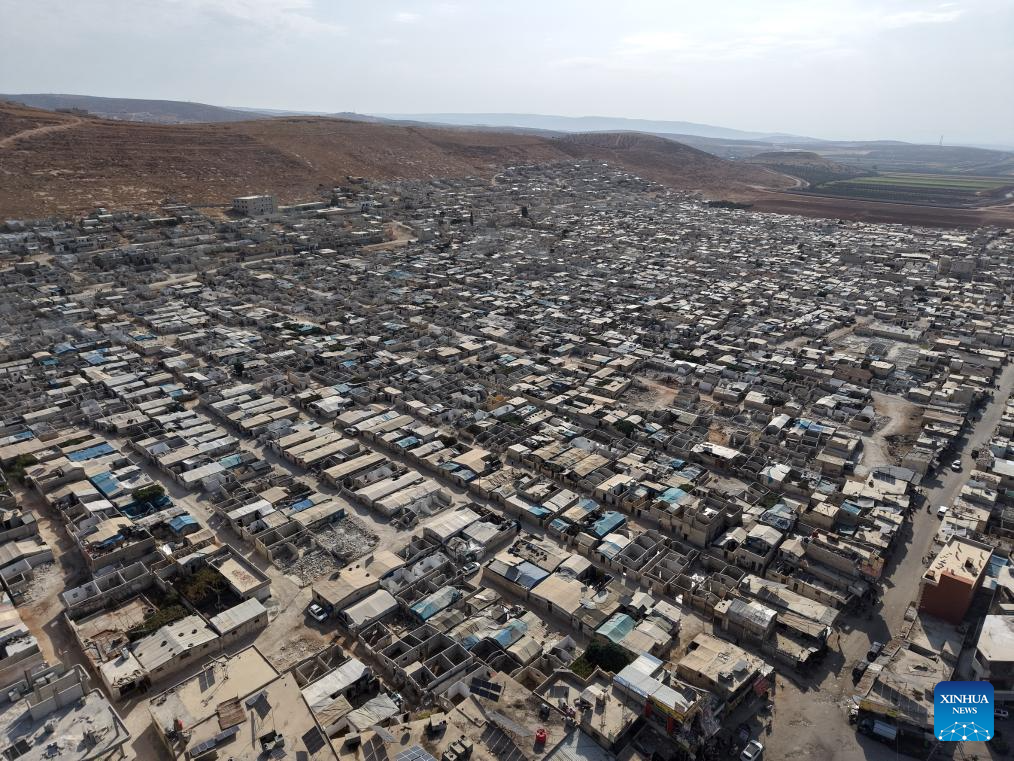
An aerial photo taken on Sept. 25, 2025 shows the Karama Camps in Idlib province, northwestern Syria. (Str/Xinhua)
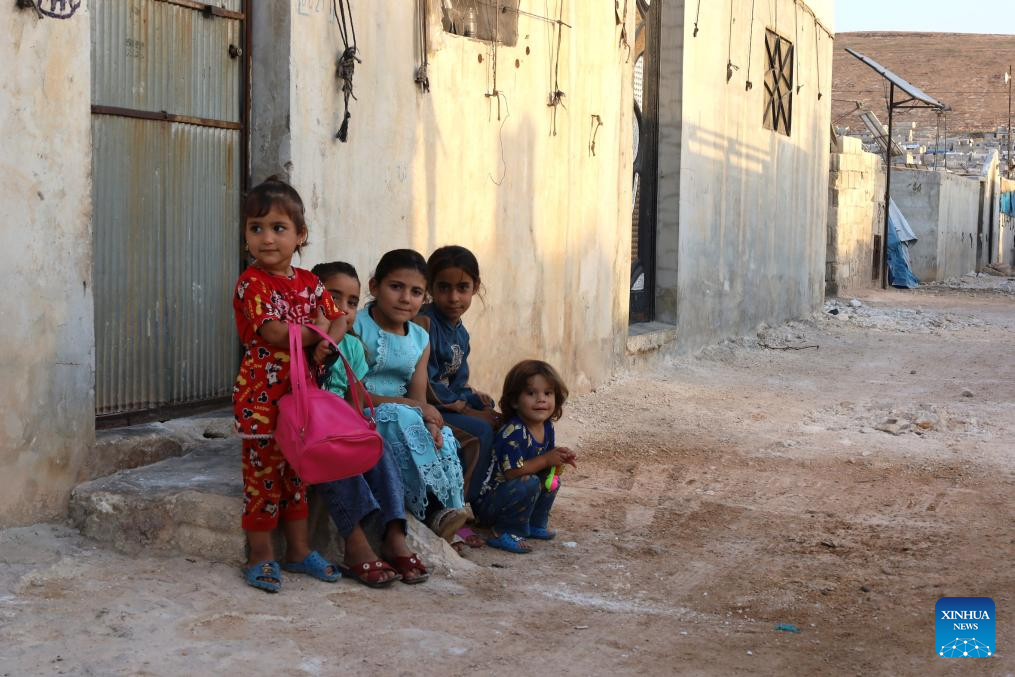
Children are seen in the Karama Camps in Idlib province, northwestern Syria, Sept. 25, 2025. (Str/Xinhua)


