
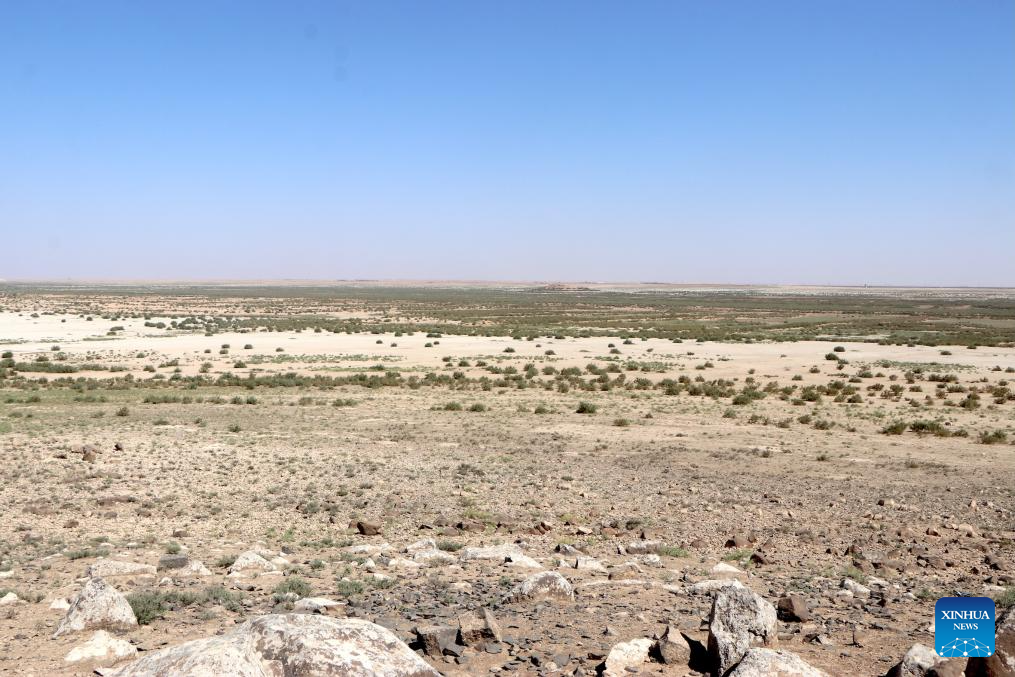
A parched landscape is seen in Hasakah province, northeastern Syria, Sept. 16, 2025. Once known as Syria's wheat basket, the northeastern province of Hasakah is now being hollowed out by years of drought, forcing families to abandon their farms and seek survival in cities.(Str/Xinhua)
HASAKAH, Syria, Sept. 25 (Xinhua) -- Once known as Syria's wheat basket, the northeastern province of Hasakah is now being hollowed out by years of drought, forcing families to abandon their farms and seek survival in cities.
"This year, rainfall was only 30 to 40 percent of the annual average," said Aziz Mikhael, a geologist and former deputy director of Hasakah's water resources department. "If the drought continues, it will be catastrophic for drinking water and all other uses."
For farmers like Maher al-Ahmad from Haj village, the losses have been devastating.
"Eighty to 90 percent of our crops were wiped out. The Khabur River has been dry for two years, reservoirs are empty, and well water has dropped to 95 meters," he said. "I used to cultivate 100 dunams, sometimes renting more land. Now I only plant 30."
Supporting a family of nine, al-Ahmad said the agricultural collapse is dragging down the entire economy.
"Eighty to 90 percent of our national income comes from farming. When agriculture stops, everything stops -- markets stall, construction halts, and livestock breeders sell their animals at rock-bottom prices. If this continues, people will have no choice but to migrate."
Many already have.
"In our village, people left for Türkiye, Damascus, or the south to find work. There is no rain, no water, and the land is abandoned," al-Ahmad said.
Others, like 31-year-old farmer Mohammad al-Ali from Tel al-Sakhr, said the cost of farming no longer makes sense.
"Well water levels have dropped by 80 percent, and what we produce doesn't even cover expenses," he said. "Most people have given up farming. For those who still try, it's simply not profitable."
A NATIONAL CRISIS
The situation in Hasakah reflects a nationwide emergency. The United Nations Food and Agriculture Organization (FAO) warns Syria is facing one of its worst agricultural crises in four decades.
"The drought has impacted over 75 percent of rain-fed farmland, with rainfall deficits up to 69 percent in key producing regions," said Pirro-Tomaso Perri, FAO's senior programme officer in Damascus. "Irrigated areas are also suffering from water shortages, power cuts, and damaged infrastructure. The dual impact is unprecedented in scale," he told Xinhua.
According to Perri, this is the third consecutive year of poor harvests. Wheat output in 2025 is projected at just 900,000 to 1.1 million tonnes, far below the national need of nearly 4 million tonnes.
Jalal Al Hamoud, FAO's food security specialist in Syria, told Xinhua in a recent interview that over 14 million Syrians are already food insecure, with 5.5 million at risk of sliding deeper into hunger. "More than 95 percent of rain-fed crops were not harvested due to low rainfall and high temperatures," he said.
The crisis is hitting returnees especially hard. According to the UN Office for the Coordination of Humanitarian Affairs (OCHA), over 900,000 refugees and 1.9 million internally displaced people have returned to their home areas, many of them farmers.
"They need to be empowered to stay in their villages and restart agricultural activity," Al Hamoud said, adding that the FAO is working to rehabilitate irrigation systems, provide seeds and tools, and train families to generate income.
RACE AGAINST TIME
To tackle the emergency, the FAO has launched a 286.7-million-U.S.-dollar Emergency and Recovery Plan of Action for 2025-2027, aiming to assist 9.7 million people. The plan combines short-term relief, such as distributing drought-tolerant seeds, livestock feed, and emergency cash, with long-term efforts to rebuild irrigation and local food systems.
"Our message is clear," Perri said. "Emergency agricultural action is needed now to save the next harvest and prevent another year of failure. Distributing drought-tolerant seeds by October 2025 is critical to boost yields and stop families from falling deeper into poverty and displacement."
But funding remains far short. The FAO is seeking 66 million dollars for drought response, including 27.5 million dollars specifically for wheat farmers. "The gap between what is needed and what is available is substantial," Perri warned. "Without stronger donor support, humanitarian needs will escalate and recovery costs will climb."
In Hasakah, the effects are already visible -- cracked soil, empty canals, and villages slowly emptying out. Farmers like al-Ahmad and al-Ali warn that unless urgent steps are taken, the province risks losing not just its crops, but its people. ■
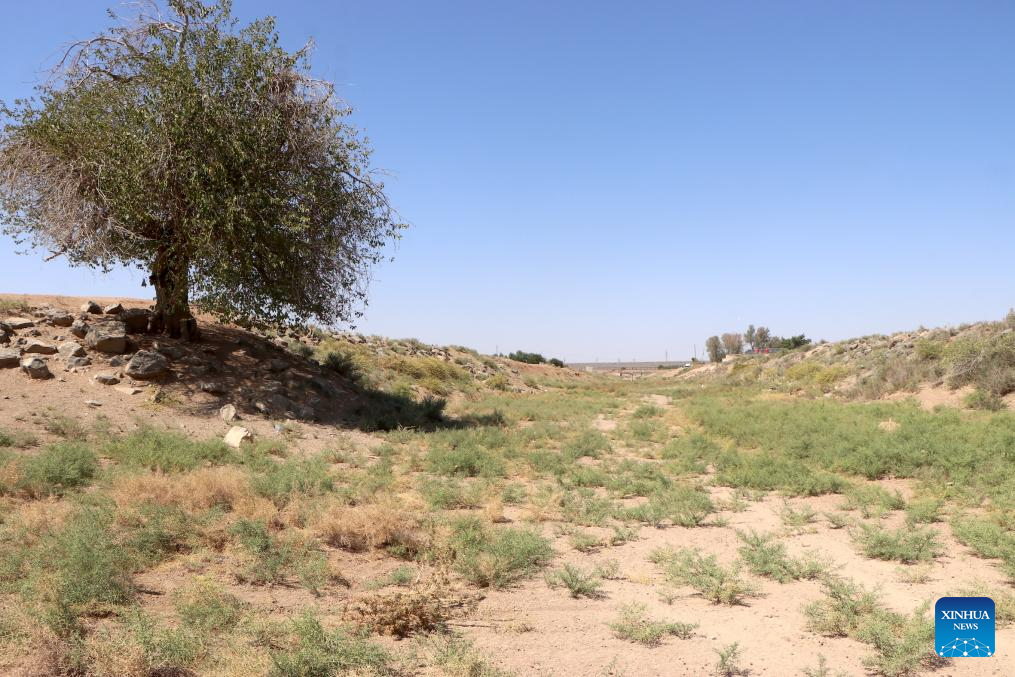
The dry riverbed of the Khabur River is pictured in Hasakah province, northeastern Syria, Sept. 16, 2025. Once known as Syria's wheat basket, the northeastern province of Hasakah is now being hollowed out by years of drought, forcing families to abandon their farms and seek survival in cities.(Str/Xinhua)
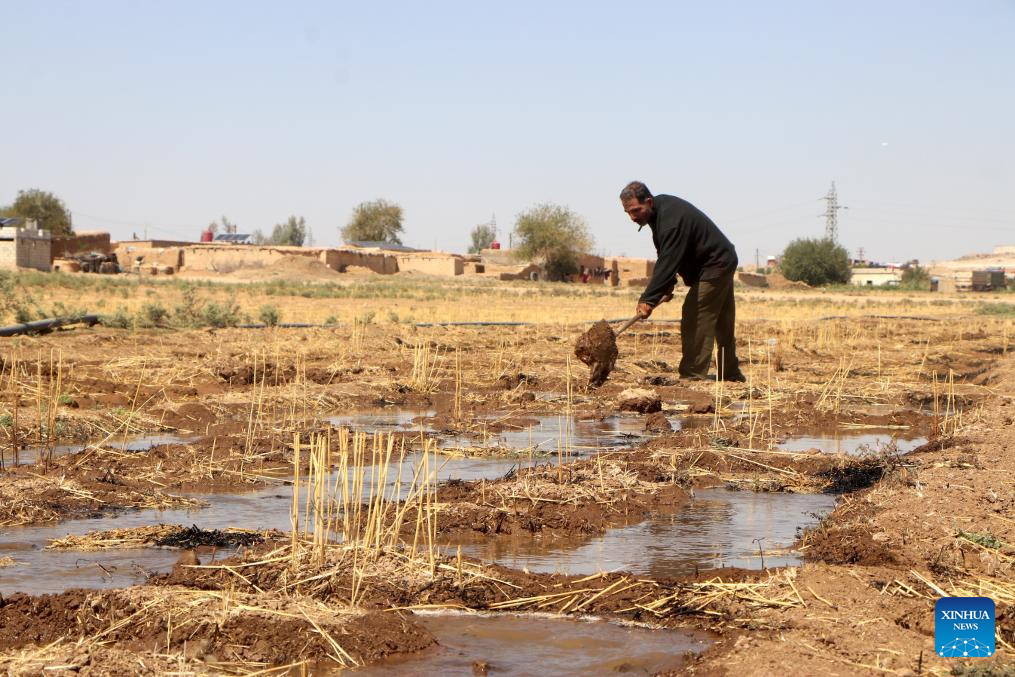
Syrian farmer Maher al-Ahmad works at his field in Hasakah province, northeastern Syria, Sept. 16, 2025. Once known as Syria's wheat basket, the northeastern province of Hasakah is now being hollowed out by years of drought, forcing families to abandon their farms and seek survival in cities.(Str/Xinhua)


