
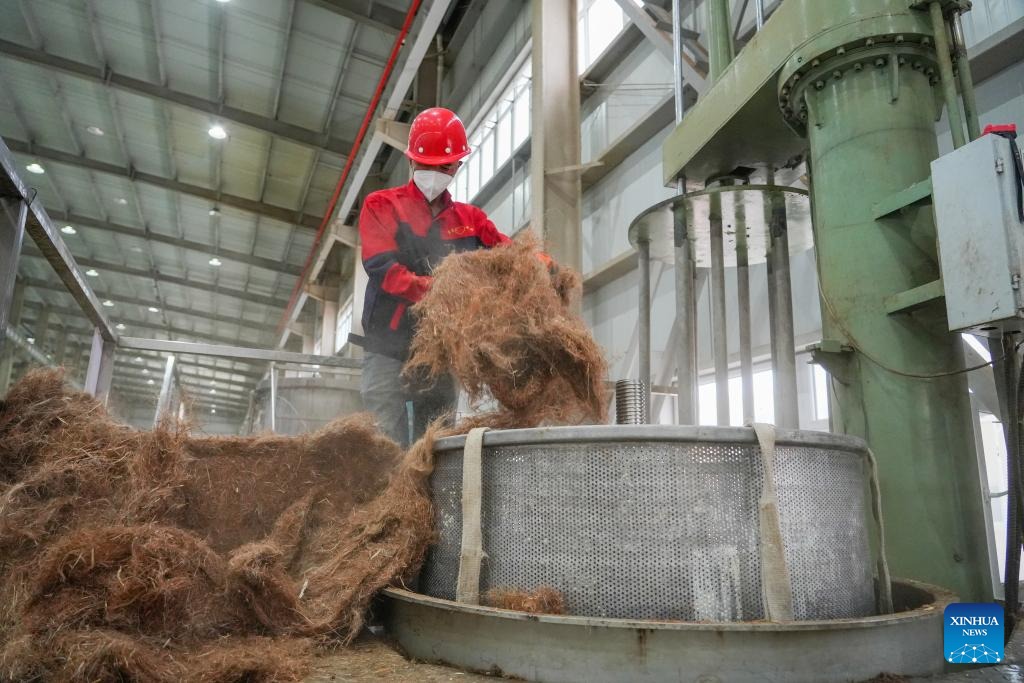
A worker processes raw materials at a fiber degumming workshop of a garment company in Yuli County, northwest China's Xinjiang Uygur Autonomous Region, Sept. 20, 2025. Leveraging apocynum venetum's characteristics of drought resistance, salt and alkali tolerance, cold and heat resistance, wind and sand resistance, and strong ecological adaptability, local authorities of Yuli County, which is located on the edge of the Taklimakan Desert, have made efforts to curb desertification, promote employment and increase local people's income by developing the apocynum venetum industry. (Photo by Wang Zhipeng/Xinhua)
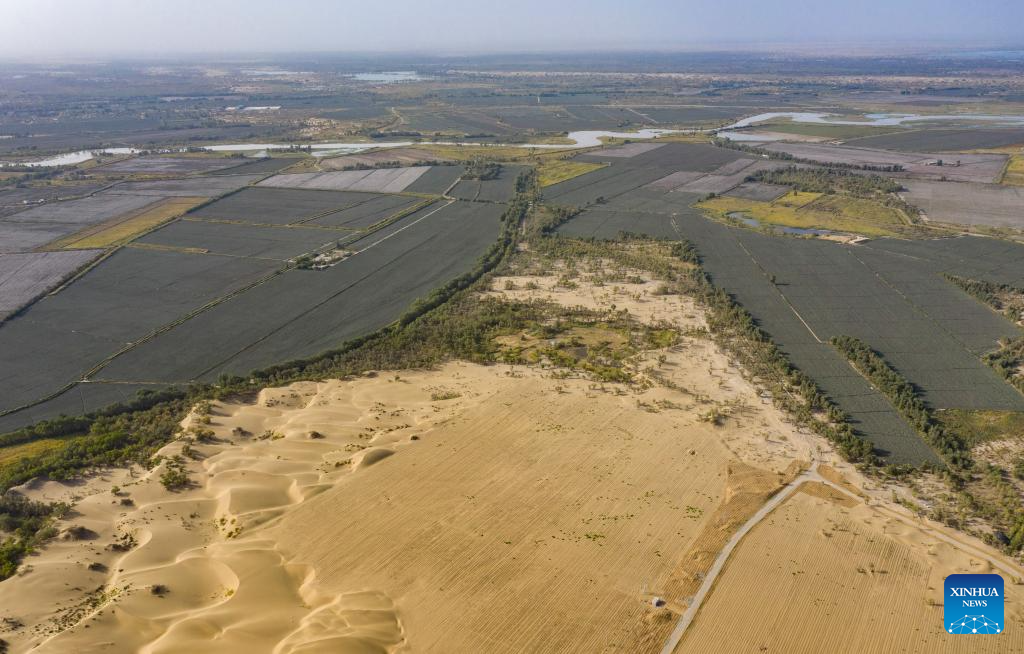
An aerial drone photo taken on Sept. 20, 2025 shows the apocynum venetum planting area (R, below), naturally formed sand dunes before treatment (L, below), and the Tarim River and the surrounding oases (above) at the desert prevention and control area on the south bank of the Tarim River in Yuli County, northwest China's Xinjiang Uygur Autonomous Region. Leveraging apocynum venetum's characteristics of drought resistance, salt and alkali tolerance, cold and heat resistance, wind and sand resistance, and strong ecological adaptability, local authorities of Yuli County, which is located on the edge of the Taklimakan Desert, have made efforts to curb desertification, promote employment and increase local people's income by developing the apocynum venetum industry. (Xinhua/Chen Shuo)
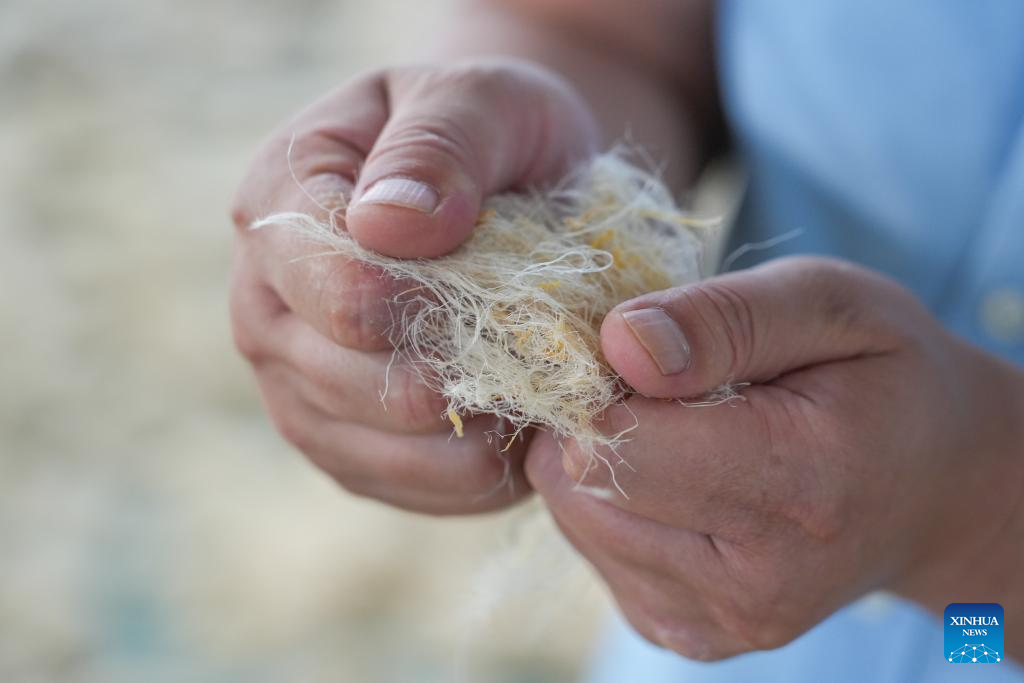
A worker checks the product quality at a fiber degumming workshop of a garment company in Yuli County, northwest China's Xinjiang Uygur Autonomous Region, Sept. 20, 2025. Leveraging apocynum venetum's characteristics of drought resistance, salt and alkali tolerance, cold and heat resistance, wind and sand resistance, and strong ecological adaptability, local authorities of Yuli County, which is located on the edge of the Taklimakan Desert, have made efforts to curb desertification, promote employment and increase local people's income by developing the apocynum venetum industry. (Photo by Wang Zhipeng/Xinhua)
Staff members patrol at the desert prevention and control area on the south bank of the Tarim River in Yuli County, northwest China's Xinjiang Uygur Autonomous Region, Sept. 20, 2025. Leveraging apocynum venetum's characteristics of drought resistance, salt and alkali tolerance, cold and heat resistance, wind and sand resistance, and strong ecological adaptability, local authorities of Yuli County, which is located on the edge of the Taklimakan Desert, have made efforts to curb desertification, promote employment and increase local people's income by developing the apocynum venetum industry. (Xinhua/Jiang Wenyao)
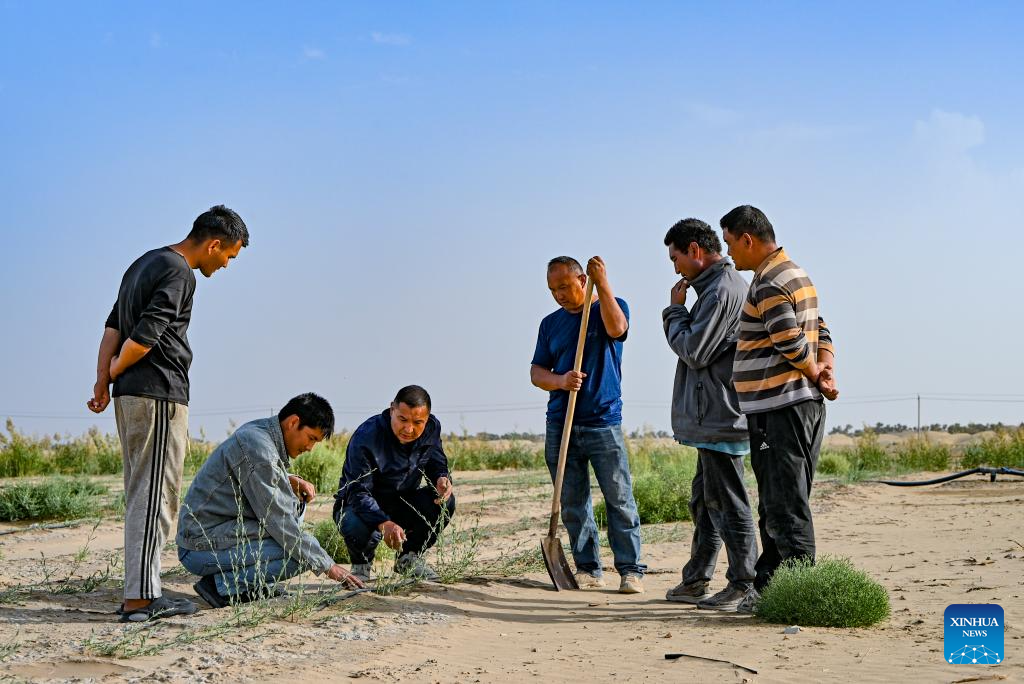
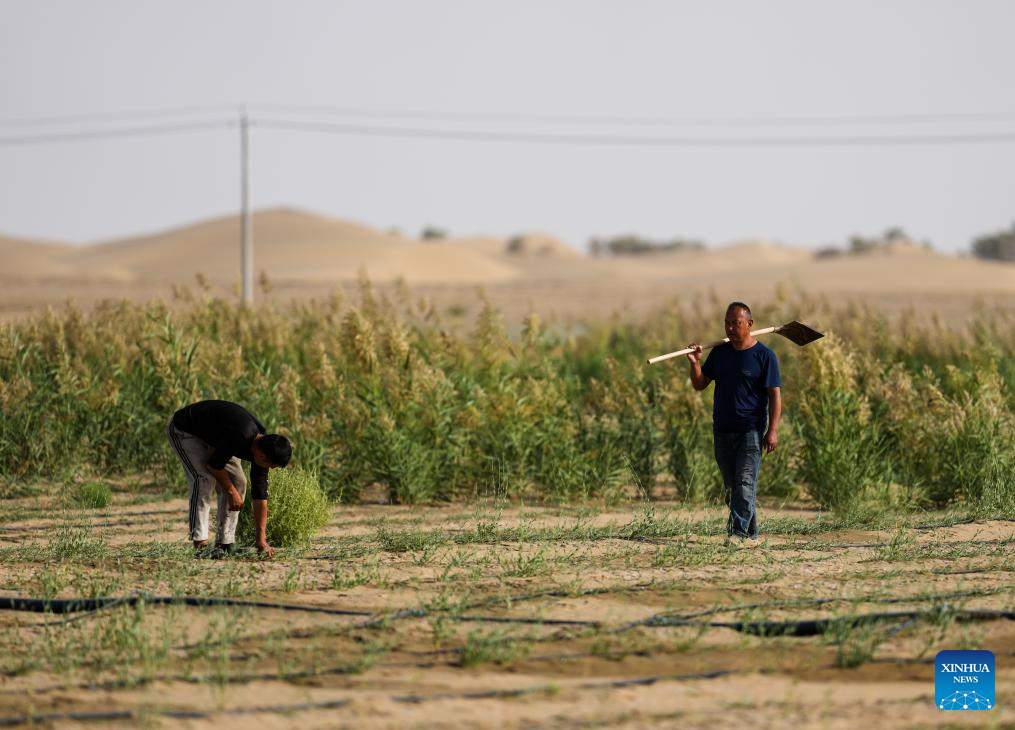
Staff members check the growth of apocynum venetum in Yuli County, northwest China's Xinjiang Uygur Autonomous Region, Sept. 20, 2025. Leveraging apocynum venetum's characteristics of drought resistance, salt and alkali tolerance, cold and heat resistance, wind and sand resistance, and strong ecological adaptability, local authorities of Yuli County, which is located on the edge of the Taklimakan Desert, have made efforts to curb desertification, promote employment and increase local people's income by developing the apocynum venetum industry. (Xinhua/Chen Shuo)
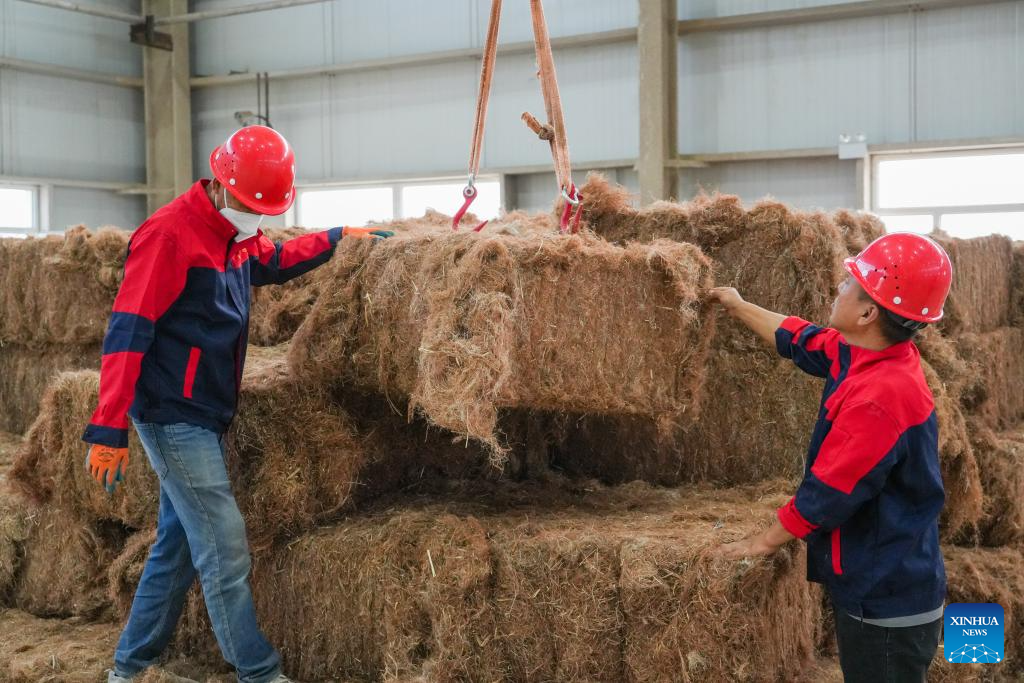
Workers transfer raw materials at a fiber degumming workshop of a garment company in Yuli County, northwest China's Xinjiang Uygur Autonomous Region, Sept. 20, 2025. Leveraging apocynum venetum's characteristics of drought resistance, salt and alkali tolerance, cold and heat resistance, wind and sand resistance, and strong ecological adaptability, local authorities of Yuli County, which is located on the edge of the Taklimakan Desert, have made efforts to curb desertification, promote employment and increase local people's income by developing the apocynum venetum industry. (Photo by Wang Zhipeng/Xinhua)
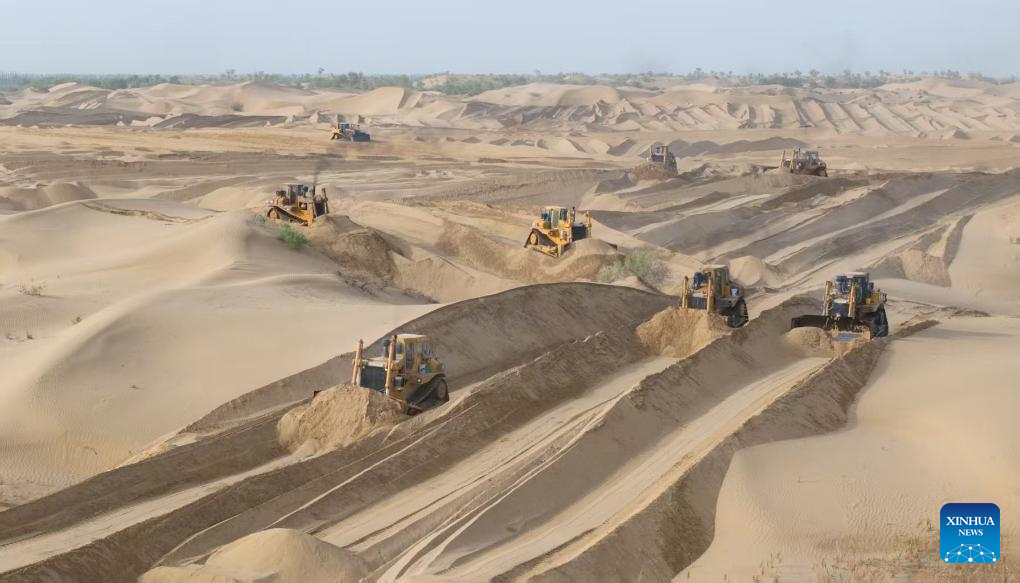
An aerial drone photo taken on May 22, 2025 shows large machinery leveling sand dunes at the desert prevention and control area on the south bank of the Tarim River in Yuli County, northwest China's Xinjiang Uygur Autonomous Region. Leveraging apocynum venetum's characteristics of drought resistance, salt and alkali tolerance, cold and heat resistance, wind and sand resistance, and strong ecological adaptability, local authorities of Yuli County, which is located on the edge of the Taklimakan Desert, have made efforts to curb desertification, promote employment and increase local people's income by developing the apocynum venetum industry. (Photo by Wang Zhipeng/Xinhua)
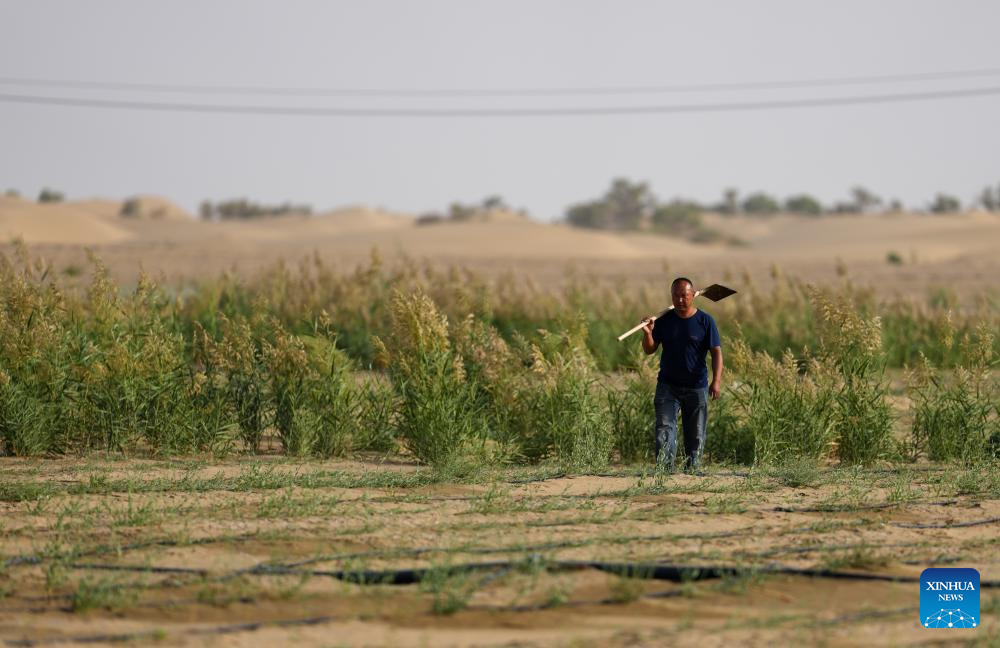
A staff member patrols at the desert prevention and control area on the south bank of the Tarim River in Yuli County, northwest China's Xinjiang Uygur Autonomous Region, Sept. 20, 2025. Leveraging apocynum venetum's characteristics of drought resistance, salt and alkali tolerance, cold and heat resistance, wind and sand resistance, and strong ecological adaptability, local authorities of Yuli County, which is located on the edge of the Taklimakan Desert, have made efforts to curb desertification, promote employment and increase local people's income by developing the apocynum venetum industry. (Xinhua/Jiang Wenyao)
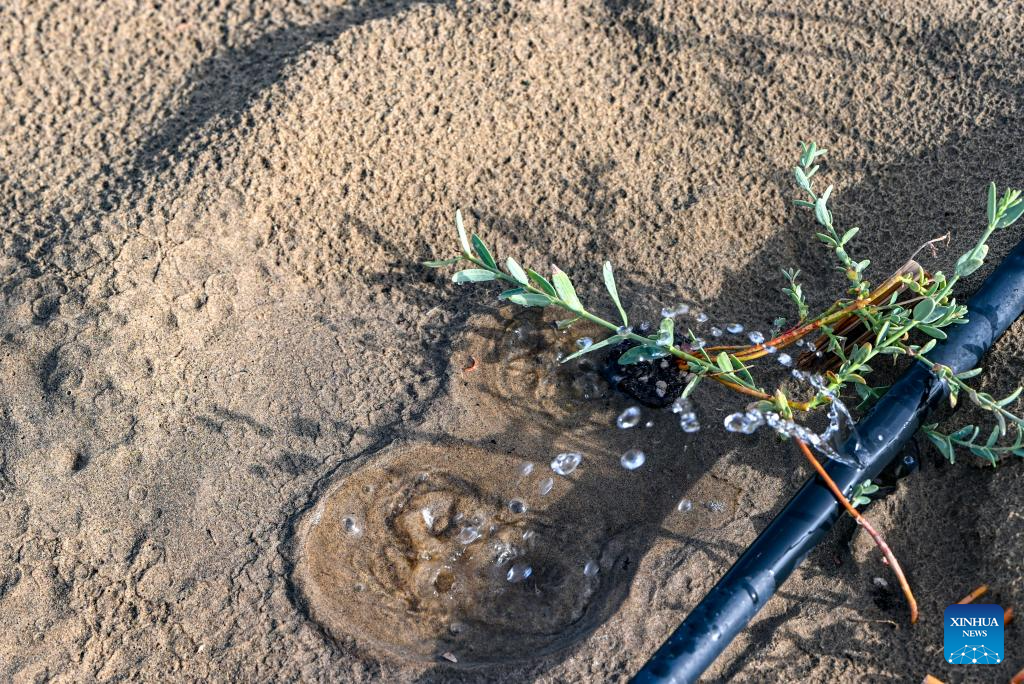
This photo taken on Sept. 20, 2025 shows the apocynum venetum irrigated by drip irrigation at the desert prevention and control area on the south bank of the Tarim River in Yuli County, northwest China's Xinjiang Uygur Autonomous Region. Leveraging apocynum venetum's characteristics of drought resistance, salt and alkali tolerance, cold and heat resistance, wind and sand resistance, and strong ecological adaptability, local authorities of Yuli County, which is located on the edge of the Taklimakan Desert, have made efforts to curb desertification, promote employment and increase local people's income by developing the apocynum venetum industry. (Xinhua/Chen Shuo)
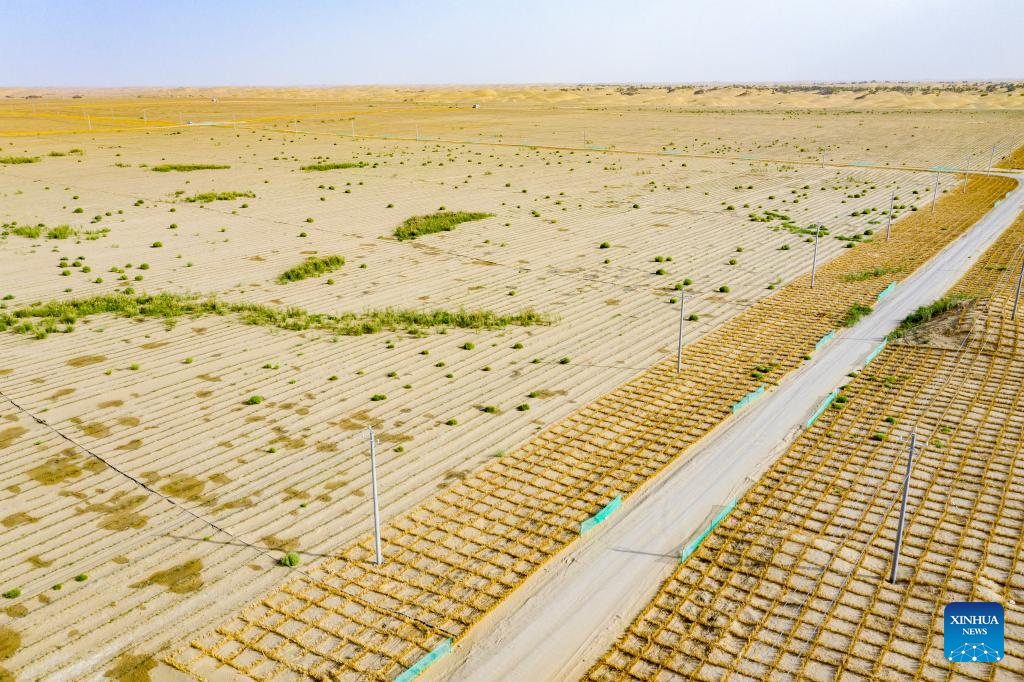
An aerial drone photo taken on Sept. 20, 2025 shows the apocynum venetum planting area (L) and sand-fixing grass grid (R) at the desert prevention and control area on the south bank of the Tarim River in Yuli County, northwest China's Xinjiang Uygur Autonomous Region. Leveraging apocynum venetum's characteristics of drought resistance, salt and alkali tolerance, cold and heat resistance, wind and sand resistance, and strong ecological adaptability, local authorities of Yuli County, which is located on the edge of the Taklimakan Desert, have made efforts to curb desertification, promote employment and increase local people's income by developing the apocynum venetum industry. (Xinhua/Chen Shuo)
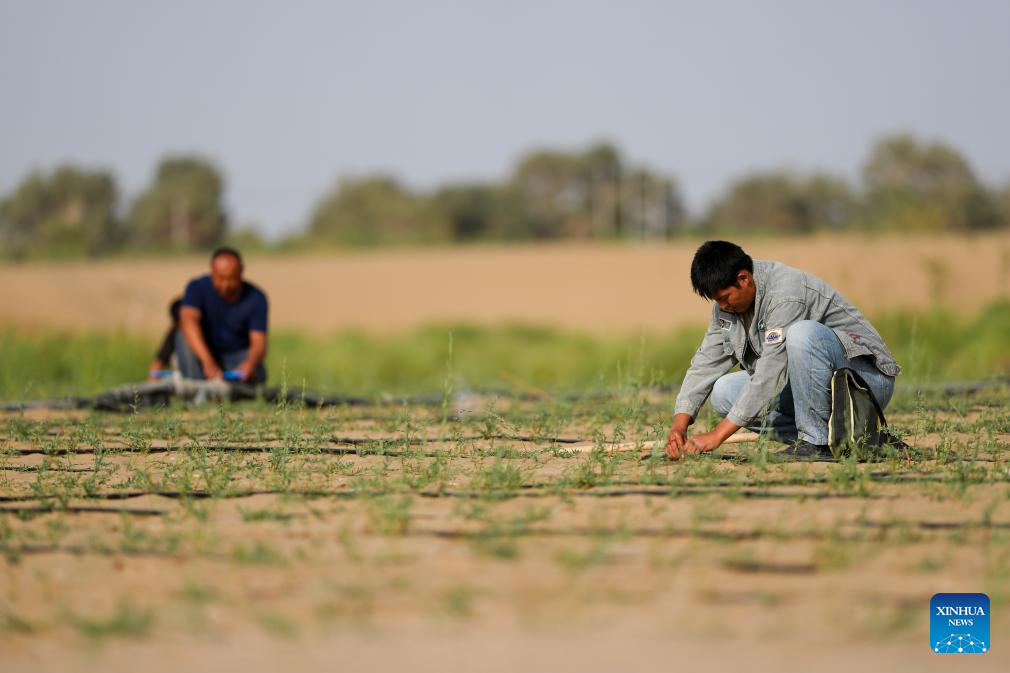
Staff members check the condition of drip irrigation pipes at the desert prevention and control area on the south bank of the Tarim River in Yuli County, northwest China's Xinjiang Uygur Autonomous Region, Sept. 20, 2025. Leveraging apocynum venetum's characteristics of drought resistance, salt and alkali tolerance, cold and heat resistance, wind and sand resistance, and strong ecological adaptability, local authorities of Yuli County, which is located on the edge of the Taklimakan Desert, have made efforts to curb desertification, promote employment and increase local people's income by developing the apocynum venetum industry. (Xinhua/Jiang Wenyao)
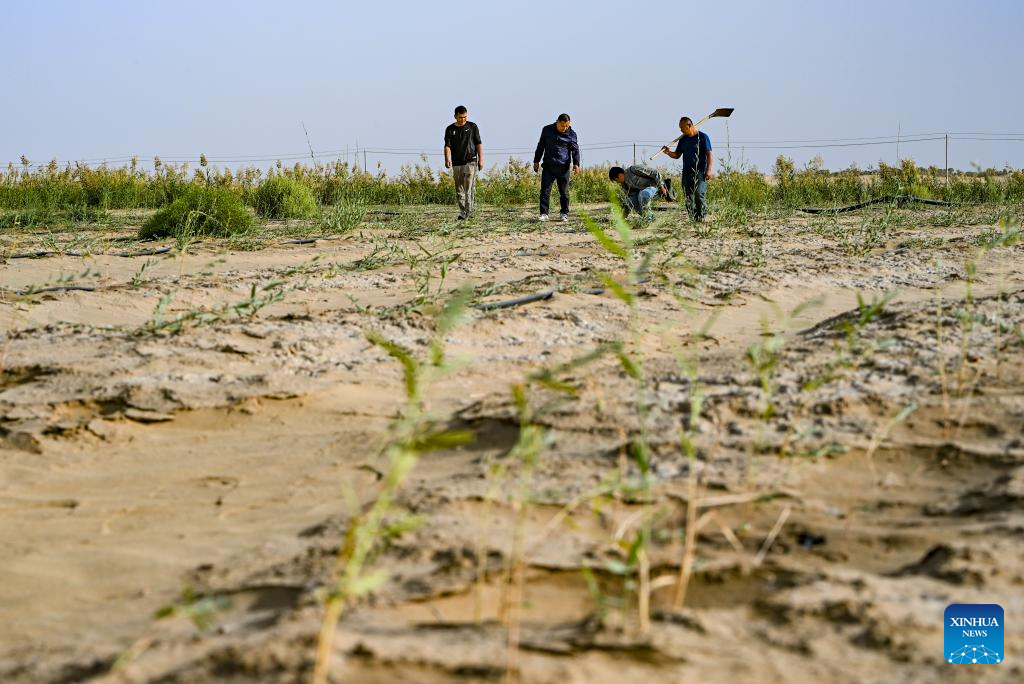
Staff members check the growth of apocynum venetum in Yuli County, northwest China's Xinjiang Uygur Autonomous Region, Sept. 20, 2025. Leveraging apocynum venetum's characteristics of drought resistance, salt and alkali tolerance, cold and heat resistance, wind and sand resistance, and strong ecological adaptability, local authorities of Yuli County, which is located on the edge of the Taklimakan Desert, have made efforts to curb desertification, promote employment and increase local people's income by developing the apocynum venetum industry. (Xinhua/Chen Shuo)


