

People view an unmanned aerial multi-functional support vehicle produced in Liuzhou during the 22nd China-ASEAN Expo in Nanning, south China's Guangxi Zhuang Autonomous Region, Sept. 20, 2025. At the ongoing 22nd China-ASEAN Expo, new energy vehicles produced in Liuzhou of Guangxi and empowered by artificial intelligence draw wide attention from both domestic and overseas businesses and visitors.
Liuzhou is a renowned automobile manufacturing city in China. In recent years, the city has focused on applying AI technology to new energy vehicles, continuously promoting innovation and upgrading in the auto industry, and exploring new models that integrate the promotion of NEVs with industrial development.
Statistics show that in the first half of this year, Liuzhou's total auto output reached 869,000 units, up 34.2 percent year-on-year. Among them, NEV production hit 468,000 units, an increase of 95.9 percent. (Xinhua/Zhou Tinglu)

This photo taken on Sept. 9, 2025 shows an automatic production line of SAIC GM Wuling Automobile in Liuzhou, south China's Guangxi Zhuang Autonomous Region. At the ongoing 22nd China-ASEAN Expo, new energy vehicles produced in Liuzhou of Guangxi and empowered by artificial intelligence draw wide attention from both domestic and overseas businesses and visitors.
Liuzhou is a renowned automobile manufacturing city in China. In recent years, the city has focused on applying AI technology to new energy vehicles, continuously promoting innovation and upgrading in the auto industry, and exploring new models that integrate the promotion of NEVs with industrial development.
Statistics show that in the first half of this year, Liuzhou's total auto output reached 869,000 units, up 34.2 percent year-on-year. Among them, NEV production hit 468,000 units, an increase of 95.9 percent. (Photo by Zheng Changhao/Xinhua)
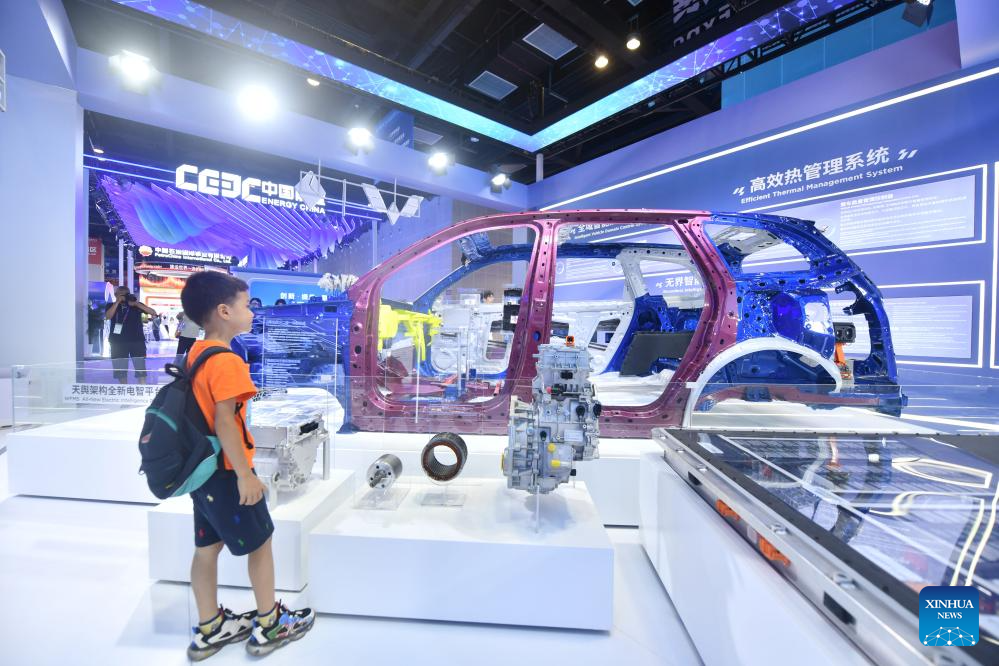
This photo taken on Sept. 20, 2025 shows a booth displaying new energy vehicle produced in Liuzhou during the 22nd China-ASEAN Expo in Nanning, south China's Guangxi Zhuang Autonomous Region. At the ongoing 22nd China-ASEAN Expo, new energy vehicles produced in Liuzhou of Guangxi and empowered by artificial intelligence draw wide attention from both domestic and overseas businesses and visitors.
Liuzhou is a renowned automobile manufacturing city in China. In recent years, the city has focused on applying AI technology to new energy vehicles, continuously promoting innovation and upgrading in the auto industry, and exploring new models that integrate the promotion of NEVs with industrial development.
Statistics show that in the first half of this year, Liuzhou's total auto output reached 869,000 units, up 34.2 percent year-on-year. Among them, NEV production hit 468,000 units, an increase of 95.9 percent. (Xinhua/Hu Qiusi)
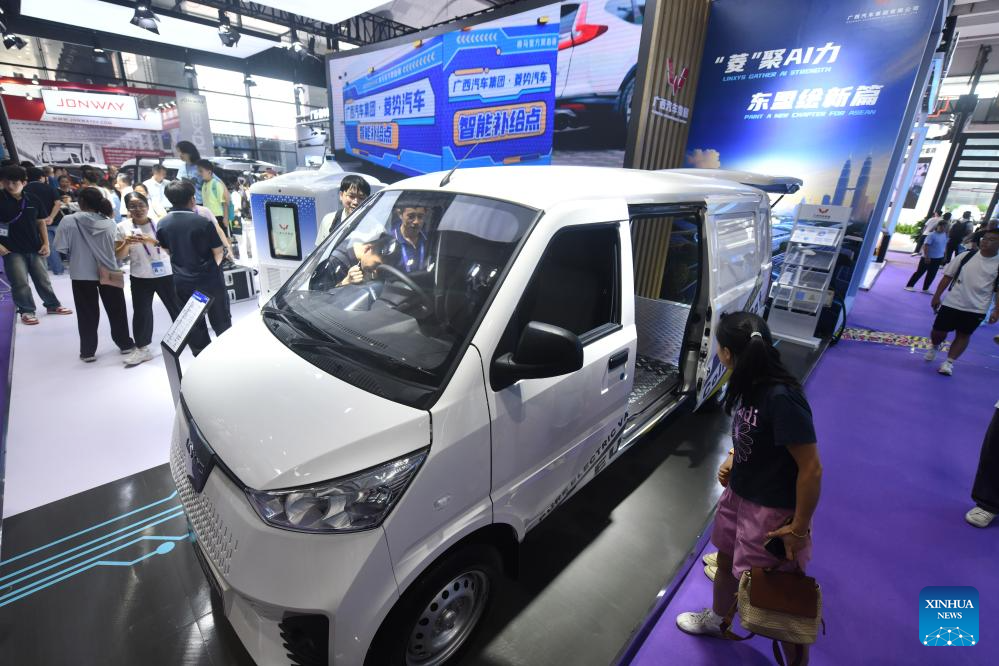
People view an electric vehicle produced in Liuzhou during the 22nd China-ASEAN Expo in Nanning, south China's Guangxi Zhuang Autonomous Region, Sept. 20, 2025. At the ongoing 22nd China-ASEAN Expo, new energy vehicles produced in Liuzhou of Guangxi and empowered by artificial intelligence draw wide attention from both domestic and overseas businesses and visitors.
Liuzhou is a renowned automobile manufacturing city in China. In recent years, the city has focused on applying AI technology to new energy vehicles, continuously promoting innovation and upgrading in the auto industry, and exploring new models that integrate the promotion of NEVs with industrial development.
Statistics show that in the first half of this year, Liuzhou's total auto output reached 869,000 units, up 34.2 percent year-on-year. Among them, NEV production hit 468,000 units, an increase of 95.9 percent. (Xinhua/Zhou Tinglu)
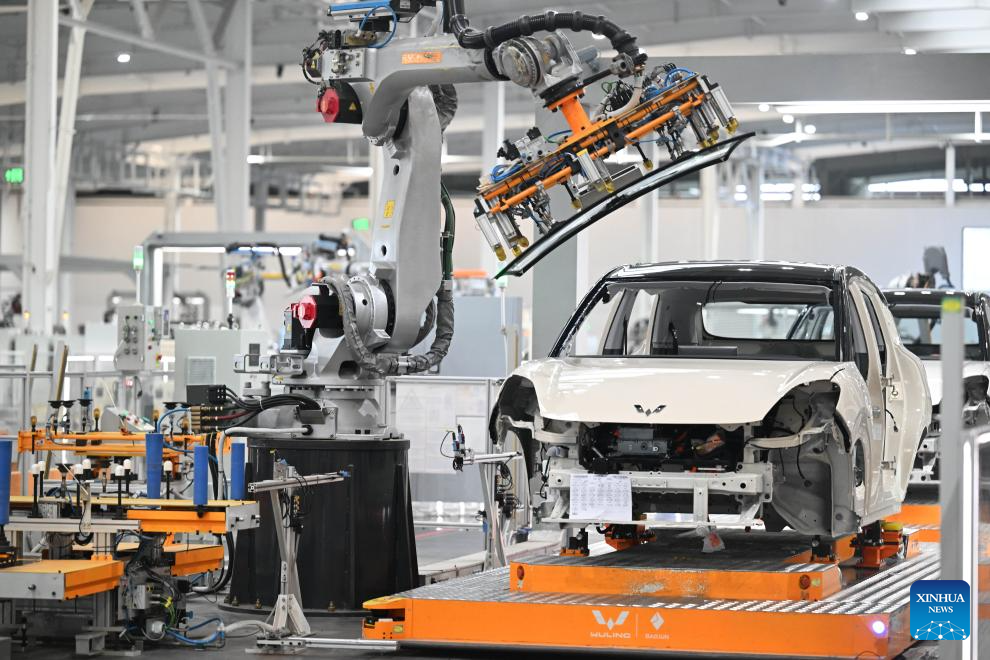
This photo taken on Sept. 9, 2025 shows an automatic production line of SAIC GM Wuling Automobile in Liuzhou, south China's Guangxi Zhuang Autonomous Region. At the ongoing 22nd China-ASEAN Expo, new energy vehicles produced in Liuzhou of Guangxi and empowered by artificial intelligence draw wide attention from both domestic and overseas businesses and visitors.
Liuzhou is a renowned automobile manufacturing city in China. In recent years, the city has focused on applying AI technology to new energy vehicles, continuously promoting innovation and upgrading in the auto industry, and exploring new models that integrate the promotion of NEVs with industrial development.
Statistics show that in the first half of this year, Liuzhou's total auto output reached 869,000 units, up 34.2 percent year-on-year. Among them, NEV production hit 468,000 units, an increase of 95.9 percent. (Photo by Li Hanchi/Xinhua)
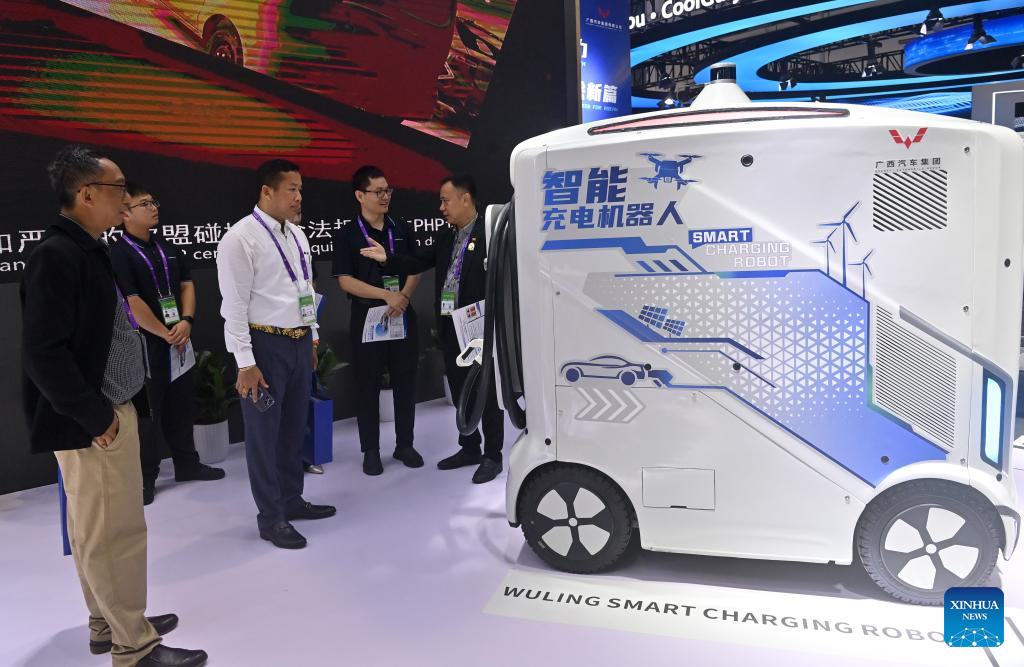
People view an intelligent charging robot during the 22nd China-ASEAN Expo in Nanning, south China's Guangxi Zhuang Autonomous Region, Sept. 19, 2025. At the ongoing 22nd China-ASEAN Expo, new energy vehicles produced in Liuzhou of Guangxi and empowered by artificial intelligence draw wide attention from both domestic and overseas businesses and visitors.
Liuzhou is a renowned automobile manufacturing city in China. In recent years, the city has focused on applying AI technology to new energy vehicles, continuously promoting innovation and upgrading in the auto industry, and exploring new models that integrate the promotion of NEVs with industrial development.
Statistics show that in the first half of this year, Liuzhou's total auto output reached 869,000 units, up 34.2 percent year-on-year. Among them, NEV production hit 468,000 units, an increase of 95.9 percent. (Xinhua/Lu Boan)
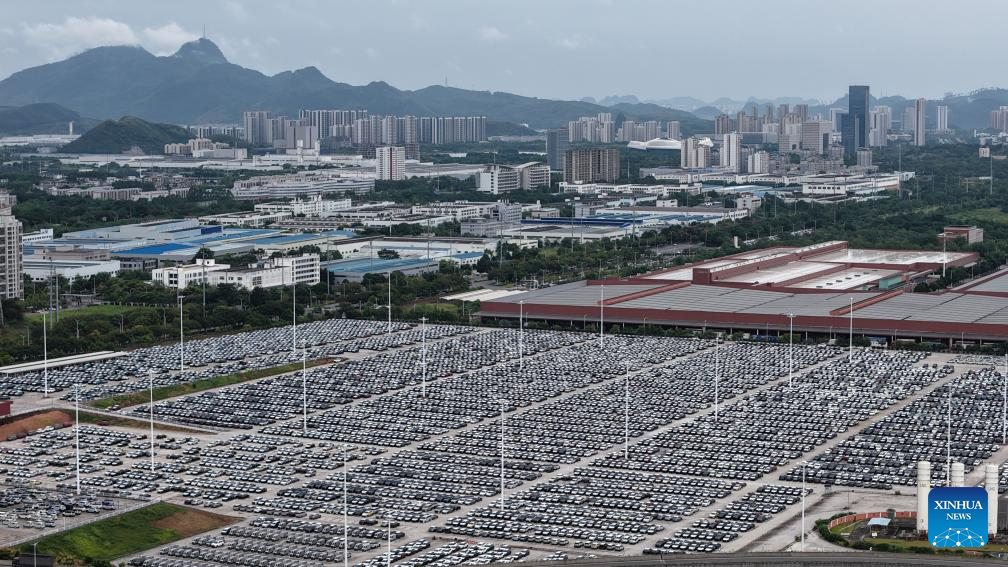
This aerial drone photo taken on Sept. 8, 2025 shows an auto logistics base in Liuzhou, south China's Guangxi Zhuang Autonomous Region. At the ongoing 22nd China-ASEAN Expo, new energy vehicles produced in Liuzhou of Guangxi and empowered by artificial intelligence draw wide attention from both domestic and overseas businesses and visitors.
Liuzhou is a renowned automobile manufacturing city in China. In recent years, the city has focused on applying AI technology to new energy vehicles, continuously promoting innovation and upgrading in the auto industry, and exploring new models that integrate the promotion of NEVs with industrial development.
Statistics show that in the first half of this year, Liuzhou's total auto output reached 869,000 units, up 34.2 percent year-on-year. Among them, NEV production hit 468,000 units, an increase of 95.9 percent. (Xinhua/Huang Xiaobang)
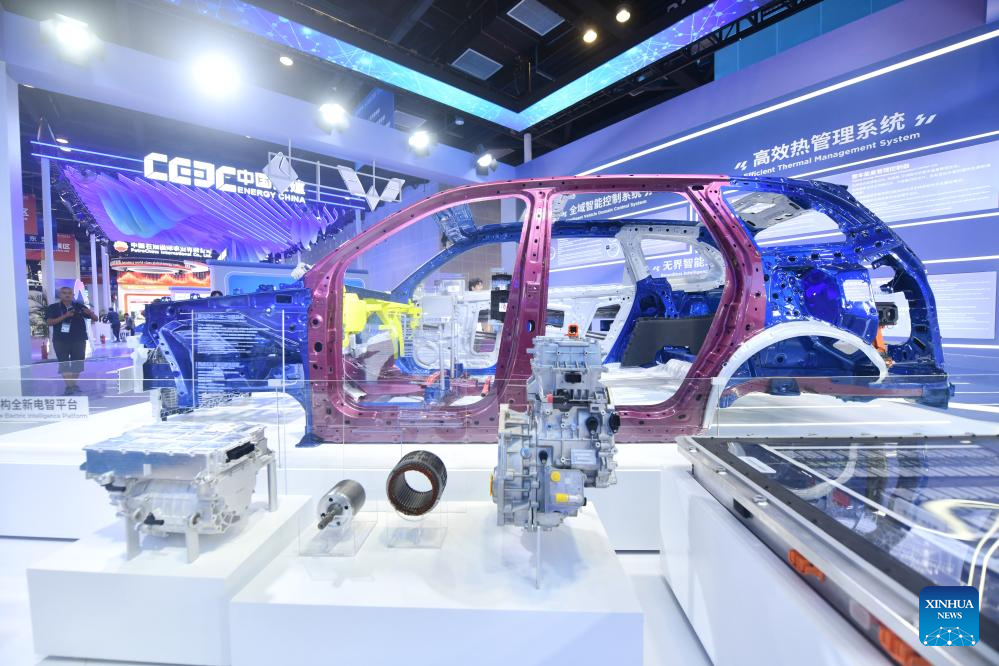
This photo taken on Sept. 20, 2025 shows a booth displaying new energy vehicle produced in Liuzhou during the 22nd China-ASEAN Expo in Nanning, south China's Guangxi Zhuang Autonomous Region. At the ongoing 22nd China-ASEAN Expo, new energy vehicles produced in Liuzhou of Guangxi and empowered by artificial intelligence draw wide attention from both domestic and overseas businesses and visitors.
Liuzhou is a renowned automobile manufacturing city in China. In recent years, the city has focused on applying AI technology to new energy vehicles, continuously promoting innovation and upgrading in the auto industry, and exploring new models that integrate the promotion of NEVs with industrial development.
Statistics show that in the first half of this year, Liuzhou's total auto output reached 869,000 units, up 34.2 percent year-on-year. Among them, NEV production hit 468,000 units, an increase of 95.9 percent. (Xinhua/Hu Qiusi)

People view an electric vehicle produced in Liuzhou during the 22nd China-ASEAN Expo in Nanning, south China's Guangxi Zhuang Autonomous Region, Sept. 18, 2025. At the ongoing 22nd China-ASEAN Expo, new energy vehicles produced in Liuzhou of Guangxi and empowered by artificial intelligence draw wide attention from both domestic and overseas businesses and visitors.
Liuzhou is a renowned automobile manufacturing city in China. In recent years, the city has focused on applying AI technology to new energy vehicles, continuously promoting innovation and upgrading in the auto industry, and exploring new models that integrate the promotion of NEVs with industrial development.
Statistics show that in the first half of this year, Liuzhou's total auto output reached 869,000 units, up 34.2 percent year-on-year. Among them, NEV production hit 468,000 units, an increase of 95.9 percent. (Xinhua/Zhang Ailin)


