
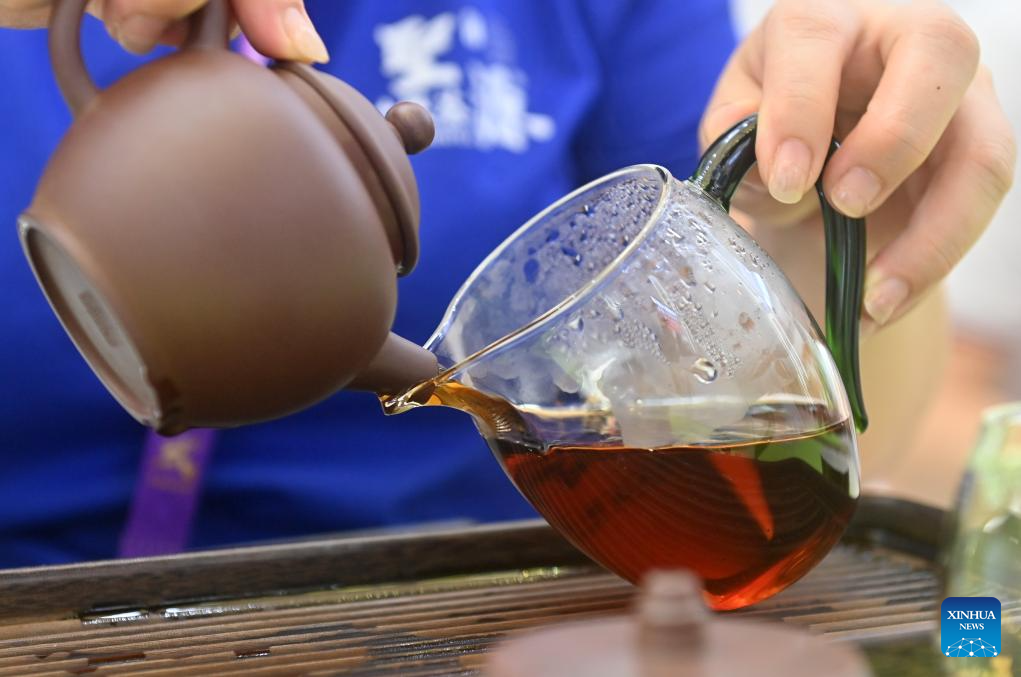
A staff member serves Liubao tea for visitors at the Nanning International Convention and Exhibition Center in Nanning, capital of south China's Guangxi Zhuang Autonomous Region, Sept. 17, 2025. Liubao tea, a Chinese dark tea known for its strong, lingering fragrance and medicinal properties, boasts a history spanning over 1,500 years. It has attracted thousands of eyes with its presence at the ongoing 22nd China-ASEAN Expo.
The traditional Liubao tea-making technique is also recognized as a UNESCO Intangible Cultural Heritage subproject. Named after Liubao Town in Wuzhou City, Guangxi, the tea thrives in this region, where mist-covered mountains and a favorable climate have long made it an ideal area for tea cultivation. (Xinhua/Lu Boan)
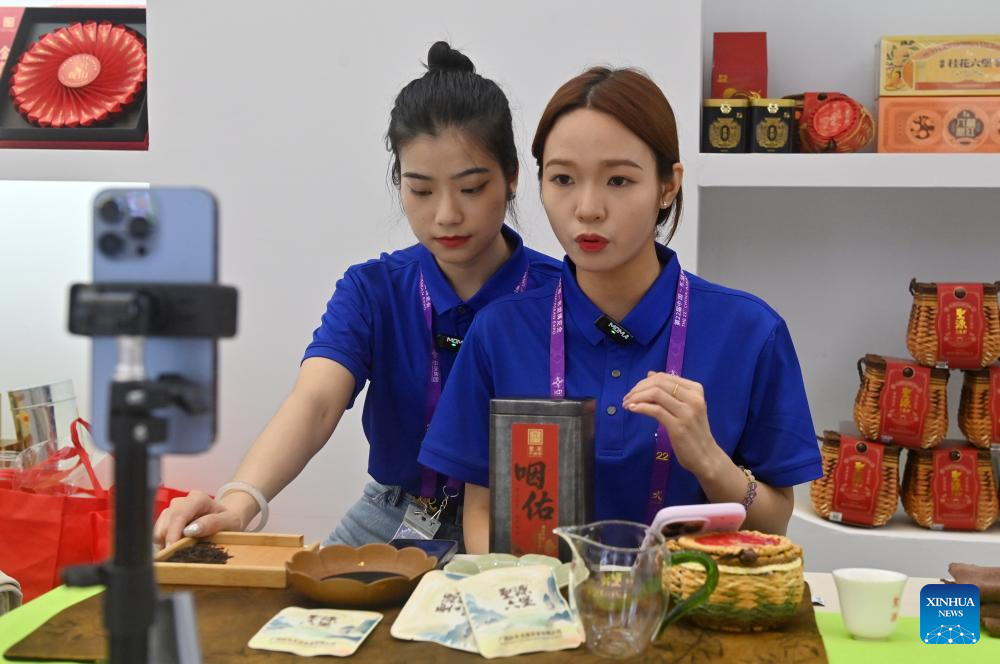
Staff members promote Liubao tea via live streaming at the Nanning International Convention and Exhibition Center in Nanning, capital of south China's Guangxi Zhuang Autonomous Region, Sept. 17, 2025. Liubao tea, a Chinese dark tea known for its strong, lingering fragrance and medicinal properties, boasts a history spanning over 1,500 years. It has attracted thousands of eyes with its presence at the ongoing 22nd China-ASEAN Expo.
The traditional Liubao tea-making technique is also recognized as a UNESCO Intangible Cultural Heritage subproject. Named after Liubao Town in Wuzhou City, Guangxi, the tea thrives in this region, where mist-covered mountains and a favorable climate have long made it an ideal area for tea cultivation. (Xinhua/Lu Boan)

Tea farmers harvest tea leaves at a tea garden in Sanjiang Dong Autonomous County, south China's Guangxi Zhuang Autonomous Region, March 21, 2025. Liubao tea, a Chinese dark tea known for its strong, lingering fragrance and medicinal properties, boasts a history spanning over 1,500 years. It has attracted thousands of eyes with its presence at the ongoing 22nd China-ASEAN Expo.
The traditional Liubao tea-making technique is also recognized as a UNESCO Intangible Cultural Heritage subproject. Named after Liubao Town in Wuzhou City, Guangxi, the tea thrives in this region, where mist-covered mountains and a favorable climate have long made it an ideal area for tea cultivation. (Xinhua/Zhang Ailin)
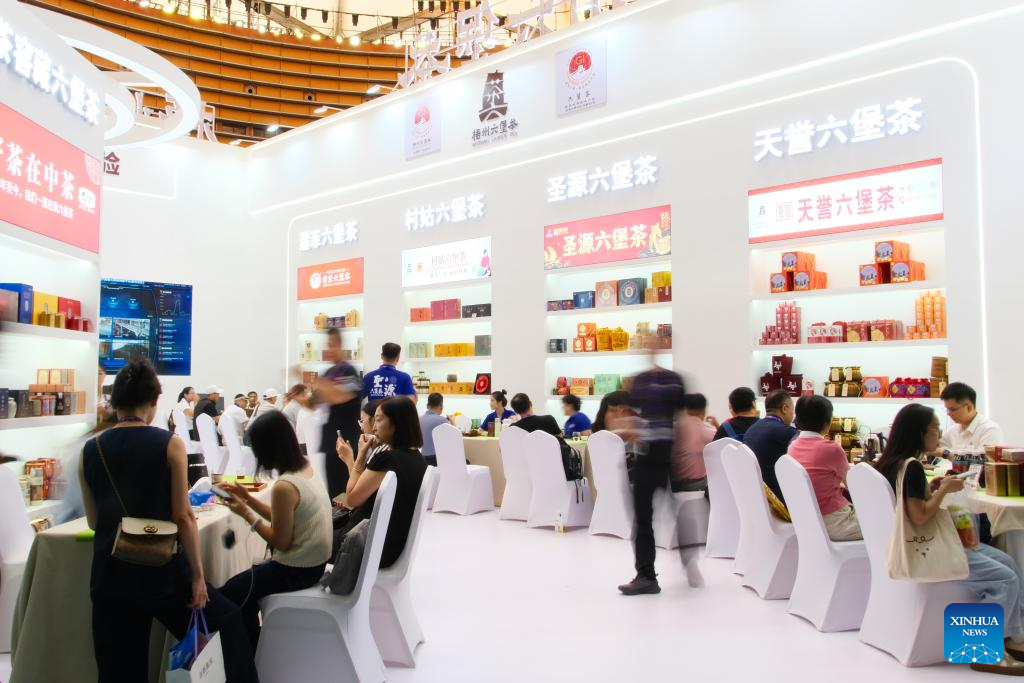
Visitors taste and purchase Liubao tea products at the Nanning International Convention and Exhibition Center in Nanning, capital of south China's Guangxi Zhuang Autonomous Region, Sept. 18, 2025. Liubao tea, a Chinese dark tea known for its strong, lingering fragrance and medicinal properties, boasts a history spanning over 1,500 years. It has attracted thousands of eyes with its presence at the ongoing 22nd China-ASEAN Expo.
The traditional Liubao tea-making technique is also recognized as a UNESCO Intangible Cultural Heritage subproject. Named after Liubao Town in Wuzhou City, Guangxi, the tea thrives in this region, where mist-covered mountains and a favorable climate have long made it an ideal area for tea cultivation. (Xinhua/Hu Qiusi)
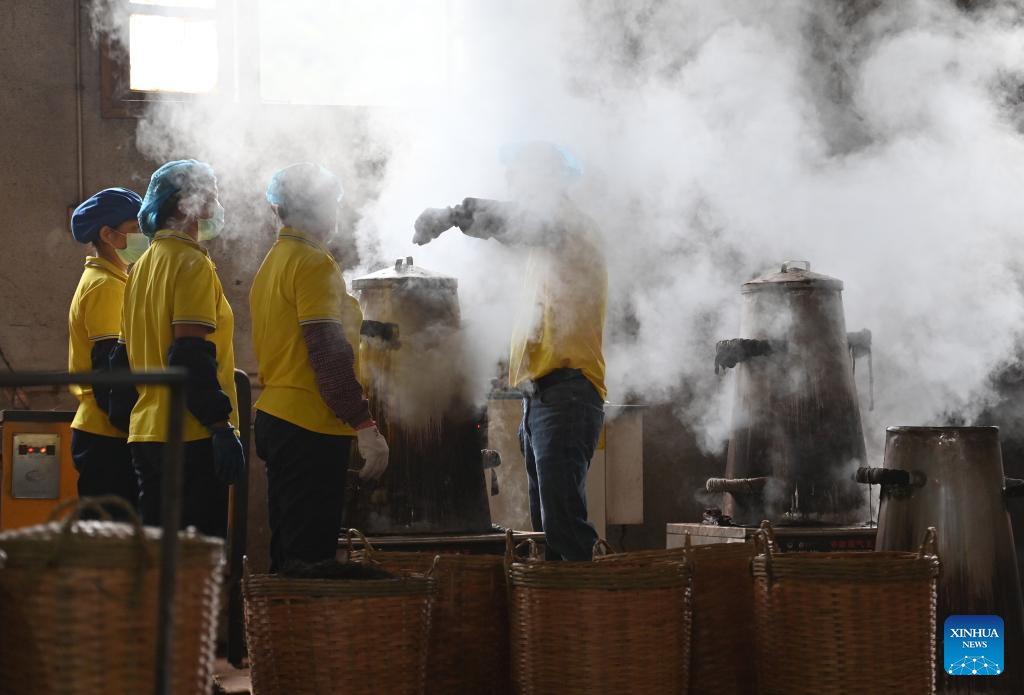
Workers produce Liubao tea products at a factory in Wuzhou City, south China's Guangxi Zhuang Autonomous Region, March 26, 2024. Liubao tea, a Chinese dark tea known for its strong, lingering fragrance and medicinal properties, boasts a history spanning over 1,500 years. It has attracted thousands of eyes with its presence at the ongoing 22nd China-ASEAN Expo.
The traditional Liubao tea-making technique is also recognized as a UNESCO Intangible Cultural Heritage subproject. Named after Liubao Town in Wuzhou City, Guangxi, the tea thrives in this region, where mist-covered mountains and a favorable climate have long made it an ideal area for tea cultivation. (Xinhua/Huang Xiaobang)

A staff member promotes Liubao tea via live streaming at the Nanning International Convention and Exhibition Center in Nanning, capital of south China's Guangxi Zhuang Autonomous Region, Sept. 18, 2025. Liubao tea, a Chinese dark tea known for its strong, lingering fragrance and medicinal properties, boasts a history spanning over 1,500 years. It has attracted thousands of eyes with its presence at the ongoing 22nd China-ASEAN Expo.
The traditional Liubao tea-making technique is also recognized as a UNESCO Intangible Cultural Heritage subproject. Named after Liubao Town in Wuzhou City, Guangxi, the tea thrives in this region, where mist-covered mountains and a favorable climate have long made it an ideal area for tea cultivation. (Xinhua/Hu Qiusi)

A staff member promotes Liubao tea via live streaming at the Nanning International Convention and Exhibition Center in Nanning, capital of south China's Guangxi Zhuang Autonomous Region, Sept. 18, 2025. Liubao tea, a Chinese dark tea known for its strong, lingering fragrance and medicinal properties, boasts a history spanning over 1,500 years. It has attracted thousands of eyes with its presence at the ongoing 22nd China-ASEAN Expo.
The traditional Liubao tea-making technique is also recognized as a UNESCO Intangible Cultural Heritage subproject. Named after Liubao Town in Wuzhou City, Guangxi, the tea thrives in this region, where mist-covered mountains and a favorable climate have long made it an ideal area for tea cultivation. (Xinhua/Zhou Tinglu)
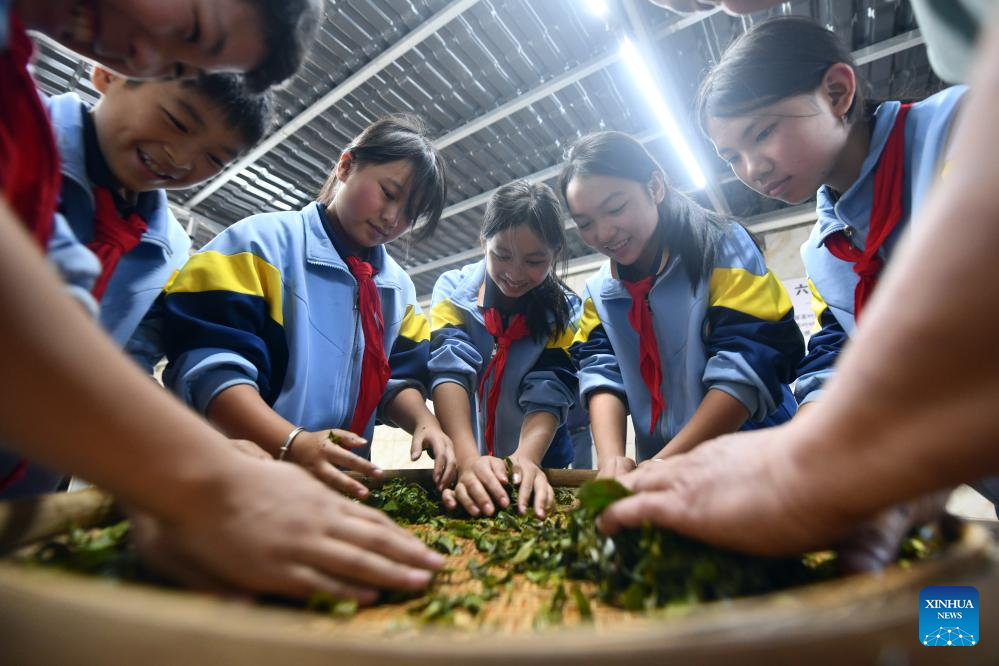
Students learn to process Liubao tea in Liubao Town, Cangwu County, Wuzhou City, south China's Guangxi Zhuang Autonomous Region, Dec. 3, 2024. Liubao tea, a Chinese dark tea known for its strong, lingering fragrance and medicinal properties, boasts a history spanning over 1,500 years. It has attracted thousands of eyes with its presence at the ongoing 22nd China-ASEAN Expo.
The traditional Liubao tea-making technique is also recognized as a UNESCO Intangible Cultural Heritage subproject. Named after Liubao Town in Wuzhou City, Guangxi, the tea thrives in this region, where mist-covered mountains and a favorable climate have long made it an ideal area for tea cultivation. (Xinhua/Huang Xiaobang)
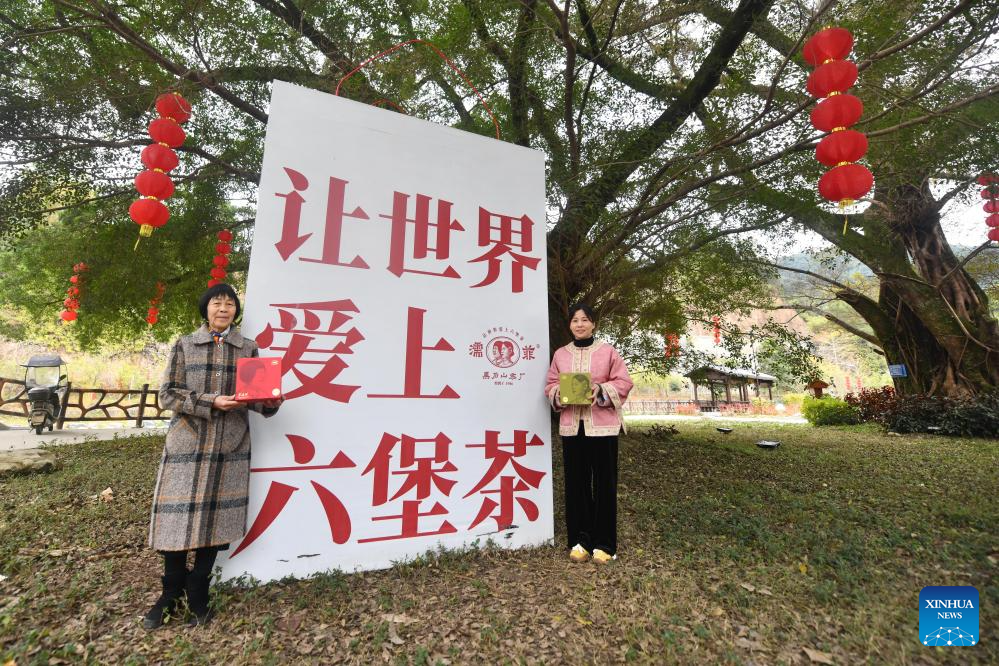
Wei Jiequn (L), an inheritor of Liubao tea producing technique, and her daughter Shi Rufei present Liubao tea products in Wuzhou City, south China's Guangxi Zhuang Autonomous Region, Feb. 21, 2025. Liubao tea, a Chinese dark tea known for its strong, lingering fragrance and medicinal properties, boasts a history spanning over 1,500 years. It has attracted thousands of eyes with its presence at the ongoing 22nd China-ASEAN Expo.
The traditional Liubao tea-making technique is also recognized as a UNESCO Intangible Cultural Heritage subproject. Named after Liubao Town in Wuzhou City, Guangxi, the tea thrives in this region, where mist-covered mountains and a favorable climate have long made it an ideal area for tea cultivation. (Xinhua/Huang Xiaobang)
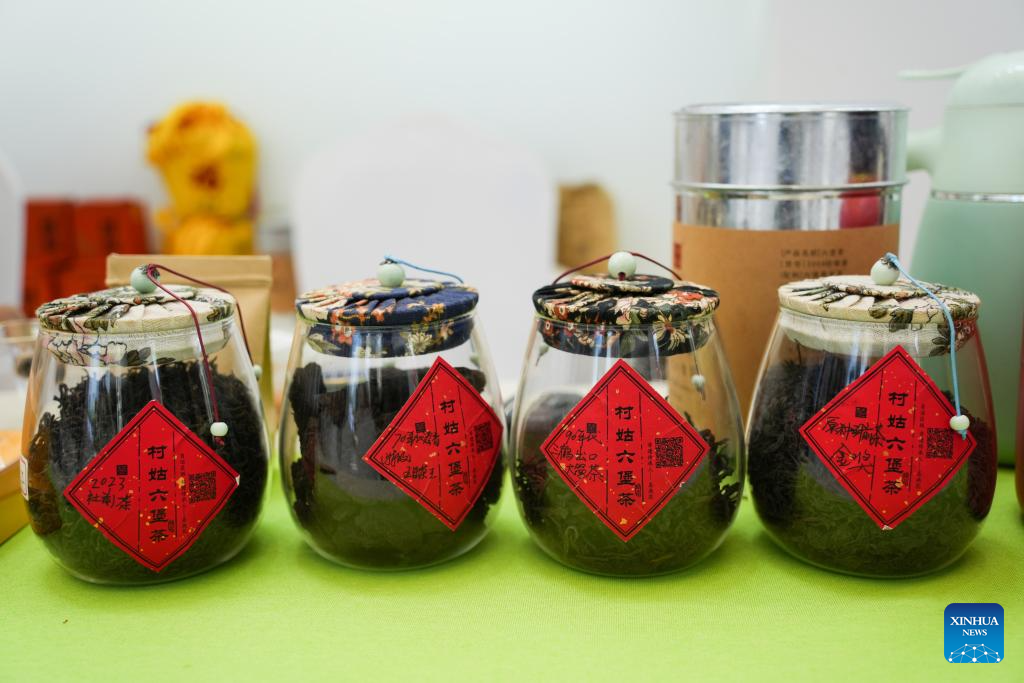
This photo taken on Sept. 18, 2025 shows Liubao tea products displayed at the Nanning International Convention and Exhibition Center in Nanning, capital of south China's Guangxi Zhuang Autonomous Region. Liubao tea, a Chinese dark tea known for its strong, lingering fragrance and medicinal properties, boasts a history spanning over 1,500 years. It has attracted thousands of eyes with its presence at the ongoing 22nd China-ASEAN Expo.
The traditional Liubao tea-making technique is also recognized as a UNESCO Intangible Cultural Heritage subproject. Named after Liubao Town in Wuzhou City, Guangxi, the tea thrives in this region, where mist-covered mountains and a favorable climate have long made it an ideal area for tea cultivation. (Xinhua/Zhou Tinglu)
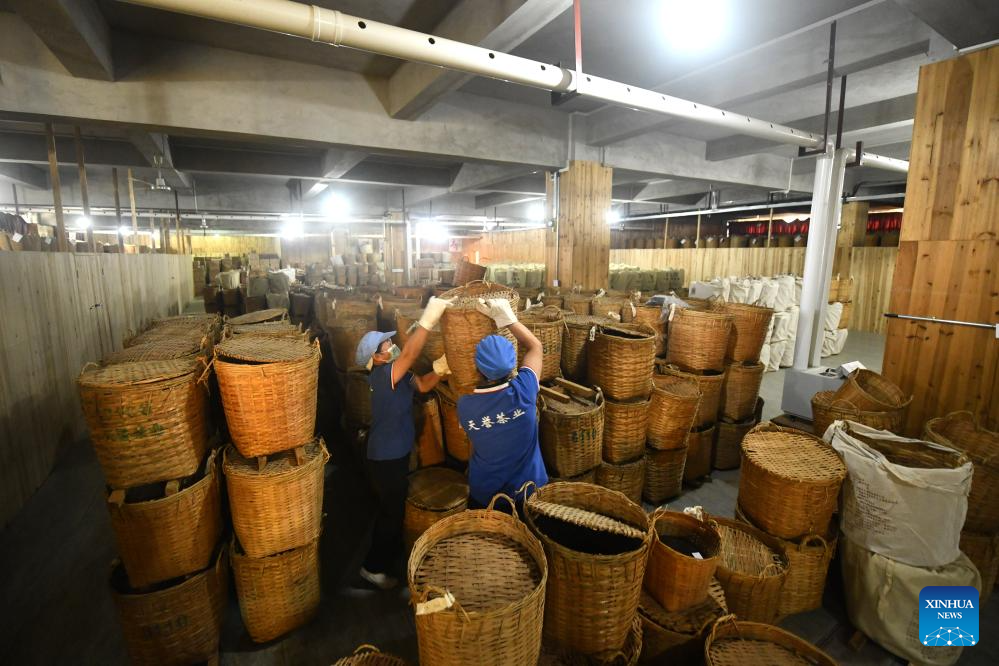
Workers transfer baskets containing Liubao tea products for maturing process at a factory in Wuzhou City, south China's Guangxi Zhuang Autonomous Region, Oct. 25, 2024. Liubao tea, a Chinese dark tea known for its strong, lingering fragrance and medicinal properties, boasts a history spanning over 1,500 years. It has attracted thousands of eyes with its presence at the ongoing 22nd China-ASEAN Expo.
The traditional Liubao tea-making technique is also recognized as a UNESCO Intangible Cultural Heritage subproject. Named after Liubao Town in Wuzhou City, Guangxi, the tea thrives in this region, where mist-covered mountains and a favorable climate have long made it an ideal area for tea cultivation. (Xinhua/Huang Xiaobang)
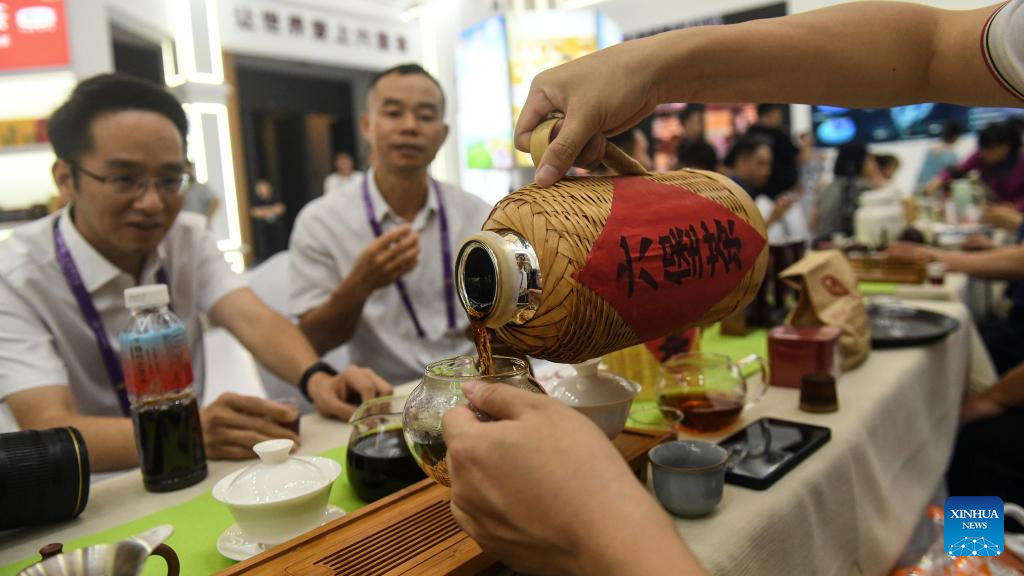
A staff member serves Liubao tea to visitors at the Nanning International Convention and Exhibition Center in Nanning, capital of south China's Guangxi Zhuang Autonomous Region, Sept. 18, 2025. Liubao tea, a Chinese dark tea known for its strong, lingering fragrance and medicinal properties, boasts a history spanning over 1,500 years. It has attracted thousands of eyes with its presence at the ongoing 22nd China-ASEAN Expo.
The traditional Liubao tea-making technique is also recognized as a UNESCO Intangible Cultural Heritage subproject. Named after Liubao Town in Wuzhou City, Guangxi, the tea thrives in this region, where mist-covered mountains and a favorable climate have long made it an ideal area for tea cultivation. (Xinhua/Zhang Ailin)


