

A boy holds grapes with a Kangana bowl in Kabul, the capital of Afghanistan, Feb. 23, 2025. The Kangana, an ancient clay jar to preserve grapes, has been widely used in the rural outskirts north of Kabul. This century-old Afghan container enables grapes harvested in the heat of summer to stay fresh until the following spring.
A Kangana is an ellipsoid formed by placing two bowl-shaped compoents face to face, with no apparent front or back side. Once sealed with mud around its brim, the jar becomes nearly airtight, functioning as a natural "vacuum storage container."
In some Afghan villages, the Kangana was once used to store peppers and apples as well. Today, with these vegetables and fruits available year-round, grapes remain as the main object in its starage. (Photo by Saifurahman Safi/Xinhua)
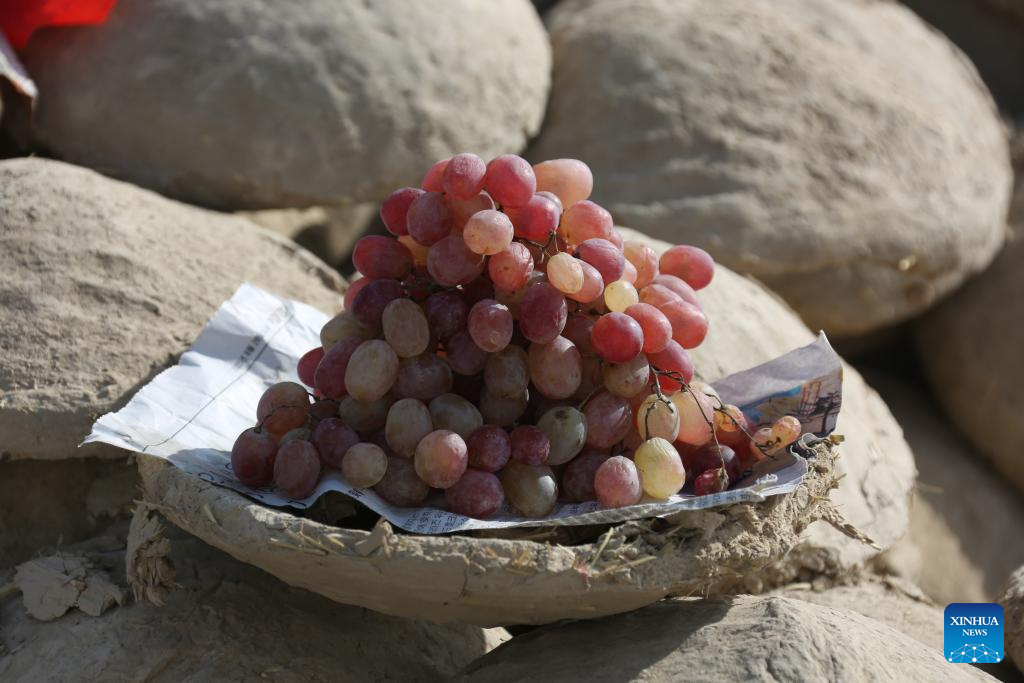
This photo taken on Jan. 26, 2025 shows grapes in a Kangana bowl in Kabul, the capital of Afghanistan. The Kangana, an ancient clay jar to preserve grapes, has been widely used in the rural outskirts north of Kabul. This century-old Afghan container enables grapes harvested in the heat of summer to stay fresh until the following spring.
A Kangana is an ellipsoid formed by placing two bowl-shaped compoents face to face, with no apparent front or back side. Once sealed with mud around its brim, the jar becomes nearly airtight, functioning as a natural "vacuum storage container."
In some Afghan villages, the Kangana was once used to store peppers and apples as well. Today, with these vegetables and fruits available year-round, grapes remain as the main object in its starage. (Photo by Saifurahman Safi/Xinhua)
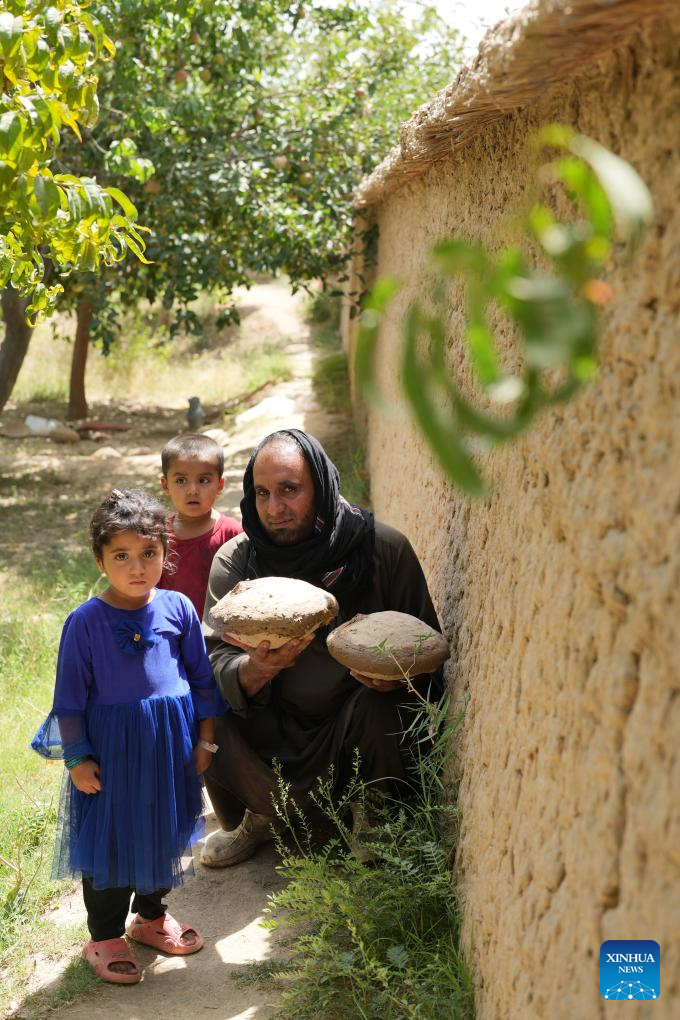
A villager, along with his children, shows two fully sealed Kangana jars in the northern outskirts of Kabul, the capital of Afghanistan, Aug. 25, 2025. The Kangana, an ancient clay jar to preserve grapes, has been widely used in the rural outskirts north of Kabul. This century-old Afghan container enables grapes harvested in the heat of summer to stay fresh until the following spring.
A Kangana is an ellipsoid formed by placing two bowl-shaped compoents face to face, with no apparent front or back side. Once sealed with mud around its brim, the jar becomes nearly airtight, functioning as a natural "vacuum storage container."
In some Afghan villages, the Kangana was once used to store peppers and apples as well. Today, with these vegetables and fruits available year-round, grapes remain as the main object in its starage. (Xinhua/Li Ang)
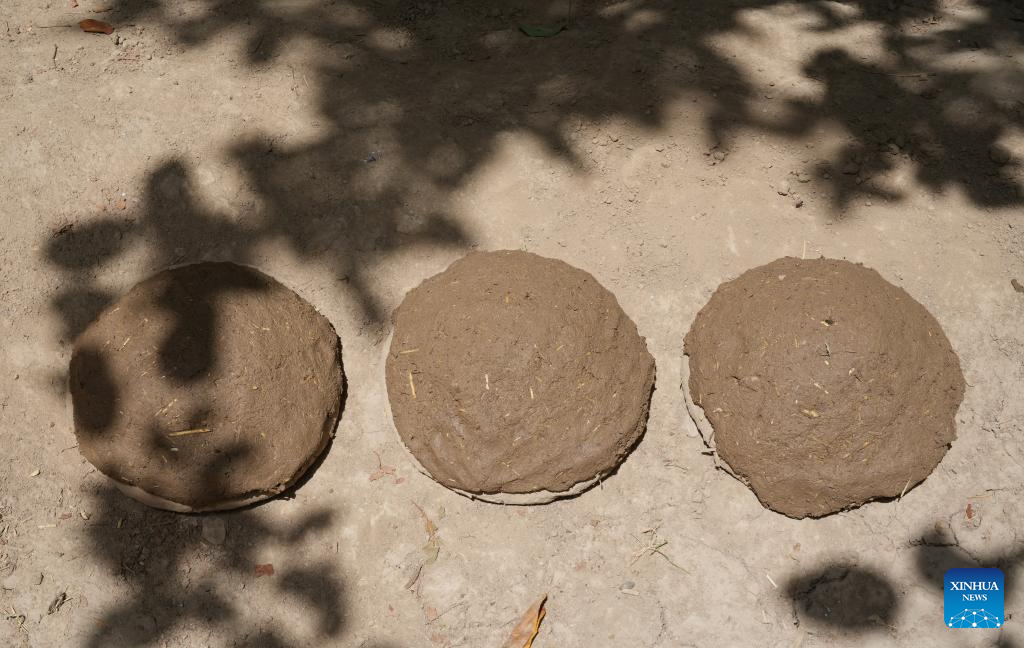
This photo taken on Aug. 25, 2025 shows Kangana bowls being slowly air-dried under sunlight in the northern outskirts of Kabul, the capital of Afghanistan. The Kangana, an ancient clay jar to preserve grapes, has been widely used in the rural outskirts north of Kabul. This century-old Afghan container enables grapes harvested in the heat of summer to stay fresh until the following spring.
A Kangana is an ellipsoid formed by placing two bowl-shaped compoents face to face, with no apparent front or back side. Once sealed with mud around its brim, the jar becomes nearly airtight, functioning as a natural "vacuum storage container."
In some Afghan villages, the Kangana was once used to store peppers and apples as well. Today, with these vegetables and fruits available year-round, grapes remain as the main object in its starage. (Xinhua/Li Ang)
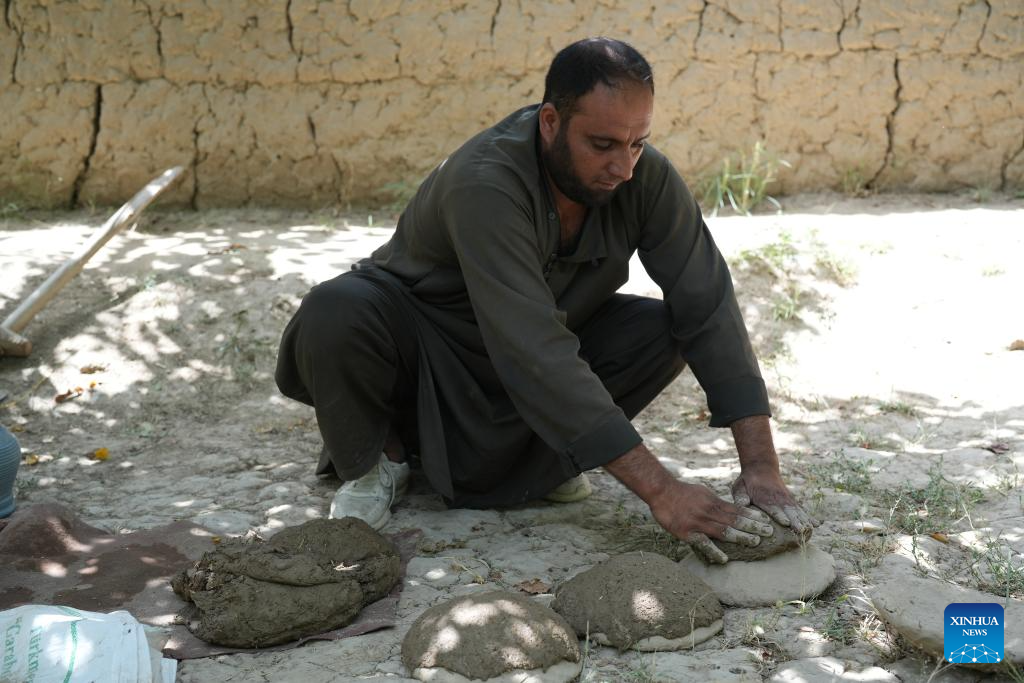
A villager uses finished Kangana jars as molds to shape bowls for new ones in the northern outskirts of Kabul, the capital of Afghanistan, Aug. 25, 2025. The Kangana, an ancient clay jar to preserve grapes, has been widely used in the rural outskirts north of Kabul. This century-old Afghan container enables grapes harvested in the heat of summer to stay fresh until the following spring.
A Kangana is an ellipsoid formed by placing two bowl-shaped compoents face to face, with no apparent front or back side. Once sealed with mud around its brim, the jar becomes nearly airtight, functioning as a natural "vacuum storage container."
In some Afghan villages, the Kangana was once used to store peppers and apples as well. Today, with these vegetables and fruits available year-round, grapes remain as the main object in its starage. (Xinhua/Li Ang)
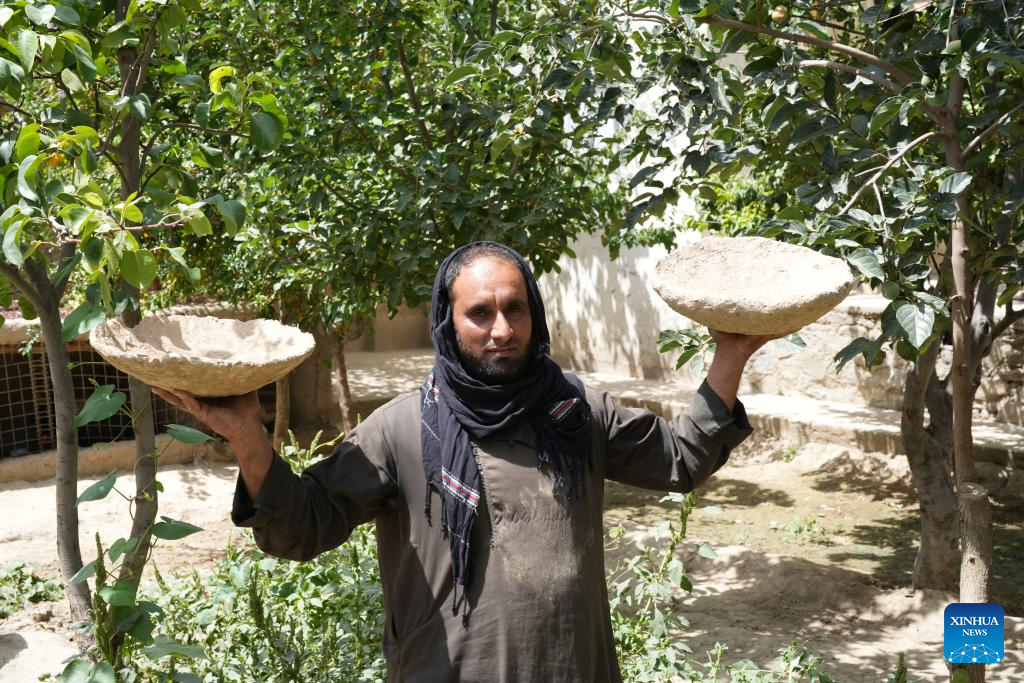
A villager shows bowls of an extra-large Kangana jar in the northern outskirts of Kabul, the capital of Afghanistan, Aug. 25, 2025. The Kangana, an ancient clay jar to preserve grapes, has been widely used in the rural outskirts north of Kabul. This century-old Afghan container enables grapes harvested in the heat of summer to stay fresh until the following spring.
A Kangana is an ellipsoid formed by placing two bowl-shaped compoents face to face, with no apparent front or back side. Once sealed with mud around its brim, the jar becomes nearly airtight, functioning as a natural "vacuum storage container."
In some Afghan villages, the Kangana was once used to store peppers and apples as well. Today, with these vegetables and fruits available year-round, grapes remain as the main object in its starage. (Xinhua/Li Ang)
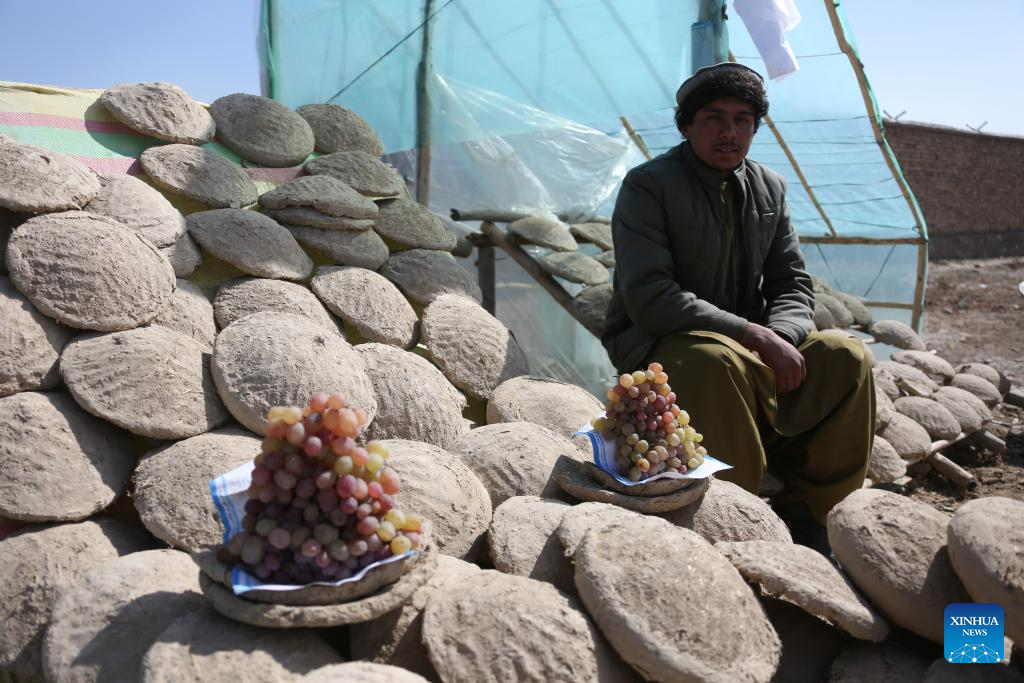
A vendor sells grapes stored in Kangana in Kabul, the capital of Afghanistan, Feb. 23, 2025. The Kangana, an ancient clay jar to preserve grapes, has been widely used in the rural outskirts north of Kabul. This century-old Afghan container enables grapes harvested in the heat of summer to stay fresh until the following spring.
A Kangana is an ellipsoid formed by placing two bowl-shaped compoents face to face, with no apparent front or back side. Once sealed with mud around its brim, the jar becomes nearly airtight, functioning as a natural "vacuum storage container."
In some Afghan villages, the Kangana was once used to store peppers and apples as well. Today, with these vegetables and fruits available year-round, grapes remain as the main object in its starage. (Photo by Saifurahman Safi/Xinhua)


