
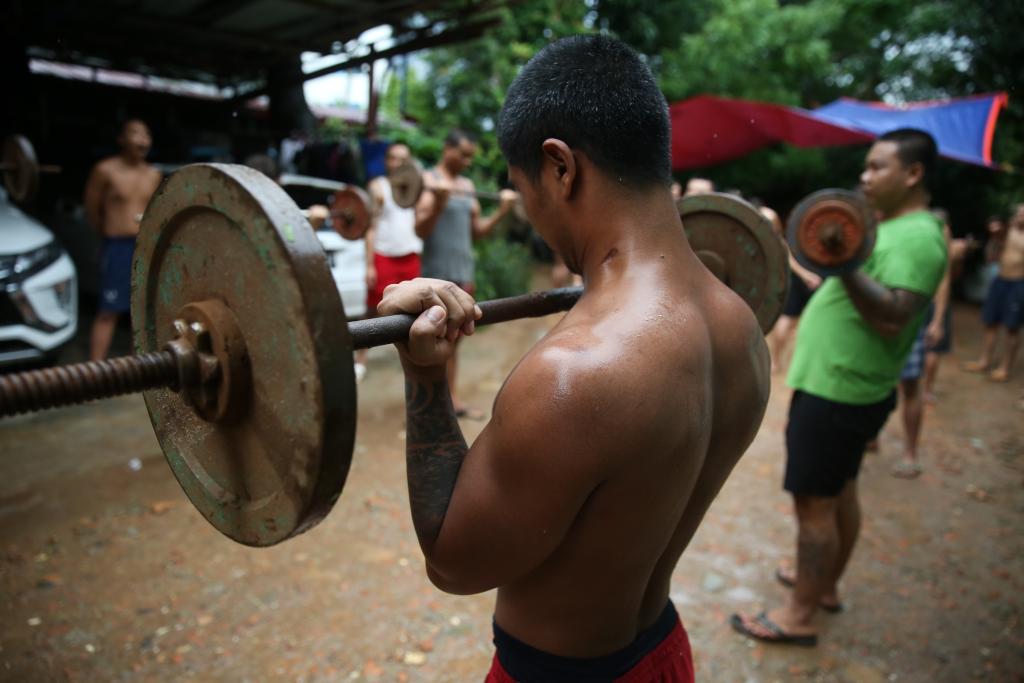
Drug addicts do physical exercise at a rehabilitation center in Yangon, Myanmar, June 26, 2025. (Xinhua/Myo Kyaw Soe)
YANGON, June 26 (Xinhua) -- At a rehabilitation center in Myanmar's Yangon, Phyo Zaw Aung begins his day with walking, running, jump rope, a gym session, and meditation rituals that have replaced a 20-year dependence on heroin and methamphetamine.
"I started using drugs when I was 15. For two decades, I was addicted, in and out of rehab, never really free," said the 37-year-old. "But this time, it's different."
Phyo's story is familiar yet uniquely tragic. After completing his matriculation exam, his parents sent him abroad to study in Singapore and England. But he never made it past the second year of university. He relapsed upon returning to Myanmar.
"I couldn't help with my parents' business. I got married in my 30s, but even my marriage was not working. Nothing in my life was working," he said.
Now, after a year at "Metta Saneain," the "House of Loving-Kindness" rehabilitation center in Yangon, Phyo said he's finally seeing light at the end of the tunnel.
"This center gave me real rehabilitation. Exercise helped flush out the poison in my body," he said, listing table tennis, gym workouts, meditation, counseling, and team sports as part of the routine. "Meditation was the hardest. But I stuck with it."
He graduated from the center's program this week on June 25, earning the highest marks among 29 participants.
But even with this milestone, Phyo said that he knew his toughest battles lie ahead.
"The real challenge is outside. People don't believe someone like me can change. Not even my own family. I have to earn that trust back," he said. "And I will. I want to help my parents. I've never done that before."
Phyo isn't alone. At the center, stories of loss, regret, and redemption echo across the halls.
Min Khaing Oo, 46, from Mingala Taungnyunt, has been in the program for just over three months. He began using narcotics in 2021.
"After using drugs, I could not sleep. I couldn't do the works asked by family members," he said. "I came here because I wanted to make my mother happy."
He said that his favorite part of the program is walking. And he said that he's already seen health improvements.
"My diabetes and cholesterol have gone down," he said. "I plan to help with the family business after I leave."
Ye Htut Khine, 38, blames peer pressure. "I was influenced by bad friends. This is my first rehab experience. At first, I was scared. But now I'm stronger physically and mentally."
He briefly fled the center once, only to be brought back by his family members. Three months later now, once slim, he's built muscle, and said he's determined never to relapse.
"I'll go back to work for my dad after leaving here. And I want to tell others: don't even try drugs. It destroys everything."
For many families, the journey is just as painful. U Tun Lwin Oo, 57, sent his son Wai Phyo Aung, 26, to the center after addiction to ICE (crystal meth).
"Maybe our ignorance helped lead him down this path. But if something's broken, we fix it," he said. "Now, after six months here, I see changes in his eyes, his expressions, and his behaviors."
His message to other families is clear: "Don't give up. Treatment and rehabilitation can save lives."
U Chit Chaw, a comedian, who is volunteering drug addicts for over a decade, is part of a team that supports the drug addicts.
"I help addicts return to a normal and even better life. That's the goal," he said. "But more and more narcotics are hitting the streets. Awareness and rehab are more critical than ever."
U San Shein, president of the Drug Addict Rehabilitation Association (Myanmar), who is founder of the center, said that the center began with just five addicts. Today, it houses about 180. "We want to build a hospital for the drug addicts in the future," he said.
"Here, from 6 a.m. to 8:30 p.m., they engage in various activities such as physical exercise, meditation, counseling, reading, and education about drugs," said U San Shein, who oversees a team of 15 rehabilitators.
In 2024, Myanmar provided treatment to 26,964 drug addicts and supported their physical and mental recovery and reintegration into society at 14 rehabilitation centers, official data showed.
To mark the International Day Against Drug Abuse and Illicit Trafficking on Thursday, Myanmar authorities burned 297.95 million dollars worth of seized narcotics across Yangon, Mandalay, and Taunggyi.
For Phyo, the message for the International Day Against Drug Abuse and Illicit Trafficking is blunt. "Don't even try drugs. You can't live or work with narcotics. I've never seen a drug user who's truly good. It always ends badly," he said.
He knew trust won't come easy. But he's ready to earn it. "I want to rebuild everything I lost. I've wasted more than 20 years. No more." ■
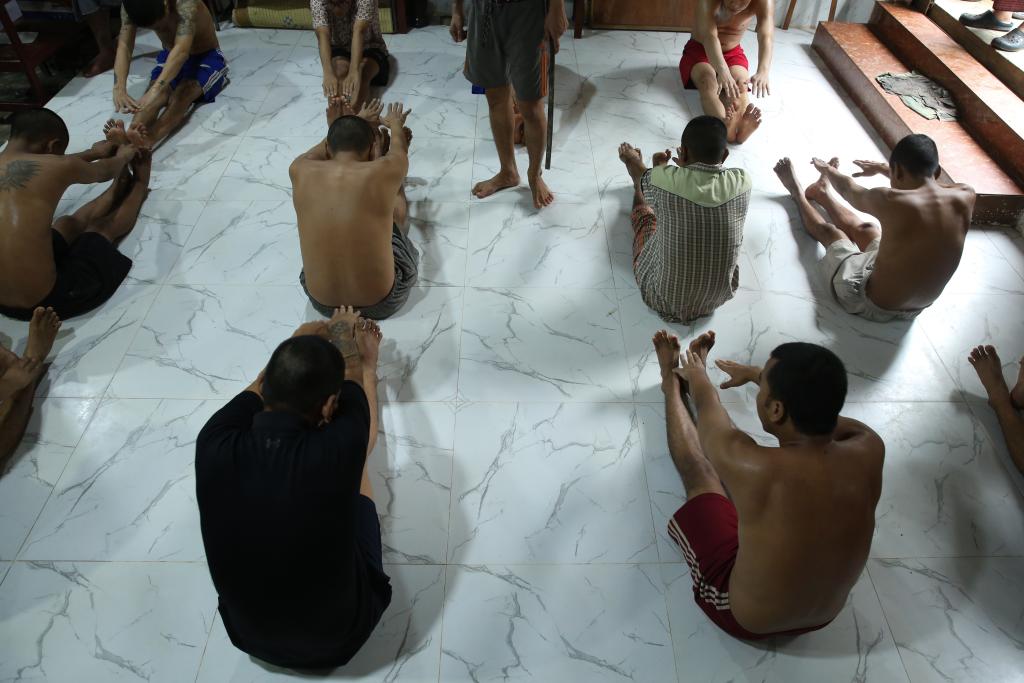
Drug addicts do physical exercise at a rehabilitation center in Yangon, Myanmar, June 26, 2025. (Xinhua/Myo Kyaw Soe)
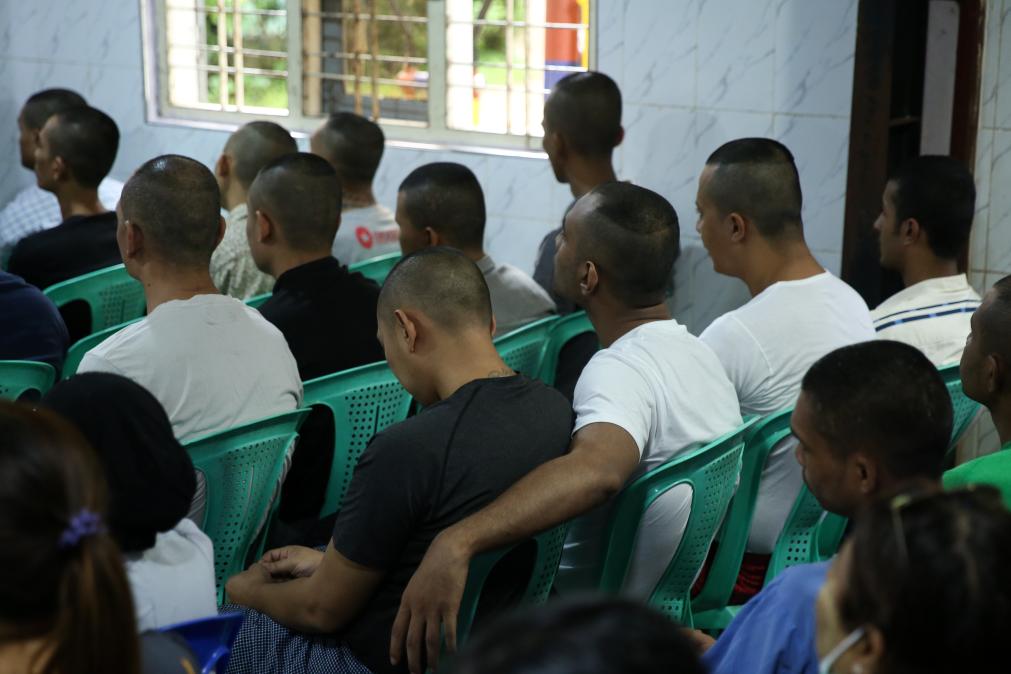
Recovered drug addicts attend a graduation ceremony after completing training at a rehabilitation center in Yangon, Myanmar, June 25, 2025. (Xinhua/Myo Kyaw Soe)


